Already here we see 56mm (if that was powergliders number) to 46, that’s 10mm and 20% less motor
So a 6384 instead of a 6374 
That’s ok, the owners are on the forum. This is where the product was developed before it went live.
1 Like
The upper BDUAV 6384 motor is the one I got, which is 50mm, and the lower is a FD 6374. For 8-10S I don’t see a good reason to choose the 6374 over a 6384 though, for heavier people at least.
*runs to measure the 6384 he has here…
My AP 6384 has a stator of 56mm. It would be interesting to see if the FD motor actually can handle the same amount of power as the AP motor.
Answer is naturally no, question is more where the breakpoint for function is. Do you lift without paddling on the 46mm stator? At 50/54/56? at which weight and board float?
I just measured what i have here:
Torqueboards 6380 is 54mm wide
Noname 45$ “6384” is 50mm wide
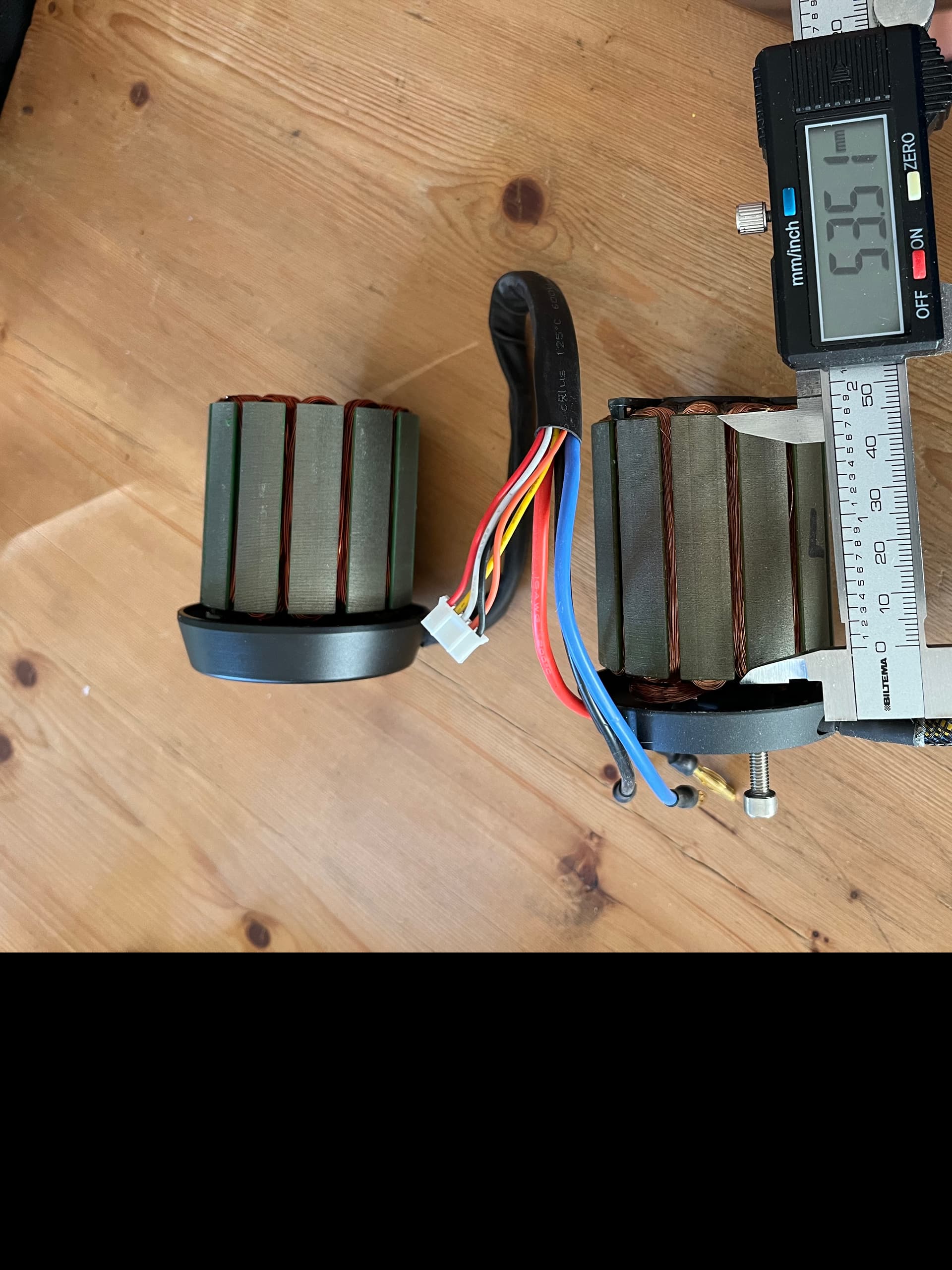
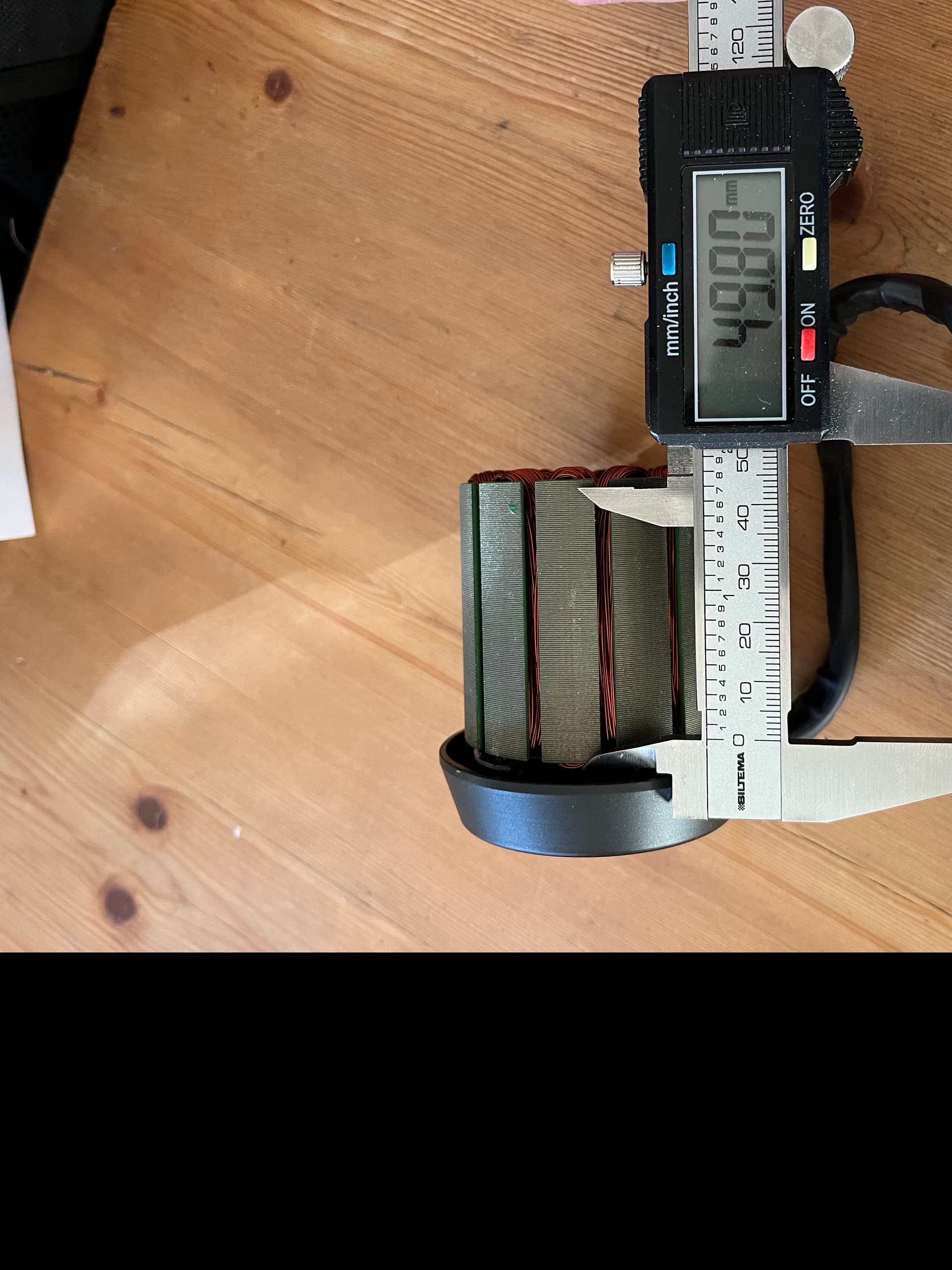
(I screwed up the caliper location on the pics but values are correct)
The torqueboards motor has 10awg wires
(which will need to be extended)
The noname motor has 16awg wires
(which will need to be replaced)
No big difference here.
The torqueboards motor magnets are stronger, it’s a fight to get calipers released after measuring
1 Like
Great initiative. Why a non rusted motor on pict 1 and a rusted one on pict 2 and 3 ?
We are at the heart of the DiY: caliper in hand, are all 6384s equal and if not, on what criteria should we be vigilant?
pic 1: DIY motor
pic 2&3: Foildrive motor
That FD motor is going down the drain already it seems?
Stator steel might look bad but takes a long time to really make a difference whereas the magnets go quicker when rust has started to show. One or two magnets puff/crumble and then the magnetic balance of the motor is gone.
2 Likes
Hello, I have treated a 6384 with slow curing epoxy and the truth has surprised me what has happened to me. I didn’t get to touch the water and there was a problem in one of the wires that fed the motor, it got very hot for a few minutes and what I show in the photos happened.
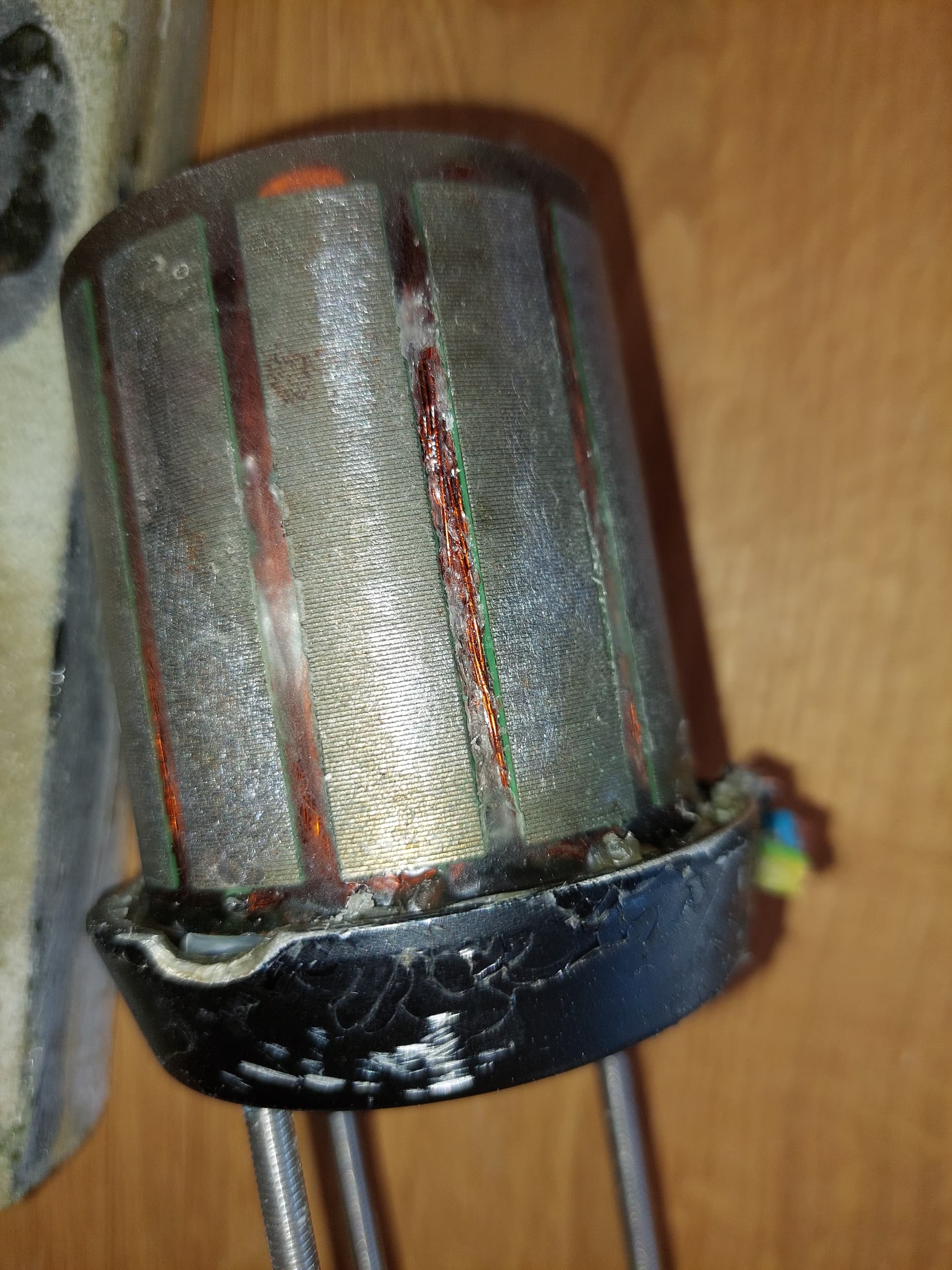
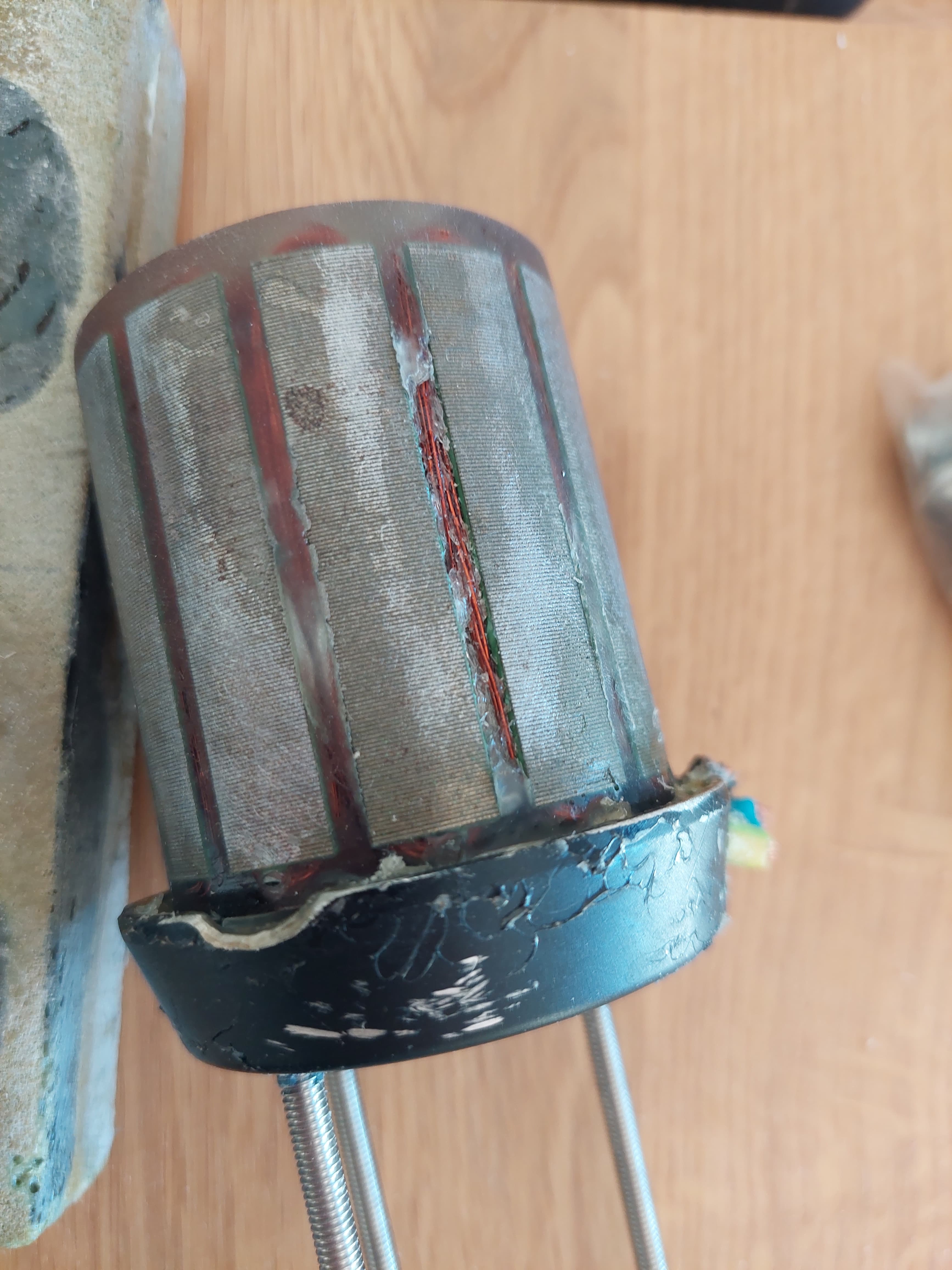

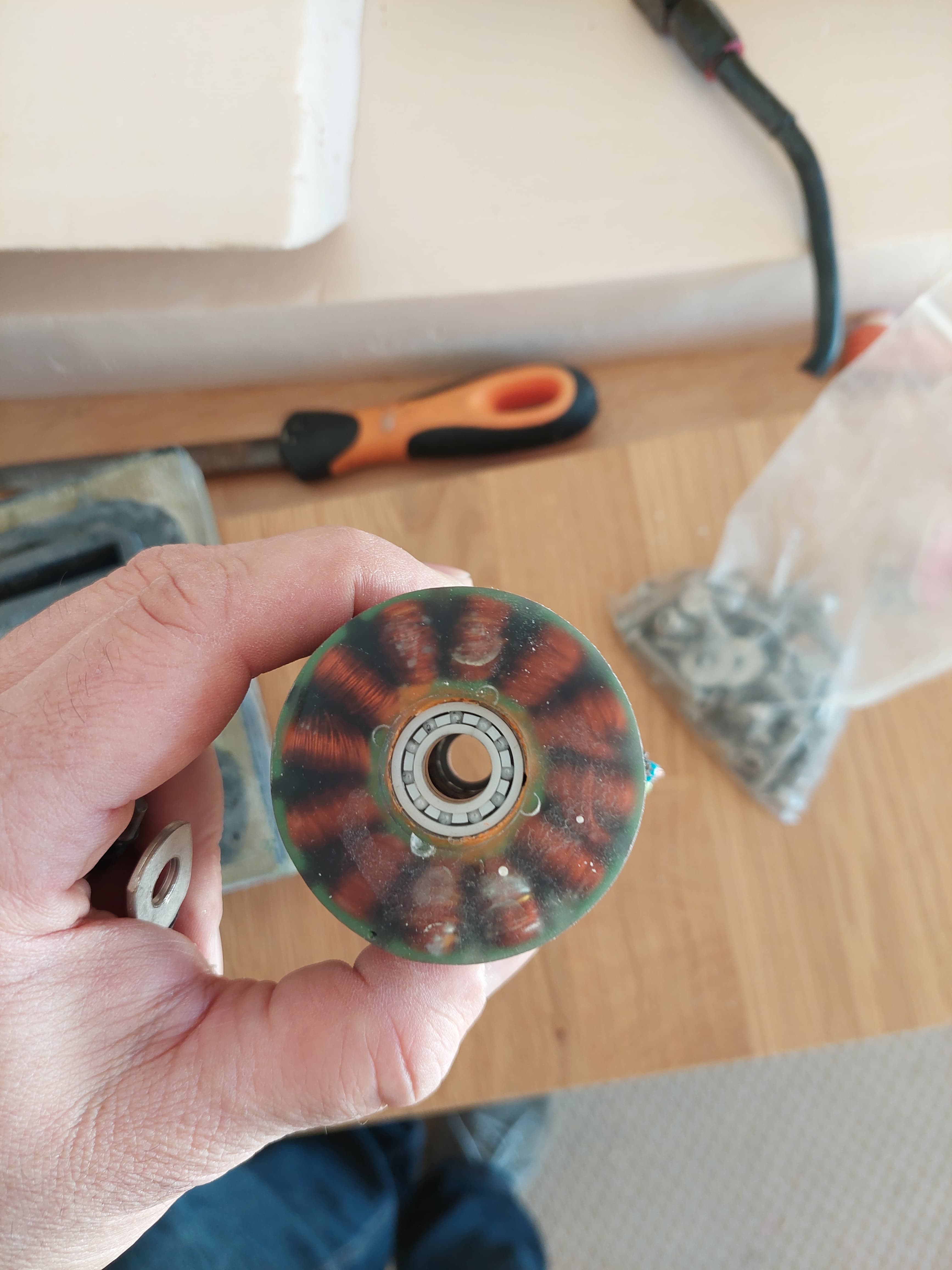

I have no problem having to replace a motor every 6-8 months, the pleasure I get is better than the constant investment. The problem is that I don’t know if with epoxy I will have that flaking in the block of the epoxy itself or go towards corrosion X
Put ceramic bearings in it and soak in corrosion x every 10 or so uses in saltwater and enjoy the ride. My original setup maintained this way is going on 15 months old without any issues.
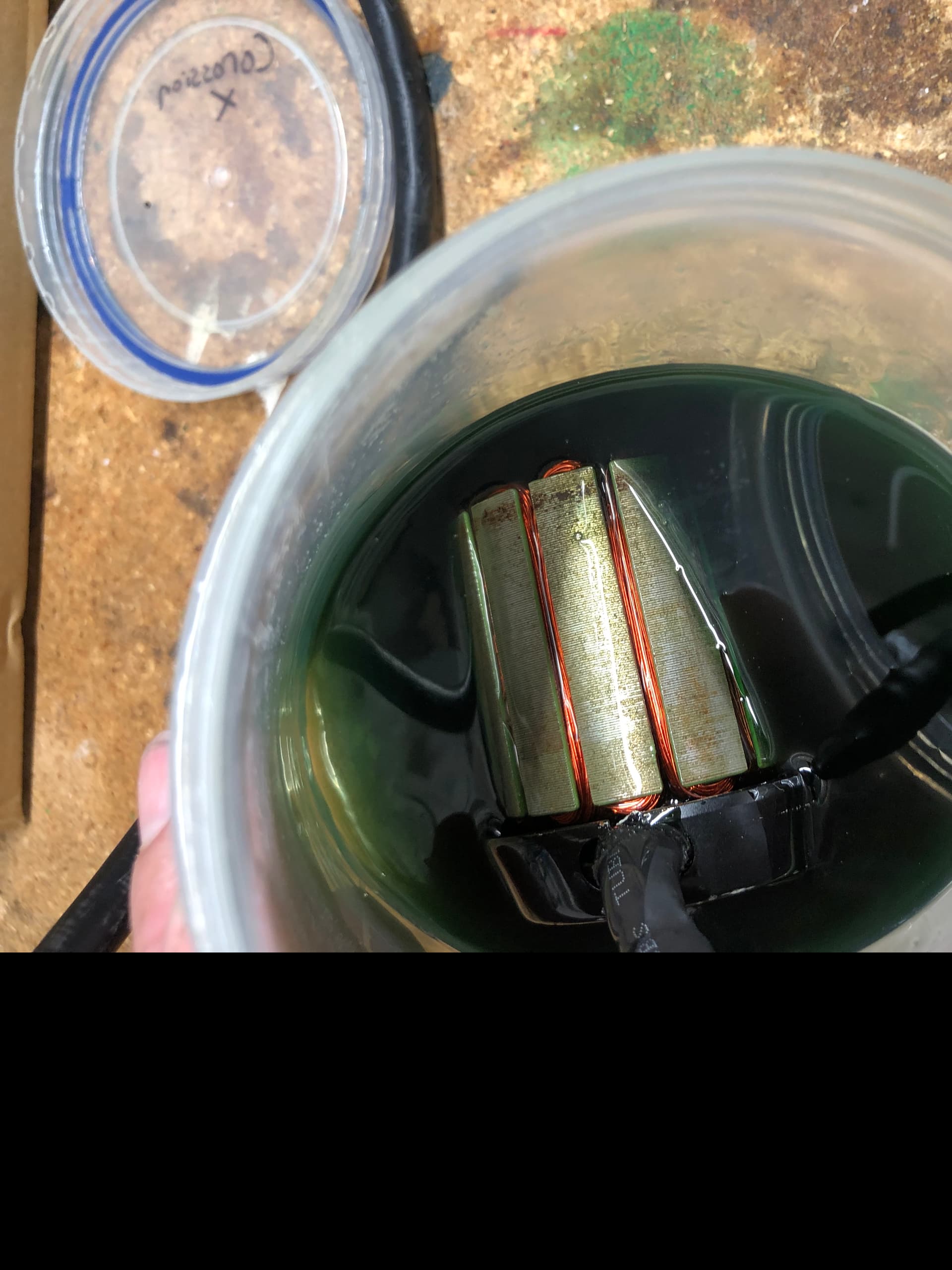
!
1 Like
Hard to see what happened but I think you put far too much epoxy. Just a dip to cover the stator should be enough. Water should still be able to get to the windings to cool them.
2 Likes
+1 on that!
You can only pot the motor fully if you use thermal epoxy or silicone, with normal epoxy it will overheat.
1 Like
Yeah same thing happened to us. It swells due to heat.
I suspect the 16awg original cables are not enough.
Anyone got tips to femove stator shaft when it is really strongly attached ?
Do you mean rotor shaft as it’s attached to the rotor? Do you want to pull it out the bearings or remove it from the actual rotor too?
Yes, 16AWG is too little even if they’re silicone clad wires
At 100A they will produce 100w of heat

(Voltage drop 1V at 100A gives 100W of heat)
The wires themselves can probably take it if it’s silicone, they are surprisingly heat resistant but it will create a hotspot where the phase wires are bundled together to exit the motor. If motor starts to run badly then this is one of the places to check. I’ve managed to quickly fix some 80100 motors with melted short circuits in this location.
Yep you all are right.
Those thin cables were completely rusted from the inside. I guess the silicone got a little too bent on my mast hole, or somewhere else, and water got in. The copper wires were more powder than wire at this stage ! No wonder the motor was all ClacClacing !!
I managed to get the motor bottom plate out, olacing the motor in the oven for 15minutes, and pounding the hell out of it, holding it with a leather glove.

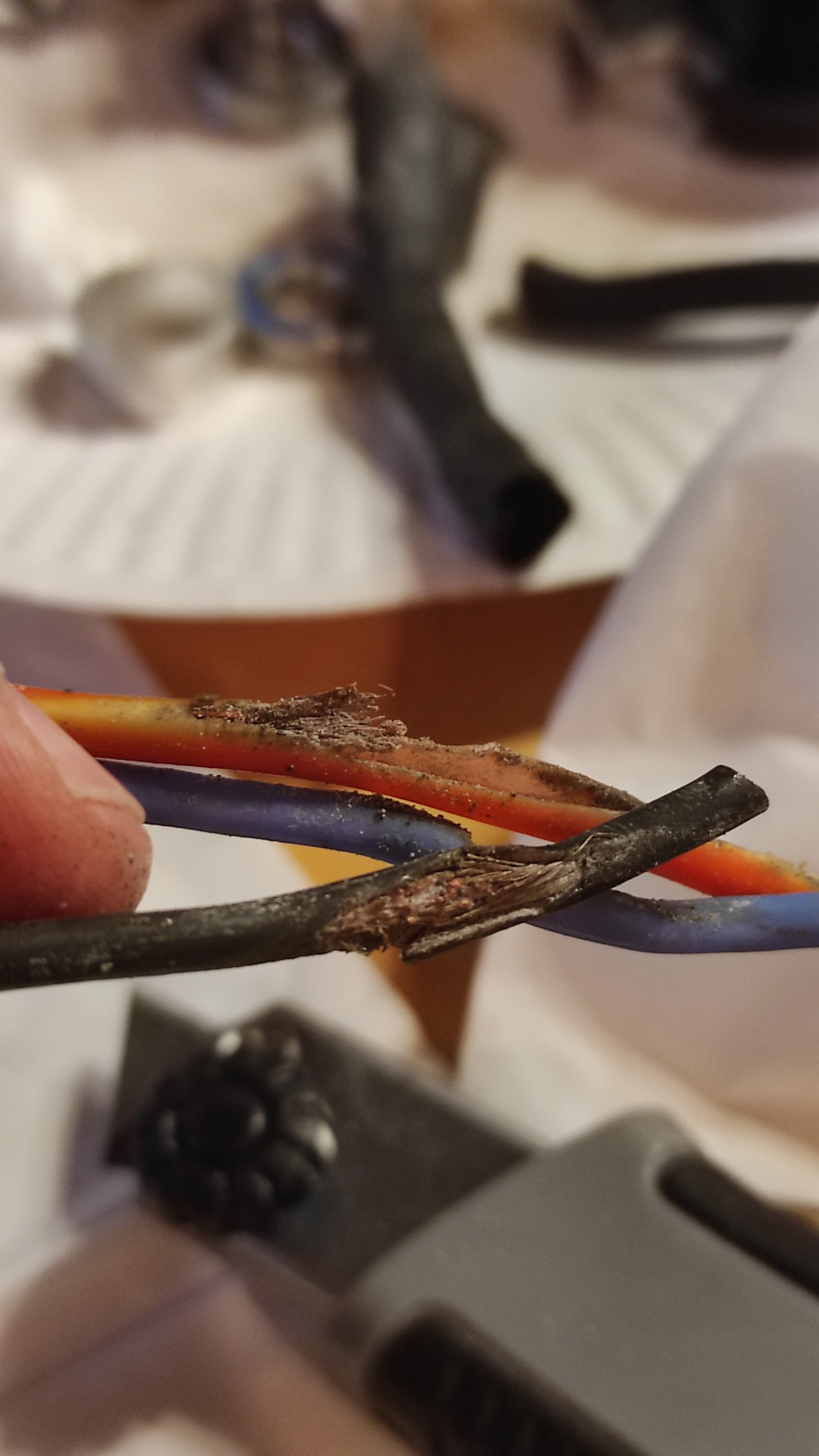
![IMG_20230203_175047|281x499]
1 Like
That’s not looking like silicone, is it? Other materials will not take the heat well, age and crack prematurely if you combine 16AWG and efoil currents.
On my 6384 efoil setup I just cut the 16 AWG to 3cm length and soldered it to my 8 AWG. It works fine as it will be cooled by the water and the high current is only for some seconds during startup. So you dont really need to replace them from the inside, at least not for FD use.
One question though: I have only used it in freshwater so far, and next season I will try it in saltwater. Will there be leakage currents between phases that can cause problems if the insulations under the “hood” of the motor is not 100%? Or should I just try and see how it goes?
It won’t be a problem, isolation distances are too long to cause any issues. The salt can, in the worst case, corrode the wire strands though. I’ve had wires turn to powder on my ebike due to this (but winter biking in southern sweden can be 4 months of salt spray testing as we put enormous amounts of salt on the roads in freezing temperatures).
The real downside of silicone wires are that heat shrink, even the type with hot glue inside, doesn’stick to the wires. I apply 2-3 coats of liquid electrical tape before heat shrinking the connections, this way there’s a flexible seal with protective outer shell.
1 Like