I’ve just taken a V2 of my tow boogie out and am having some issues. Looking for some wisdom from the forum.
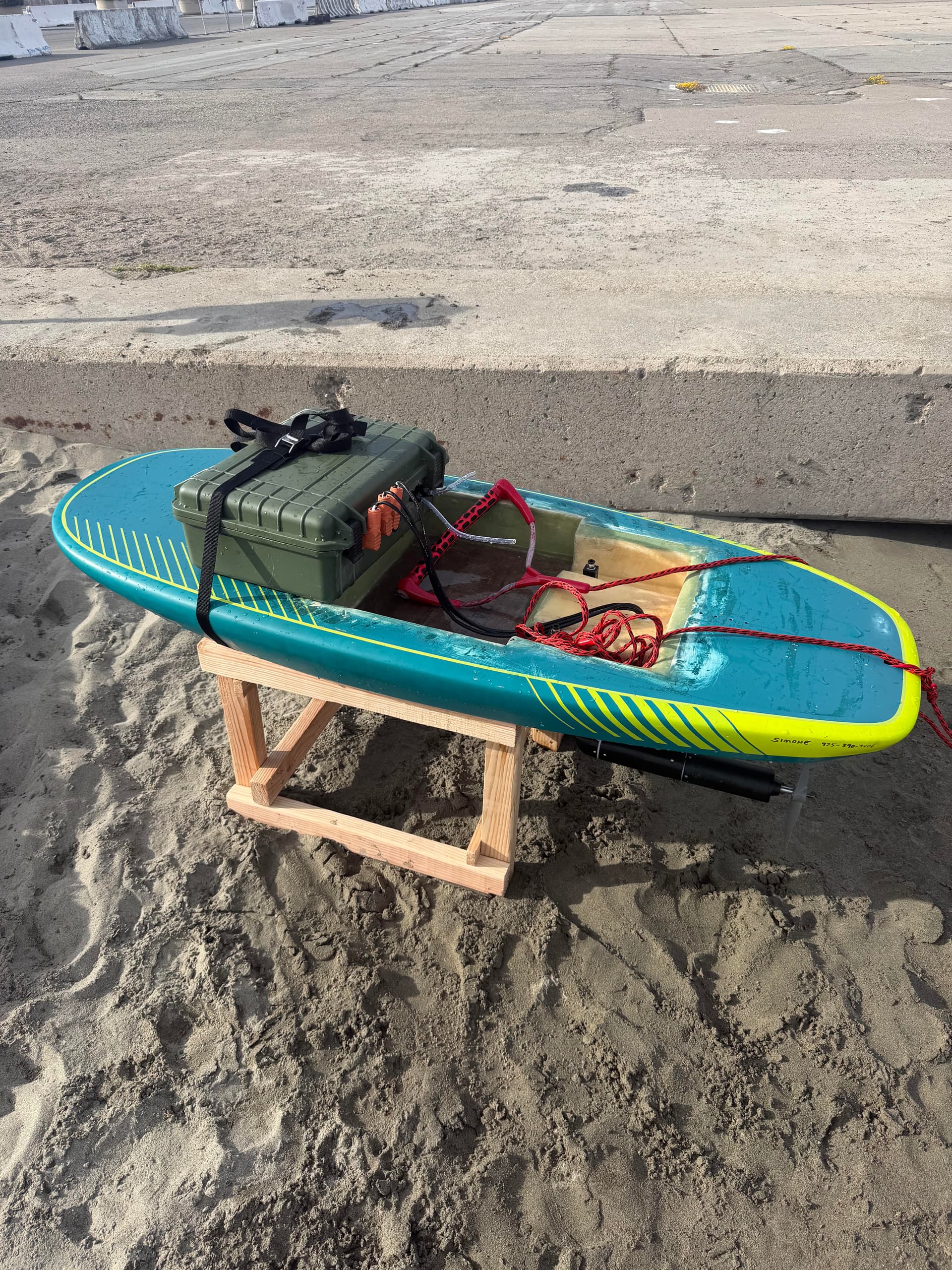
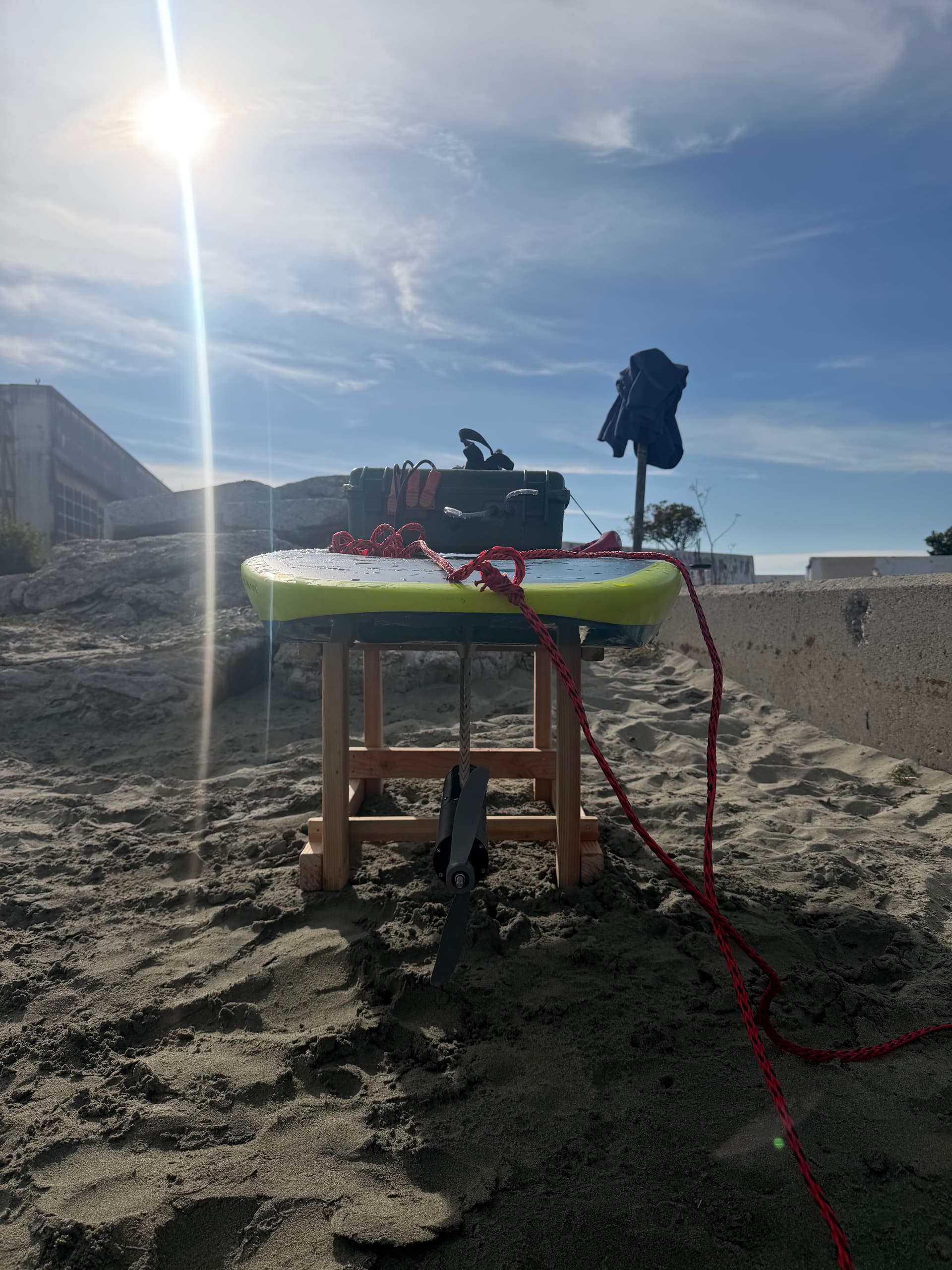
First some specs (pics below):
Flipsky 65161 120kv motor
Flipsky 75200 pro V2 (watercooled type)
Flipsky vx3 remote
Rawrr mantis 72V/30Ah battery (~35 lbs)
Pelican 1500 case
Cabrinha aluminum mast
10x8M-LH APC-brand propeller (most success so far)
3D printed motor mount which squeezes the mast
Built on a 90L slingshot foil board
*i’m riding a unifoil hyper 250 in^2 (~1600 cm^2)
Now the issues:
It requires a significant amount of power to get on foil. 100 amps won’t do it, 120 amps will but i’m newer to foiling (some wingfoil experience) so i continue to stall if not pumping.
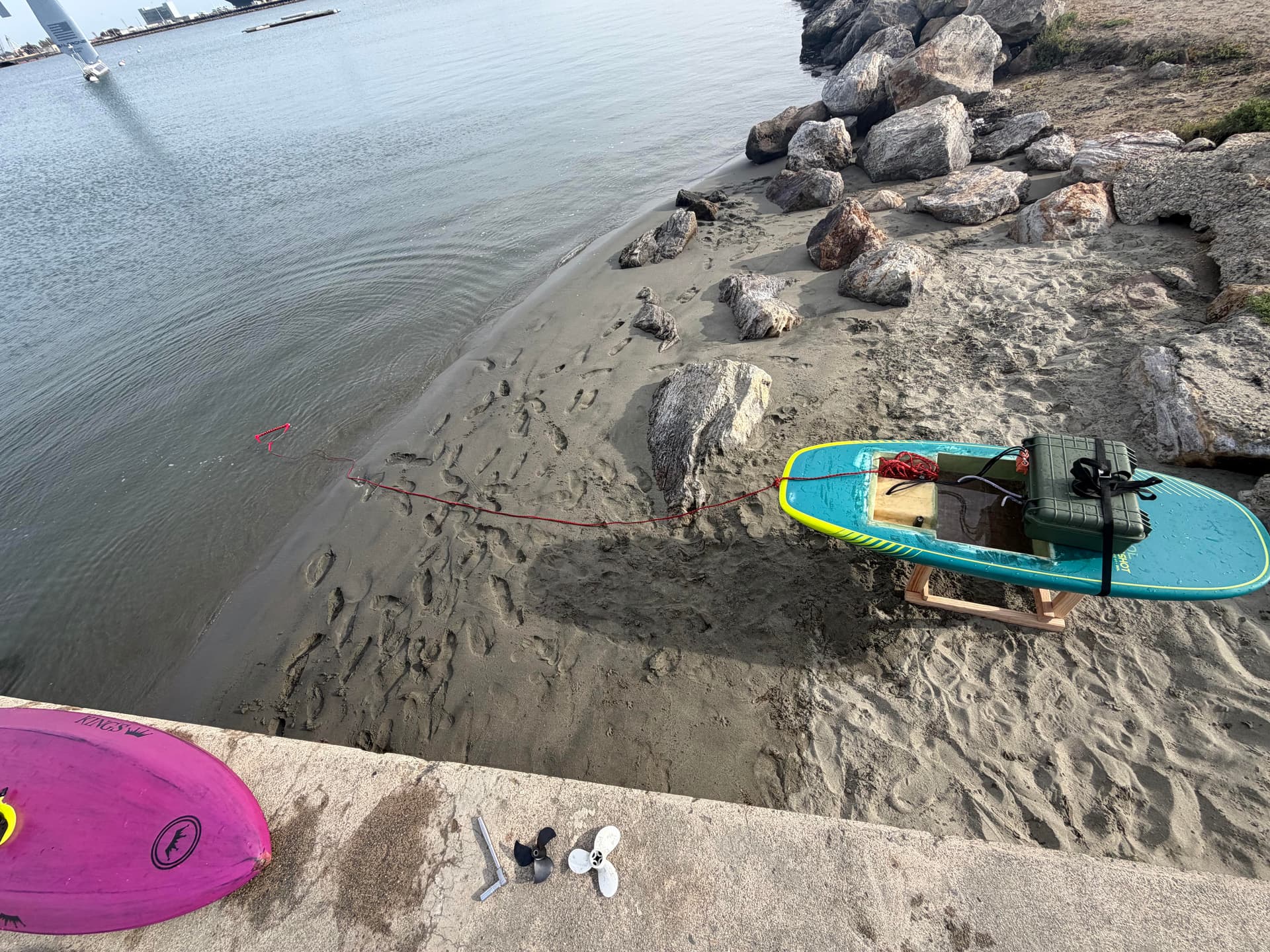
i’ve tried a 10"x8" APC prop, fliteboard prop, and a 7.5"x7" white (aluminum) boat propeller. The boat prop pulls the hardest but requires ~120A to ride at all. The 10"x8" APC prop used to work great on my V1, but still drew higher than desirable amps at ~60A to cruise.
In general it feels the board doesn’t move fast enough even though I believe i’ve been using larger/higher pitch props than other folks on the forum
Porpoising (nose of board points up significantly). I think this can be fixed with a longer tow anchor off the back of the board.
Open to other ideas, perhaps pitch angle of the motor/prop
Significant roll. The CCW props pull left and CW prop pulls right. The higher the rpm the more significant the roll. At full tilt (both on and not on foil) the board rolls so much I can barely keep it upright by carving out in the direction required to right-it.
Ideas i’ve read here include adding fins or trim tabs. I’ve also tried adjust yaw angle of the motor/prop but there is not a significant adjustment available with the stock foil board mounting rails.
I’ve been saying 100A and 120A as thats what i’ve set my motor current limit to. I’ve confirmed this by taking data logs.
Specifically, at peak (taken from vesc tool logs):
input_voltage: 78.8
current_motor: ~117A
current_in: ~24A
erpm: ~3700 (erpm/4 pole pairs (arbitrary set in software) ~ 925rpm)
(motor and esc/mosfet temp well below limit)
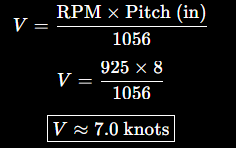
If i calculated mechanical rpm correctly, for a 8" pitch prop the max speed with 100% efficiency is 7 knots. Definitely felt like that or slower.
For the handling a looks like the prop is too low, which causes the nose to lift.
The back of the board needs a sharp edge as well (look at any planning boat) otherwise it will dig into the water and make the nose go up even more. Think of holding the back of a spoon into a stream of water and it will get pulled into the stream. The same thing is happening to the back of your board.
so i’ve done a bench-top test and found that (for my vesc tool firmware version, atleast):
1 mechanical rpm = erpm/6 OR abs_tach/6
I found this about by removing prop and spinning motor at full throttle for 30s.
read 25k erpm during test, and 75,000 counts on abs_tach
spinning the motor 10x by hand gave 60 counts on abs_tach (6 counts per rev)
75,000 counts / 6 / 0.5 minutes = 25,000
… so 25k erpm / 6 = ~4,166 rpm
the motor, however, should spin at ~72V*120kV = ~8,640 rpm
still troubleshooting why i’m only achieving half the rpm I should be able to on bench (no load, no prop, just motor shaft)
I’ve checked firmware limits on erpm, motor temp, voltage, current draw, remote endpoint calibration, and a few other things i’m forgetting.
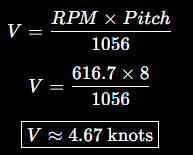
to update my previous post, the 3,700 erpm is actually 3700/6 = ~617 rpm… so at 100% efficiency we’re moving at 4.7 knots. wow.
I think you need to divide by pole pairs, not poles, so divide by 3 instead of 6.
I built a rpm meter with a laser diode, it connects to the mobile phones 3.5mm headphone connector. With this tool you can measure real rpm, see here laser tachometer: Strobe light tachometer
For a 65161, 120kV at 72V input that is expected… 6 poles = 3 pole pairs
72V * 95% * 120kV = 8200rpm
8200rpm * 3P = 24600 ERPM
No, they are ok, see above explanation
So that says it all, prop too big for the motor / required thrust too high for the setup
→ only solved by more motor current (65161 can handle 200A for a short time), motor with less kV, prop with less pitch, less drag of the vessel
Most people now run dual motor boogies, because cw and ccw motor will cancel yaw torque out and power will be shared among 2 motors. 5 to 6" props are more common for that, usually high area props like big 3-blade
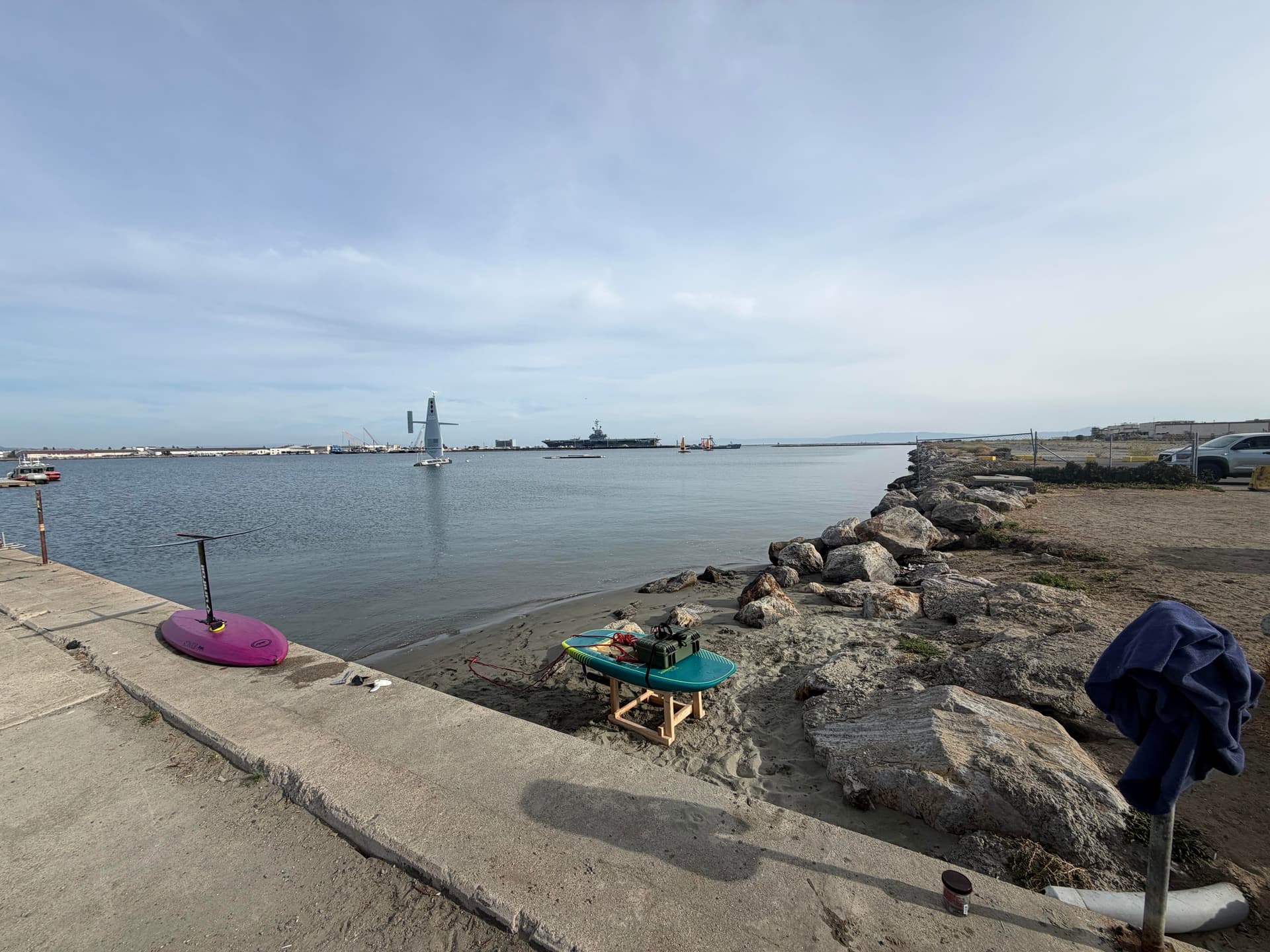
Location appears to be near Alameda Point as depicted by the Saildrone and Enterprise carrier in background.
I have optical rpm meter from my Rc planes if you want to verify motor speed.
I have found that with the flipsky 65161 120kv motor I cannot go larger than the stock 7” white prop.
I am surprised by the high ratio of motor current vs battery current. My battery current on efoil can be 60A or higher at takeoff. I’m about 240 lbs.
I’m still confused how I counted revs per count (6/rpm) yet logically and physically it only makes sense that it is (6/2/rpm). I’ll have to repeat my experiment for my own sanity - but sat_be and ludwig you are definitely correct.
Hope to get on the water this weekend with a revised battery current limit and some more prop experimentation.
Something I missed: data for V1 of my tow boogie had me foiling at the same motor current (120A) draw but 40A battery pull with a different prop. I must’ve set the battery current limit higher before and accidently overwritten that parameter recently.
I’ll update this thread with the results! Thanks for the input so far
No matter how high you set the max. battery current, it will be whatever it wants to be (or rather the product of motor rpm * motor current = battery voltage * current)
So even if you set it to 200 now, it will stay at 25A with your given setup, if you leave max motor current and prop unchanged
The old setup probably had less drag, and as you say a different propeller, if motor and motor current were the same back then
the tow boogie pulled harder and faster as the data would suggest. i was able to get on foil and maintain good level cruise velocity at ~60% throttle with the fliteprop.
the instability of the boogie itself though became much more apparent. even though i was foiling i was only able to go in CW circles!
both props i tested rotate CCW and caused yaw and roll in the left-turning direction. i am going to glass in two shortboard surf fins to address the problem. i might also shorten the motor mast to reduce the imparted torque. any suggestions are welcome!