I bought an old Takuma Cruiser V1 knowing the original remote had been drowned and was dead. That left a fairly obvious question: was it just the remote, or was there more wrong with it?
The board itself was complete. Battery, mast, foil, motor, gearbox and electronics enclosure were all there, and most of it looked too good to throw away. I wasn’t interested in turning it into something it was never designed to be. I just wanted to get the thing working so I could go efoiling.
Getting control of the original ESC
The first useful clue came from posts here on FOIL.zone.
Other people had already worked out that the original Takuma ESC could be driven from a Flipsky VX3 receiver using the PWM connections on the Takuma interface board. Credit where it’s due — that saved me a lot of unnecessary reverse engineering.
The Takuma board even makes life fairly easy because the connections are labelled PWMOUT, PWMVCC and PWMGND.
I wired the VX3 receiver into those connections and got throttle control back.
Unfortunately, pulling the trigger didn’t result in a happily spinning motor.
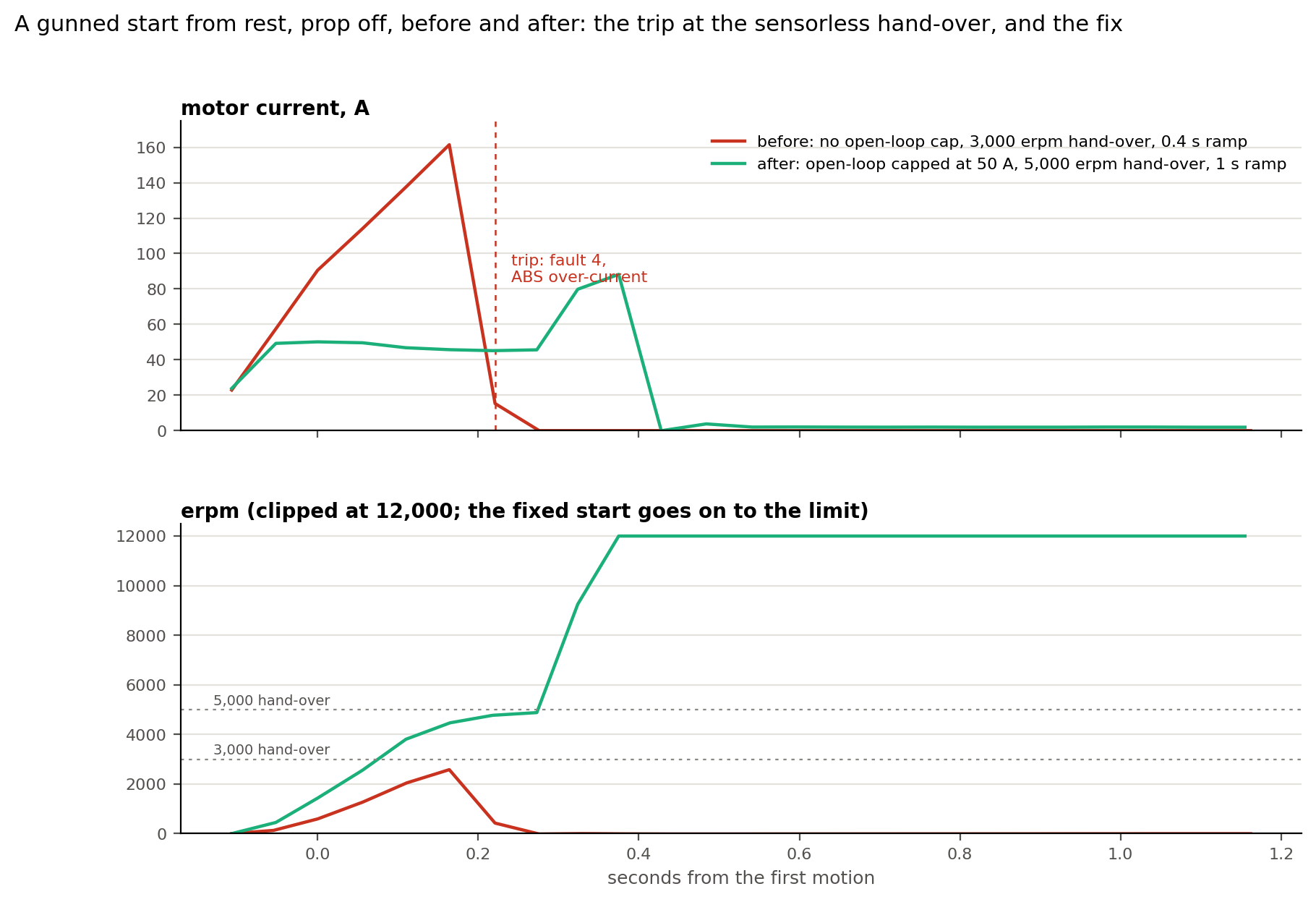
It stuttered badly.
With the gearbox connected it sounded like something mechanical was destroying itself, but once I removed the gearbox the noise disappeared while the motor still stuttered. The gearbox was really just amplifying the repeated kicks from a motor that wasn’t commutating properly.
The three phase resistances all looked similar on a multimeter and there wasn’t anything obviously open-circuit in the motor.
The original ESC heatsink was warming up as well, so it was definitely switching current.
At that stage the ESC was looking suspicious, but I still didn’t know whether the motor itself had a problem.
A cheap way to answer the question
Rather than keep guessing, I bought a Flipsky Mini FSESC 6.8 60V/100A.
The ESC itself was about US$76, so it was a fairly inexpensive way of finding out what was actually broken.
If the motor still stuttered on the Flipsky, I would keep looking at the motor and wiring.
If it ran properly, the answer was pretty obvious.
I also bought the Flipsky BLE module. Initially that was simply because VESC Tool would let me see what the controller was actually doing rather than diagnosing everything by sound, smell and touching things to see whether they were getting hot.
There was still one unknown before any of this was useful: the original Takuma battery.
The original battery works
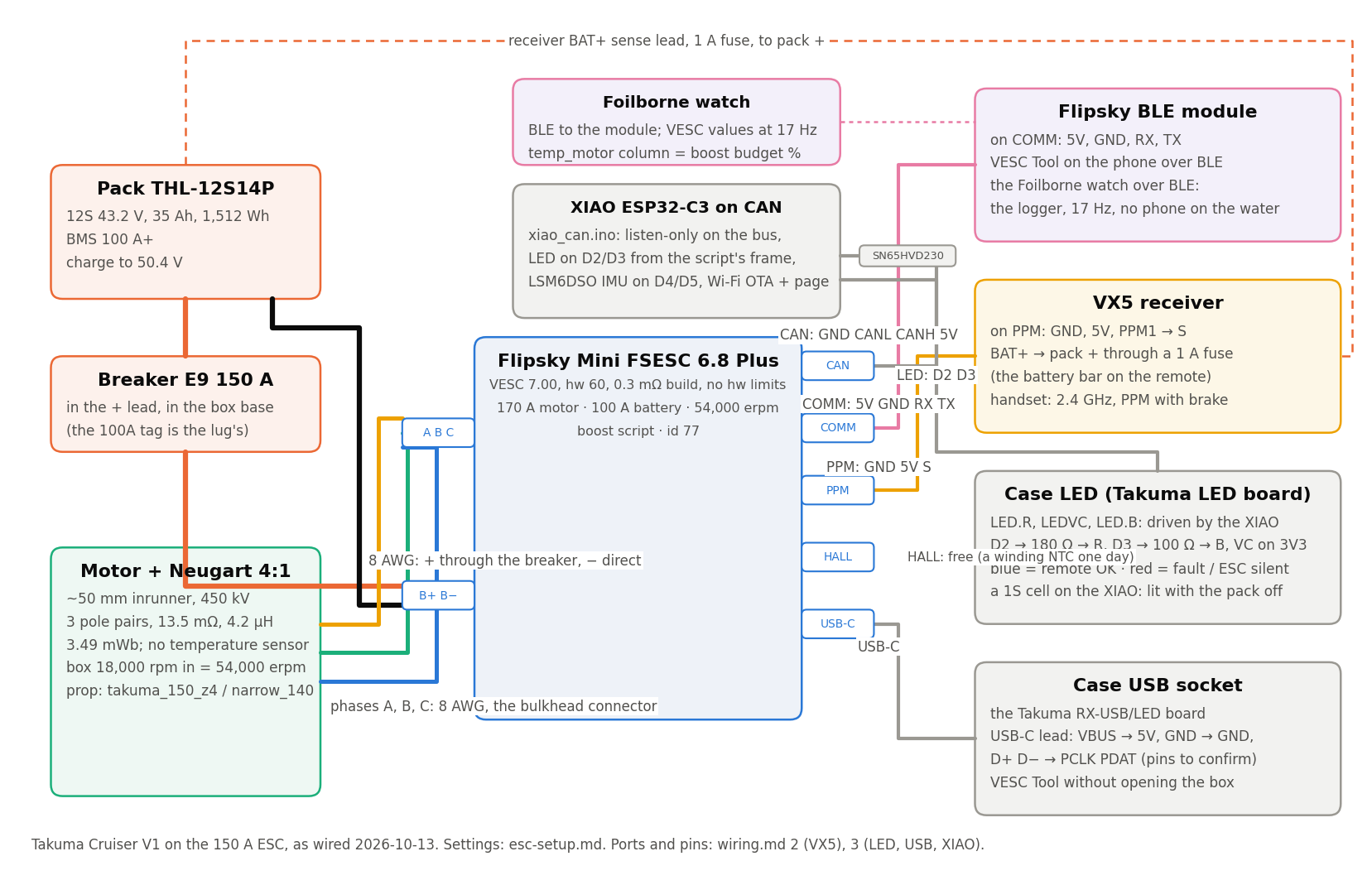
The Cruiser V1 battery is a 12S lithium-ion pack, 43.2V nominal, 35Ah and about 1.5kWh, with a 50.4V maximum charge voltage.
There are several small connections between the battery and the original Takuma electronics, so I wasn’t sure whether the BMS expected to see the factory ESC before it would allow normal discharge.
Apparently it doesn’t.
The battery powers the Flipsky normally and remains enabled under load.
That was a fairly important result because it meant I didn’t need to replace a perfectly serviceable battery simply because the original controller had failed.
The motor just worked
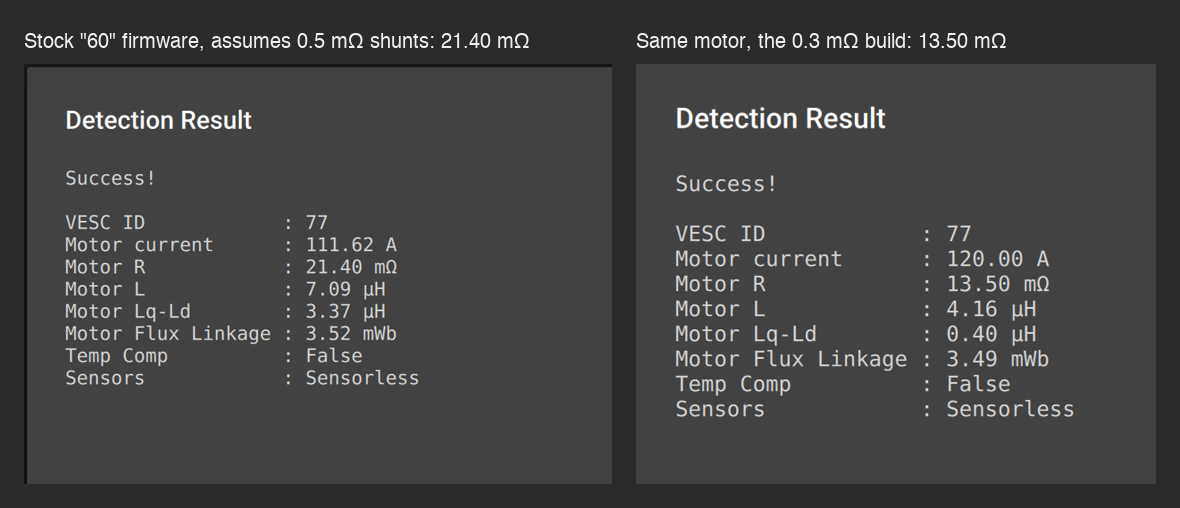
I connected the original Takuma motor to the Flipsky and ran motor detection in VESC Tool.
Detection succeeded immediately.
Then I ran the motor.
Smooth.
No stuttering.
I refitted the planetary gearbox and tried again.
Still smooth.
That pretty much answered the original question. The Takuma battery was fine, the motor was fine and the gearbox was fine.
The original ESC was the failed part.
That little US$76 controller had gone from being a diagnostic tool to being the repair.
The size difference is ridiculous
One of the more interesting things about this job is simply putting the old and new electronics next to each other.
The original Takuma power section is substantial. Large FET board, big capacitor bank, heavy phase wiring and a proper thermal arrangement built into the enclosure.
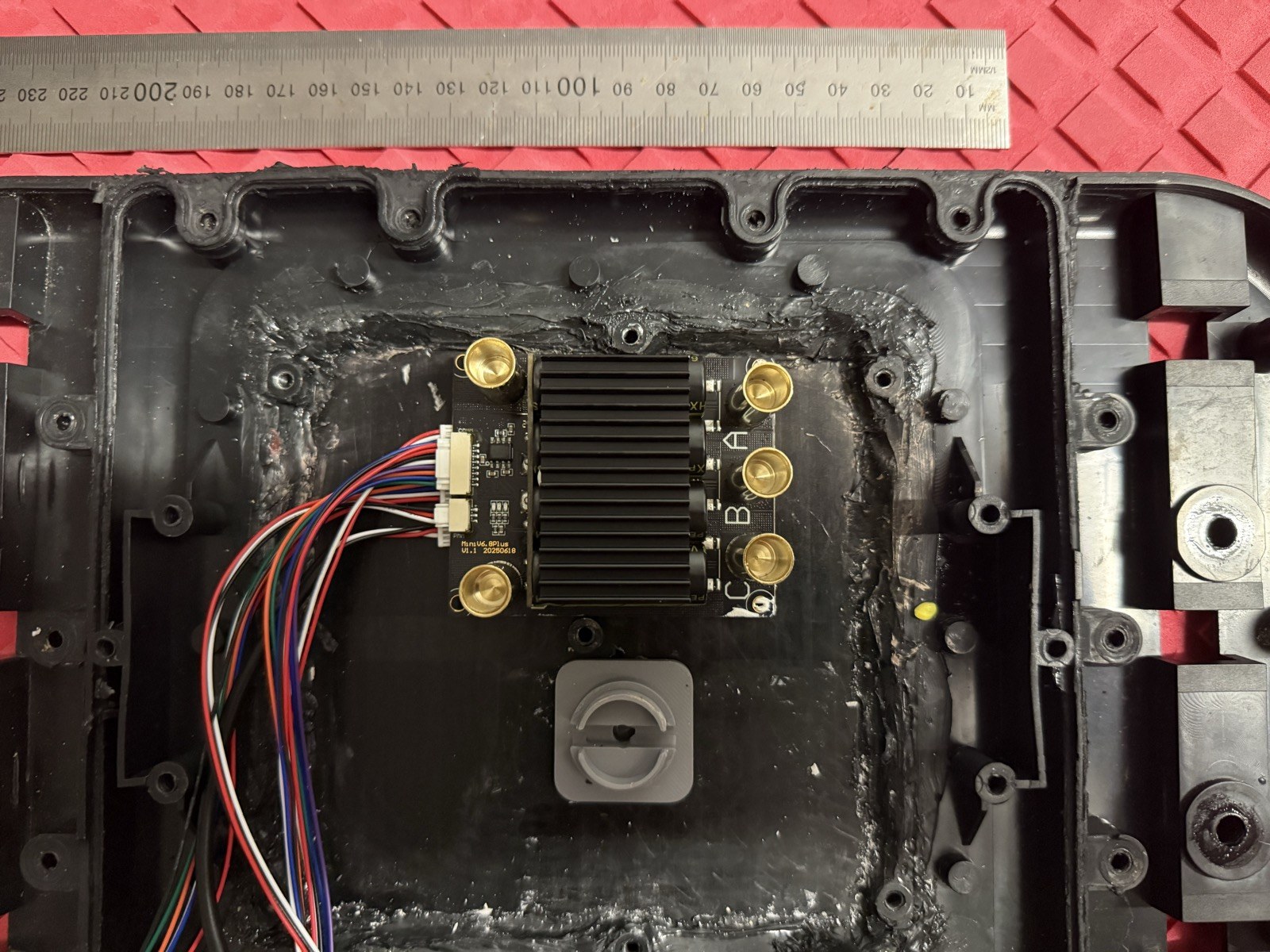
The Flipsky Mini looks tiny sitting in the same space.
That doesn’t mean Takuma did a bad job. It shows how far motor-control electronics have moved on. Modern MOSFETs, gate drivers, PCB integration and VESC firmware put a surprising amount of capability into a very small package.
And unlike the original controller, I now have sensorless FOC, adjustable current limits, live voltage and current information, temperature monitoring, fault reporting and proper logging.
That visibility has probably been one of the biggest improvements.
Keeping the good Takuma engineering
I’ve deliberately kept as much of the original Takuma hardware as possible.
The original waterproof connectors are still being used. So is the contactor, the enclosure and its thermal hardware.
The Takuma electronics enclosure is plastic, but the original ESC used a large copper-looking heat spreader inside it. That plate appears to be electrically floating and was obviously intended to take heat away from the power electronics.
The Flipsky comes with its own small finned aluminium heatsink. I originally considered removing it and coupling the FETs directly to the Takuma heat spreader.
Then I had a closer look.
The Flipsky heatsink appears to be bonded directly to the FETs with thermal adhesive. Trying to remove it seemed like a very good way of turning a working ESC into a broken one.
So I left it alone.
Instead, the Flipsky heatsink is being thermally coupled to the original Takuma heat spreader.
I designed a simple 3D-printed clamp that uses the existing Takuma mounting points to hold the controller firmly against the plate. The first PLA prototype worked surprisingly well. A couple of mounting holes need moving slightly, but mechanically the idea is sound.
The important part is that the clamp bosses sit beside the wiring and clear the components rather than putting pressure directly onto capacitors, connectors or solder joints.
Once the dimensions are final I’ll print it in something more appropriate for long-term use, probably ASA or PETG.
The thermal tests look promising
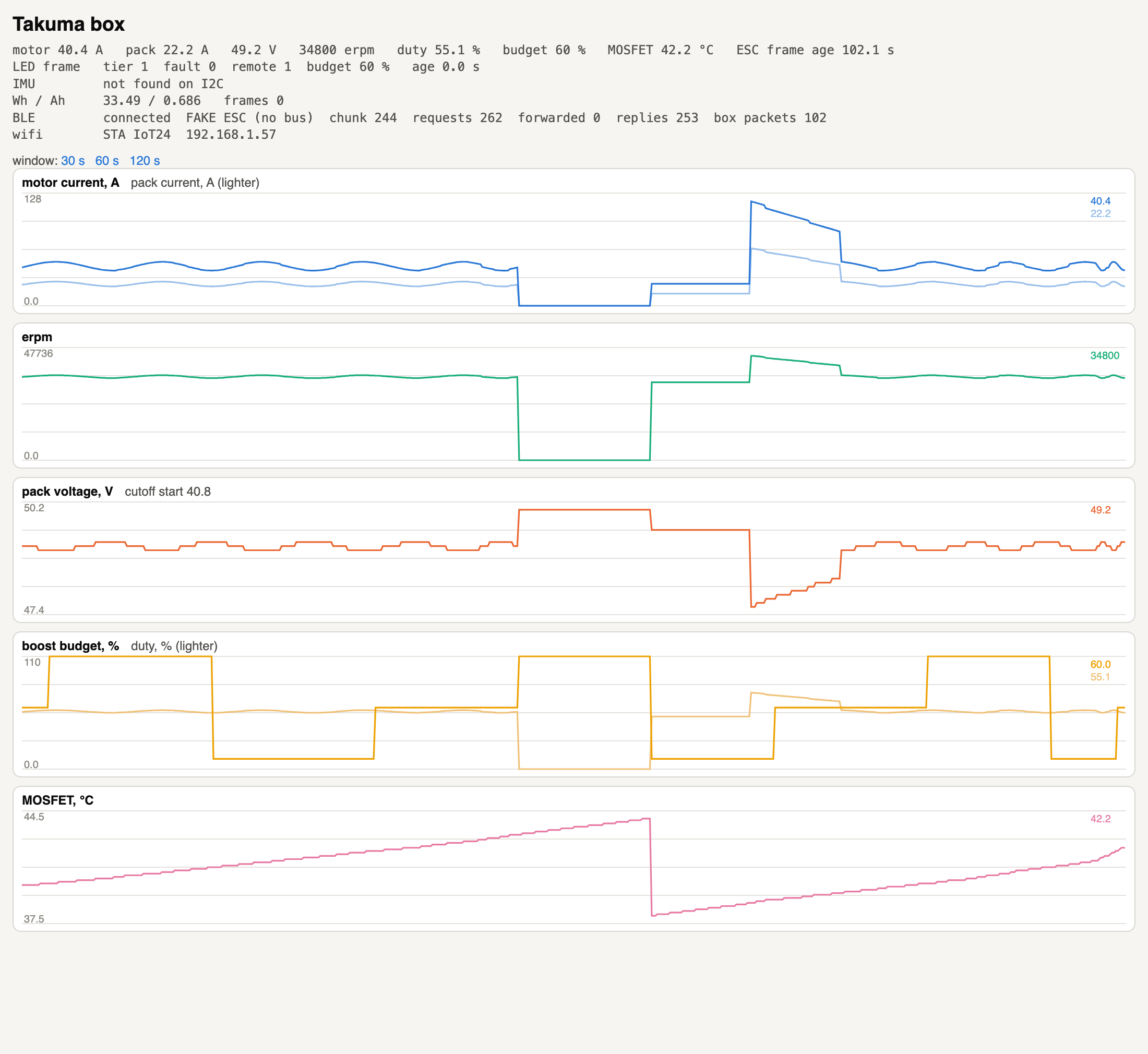
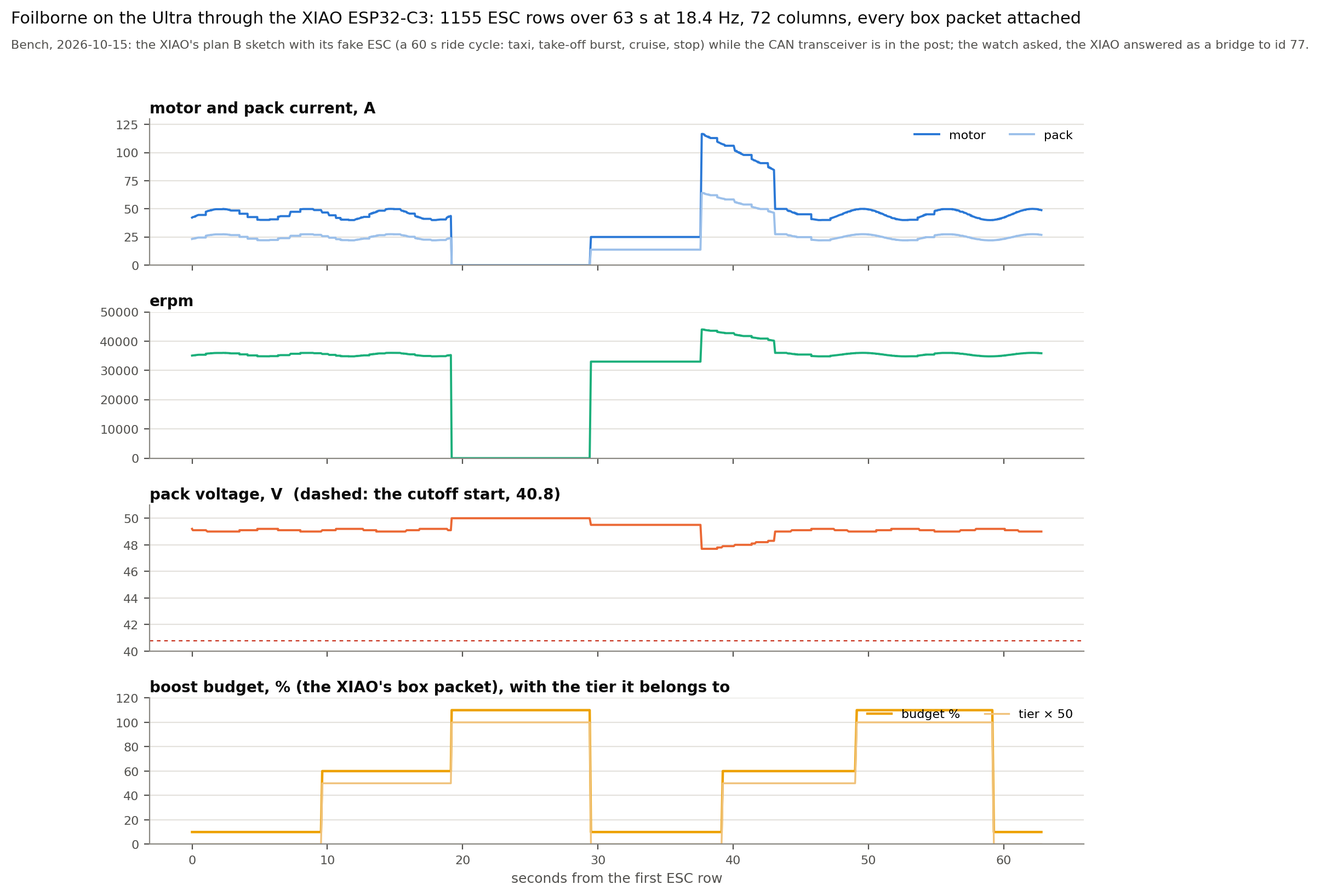
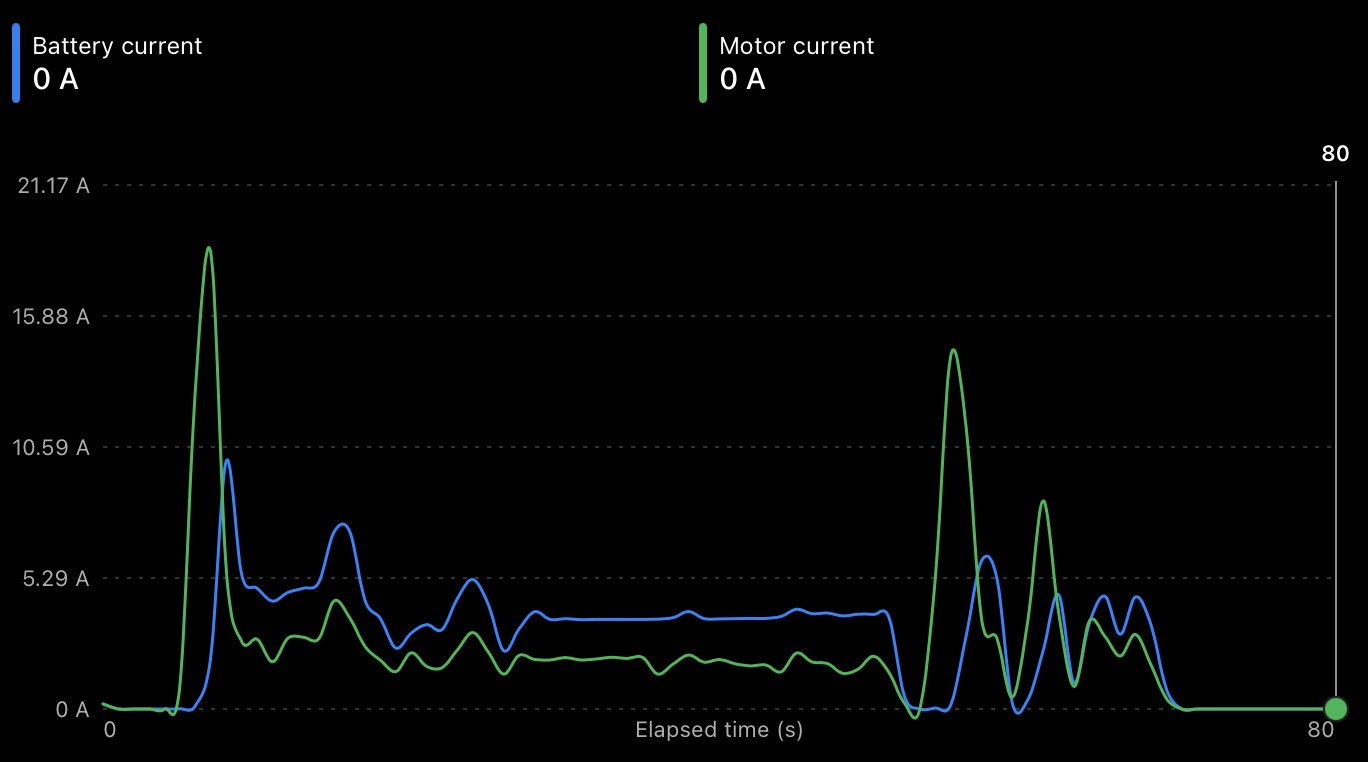
I’ve already run the controller with the new thermal arrangement while logging the ESC through VESC Tool.
In the latest bench test the MOSFET temperature peaked at only about 35°C.
More interestingly, the log also captured the cool-down after the motor stopped. The controller dropped from roughly 35°C to around 31°C in about half a minute.
That at least shows that heat is moving away from the controller rather than simply being trapped in the little Flipsky heatsink.
The proper test will obviously be with the enclosure closed and the foil in the water, but so far there’s nothing suggesting the thermal arrangement is going to be a problem.
VX3 for throttle, Bluetooth for everything else
The VX3 receiver can communicate with a VESC over UART, and I tried that.
The problem is that the BLE module also wants the UART connection.
During development, Bluetooth is much more useful to me.
So the VX3 is connected using PPM and the BLE module gets UART.
The remote still does the important job — throttle.
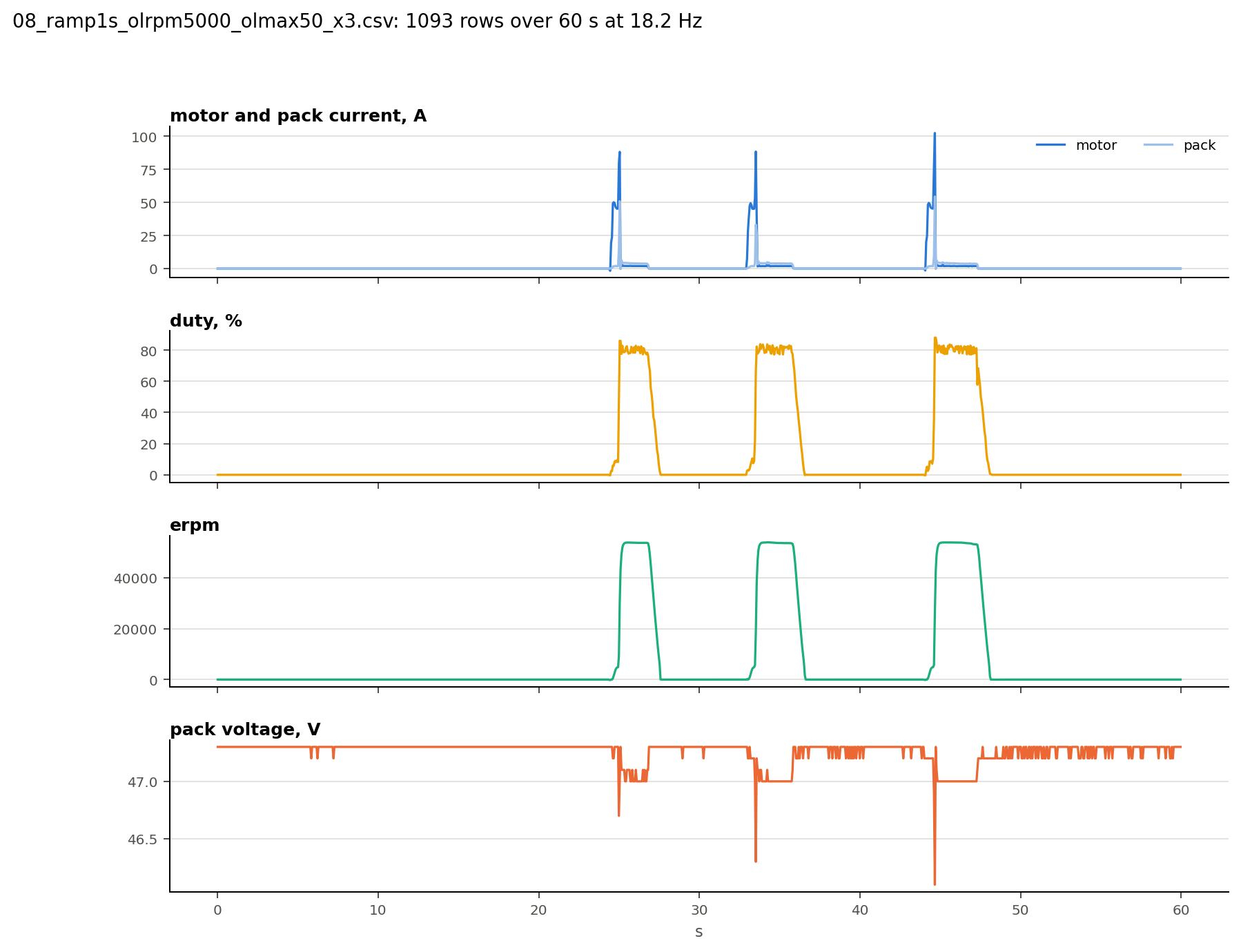
The phone gives me the interesting stuff: voltage, battery current, motor current, duty cycle, eRPM, temperatures, faults and logging.
That also lets me work on the throttle response properly. I’m currently adjusting the PPM response and throttle curve so there is more usable trigger movement in the higher-power part of the range rather than wasting lots of travel at very low throttle.
That’s tuning rather than troubleshooting, which is a nice place to finally be.
The Bluetooth module may not even be permanent
One of the useful things about VESC is that the configuration can be exported.
Once I’ve finished the wet testing and have a setup I’m happy with for the original Takuma motor, gearbox, battery and the Flipsky Mini, I can save that profile.
That means another Cruiser V1 owner could potentially load a known working configuration into VESC Tool rather than starting from scratch.
At that point Bluetooth becomes optional. You could install the configuration, verify everything behaves properly and then remove the BLE module if you don’t want it permanently fitted…
What actually needed replacing?
Very little.
The board is still a Takuma Cruiser V1.
It still has its original battery, motor, planetary gearbox, mast, foil, connectors, contactor, enclosure and thermal hardware.
The drowned remote was replaced by the VX3 and the failed ESC was replaced by the Flipsky.
That’s it.
The aim was never to reinvent it.
I just wanted to fix it.
Now I’m running out of excuses not to put it in the water.
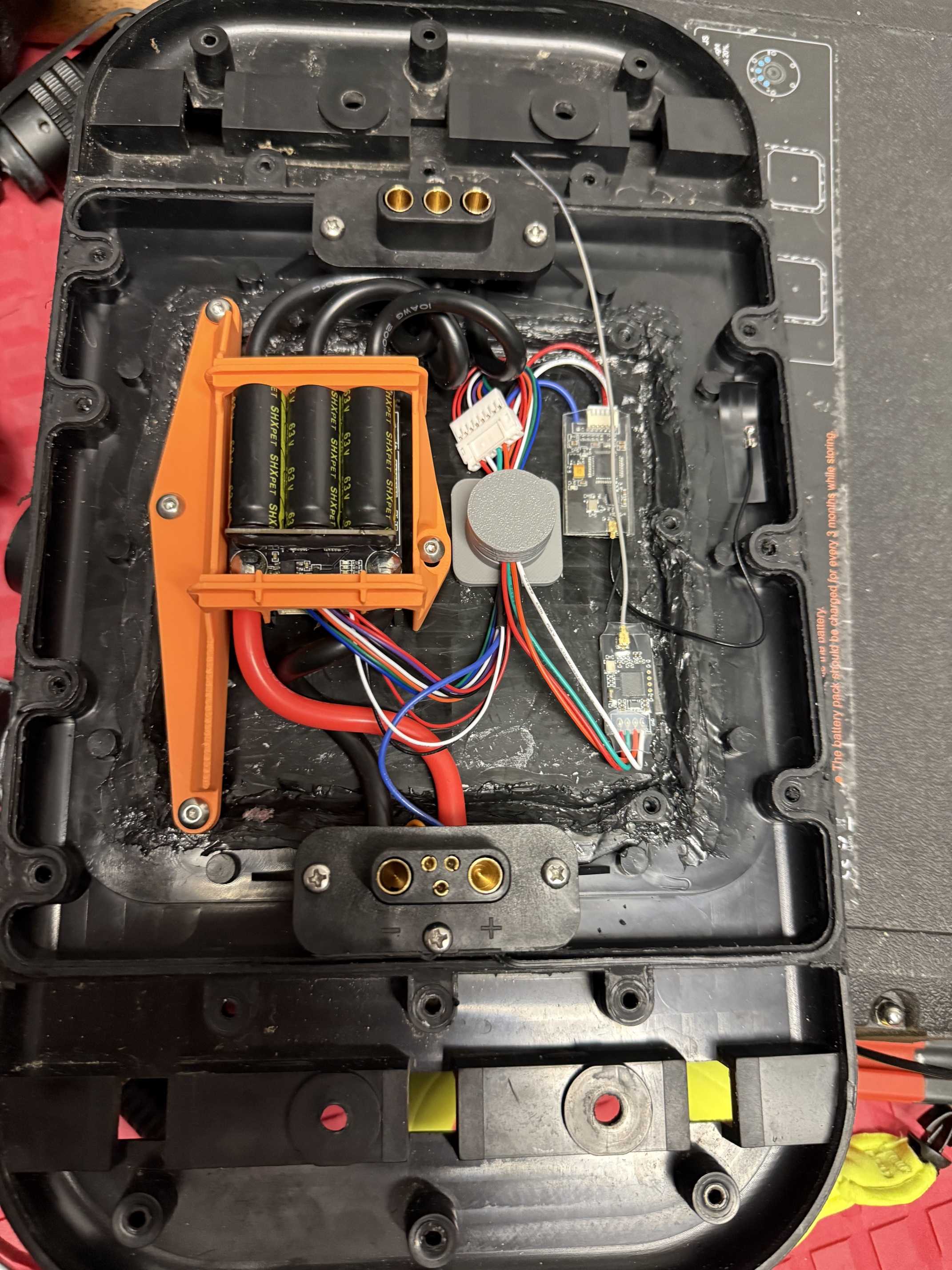
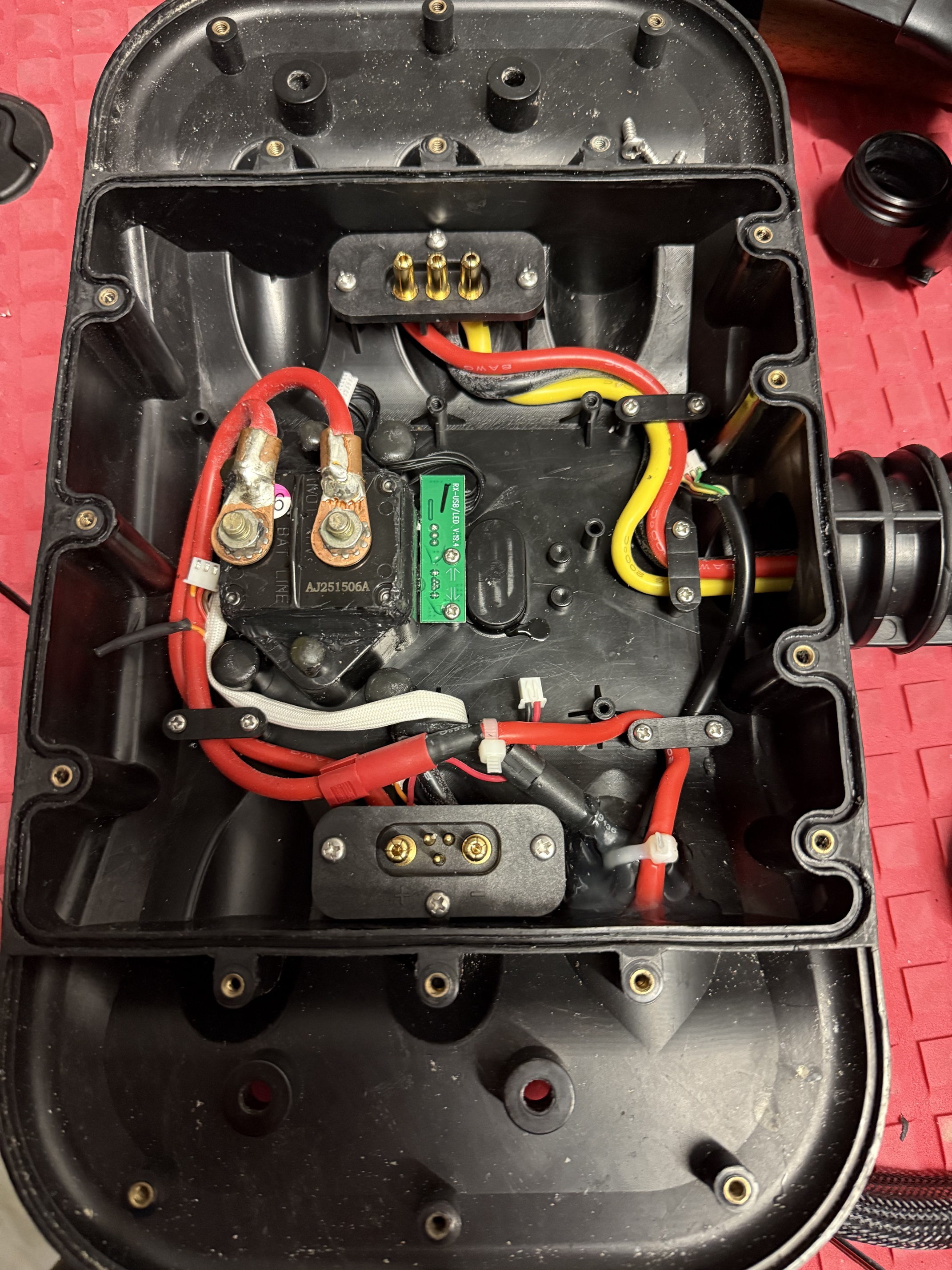
Photo caption: The Flipsky Mini FSESC installed in the original Takuma Cruiser V1 electronics enclosure. The size difference from the original power electronics is dramatic, while the original battery, motor, gearbox, connectors and thermal hardware all remain in service.