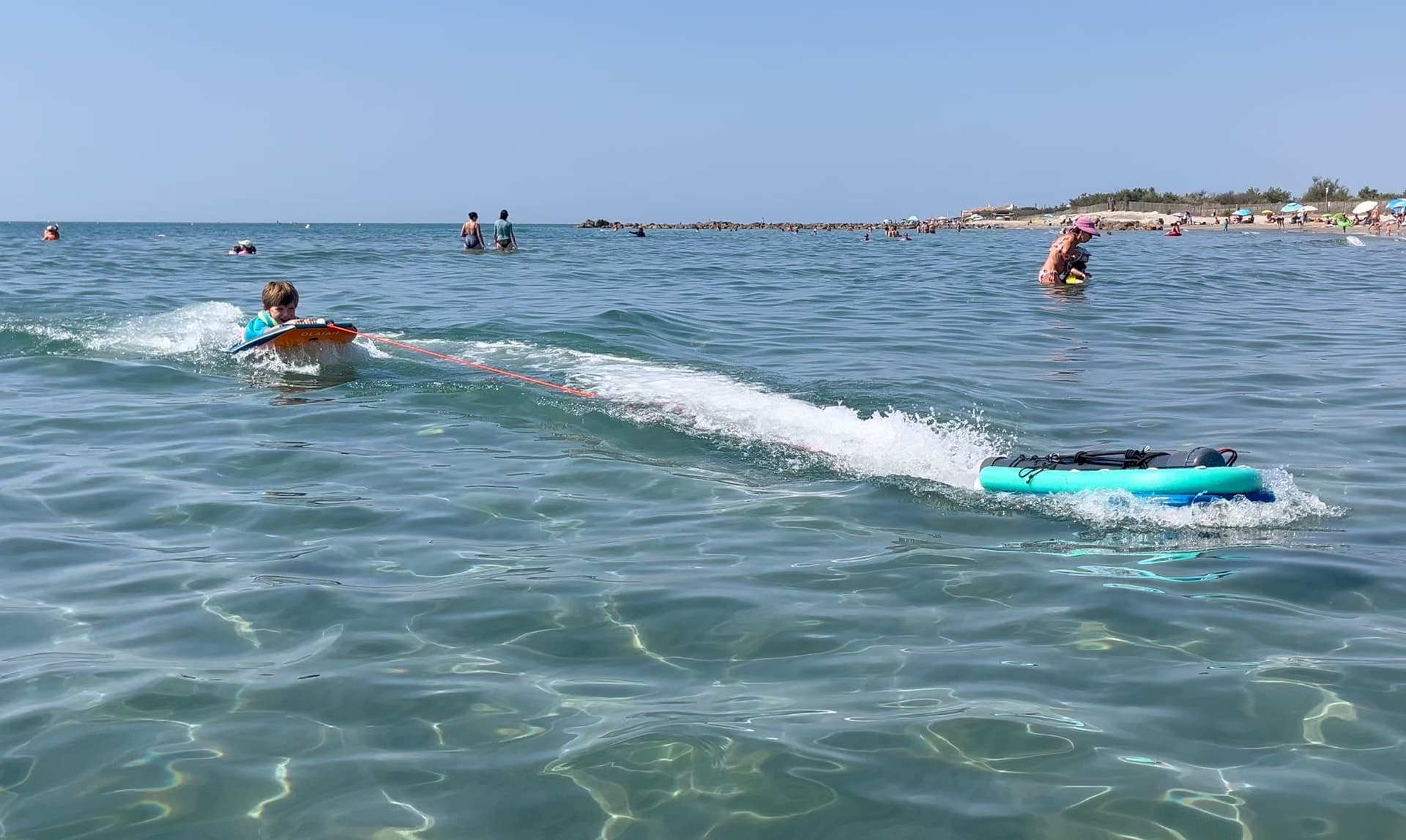
Still a work in progress, first real run should be next week, but I wanted to start the thread now. Here’s the story so far.
Where it started
A year ago I rode a waterjet ferry (62km/h !) and spent the whole crossing staring at the water blasting out the back. That did it: I wanted to build my own turbine, fully 3D-printed. This is where it got me.
What it is
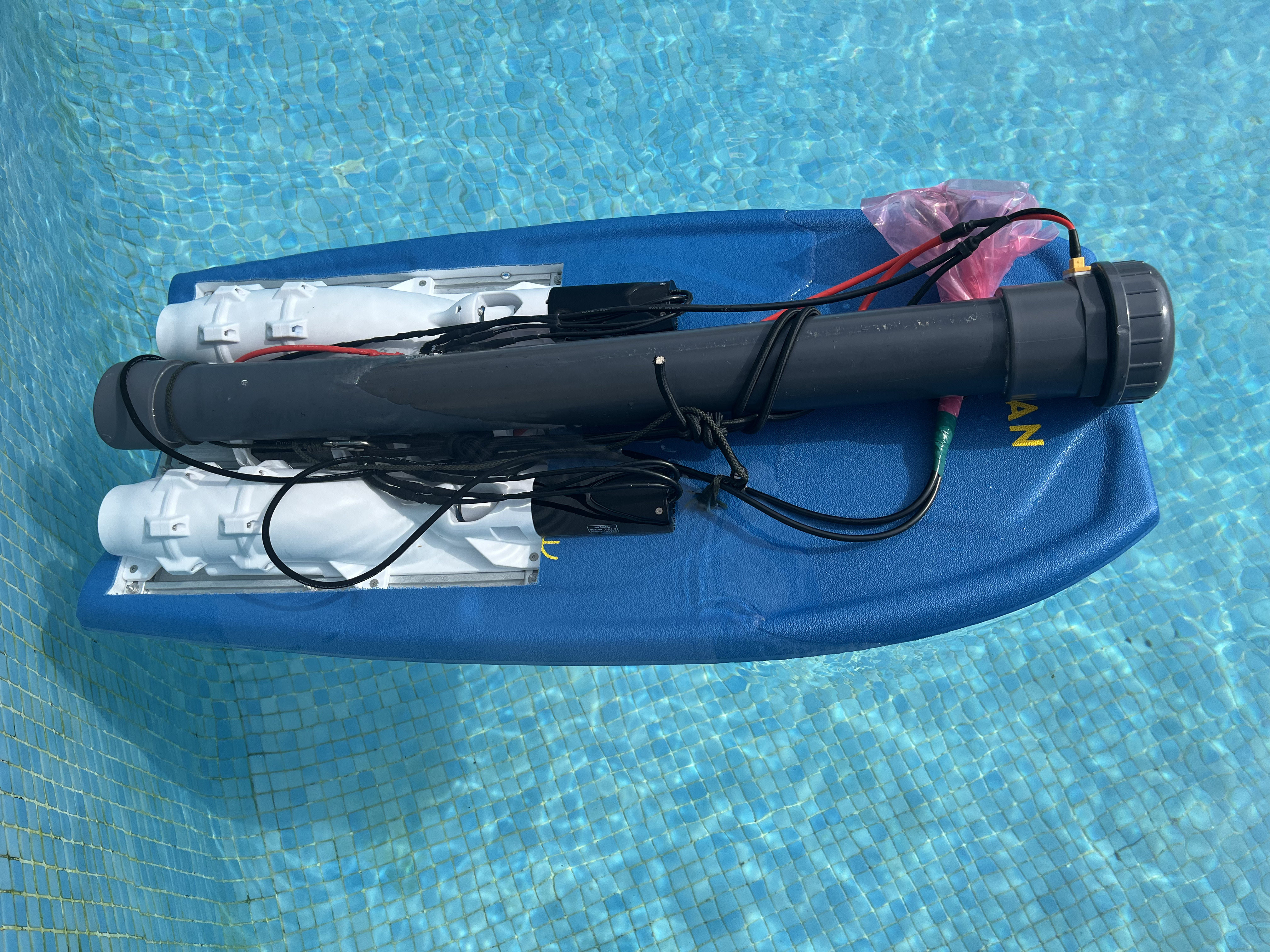
A tow boogie, two 80 mm waterjets, mixed-flow pump turbines designed in CAD, checked in CFD and printed. DIY battery + PCBs. It’s mostly an engineering project I do for the fun of it.

Turbines and CFD
Two 80 mm mixed-flow pumps, designed in CAD, run in OpenFOAM, iterating on the rotor/stator geometry.
Design point: 4 m/s inflow, 2 N·m on the shaft, ~4500 rpm gives about 100 N (10 kg) per turbine, so ~200 N (20 kg) for the pair. That thrust number is what sized the whole drivetrain.
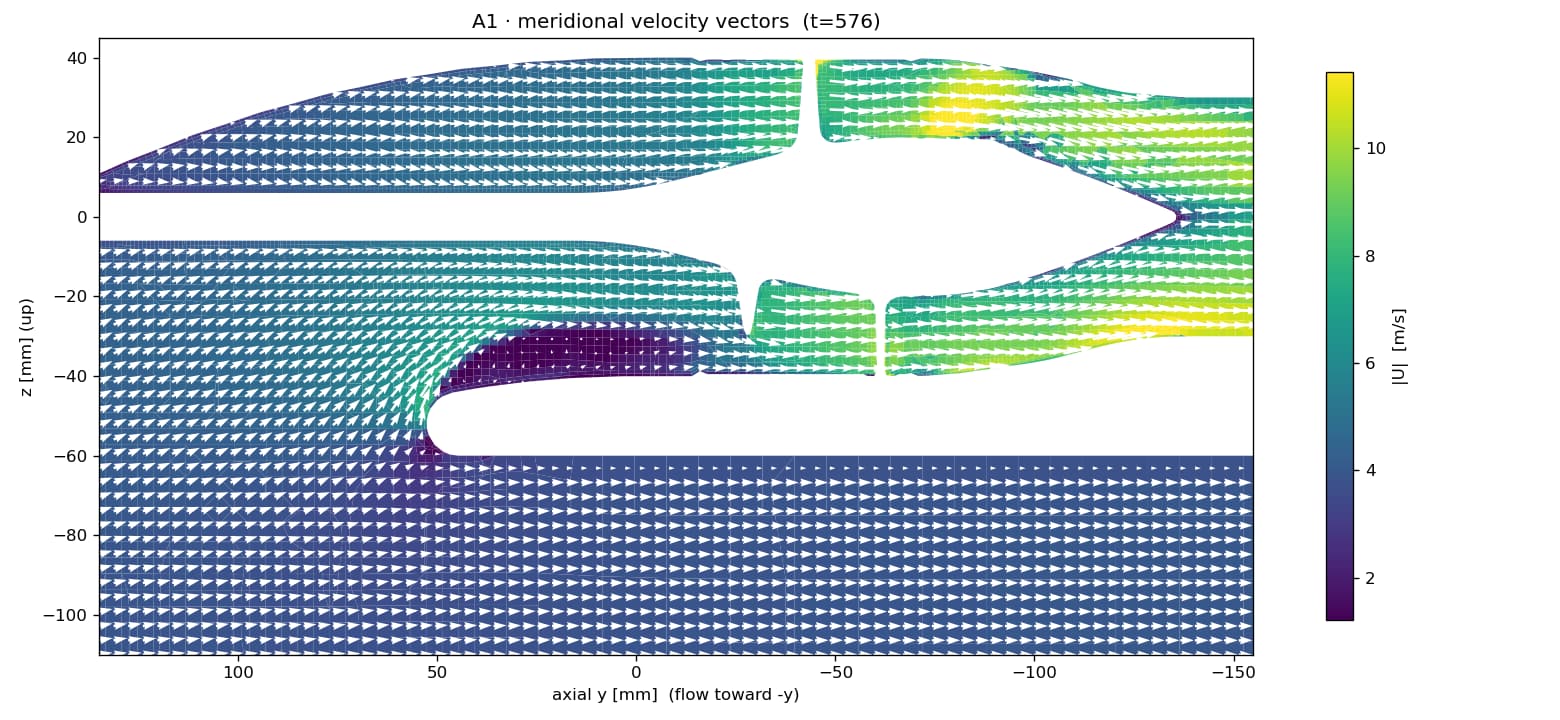
The rotor adds swirl, the stator removes it and convert it back to pressure, the nozzle convert that pressure into jet speed (thrust)
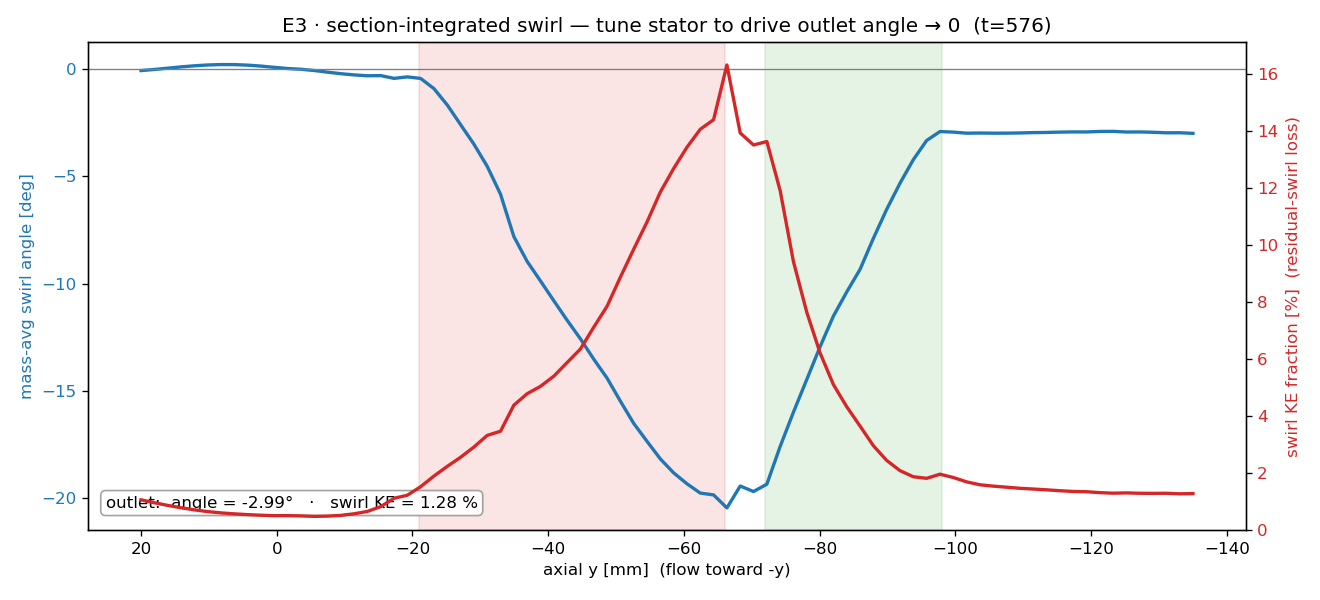
I learnt so much about waterjets by designing, simulating and iterating!
Motor and ESC
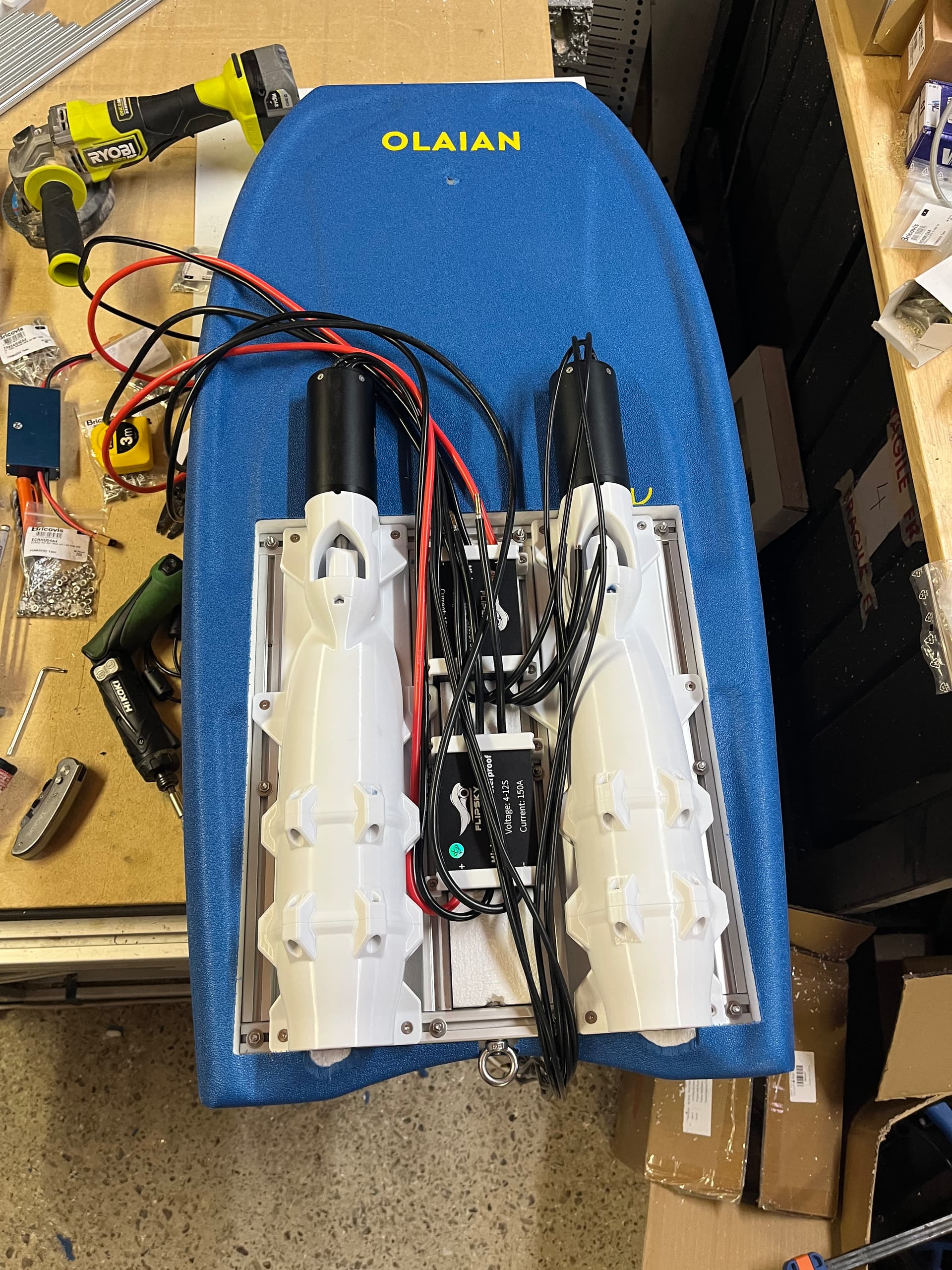
- Flipsky 56115 (continuous 2Nm) / 150KV
- Mini FSESC6.8 Plus
Battery
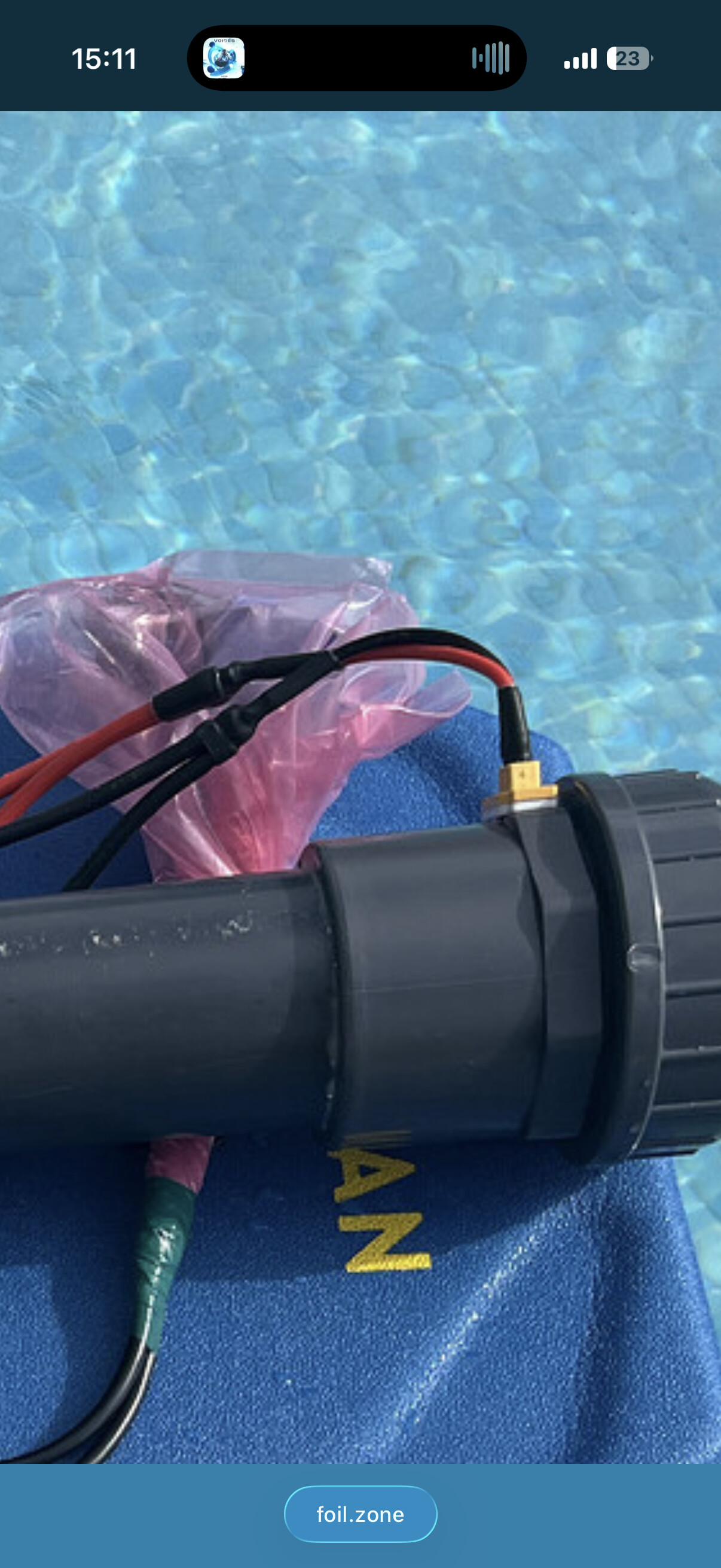
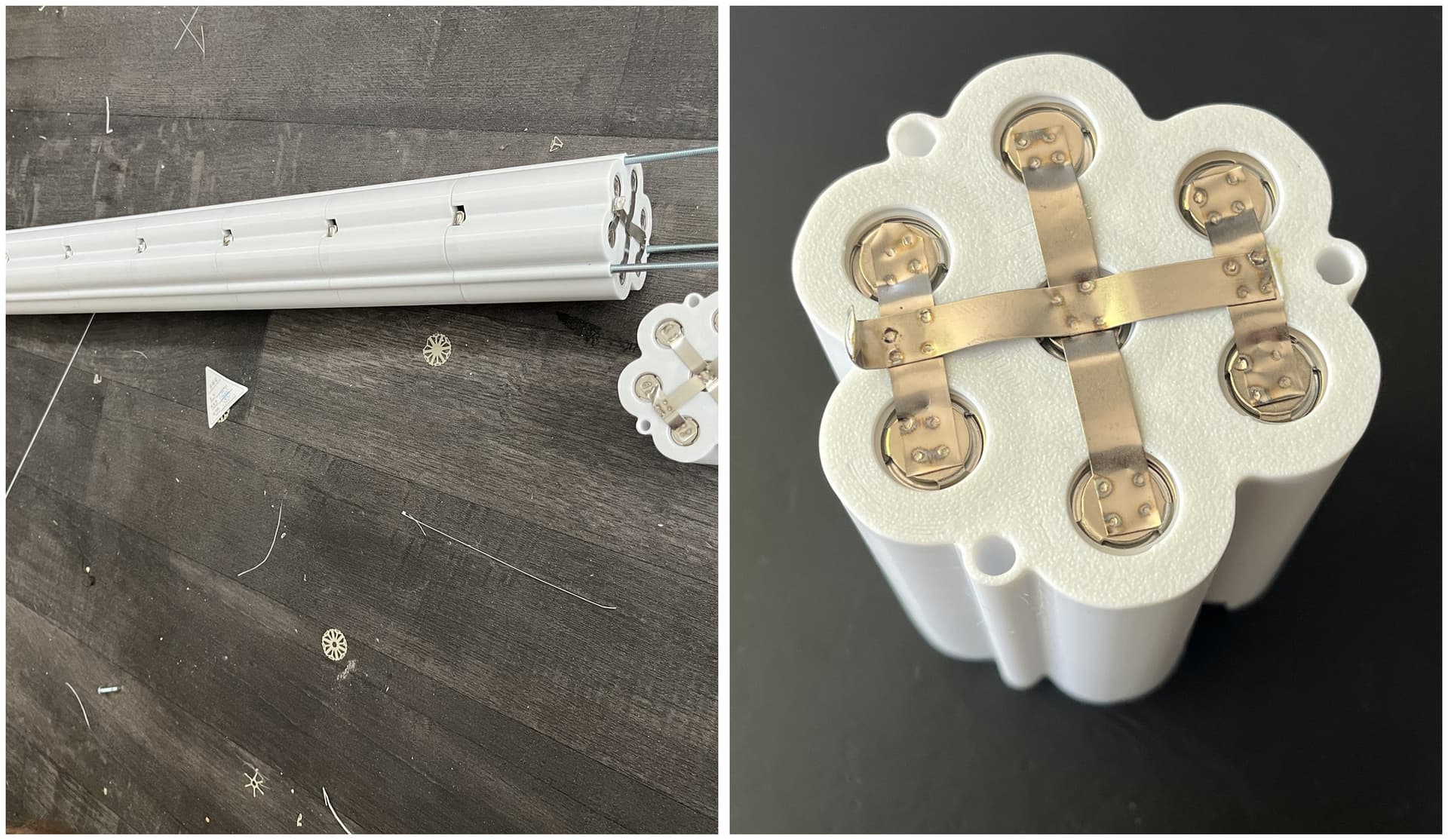
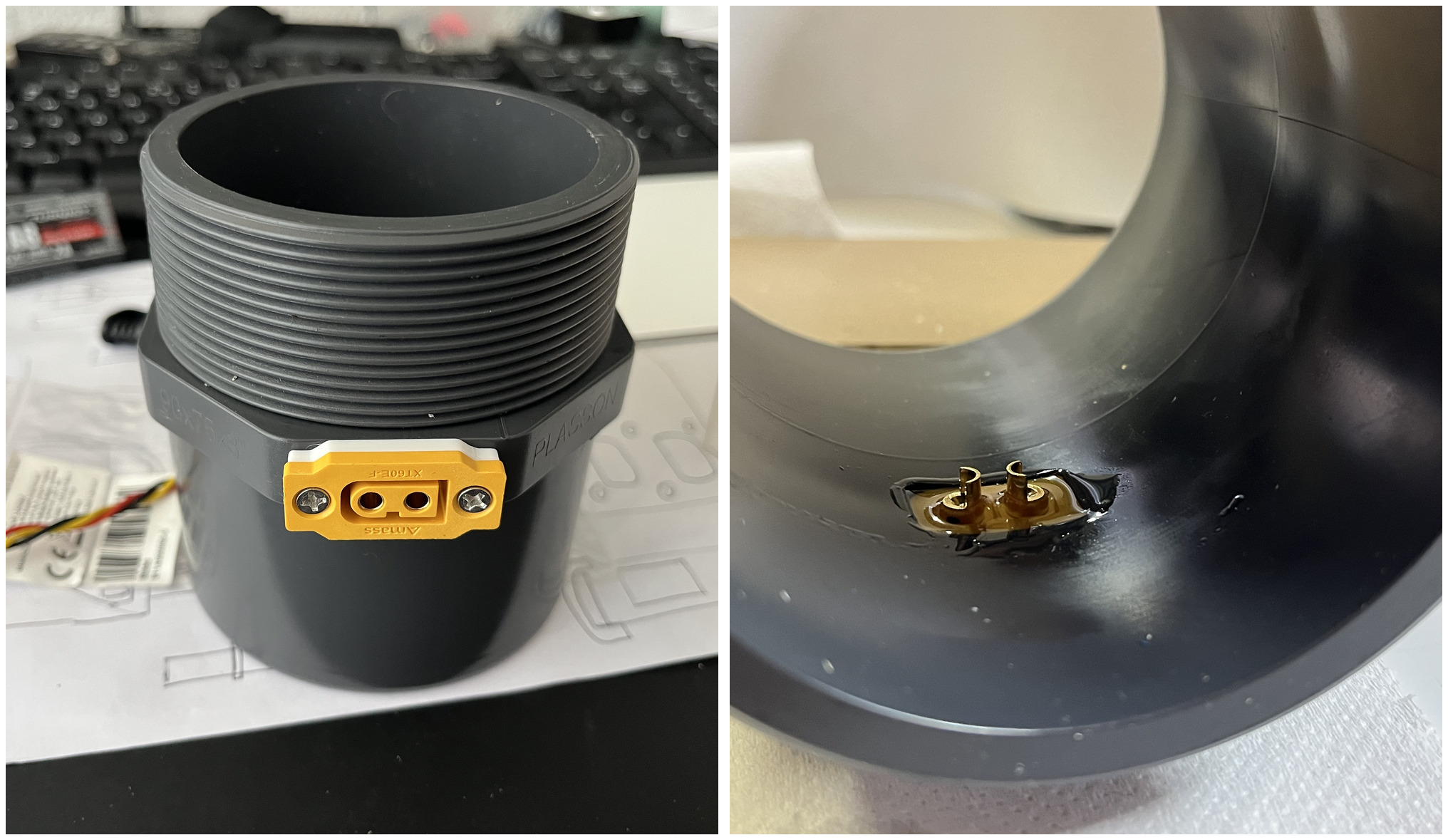
Home-made pack sized to slide into a 75 mm PVC tube:
- 10S7P, plain NMC Li-ion, spot-welded nickel strip
- 3D-printed holders, flower layout (1 centre cell plus 6 around)
- threaded rods clamp the stack into a rigid cylinder
Hull
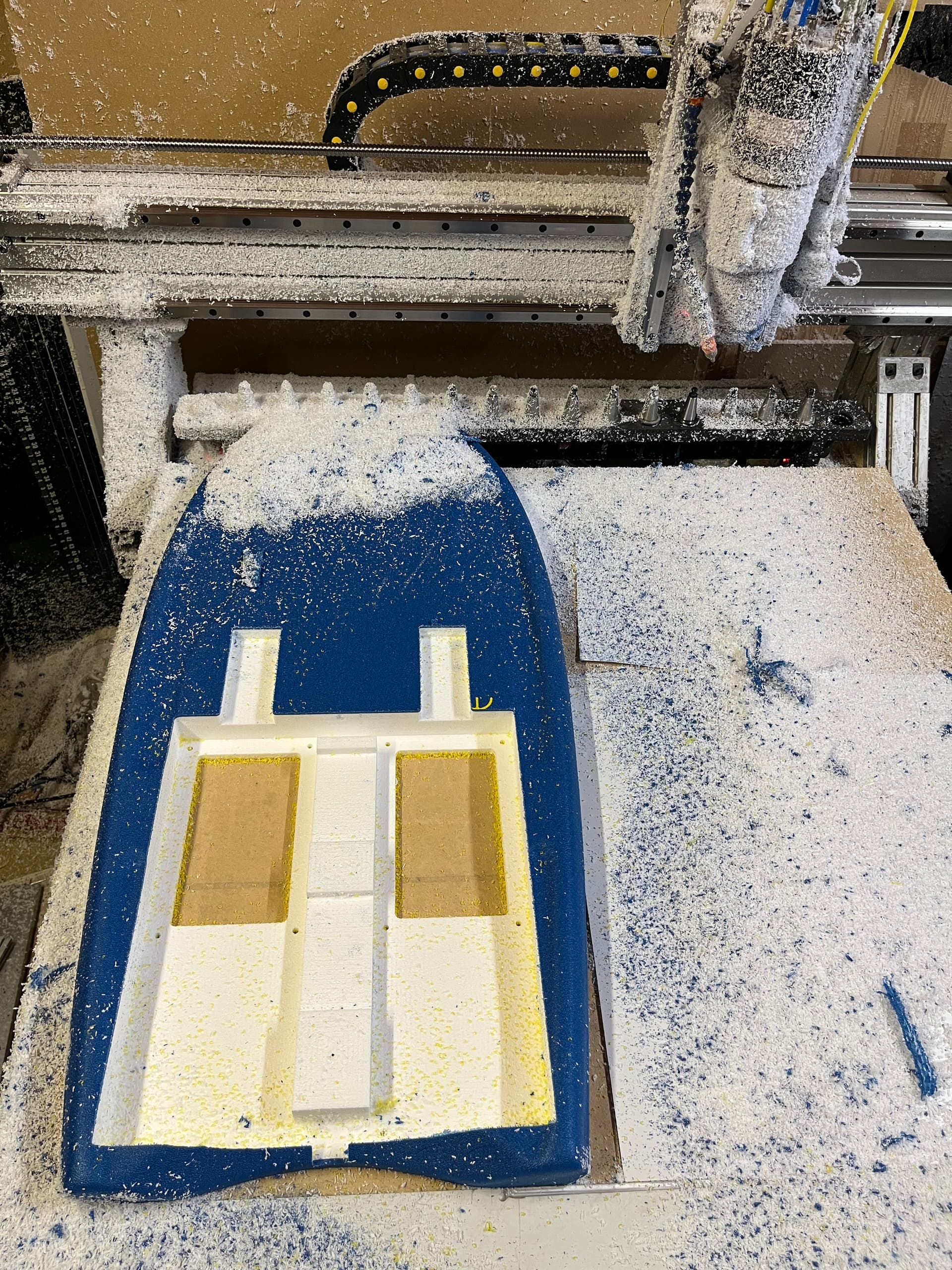
A Decathlon Olaian kid bodyboard. I CNC-milled the foam to cut the bay for the tube, motors and electronics, then dropped in an aluminium T-slot cradle for the two jets.
Electronics
I made 2 PCBs:
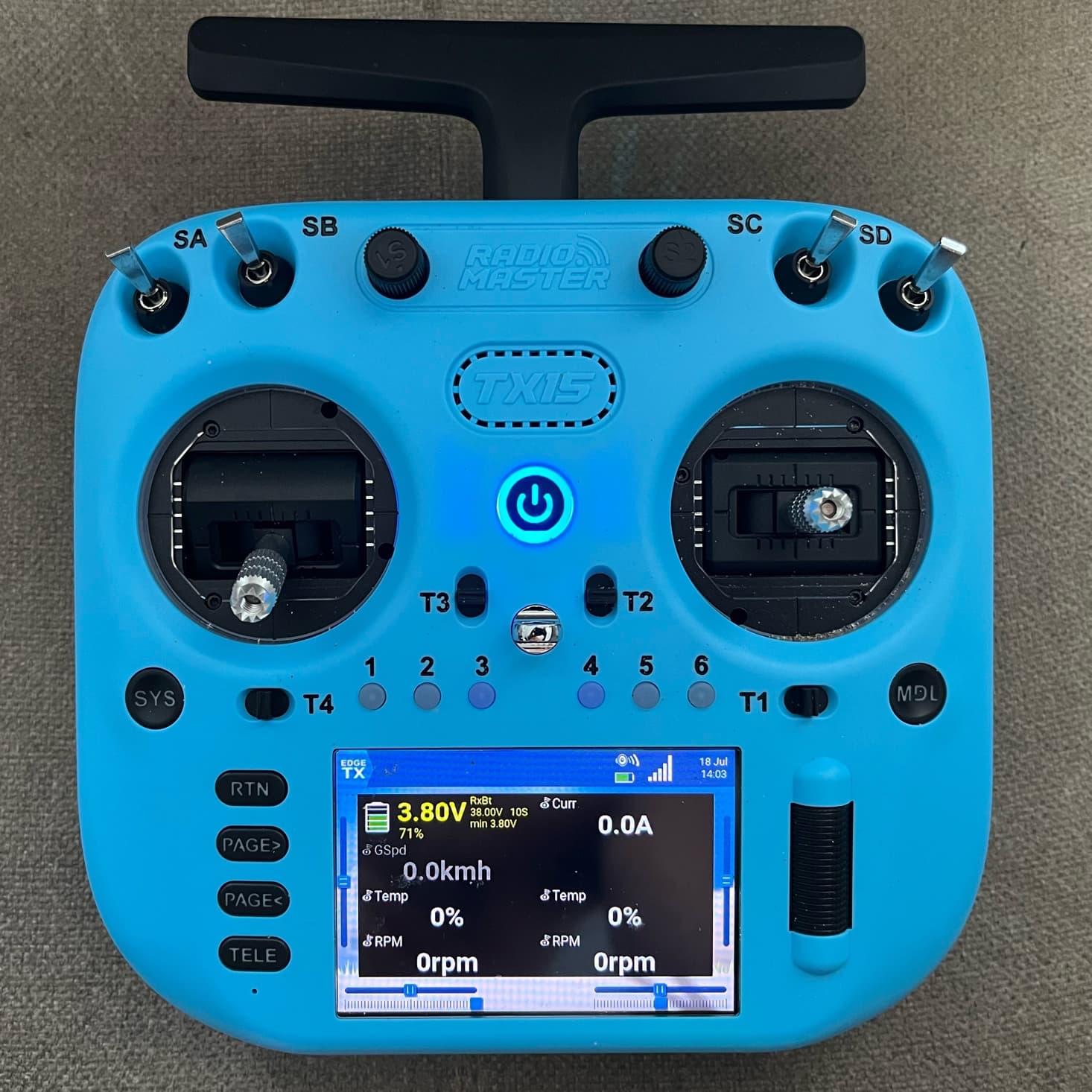
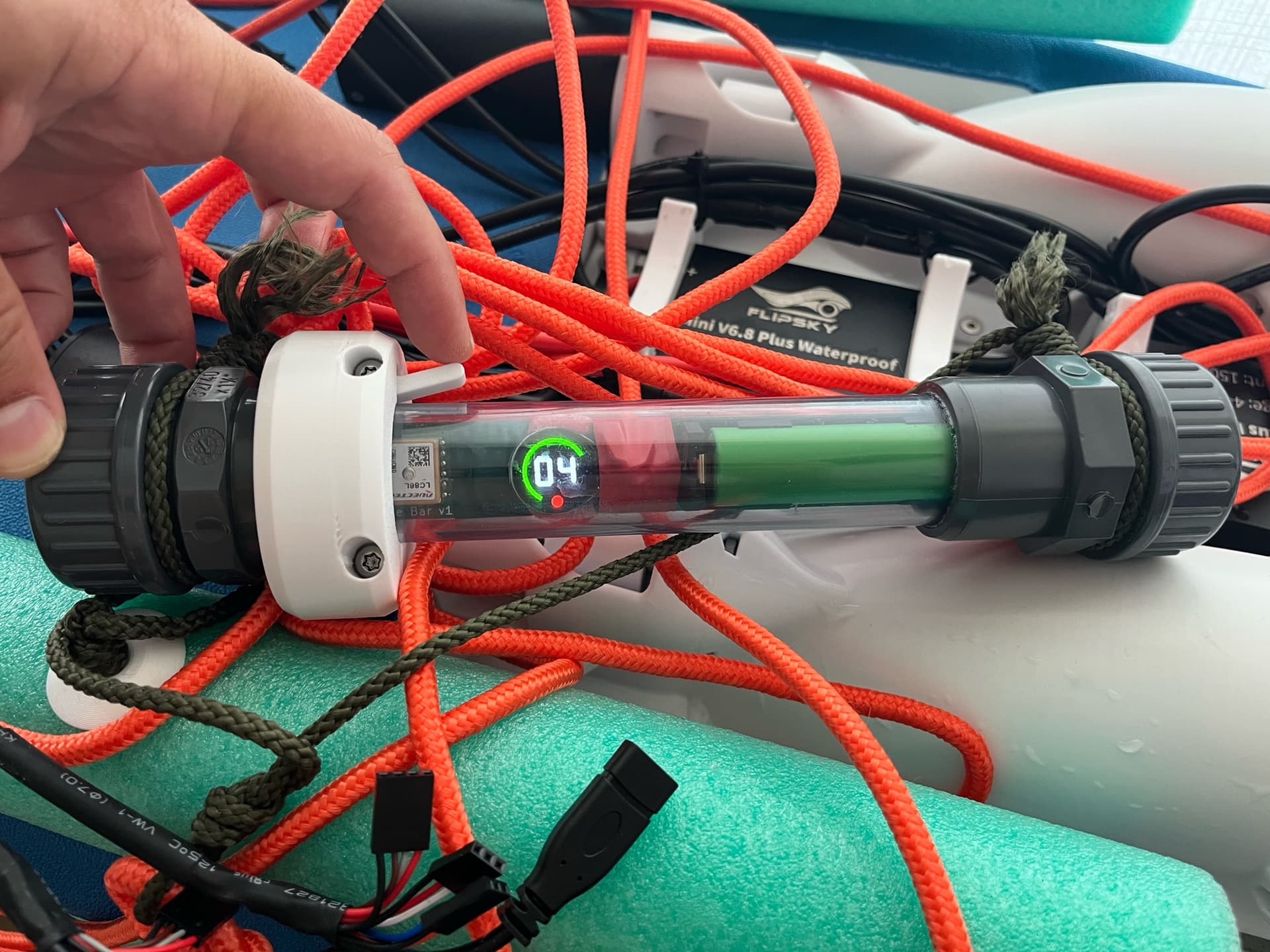
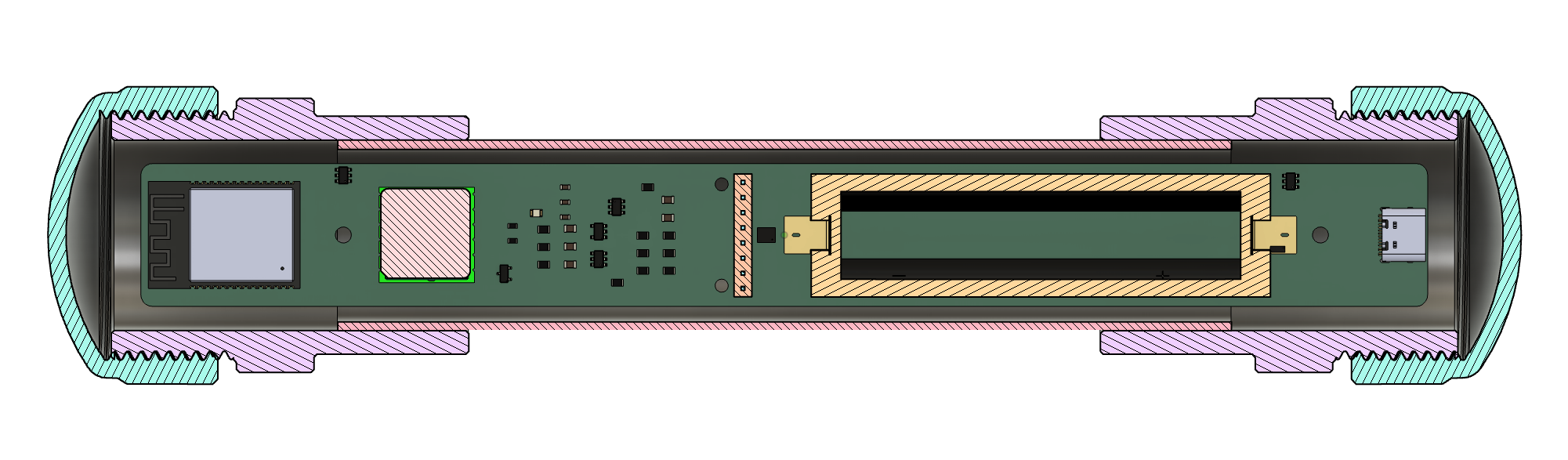
- a PCB inside the tow handle (transparent PVC tube) at the end of the rope, with two 3D magnetic sensors and an accel/gyro
- throttle comes from a moving magnet + 3D magnetic sensor
- second magnetic sensor for a dead man security
- steering come from a gyro AHRS. The bar tilt drives the yaw rate of the board.
- Small TFT screen to displays some info
- 18650 cell + USB-C charging
- a PCB on the board, UART connection to the 2 VESC, ESPNOW protocol between the 2 PCBs.
Later, I want a small wrist unit, GPS-watch style, so it can come back to me on its own by GPS.
First trials
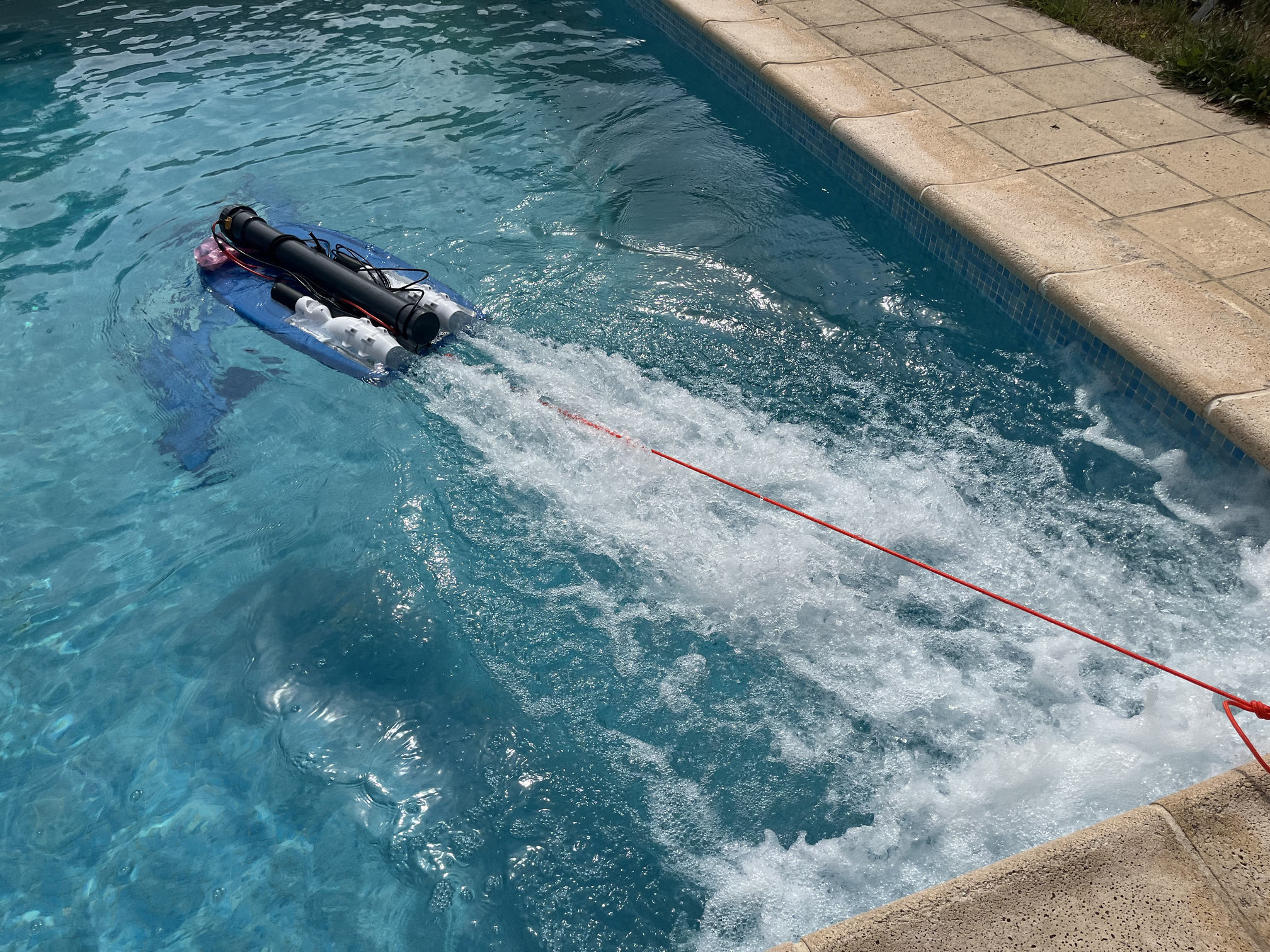
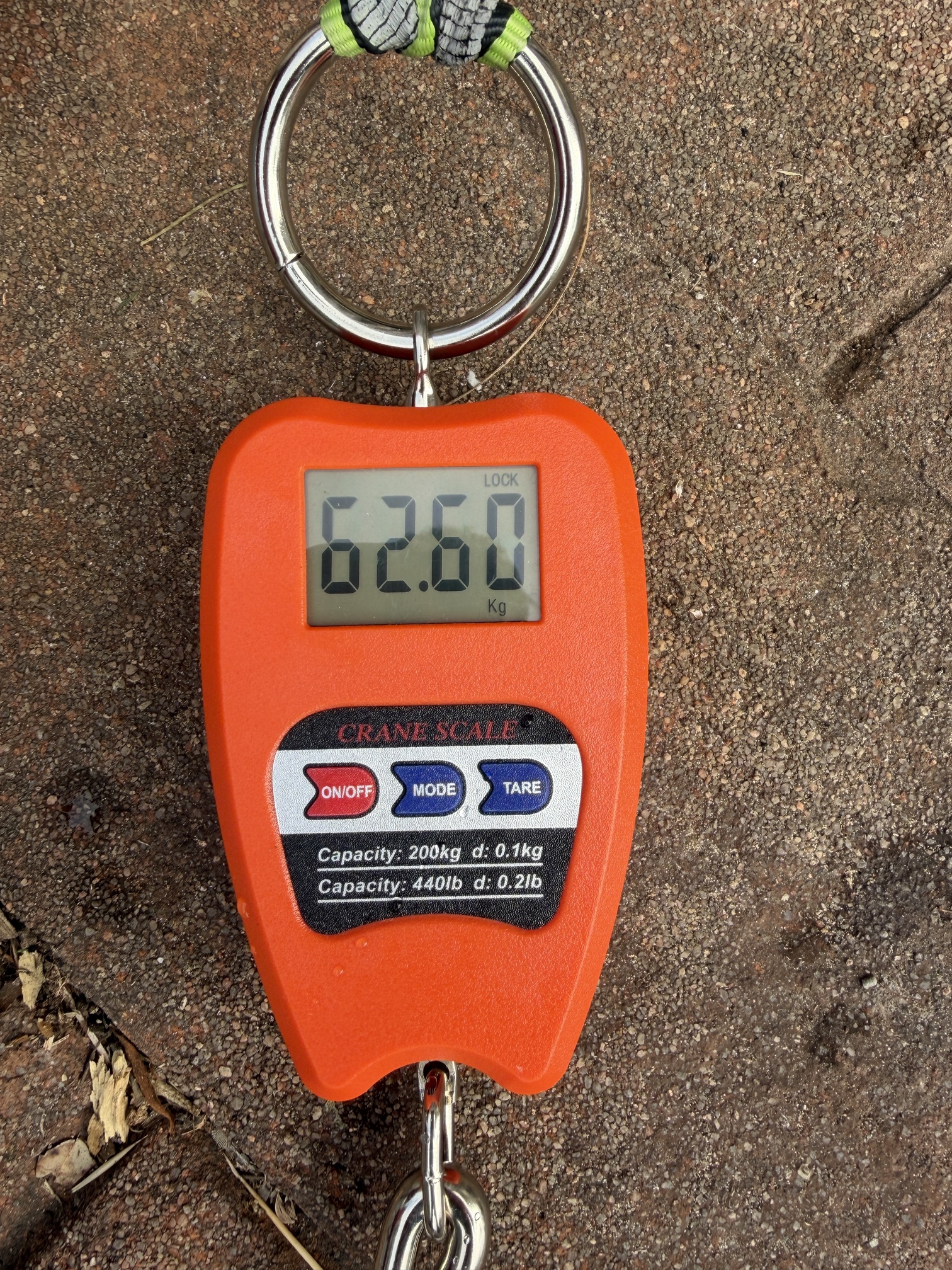
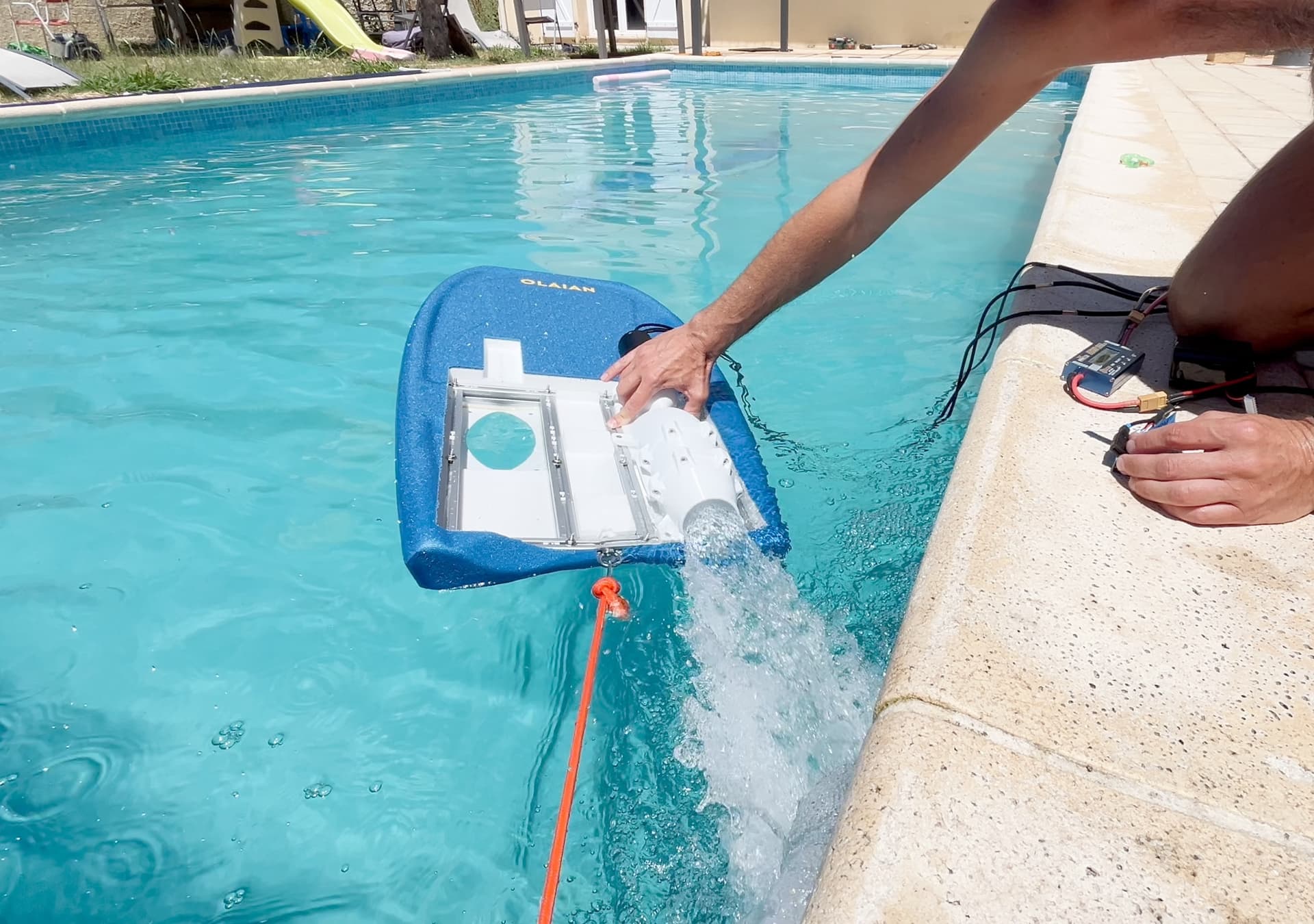
First powered test in the pool, one turbine, tied down so I could measure it: about 300 W in for roughly 6 kg of thrust, and the jet out the back is very satisfying. Good first data point, it lines up with the CFD.
Next steps
Finish the wiring and sealing, first real run next week (I’m waiting for the PCBs), then find out whether a finless board steered by differential thrust is actually rideable off-axis (I’m pretty sure it is not).