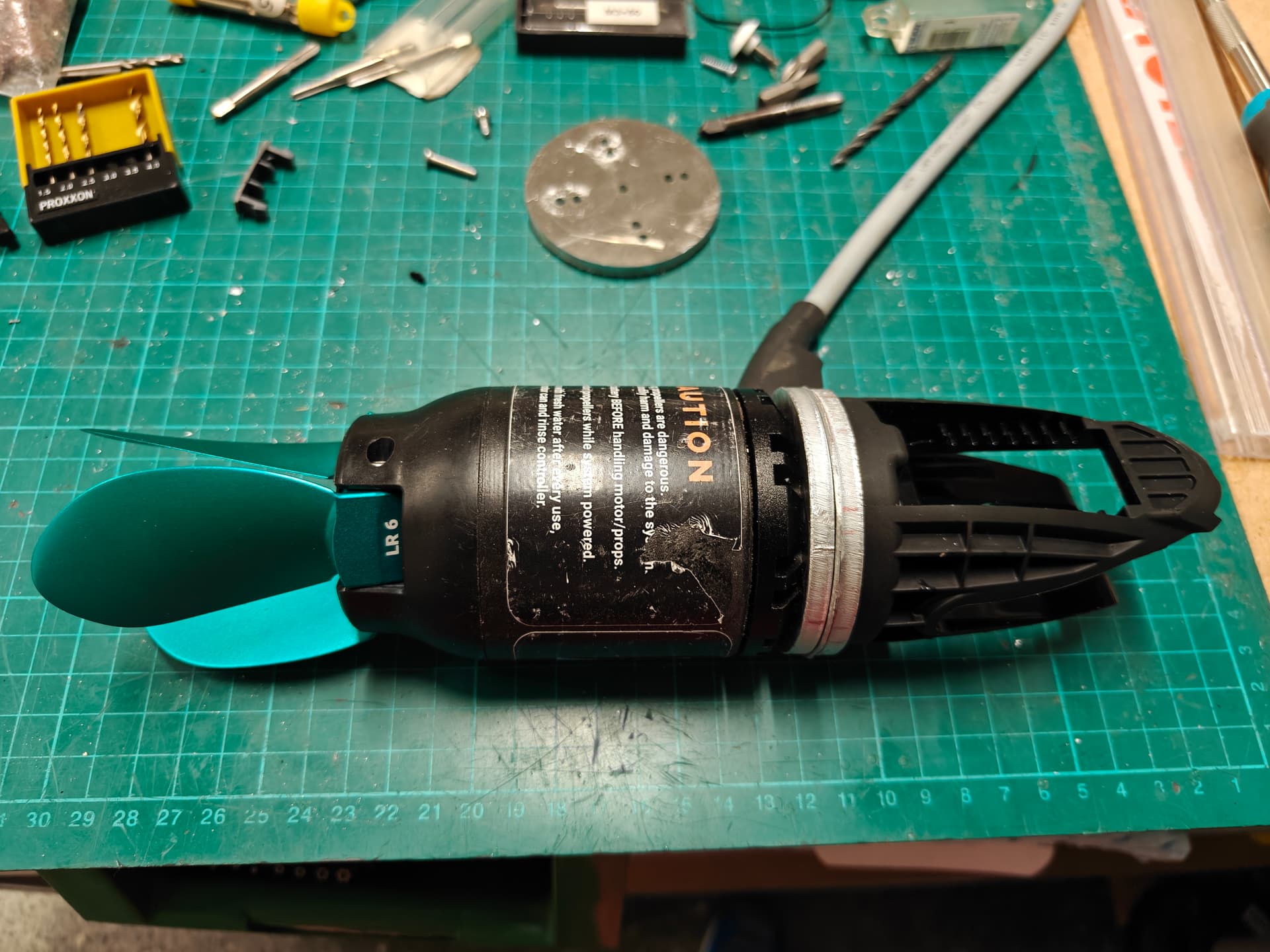
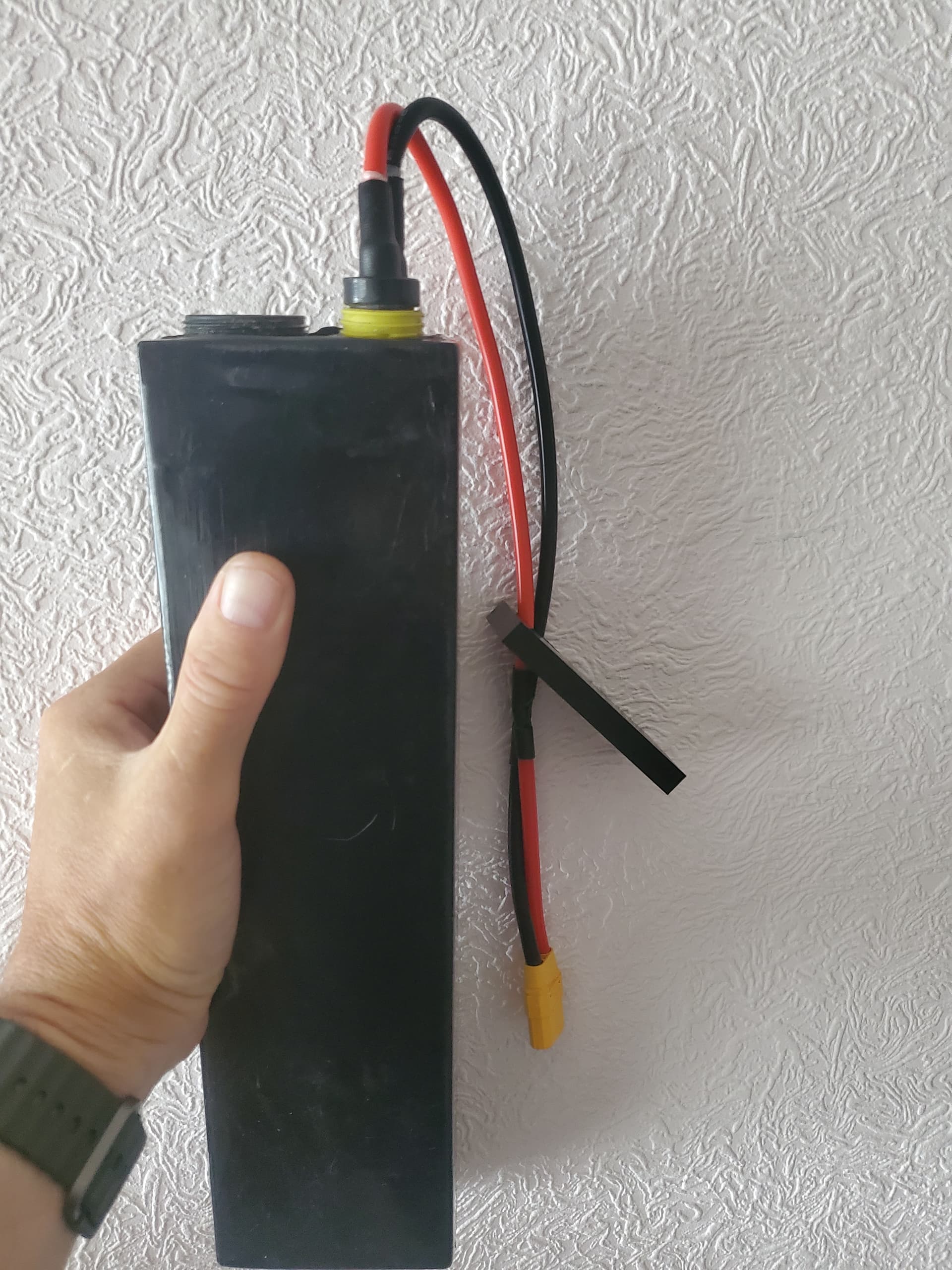
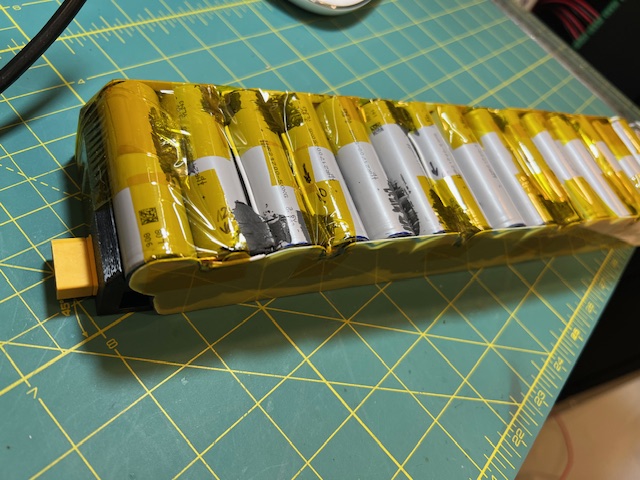
Hi, I’ve finished making the first prototype of the adapter. I’m going to create a new thread and share the first pictures of the prototype, all the technical information, and the new drawings of the parts.
I’ll make the “good,” elegant version next week; I don’t have the time right now.
i toyed with that idea of just a plate with the different bolt hole patterns on each side, its one way to do it, but i have a 3d printer and i’m a but OCD on weight and keeping part count minimal, keen to hear how it goes
for anyone printing an adapter like mine definitely just print it on its side as it fails on the layer lines if you print it vertically… if you do that PETG seems perfectly strong enough and its easy as to print, you just need to enable supports to do it on its side
Since I didn’t get a response, I had to solder an adapter and connect it to the Fd v2 myself. And here’s what I found: everything works, the Maytech remote shows battery voltage, and the motors start. I’ll have to weld batteries for my friend using new, high-capacity cells.
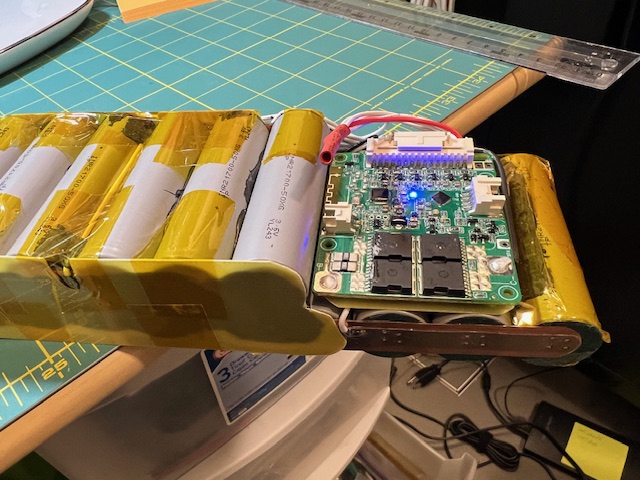
JBD 14S BT bms, BMS is wired for charging only (on the small pin of the XT90i connector). Need to remove the heatsink and trim the plastic of the UART port so it fits in the slanted area of the cone.
Yeah - genuine FD Max main unit with FD v3 remote and FD HP motor.
I also did a sport battery (11s2p) with RS50 cells that performs really well with 18Wh cells (I see FD just officially launched a sport HP battery).
Next on the list is to build a couple of batteries with the new linkdata 65P cells
It’s a 10gauge insulated wire that runs long on one side from the back of the battery to the xt90 in the front for negative and a short piece of 10gauge bare copper for the positive. Both soldered to the 0.3copper plate that is spot welded to the cells. Sorry no picture since it is now shrink wrapped.
Welder is P60F, it’s 0.3mm copper with 0.1mm stainless steel on top, power 450, no pre heat, single pulse. It’s easier to get the copper/stainless dimpled wellgo strips since they require much less power to weld but they are expensive.
Does anyone have the exact dimensions of the Foil Drive’s internal compartment? I’m welding a battery and really don’t want to have to install the busbar like the original—it looks more like ice cream foil.
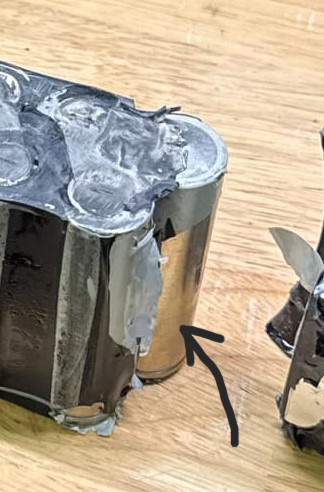
Please correct me if I’m wrong, but is that piece of foil I see in the photo of the disassembled battery a busbar?
The way they have designed their batteries is pretty strange. Which dimensions are you looking for? I have an HP battery which has to fit their unit and can give you what its max dims are if you need.
I’m interested in the width and height of the internal compartment. I have the original battery’s measurements and would like to know if I can fit a 1 mm thick copper busbar in it.
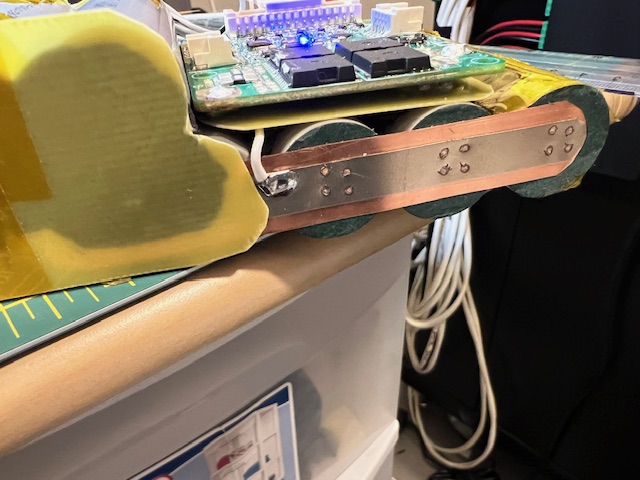
My home made HP batteries are 77.65mm x 40.65mm. They slide in snuggly into the box. I run 0.3mm x 25mm bus bar for negative on the right side. After welding the cells, I lay 0.1mm FR4 board on both sides with permatex gasket maker black goop. Leave some space (1-2mm) at the top on both sides to expose the copper to weld the balancing wires. On top of the FR4 board on the right side I lay 25mm 0.3 copper bus bar that tapers at both ends (battery negative and then the negative on the XT90i). Lay kapton tape on top. Then weld and run the balancing wires on top of the bus bar/FR4. Then I run a single 14awg THHN wire with insulation from one of the small pins on the XT90i to the C- on the JBD BMS. The B- on the JBD BMS goes to the battery negative. Final wrap in fish paper or kapton or epoxy and then the heatshrink on the outside. You need to shave the plastic off the JBD UART port, otherwise it hits the roof of the cone. Have built 5 batteries this way. I dont pot in epoxy, my battery compartment is dry and I check all the time.
Please post more pics of the dissected FD battery you have - curious how they run balancing wires and how they run the negative bus to the front of the battery. Thx
One final thing, if building from scratch and not careful you are likely to end up with a battery which is a few mm too long and that wont work. In the front, once you have 3D printed the end piece, the terminals of the XT90i will be touching the bus bars that are bent over that first lower cell. Put enough insulation on it so that the cell wrap doesn’t melt when you solder the XT90i to the bus bars.