Hello, that has been my experiance with not enough mixing or bad measure of QTY.
How hot did the esc get?
Adam
Hello, that has been my experiance with not enough mixing or bad measure of QTY.
How hot did the esc get?
Adam
Yes, the magic gel was almost fluid in that spot. The heating pad was longer as the controller, so it had contact over a bigger area with the magic gel. Strangely the magic gel was kind of fluid only that spot, in the rest of the housing it was fully cured.
The controller heat was fine, because the pad was not dissolved so far below the controller that it would have any impact yet. But with time it would have become a problem. Just posted about this so anyone who used magic gel can have an eye on it.
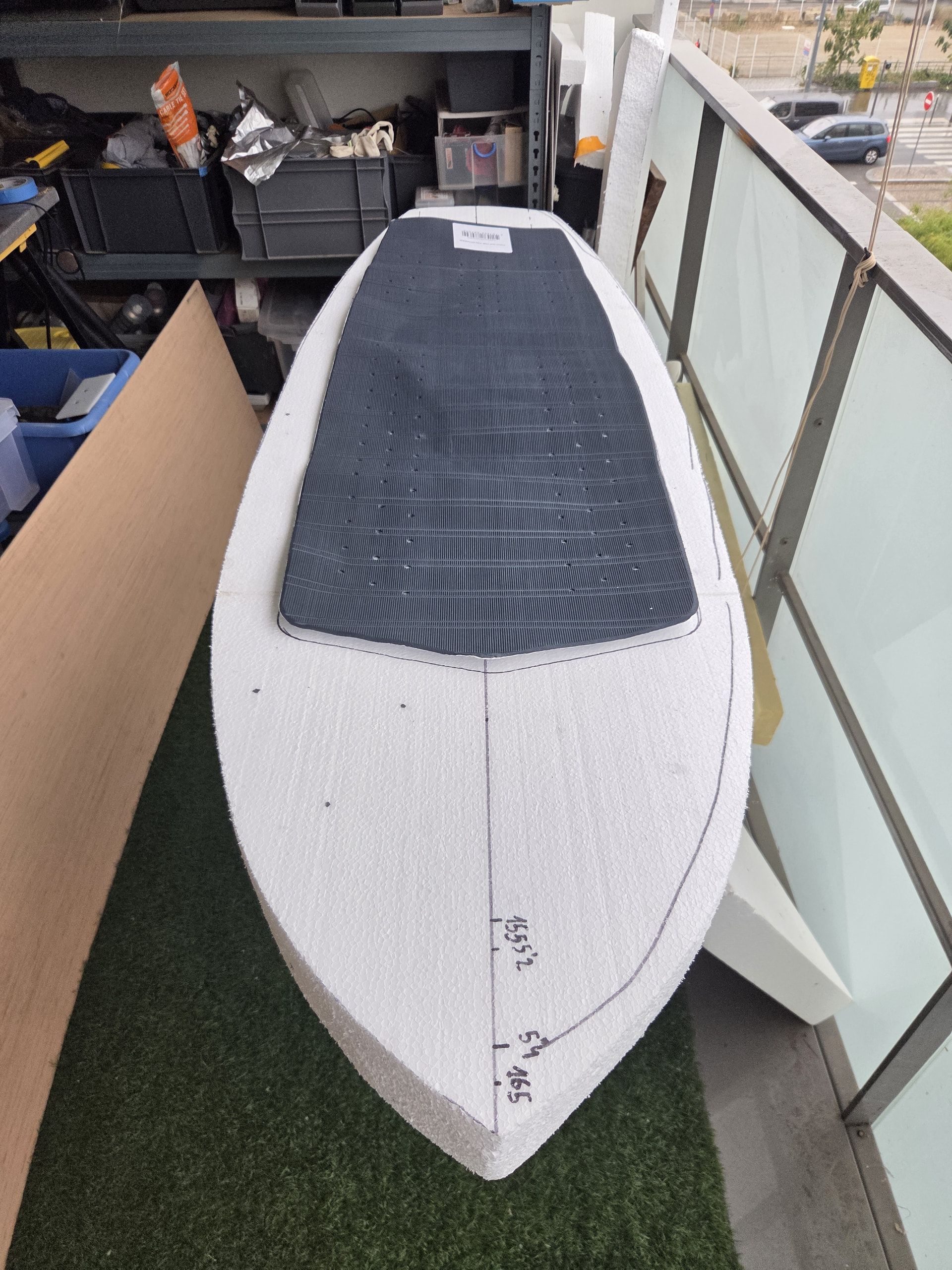
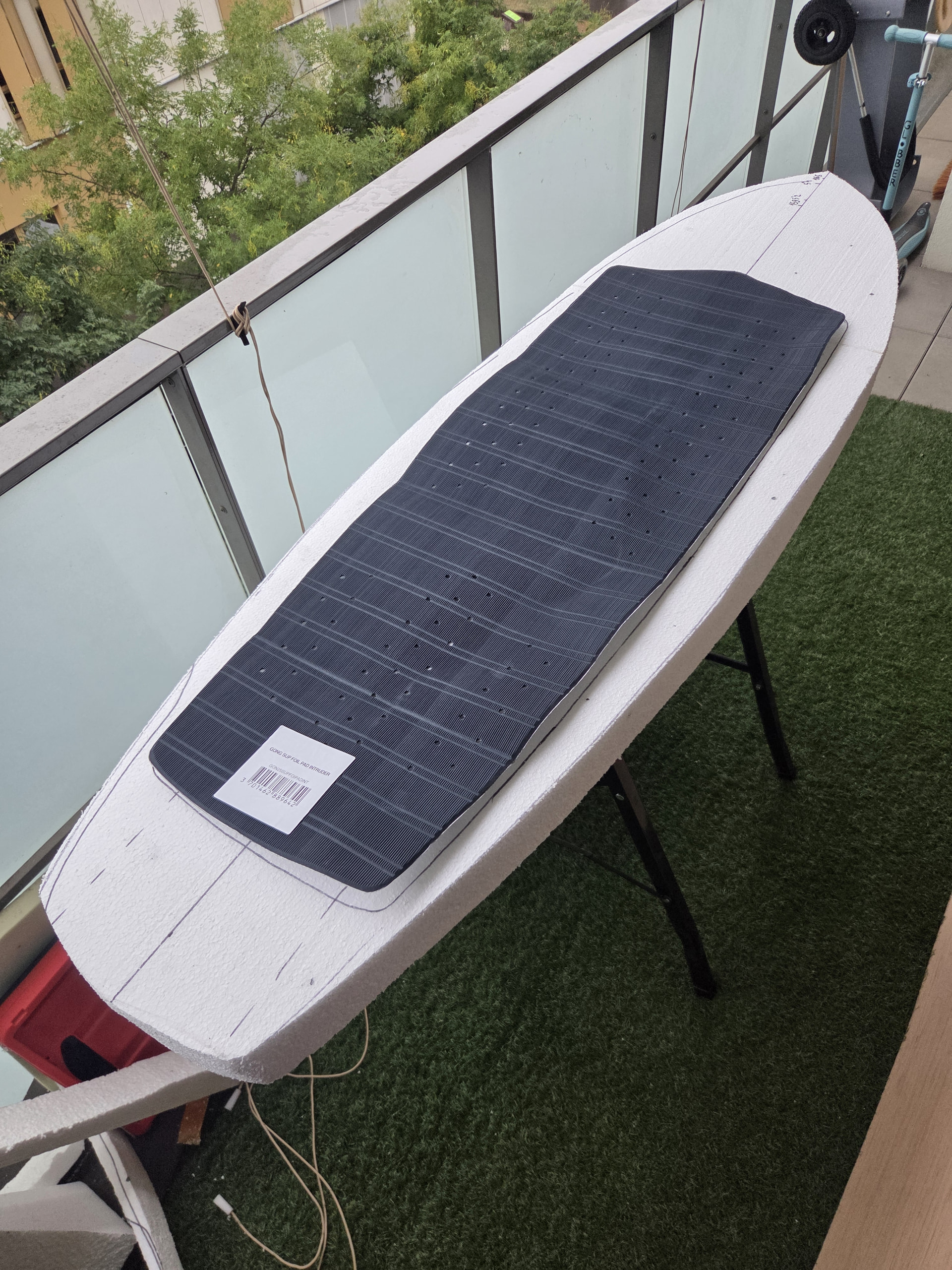
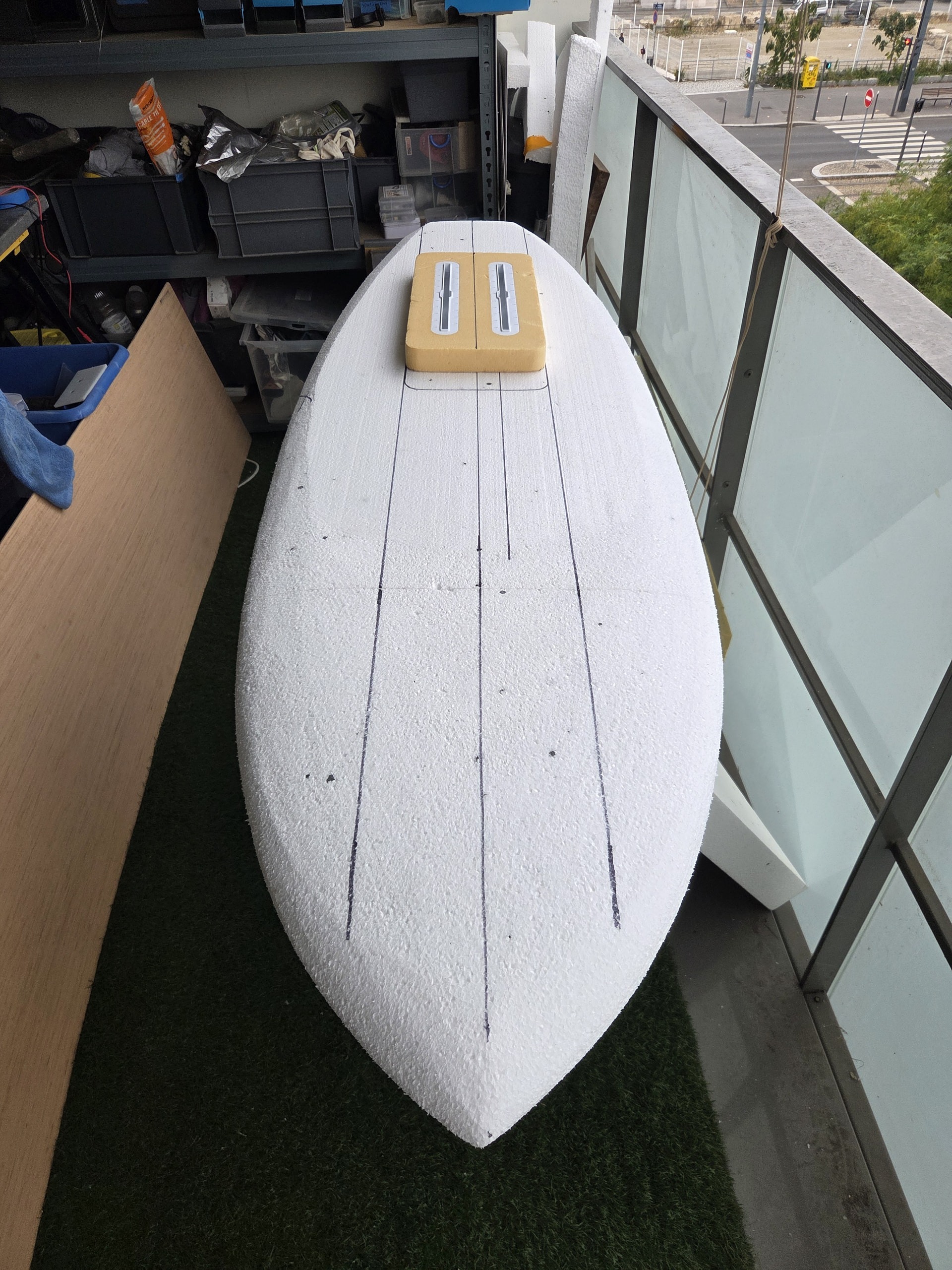
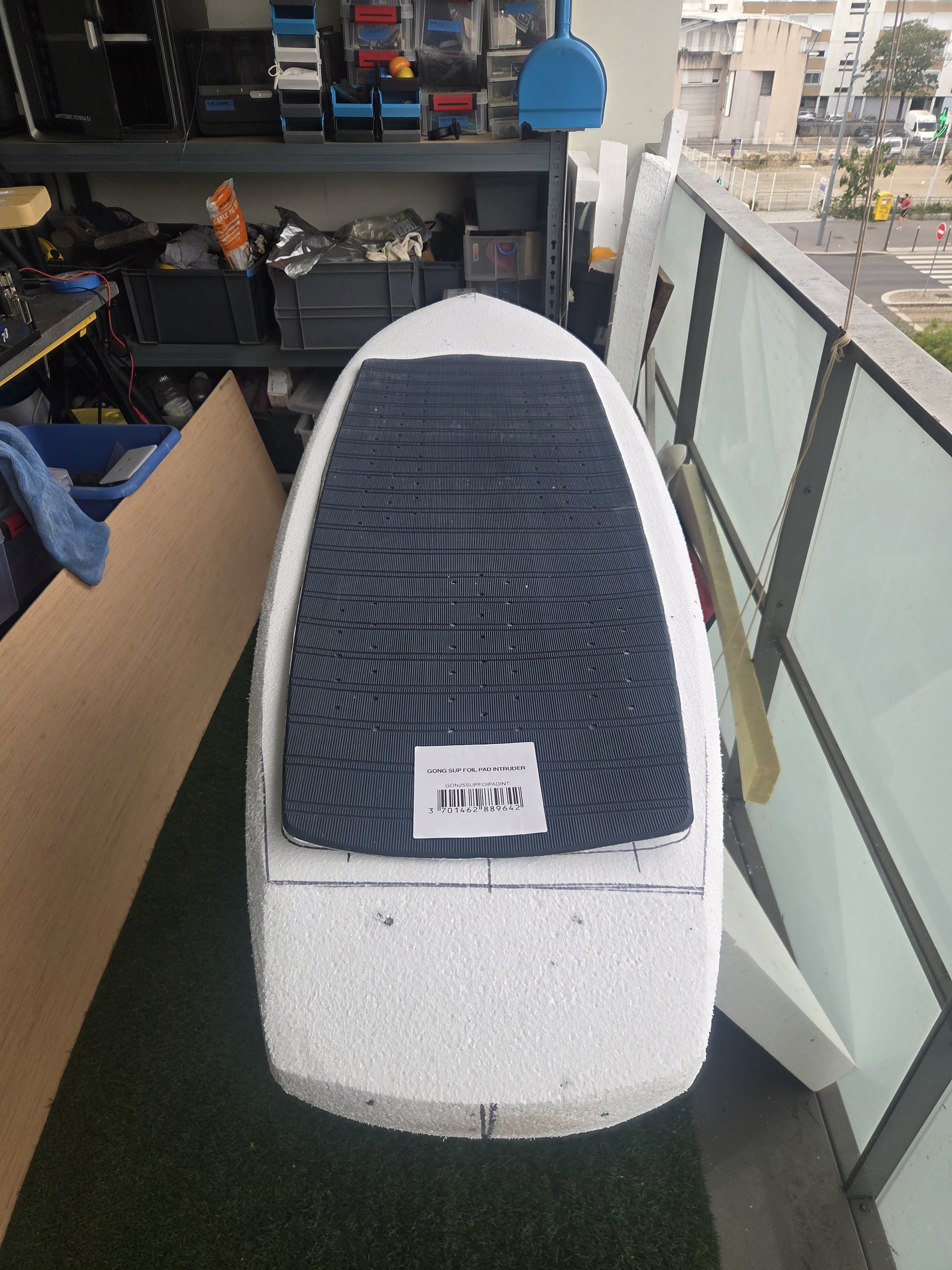
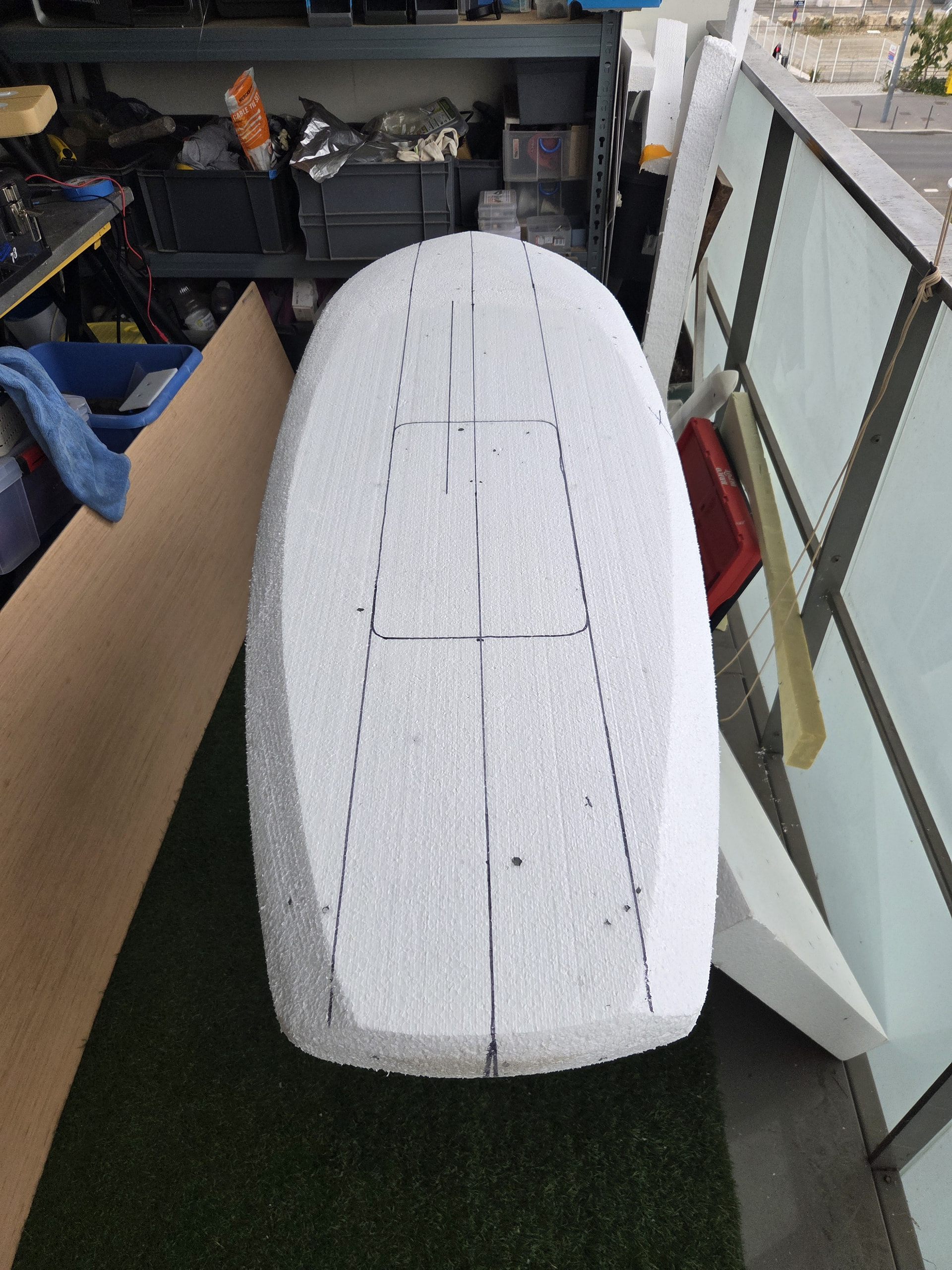
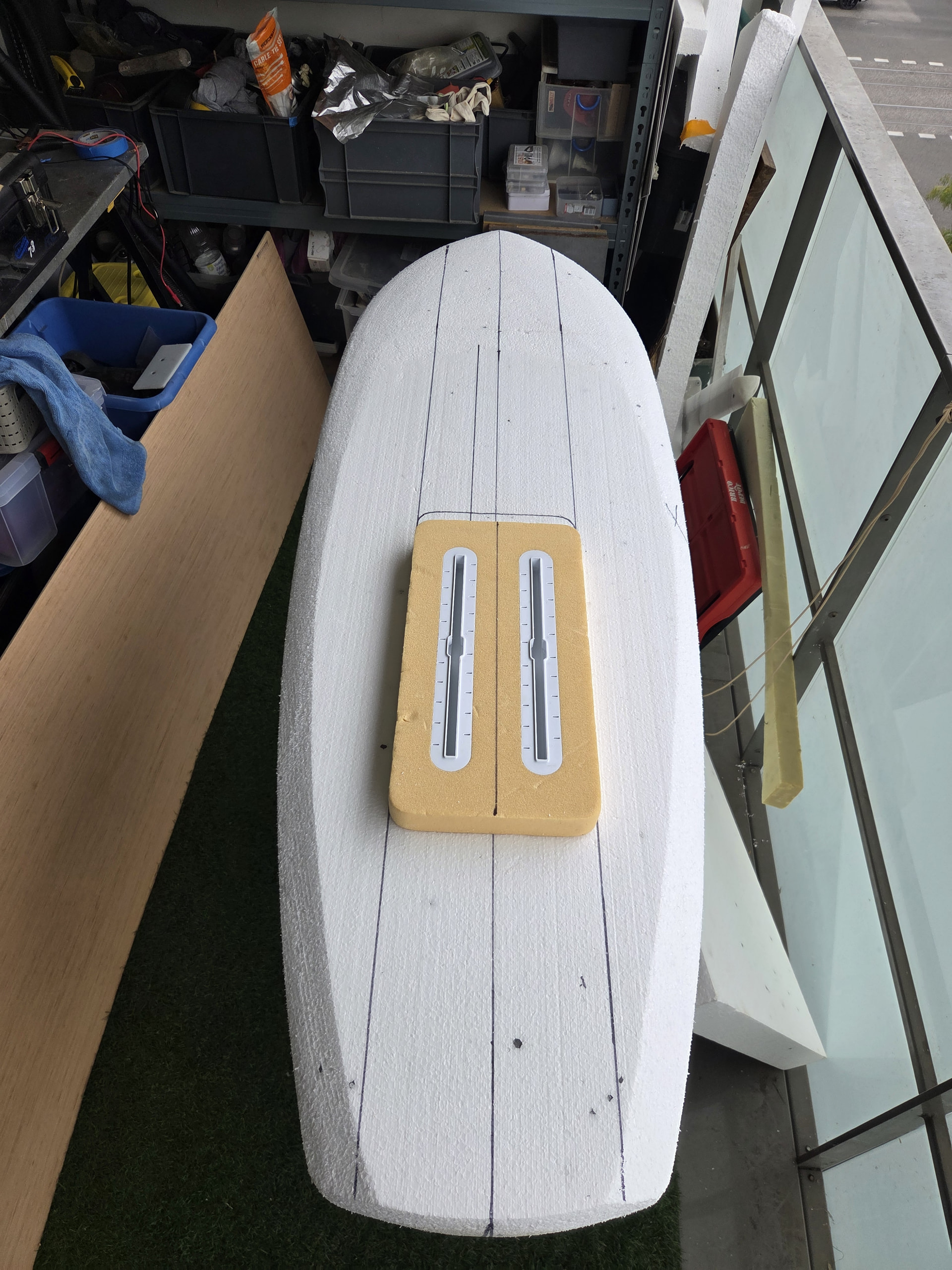
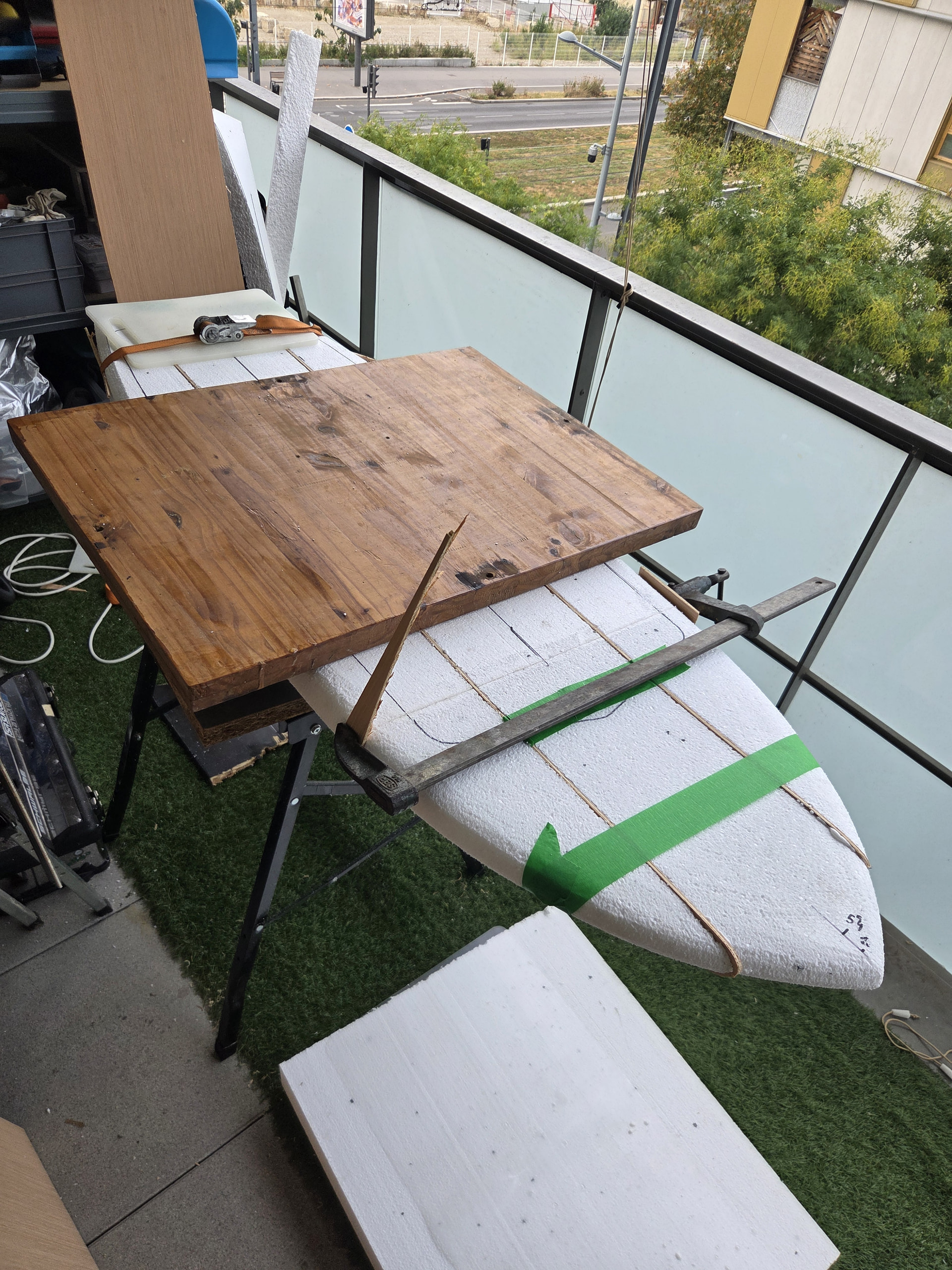
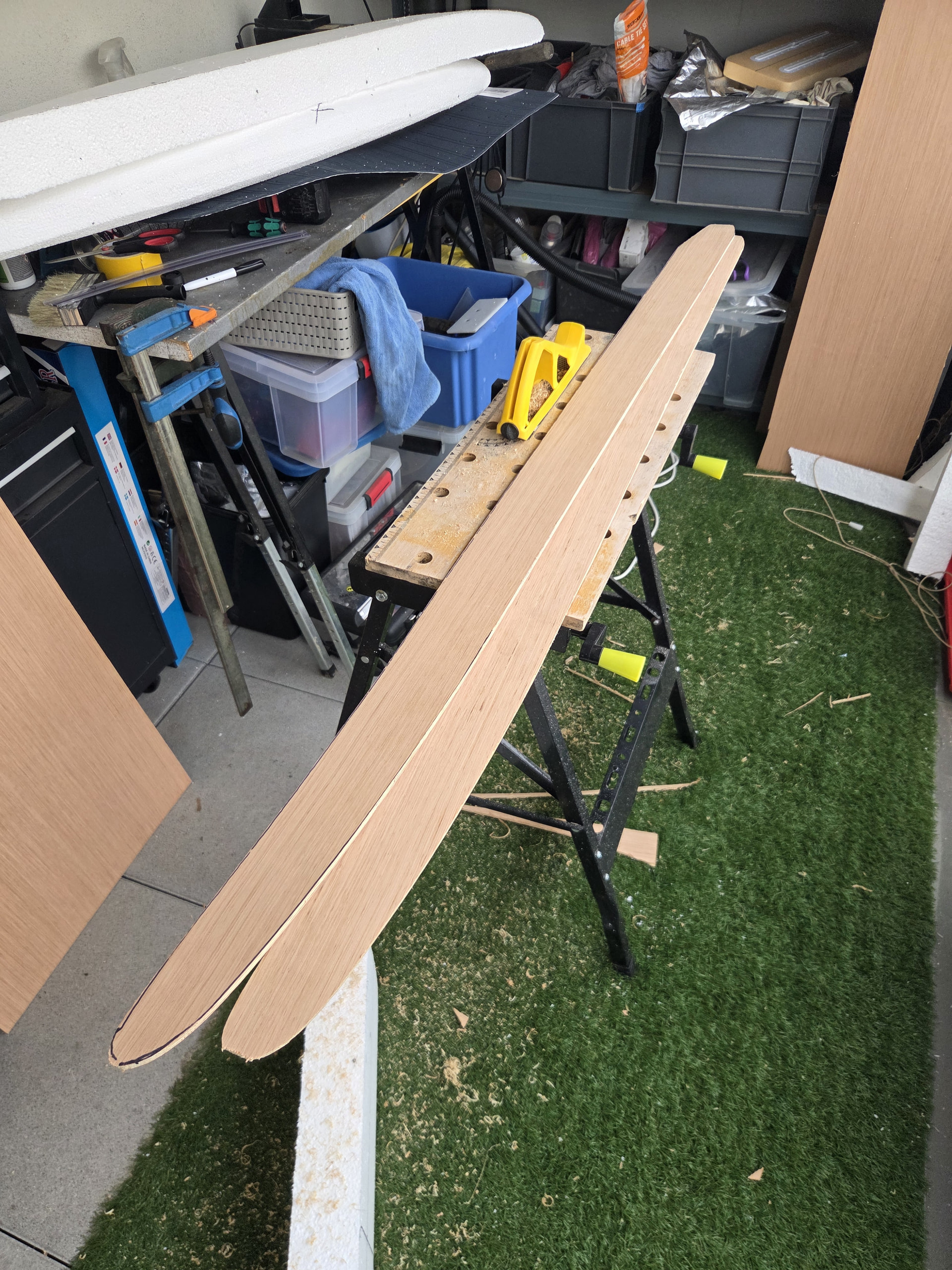
Started a new board build, a little limited by the availability of thick eps blanks.
163 52 * 80mm max thickness. I don’t think I will do a trench, as I also want to be able to parawing with it in bigger conditions.
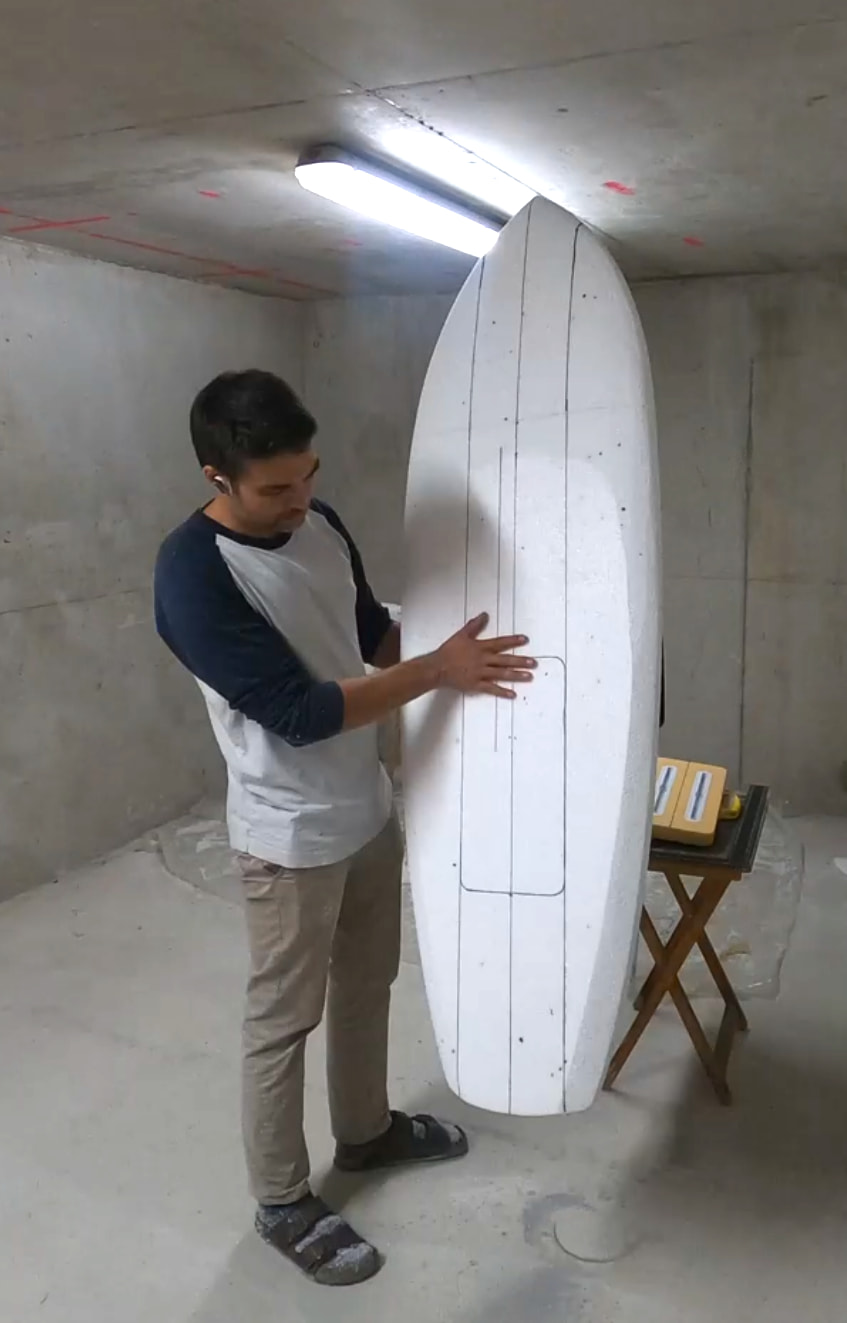
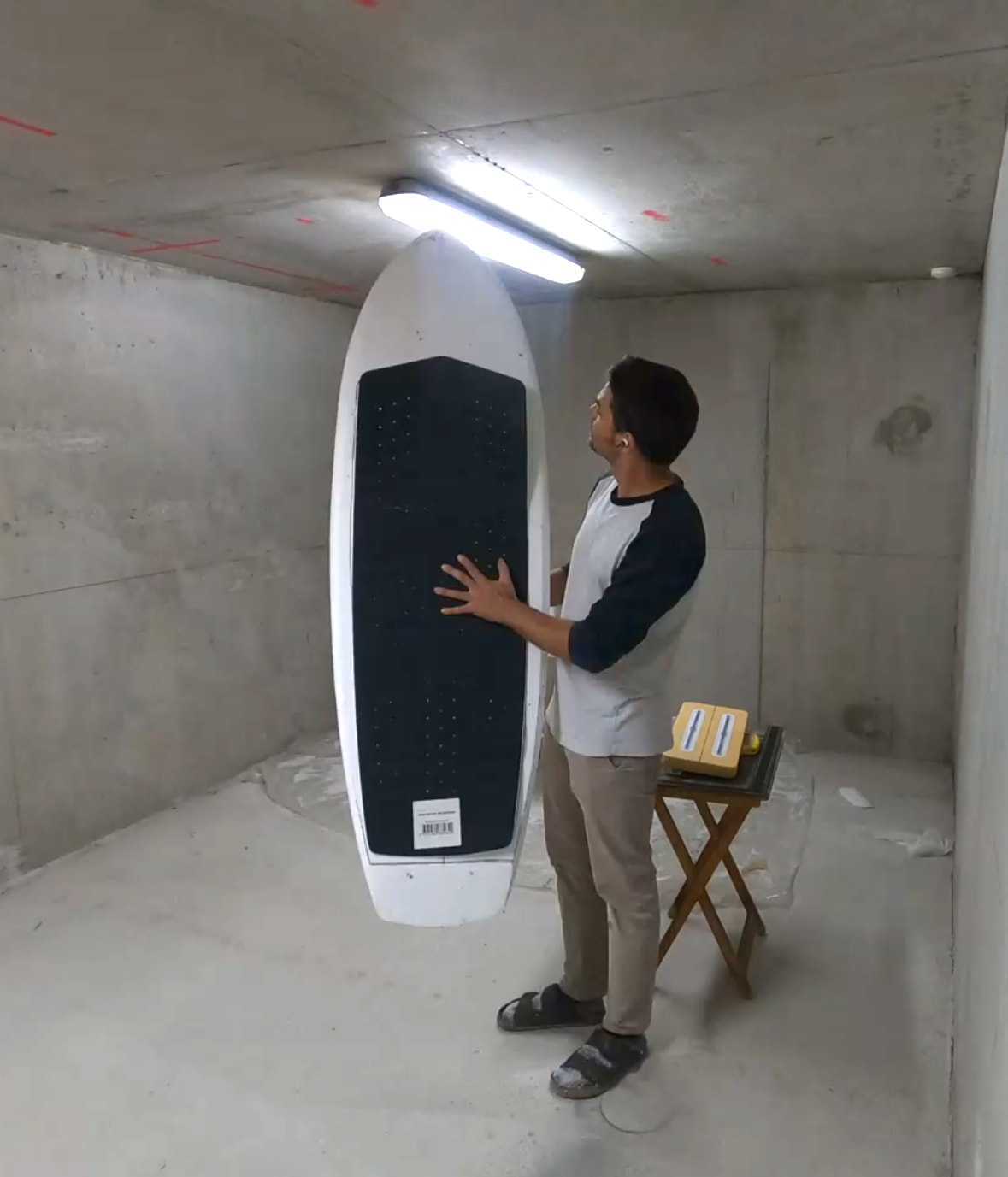
shaping in progress
Just to clarify: do you feel this is mostly due to the interaction of the heat involved? My latest build uses magic gel in areas that aren’t affected by heat (encasing the radios, reed switches and wiring only). So far they seems to be holding up well but I haven’t opened those compartments up to check in quite a while. I have found Magic Gel to be a lot more runny than I expected, but it seems to be stable in it’s current state. Just curious so I can be less worried 
I do not think it is the heat. I think it is a chemical reaction between magic gel and heat pad. I had my heating pad about 4 cm longer than the controller. There it got into contact with the magic gel and dessolved. It also dissolved about 2 mm under the controller already.
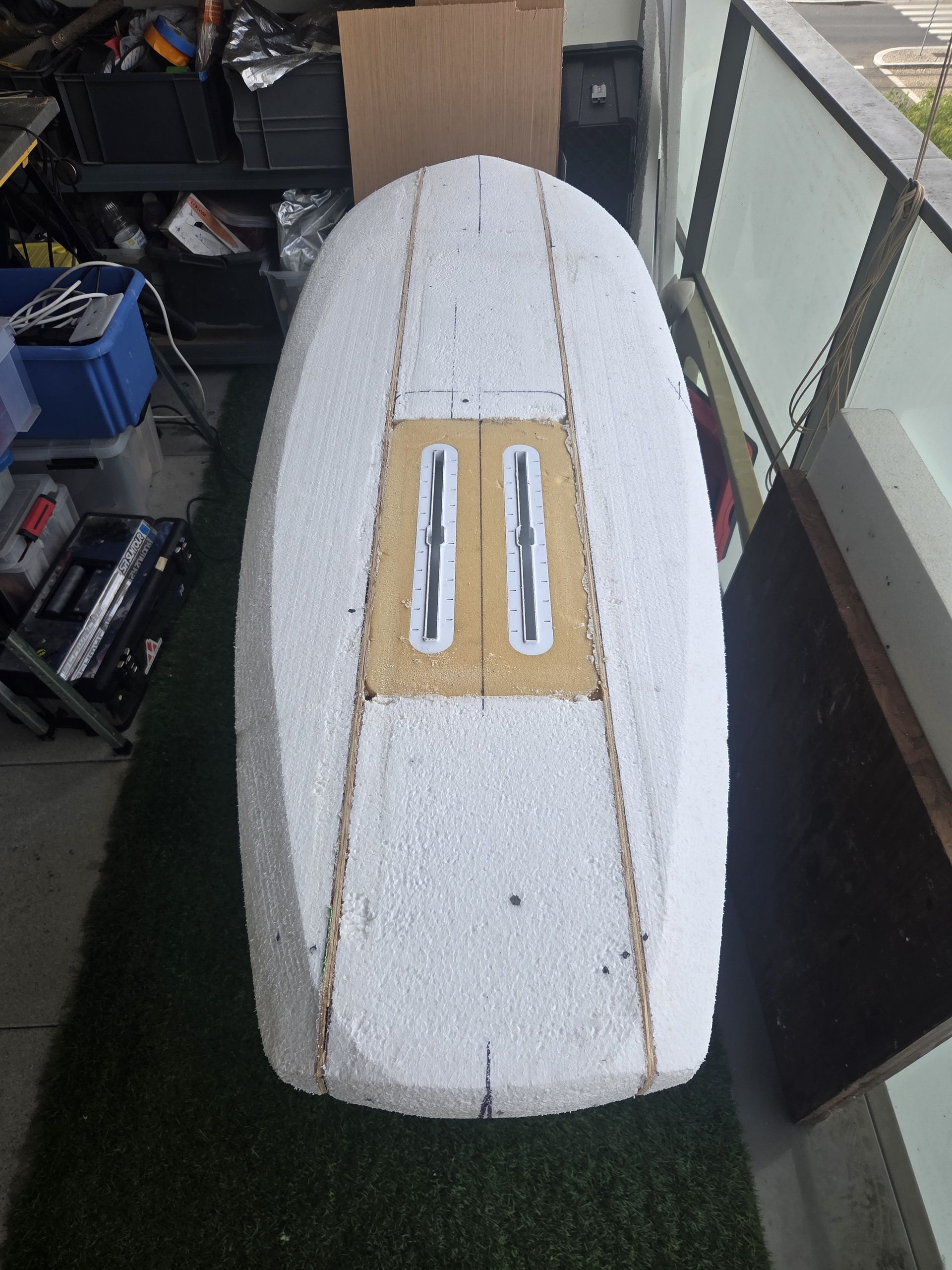
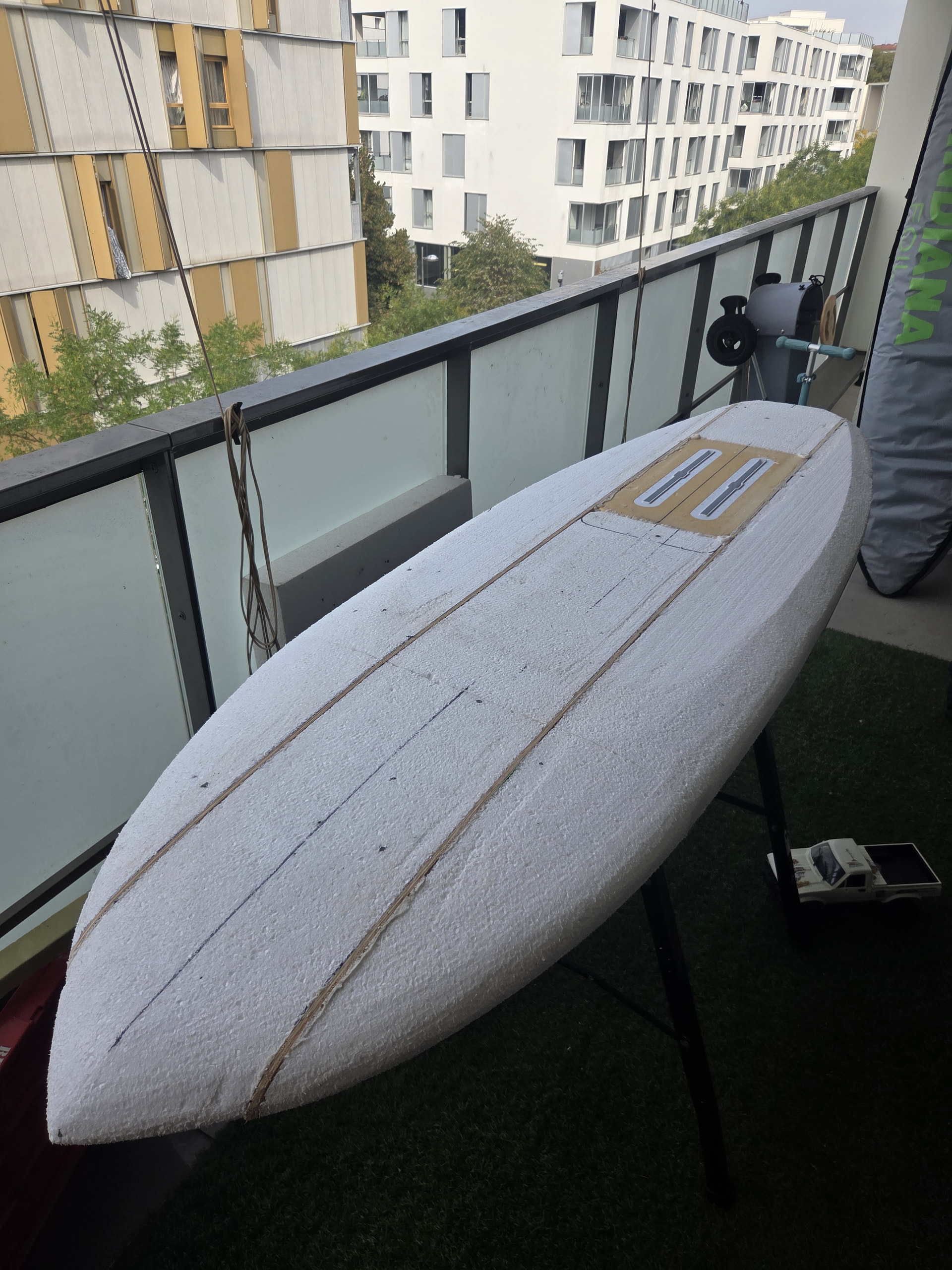
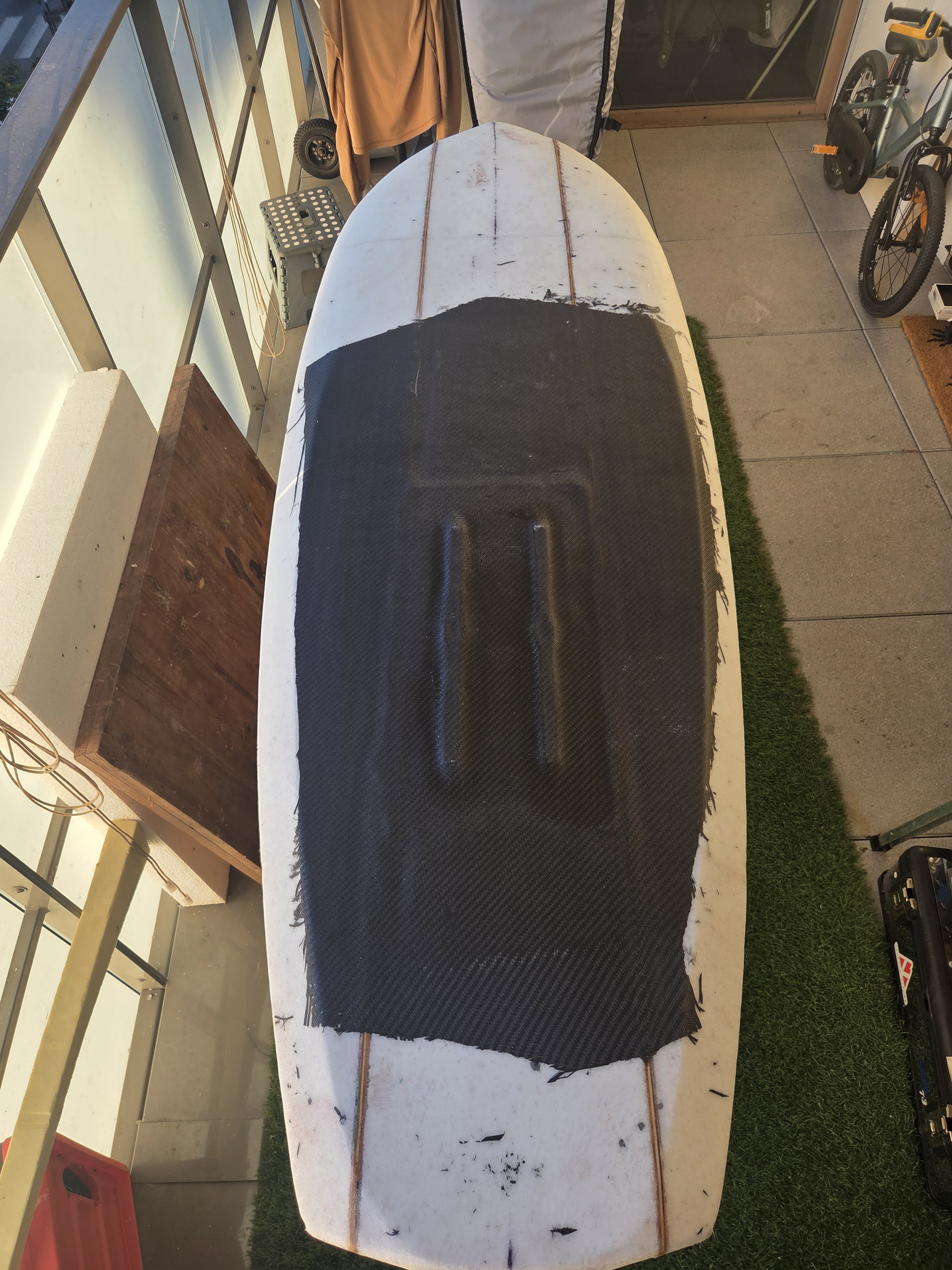
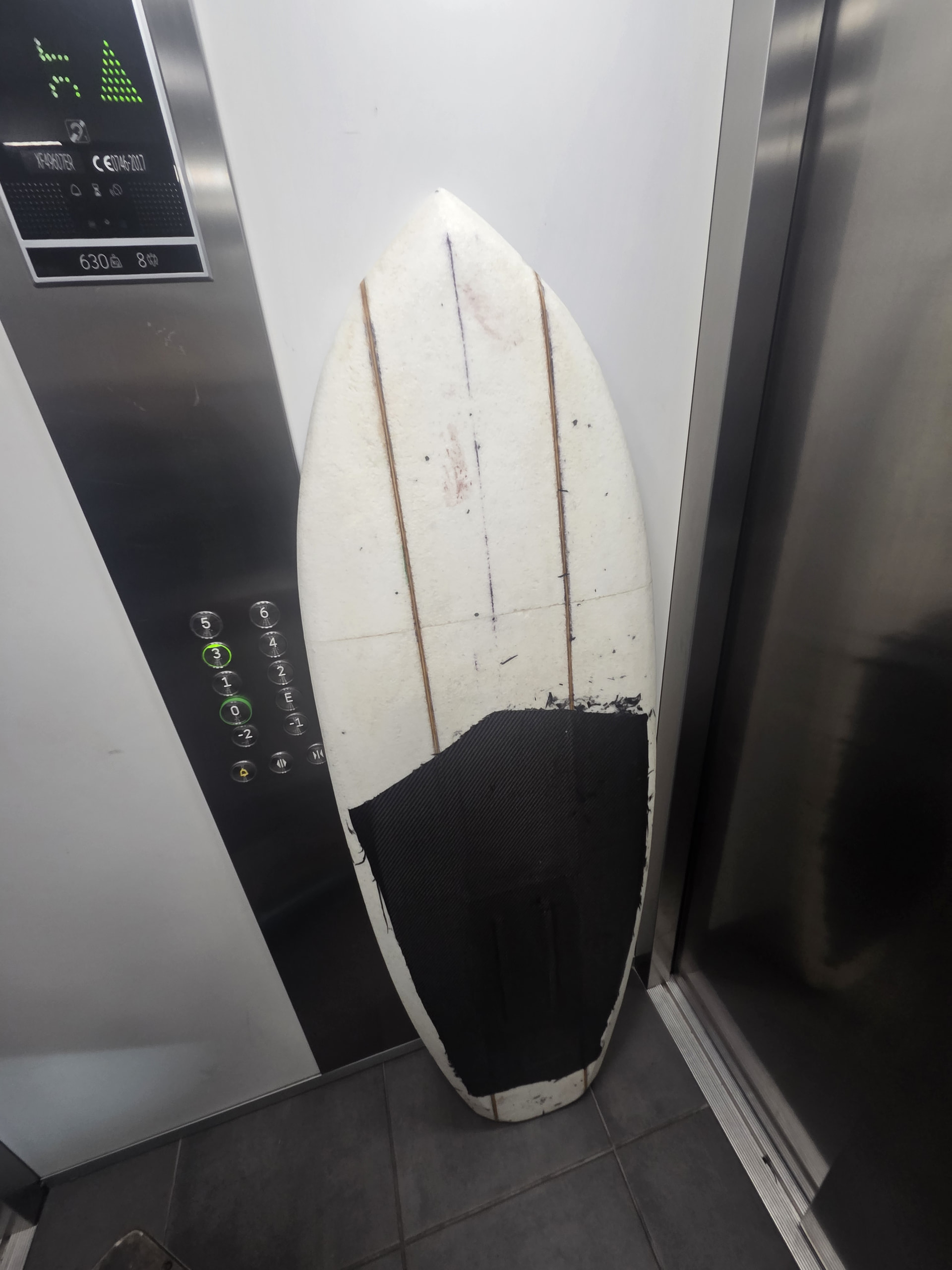
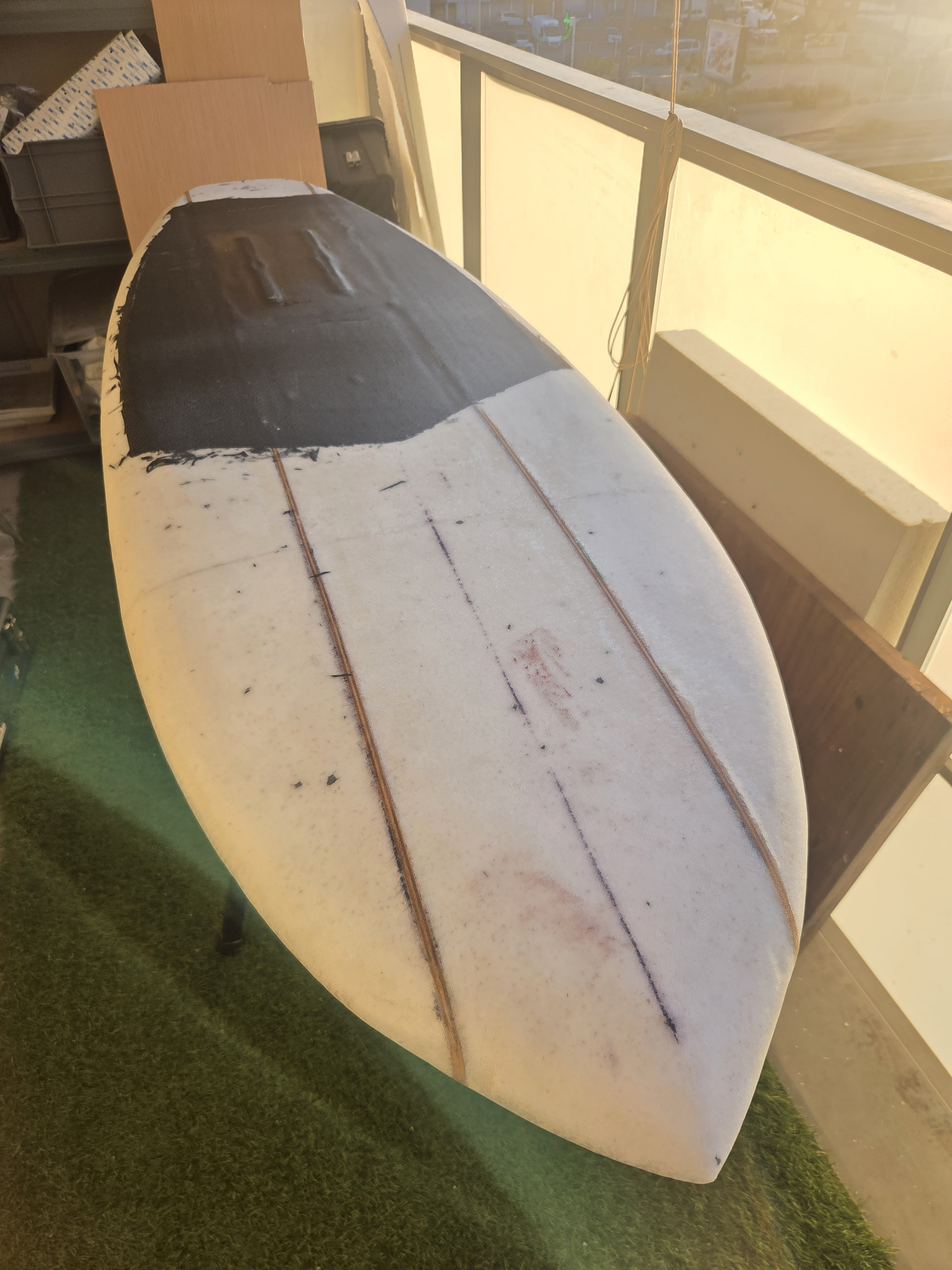
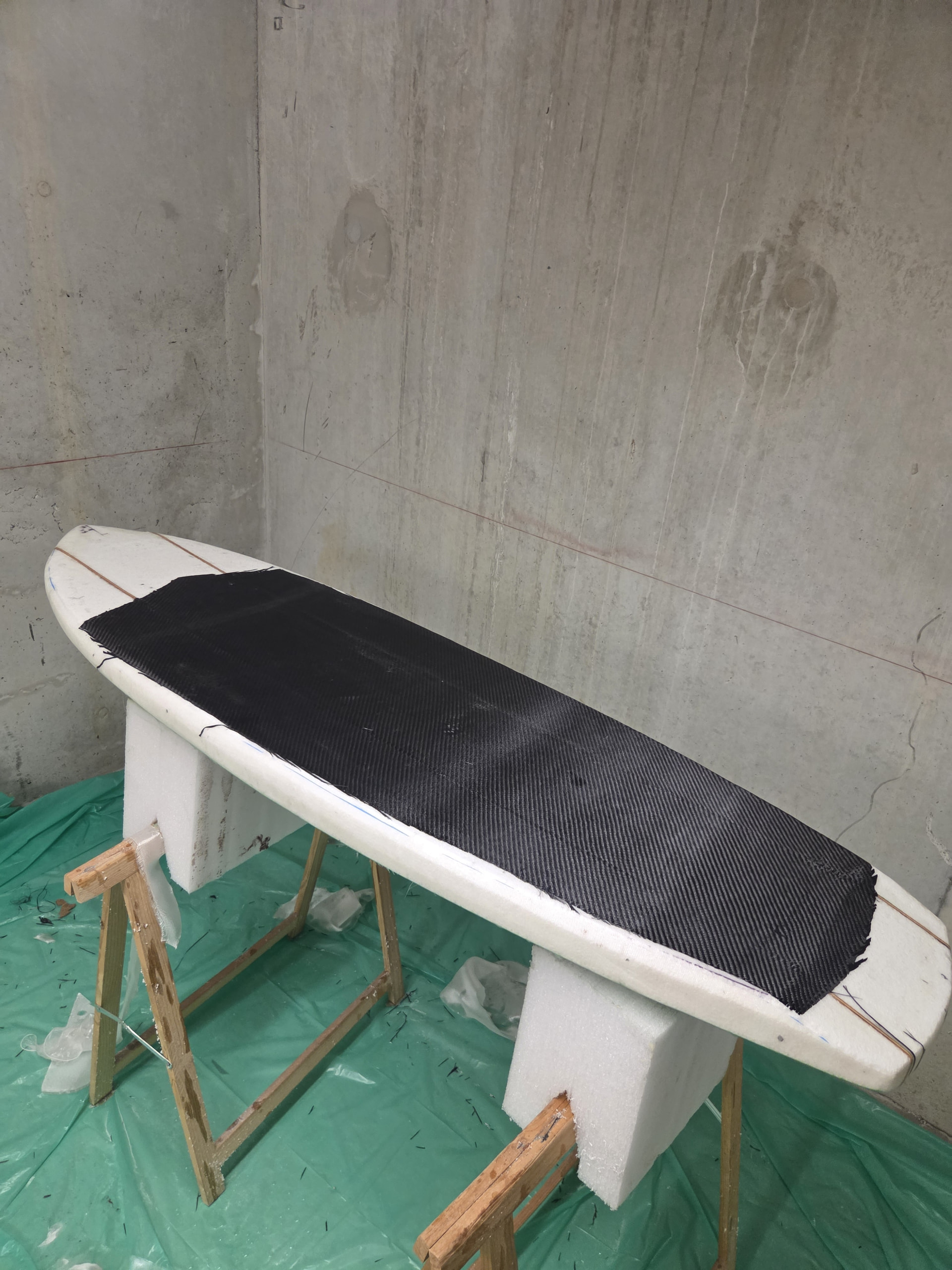
Glassed the bottom, just a wet lay, its very easy and zen process compared to vacuum, did not even use peel ply. I’m out of glass so stuck for now, waiting on my order of more 125gr.
With the big dual stringer, I will go for just two layers of 125 gr glass and 200 gr carbon patch top/ bottom.
Final board should come at around 4kgs.
Would even have been nice looking with raw finish of I didnt boatch the carbon patch cut 
Getting there with the board, i think i made a big mistake by not having the carbon patch for deck not wrap around until the hull lap, loosing quite a lot of strength and Rigidity in the proces…
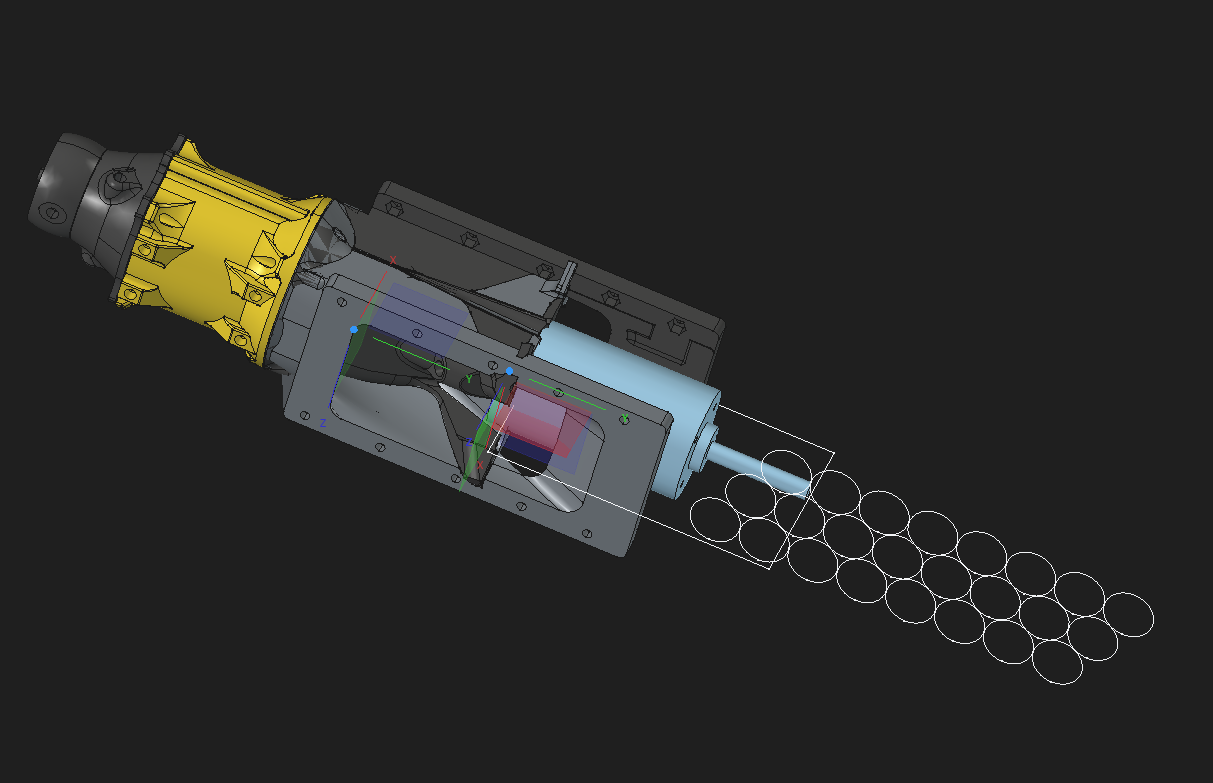
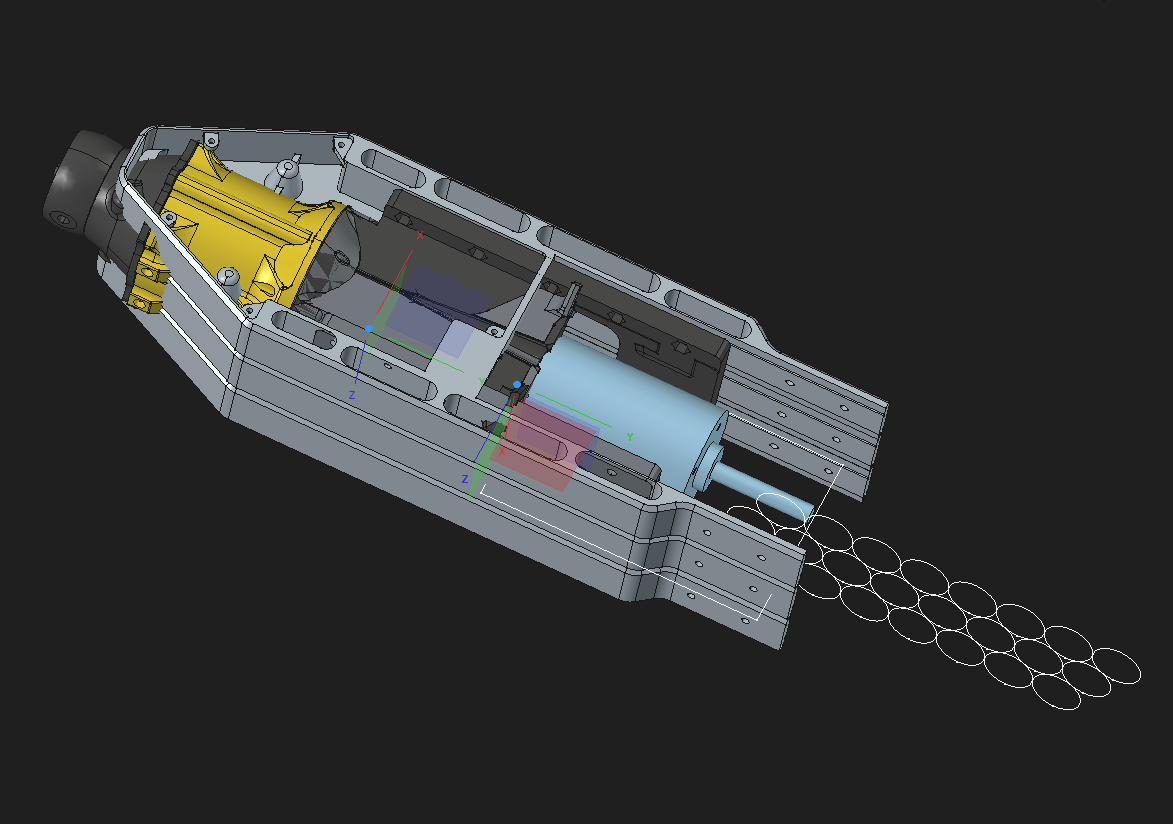
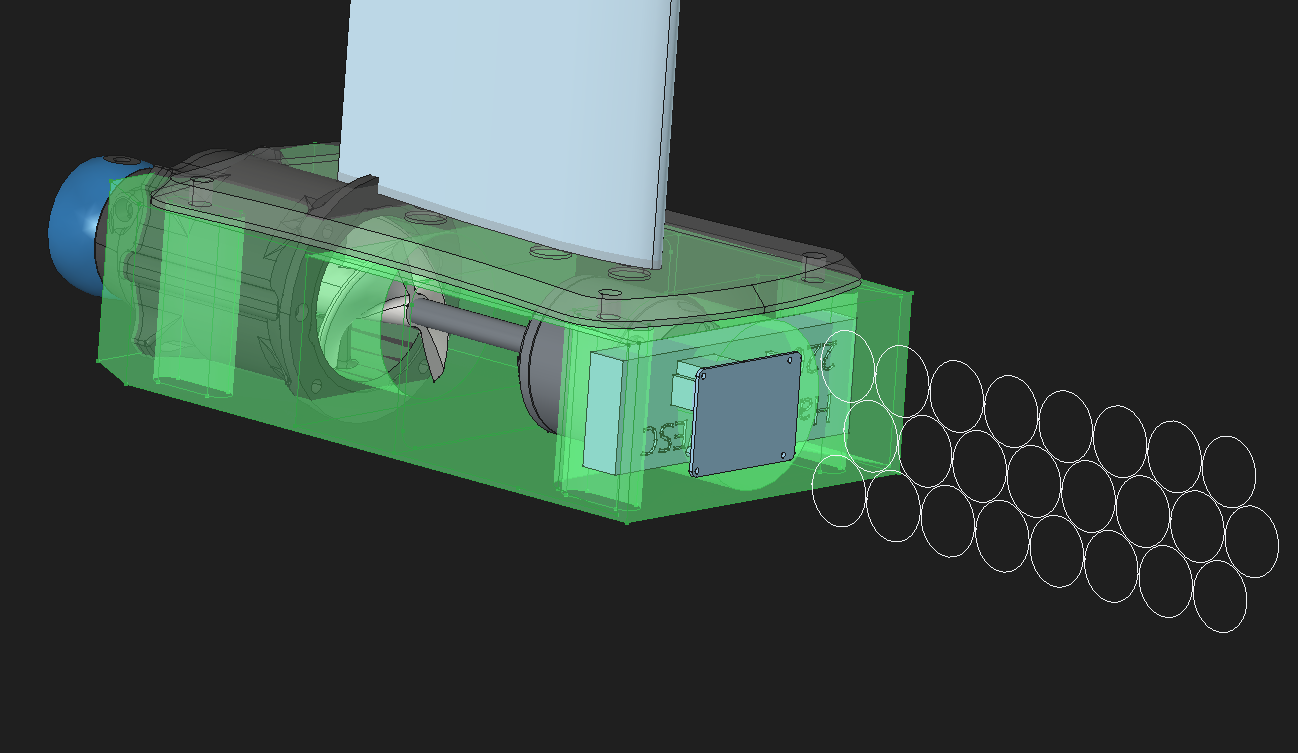
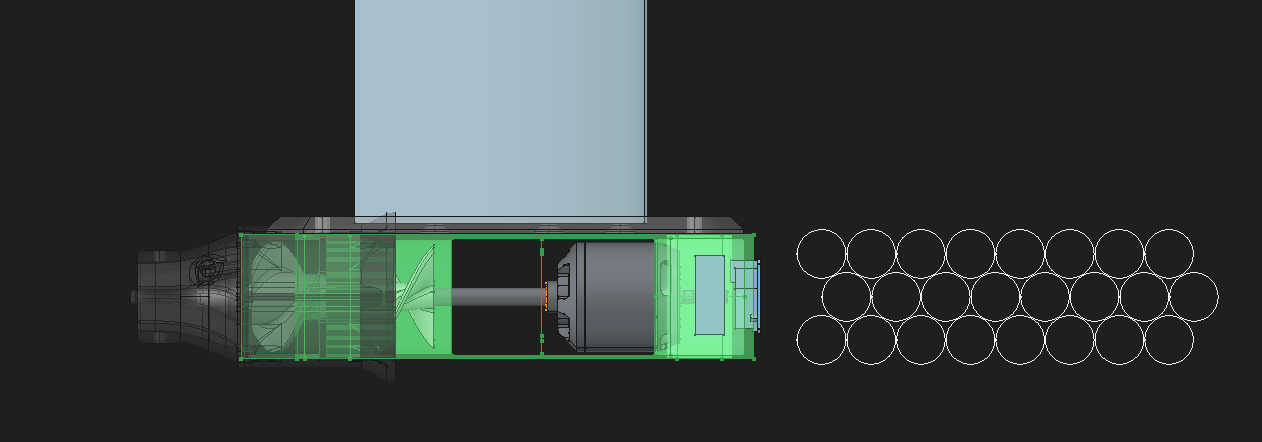
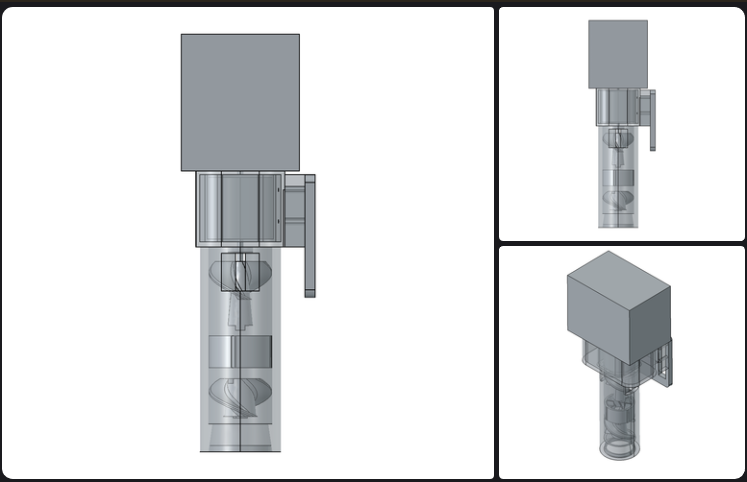
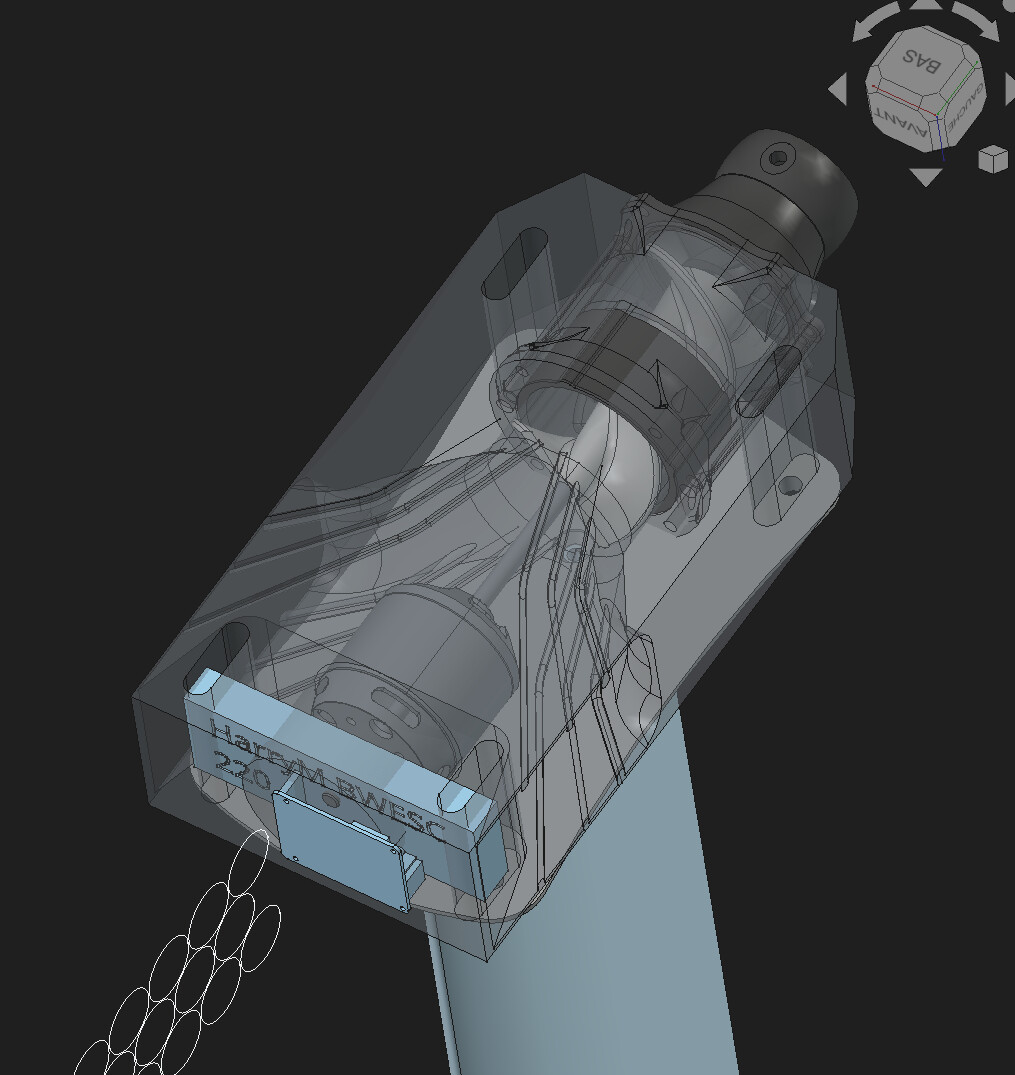
On the assist side, I bought some files for a rc boat 40mm turbine, the builder reported 13.3kg of trust at 8s/2.2kw. I will do a scale to 50mm, and see what kind of motor I can run, thinking about a 5055, as they can get pretty high kv. Here is very wip cad
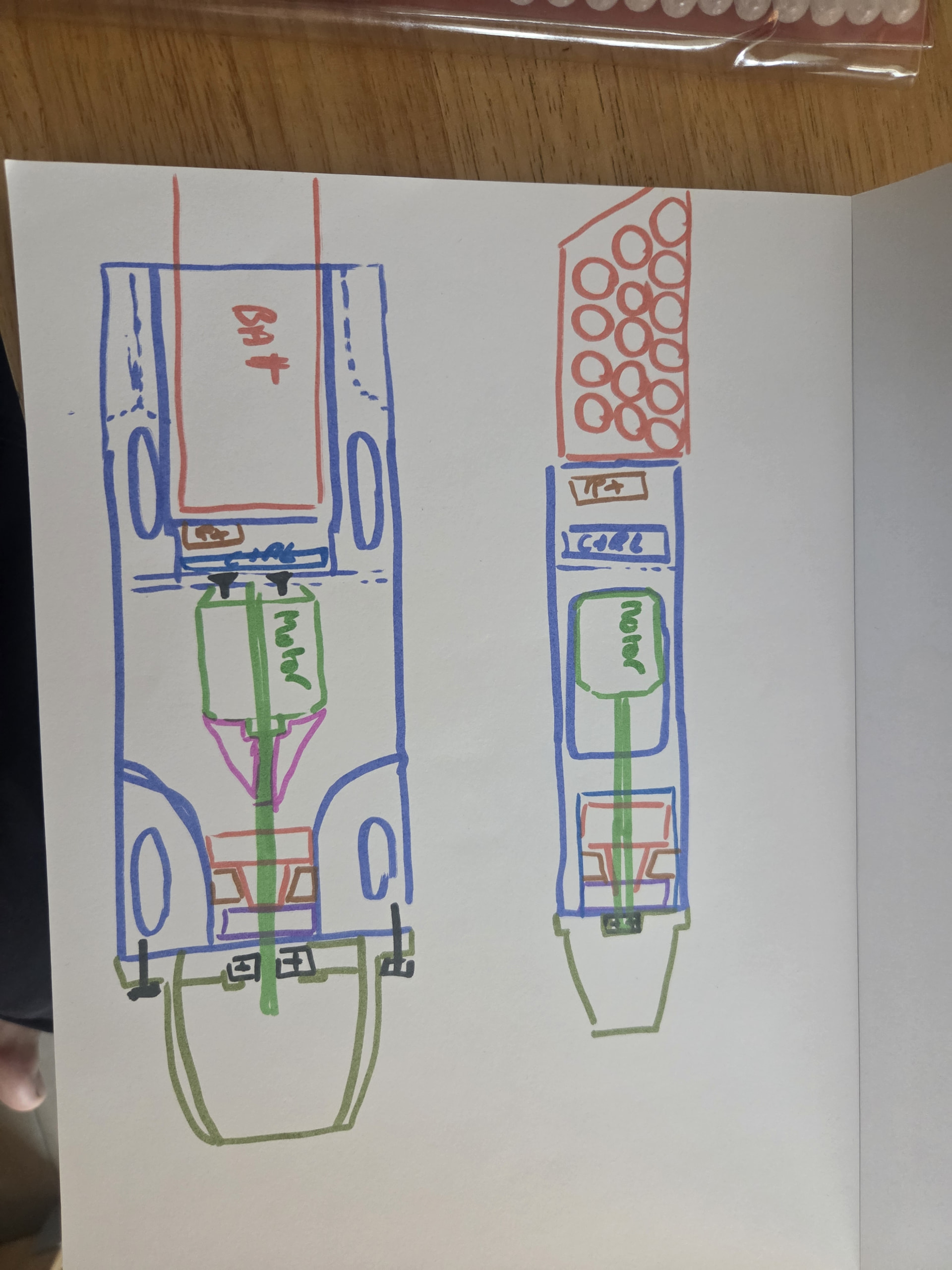
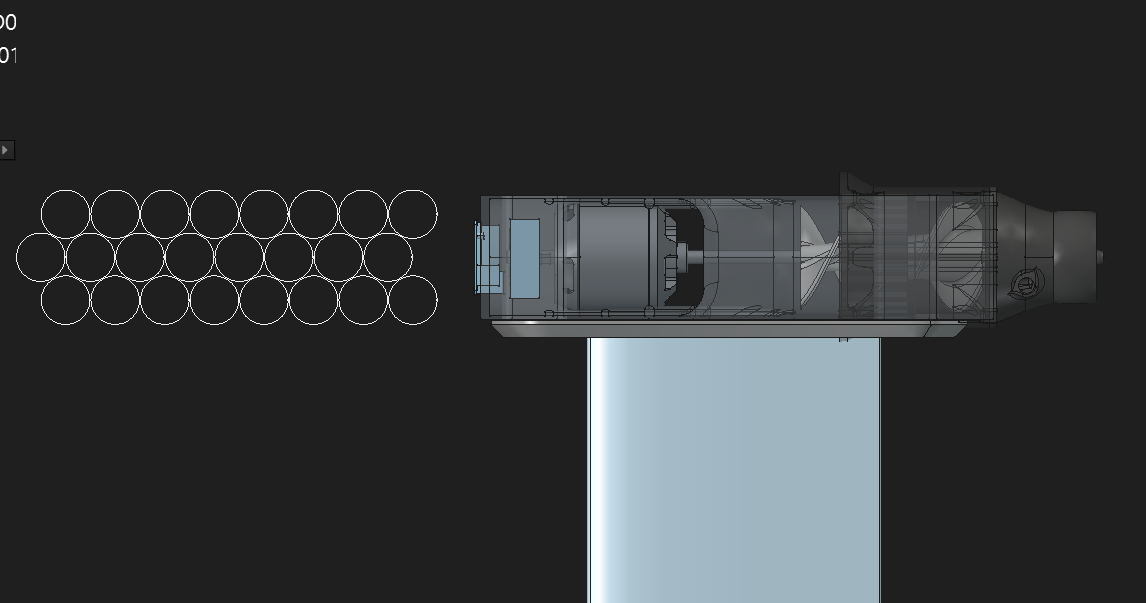
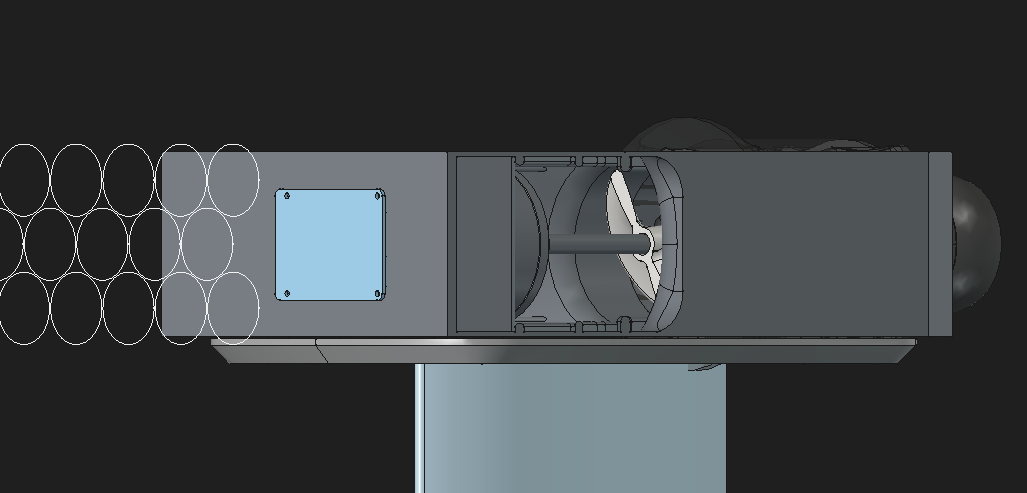
The current idea is to have the motor under the mast, inlet on each side and battery in the front. I will try to package it all in a 55mm thick unit (like FD).
Due to the low turbine efficiency vs an open prop, I will go 12s2p by default.
Very nice build - extremely light and clean. It is an absolute inspiration. A side question - are you happy with the controller. I find this similar product: M-Classic – DQ Drives - with slightly different specs and lower price. Are these different products - like an open source project manufactured by different vendors ?
I use one of those in my assist build with 6384 and 5085motors. Works well, you just need to make sure to cool it properly.
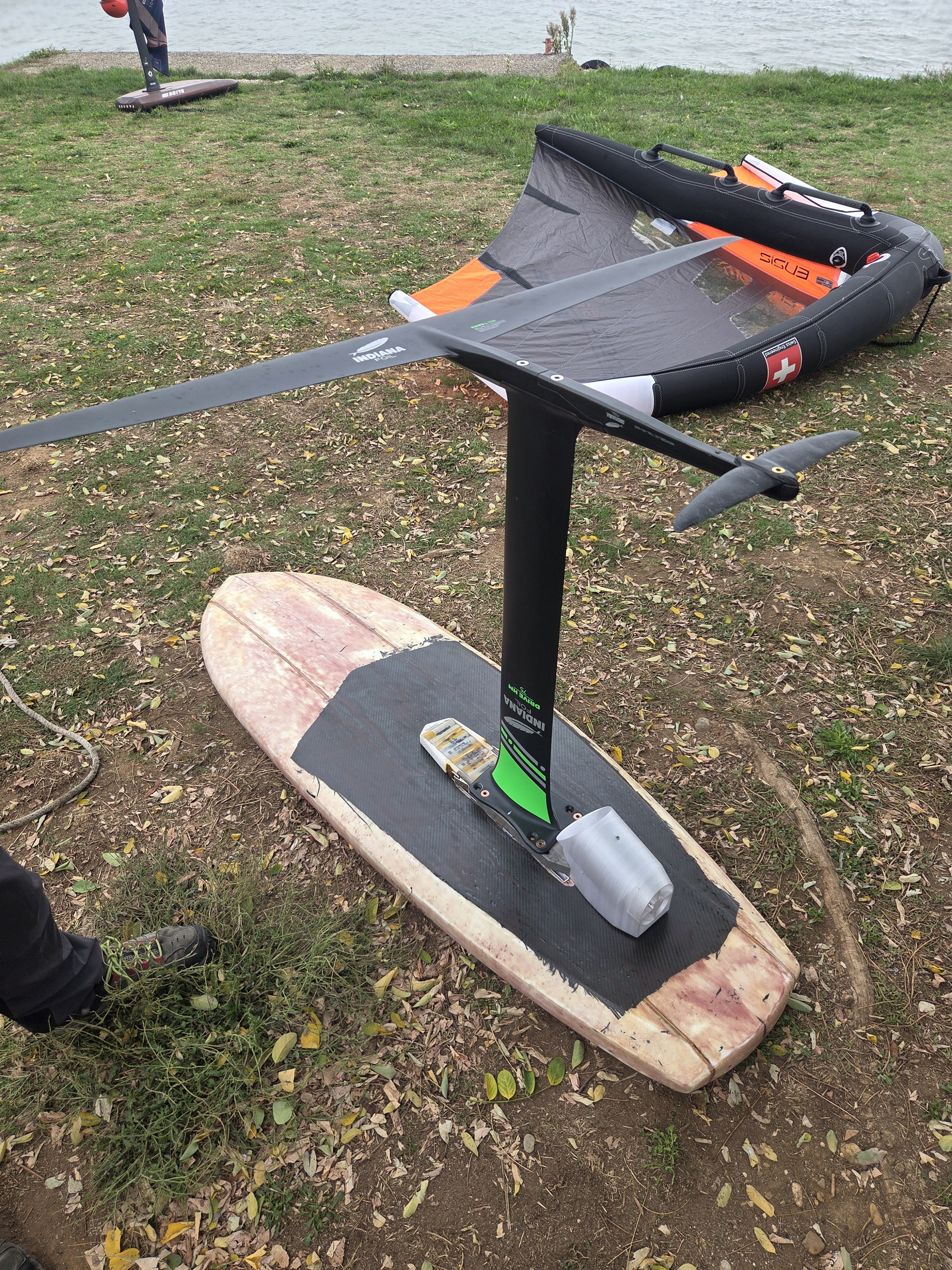
Got the board out, need to get it a good coat of paint as the hot coat with some filler really left a  finish. I tried it with a high AR 980 cm2 foil, but was unable to start. I could see that the system was hitting 60A but thrust seems lower than my previous tests.
I had the foil too much forward on the board, as I found out the propper setting later with 4sqm parawing, 9-22kt winds. First time on a sinker, it went about as well as you can imagine Flying maybe 25% of the time, did not manage any maneuver, I hope i’ts not due to a lack of board Rigidity. The board has a tendency to nose dive during takeoff, the mast position adjust to the back helped a lot, but it seems like I will need a mast shim to noze up, seems weird due to the very flat bottom of board and slight rocker.
I made progress on the build concept for the turbine unit, cad underway.
Design is pretty simple, just the motor plus one extra support bearing on the shaft end, electronics on the other end of the motor, then battery. Not sure for battery if I go 8x3 and live with the extra thickness, or 12x2 and have more swing weight.
My focus is now on making the system rigid enouth so that the shaft does not move so much that the turbine blades hit the housing.
Due to the high RPM, i’m also not sure if the 6 or 8mm shaft will not vibrate itself in a bend/oscillation betwen the motor bell and the output nozzle support bearing.
I’m trying to get local qwen38-flash to design the housing in freecad mcp, based on my hand sketch and existing cad ressources. Not working out great so far but could definitely work for simpler tasks.
Have you explained the idea behind that approach?
I can see why Flite AMP works, since it has no drag once you turn off the motor.
So on the wave you just need to catch it and turn off the motor.
But won’t this go full stop, once you turn off the motor, just like a “regular” foil assist?
Can you do a proper popup with motor and your old system? I find it super hard to do unless the waves are extremely soft. Like 5x harder than without motor. Maybe I am just lacking proper surf background.
Use is start assist for small unbroken waves and river DW, with enhenced user safety.
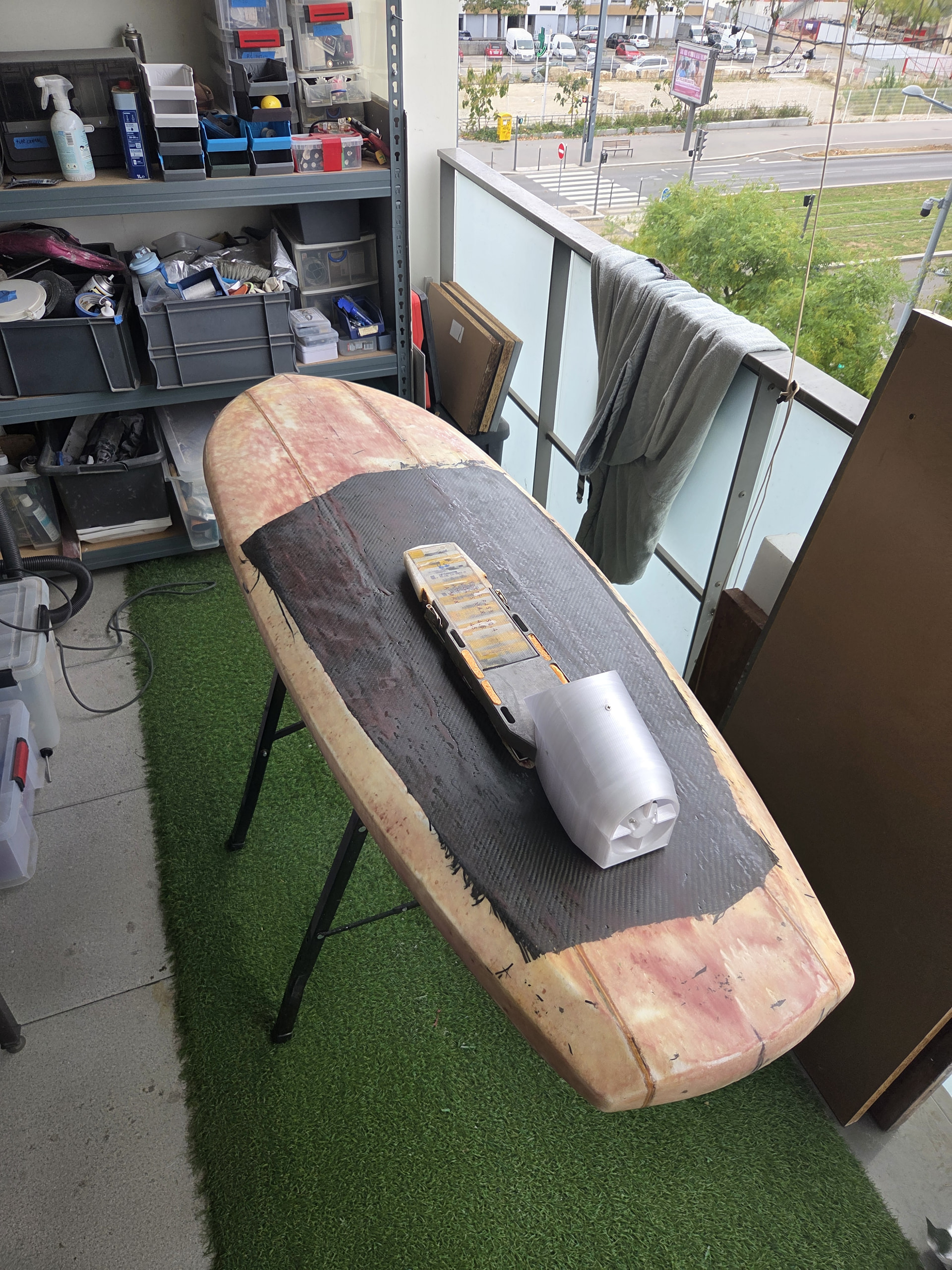
It is much thicker than my 25mm unit, but has no pod drag, and no risk penaly for keeping the motor full throttle for the full takeoff attempt.
ideally, I want to get a good amount of starts (30+) even on flat water with the 50L 5"4.
Unsure if the side water inlets will work out, but the two satge jet sould be much more immune to air bubbles.
With the 5080 and 25mm 1P unit, 1600cm2 foil I had good performance during summer on waves, but the 25lt and 1P pack was really the limitting factors for smaller foils. When battery was low, I could use motor plus some paddle to catch waves, but I mostly got small mellow swell.
That sounds like much less of a wave than I was imagining.
I was trying that a lot when I had issues getting up on foil with the small foil.
My problem was on popup almost any extra power was too much. If I kept the motor at the same throttle, I would skyrocket out of the wave right away.
So motor off would work perfectly. But with the pod, that is too much drag. So I had to try to just match the drag of the pod by the motor, so somewhere between 3% and 5% throttle, which I found super hard to do.
It definately was more fun for the surfers watching me, than for myself trying