For printing PPA-CF?
Nozzle you want around 295-300 C, bed temperature 100C and the chamber 65C
PET-CF nozzle 280C, bed 100C and chamber 50C
For printing PPA-CF?
Nozzle you want around 295-300 C, bed temperature 100C and the chamber 65C
PET-CF nozzle 280C, bed 100C and chamber 50C
Yes. Same here.
We also use a modified TPU assist (changed the gears to hardened steel) to help the PPA-CF a little bit getting to the nozzle.
The question concerned only the nozzle temperature. I print PPA-CF at a temperature of 330-340 degrees.
thats ok, your question was unclear so you got more information
That’s an awesome looking design.
How do you do that/where do you start modelling?
Let me know once you’re done and I’ll print some blades with the SLA printer if you are happy to share the files. I see you’re on the Gold coast - I can post you some if you like.
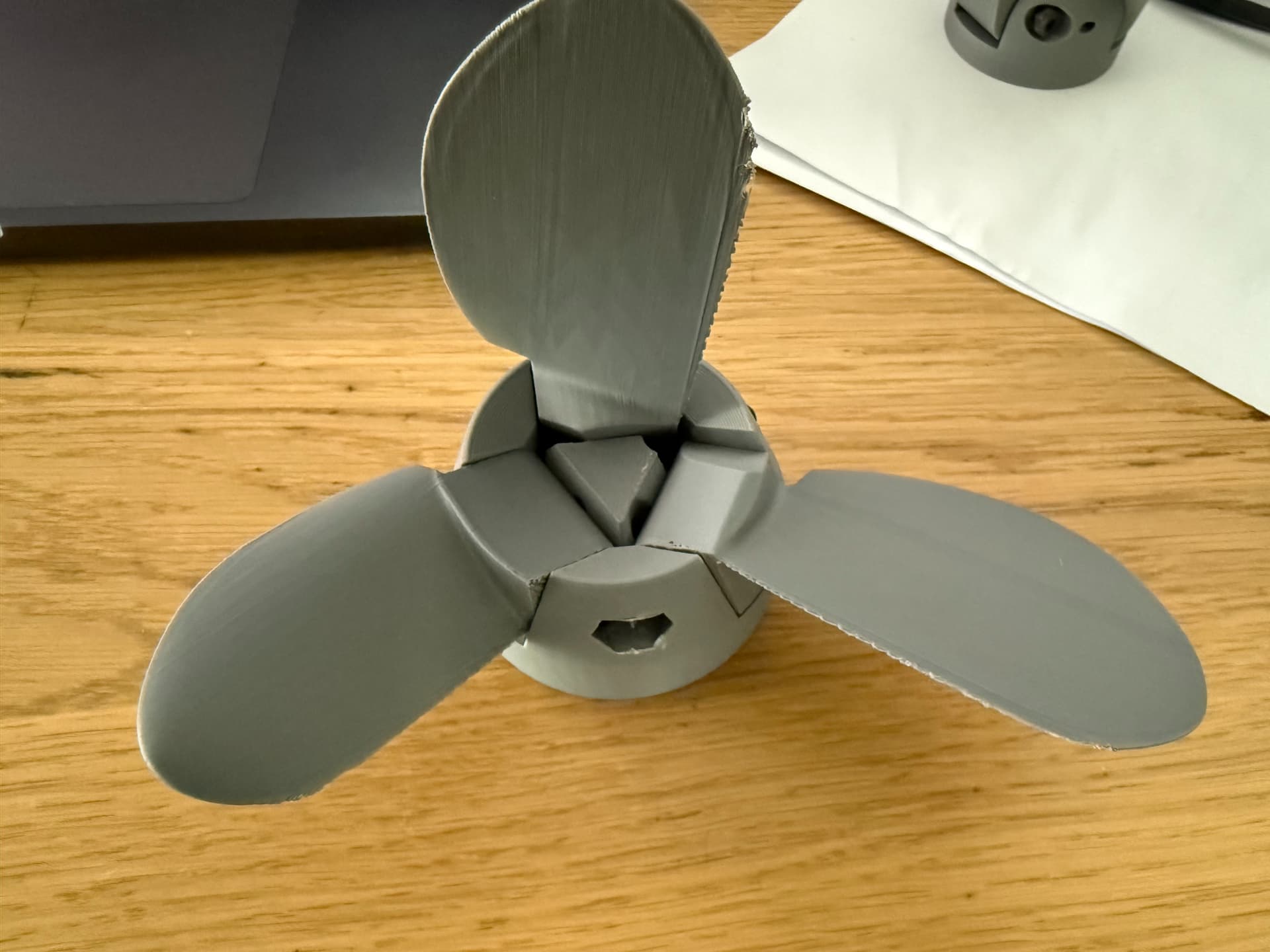
I was wondering whether the 200 mm diameter might be too large, so I also made a set of 160 mm blades with pitch compensation. Here is a rough PLA model of both sizes mounted on the hub; the edges are a little rough  . I will add more fillets to the corners and edges to soften them a bit.
I was unsure what the profile on the back of the blade was for. Originally, I thought it was intended to provide access to the hub bolts, but the profiles do not line up unless each blade is unique. More material there is probably better anyway.
These blades have a 5° rake, so I had to remove some of the material from the centre stop to allow them to stand upright.
| Property | 200 | 160 | 140 (52 mm hub) |
|---|---|---|---|
| Diameter | 200 mm | 160 mm | 140 mm |
| PD ratio | 0.544 | 0.705 | 0.743 |
| Pitch | 108.8 mm | 112.8 mm | 104 mm |
| Surface area (EAR) | 94.2 cm² (0.30) | 64.3 cm² (0.32) | 85 cm² (0.552) |
| Disk area | 314.2 cm² | 201.1 cm² | 153.9 cm² |
| Root thickness | 7 mm | 7 mm | 7 mm |
| Rake | 5° | 5° | 15° |
| Direction | CCW | CCW | CW |
| Characteristics | Higher static thrust | Higher theoretical top speed | Constrained diameter |
I am happy to share the STL files if you would like to print them. They will not fit my motor at the moment, but I am looking into adding advanced VESC logging so I can compare their performance later.
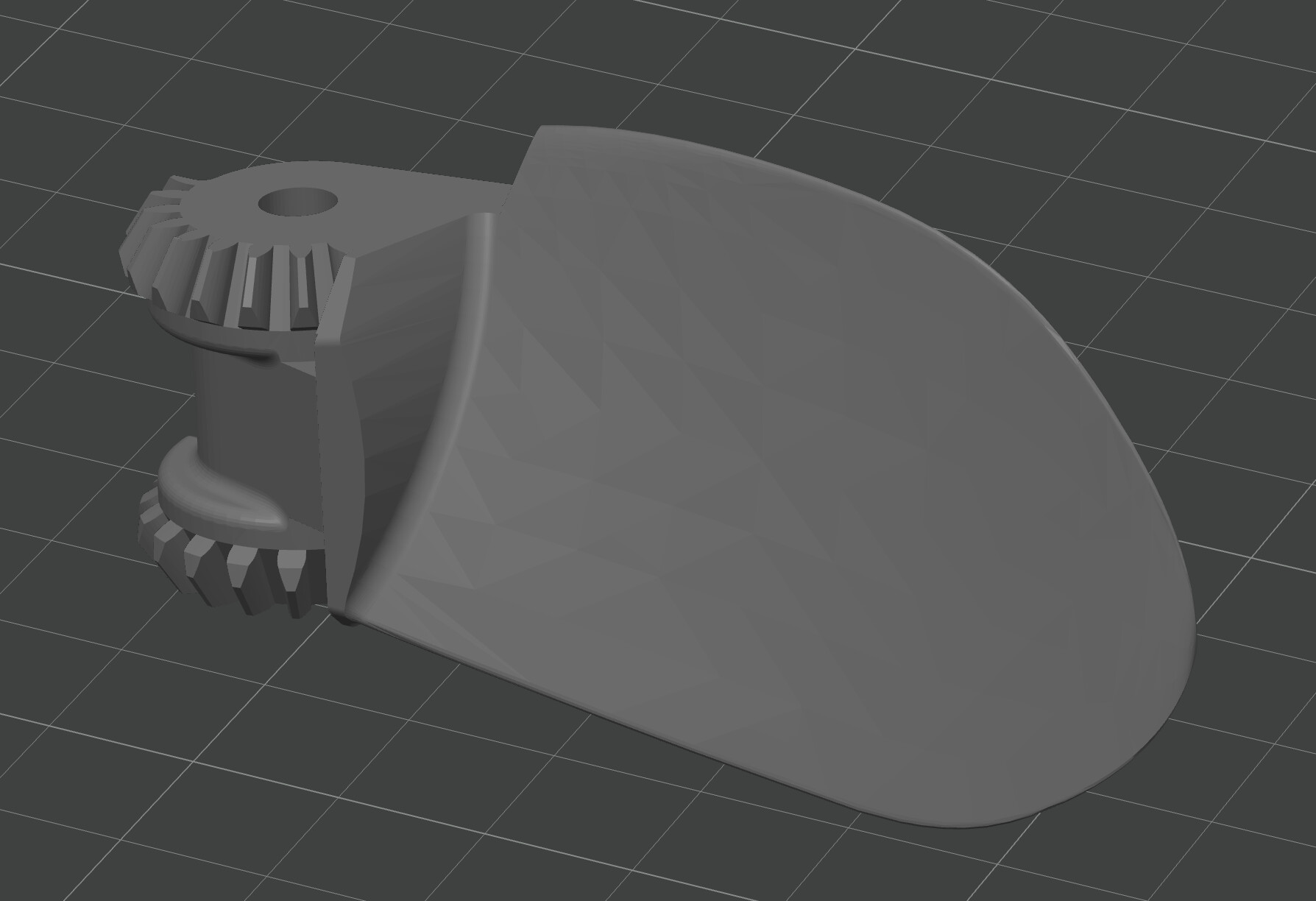
One feature I considered adding was a mechanism to gear the blades together, similar to the systems used on larger three-blade folding propellers. This would ensure that all the blades remain in the same rotational plane.
I am not sure how important this would be at this scale.
A bit more progress on the three-blade folding prop.
I made a few changes to the design shared by @thuffam.
Apart from lowering the pitch to better suit the expected RPM from a 140kv motor, I also made a smaller-diameter version. The earlier 200 mm version looked like it might simply be too much prop for this application, so this gives me another option to test.
The bigger mechanical change is at the hub.
I’ve removed the blade bolts and changed over to 5 mm stainless pins for the blade pivots. That cleans the hub up quite a bit and should make assembly/disassembly simpler.
I also decided to try the idea I mentioned earlier of mechanically linking all three blades together.
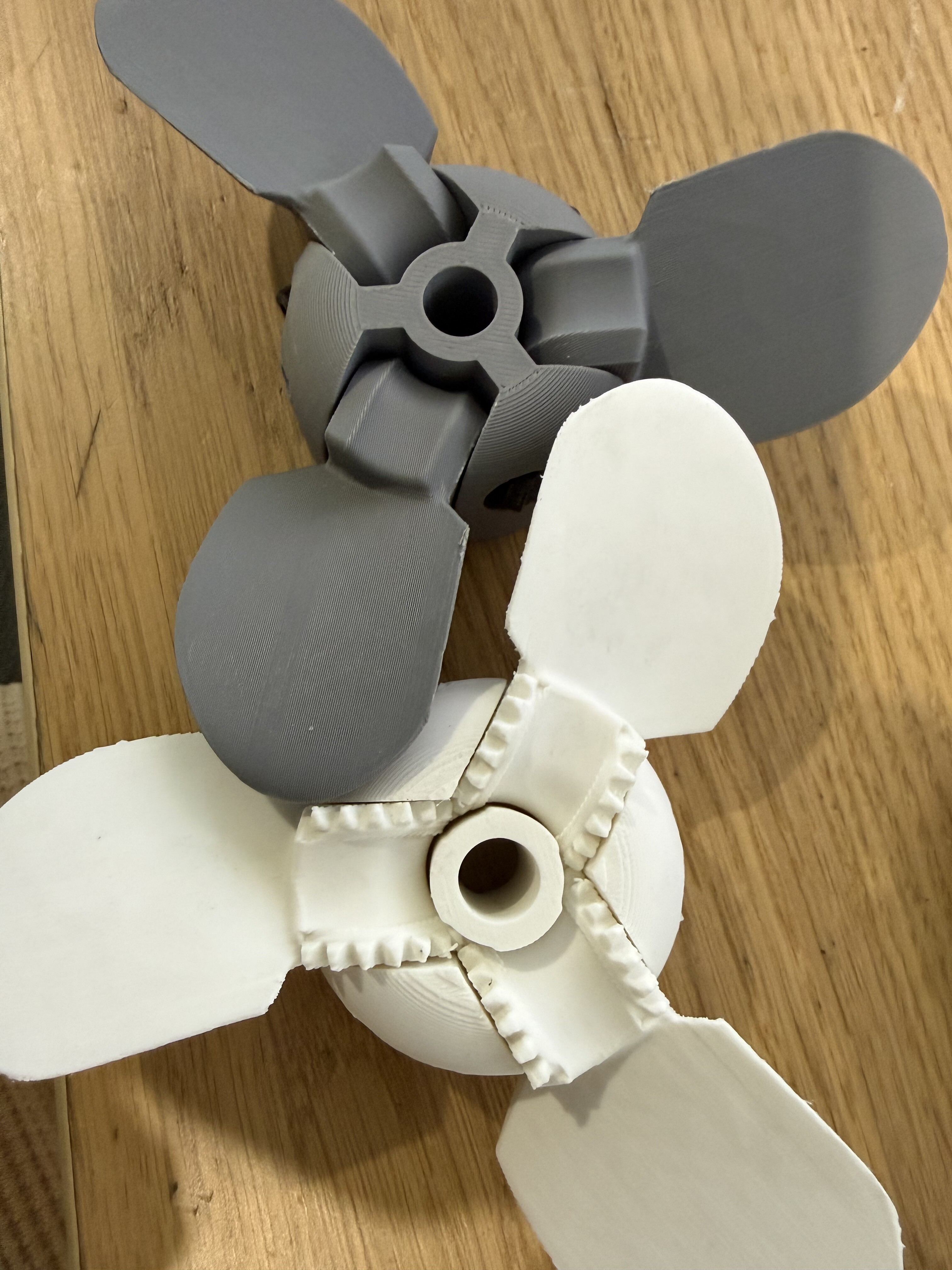
There are now small bevel gears between the blade roots, so moving one blade moves the other two with it. The idea is to keep all three blades synchronised when folding and deploying rather than relying on each blade finding its own position independently.
Video here:
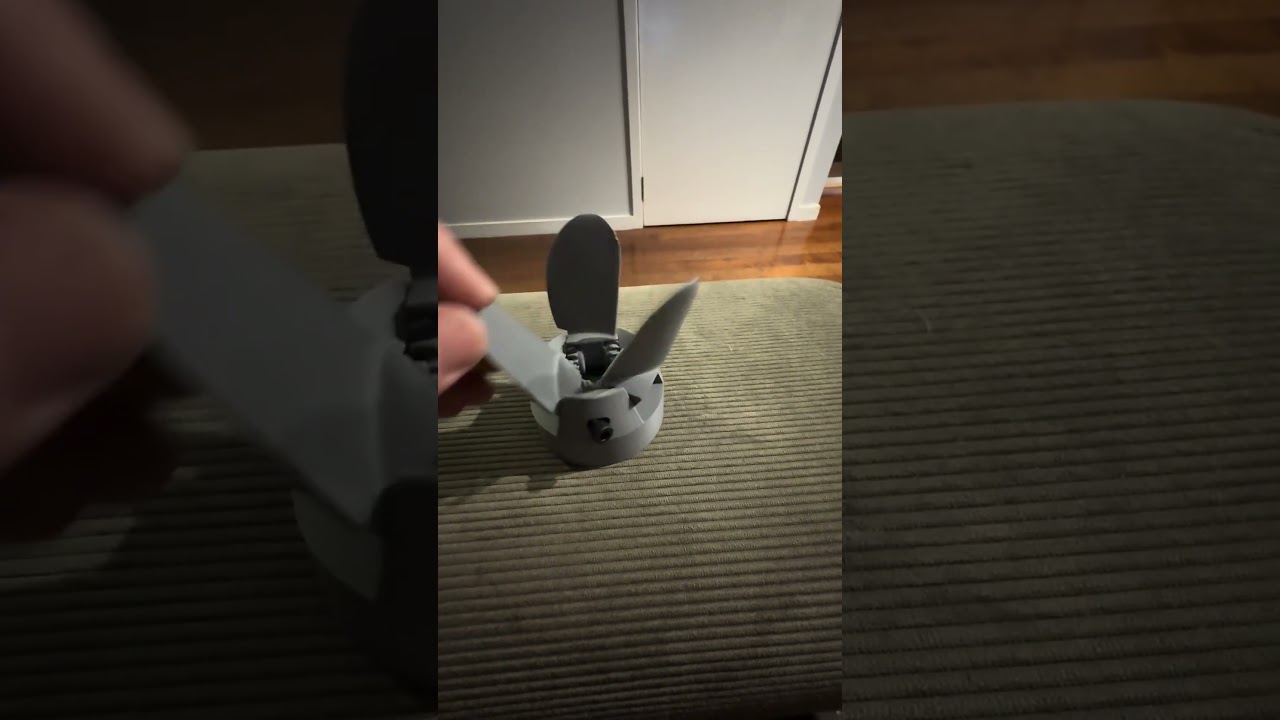
It actually works surprisingly well for a first attempt.
There is still some tuning to do. At the moment the gears are probably a little too tight, so I may add a bit more backlash and clearance to make the mechanism freer, particularly once it’s printed in the final material rather than PLA.
I don’t want the gears carrying propeller thrust — the blade stops and pins should still do that job. The gears are really only there to synchronise blade position.
The latest changes are basically:
Still very much an experiment, but the mechanism is starting to look and behave more like a proper little folding prop rather than three independent blades hanging off a hub.
Next step is probably getting the gear clearances right and then printing a proper set in PET-CF or PPA-CF.
Good to see some new folding props. I also thought 200mm diameter is too big, when I saw your earlier post. As a reference, FD 3 Blade has about 164mm in diameter, I don‘t know the pitch but it is low, maybe around 4.5“.
For the gears I think it has been tried already but there was no real benefit if I remenber right. If the blades weight the same and they can move without too much friction, they will open simultaniously through centrifugal force. If you limit them at the same plane, the prop runs smoothtly.
Loving all the development on these and looking forward to printing a set to try once you are happy with them. I’m keen to try smaller length motors to save a little weight so the option of smaller diameter props is great.
A few people have asked for the STL/STEP files.
I’m happy to share them once the design settles down a bit. There are still a few things changing around the geared folding mechanism, hub stiffness and the 140 mm version.
I’ll probably release them under CC BY-NC-SA 4.0, likely using GitHub for the CAD/source files and MakerWorld for the print-ready files and tested print profiles.
There isn’t really one universal “correct” prop though. The way I’m sizing these is:
motor KV + voltage
↓
motor RPM
↓
gear ratio
↓
prop RPM
↓
target speed
↓
pitch, allowing for slip
↓
diameter / blade area / current
From the motor spec:
motor RPM ≈ KV × voltage
If you have VESC logs you can cross-check it with:
motor RPM = ERPM / pole pairs
and then:
prop RPM = motor RPM / gearbox ratio
As a quick example, 65,000 ERPM with 3 pole pairs and a 4:1 gearbox works out at roughly:
65,000 / 3 / 4 ≈ 5,400 prop RPM
For pitch I’m currently using about 30% slip as a starting point:
actual speed ≈ theoretical pitch speed × 0.70
or working backwards:
required pitch ≈ target speed / (prop RPM × 0.70)
My target is roughly 20–30 km/h with the prop in the 4–5k RPM range.
On my board I also only have about 80 mm from shaft centreline to the fuselage, which is what drove the Takuma-specific version to 140 mm diameter and about 10 mm nominal tip clearance.
For the blade shape I’m starting with a Wageningen Series B propeller design, using relatively low blade area and minimal rake. I then take that generated prop into CAD and use extrudes, sweeps and lofts to cut it back into the folding blade geometry I want.
Diameter and pitch also have a big effect on load and current, so the goal isn’t simply the biggest diameter or highest pitch possible. It’s finding the combination of:
diameter + pitch + blade area
that gives the required thrust and speed without overloading the motor or ESC.
Once the geometry stops changing every second day, I’ll share the files.
Nice work on the gear mech. Lots of talk on the foil drive forums with having to prespool motors to get all three blades to open nicely especially on integrated masts with more laminar flows. This should help solve this.
Wow, thats plenty rpm.
My best setup ist going 2.300rpm with 20km/h. Non Fold.
Maybe foldables are/need less Pitch, but 5k Sounds crazy for me with so Low speed
I am just following the maths and looking at the logs from my own board. Open to hearing what is normal/out there. Different manufacturers / KV will be very different. For instance the motor the 140mm design is for is around 450KV and a 4:1 gearbox and the motor spins at around 20K RPM.
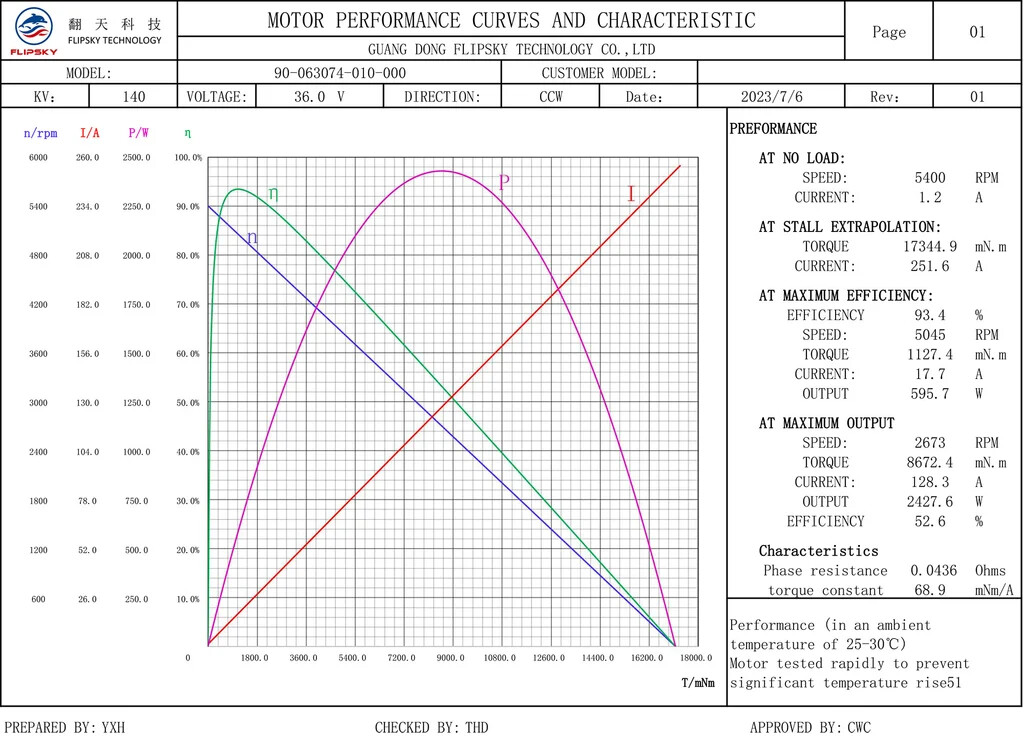
If you look at the flipsky power sheets for a motor like the 6374 @ 36V the no load speed is about 5400RPM and 93.4% efficiency 5045RPM and max power at 2673RPM. with a 12S battery your voltage and these numbers should be higher if the ESC/Battery can provide the current.
what motor are you looking at?
Any chance you could make your design parametric…?
For example I’ve been playing with AI to come up with parameters for my use case and setup specifications :
At the moment there is a lot of manual work, but I like the challenge. I have to go away for a couple of weeks so will not be near a printer. This sounds like a task to keep me occupied to see if I can make it parametric.
AI is amazing but don’t forget to checks its work. Pitch a couple of them against each other to make sure they agree.
I did manage to fit the gears into the 52mm hub