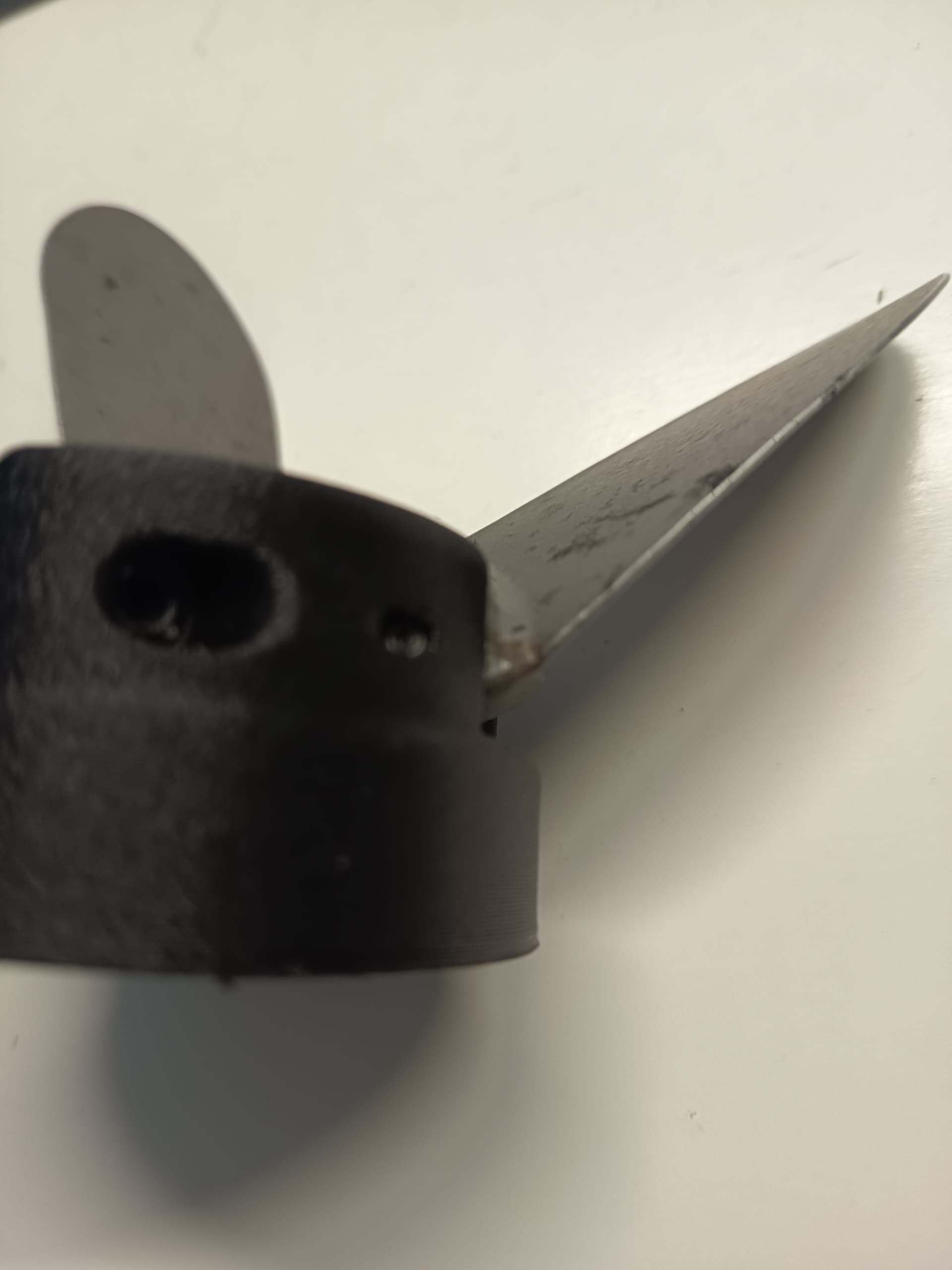
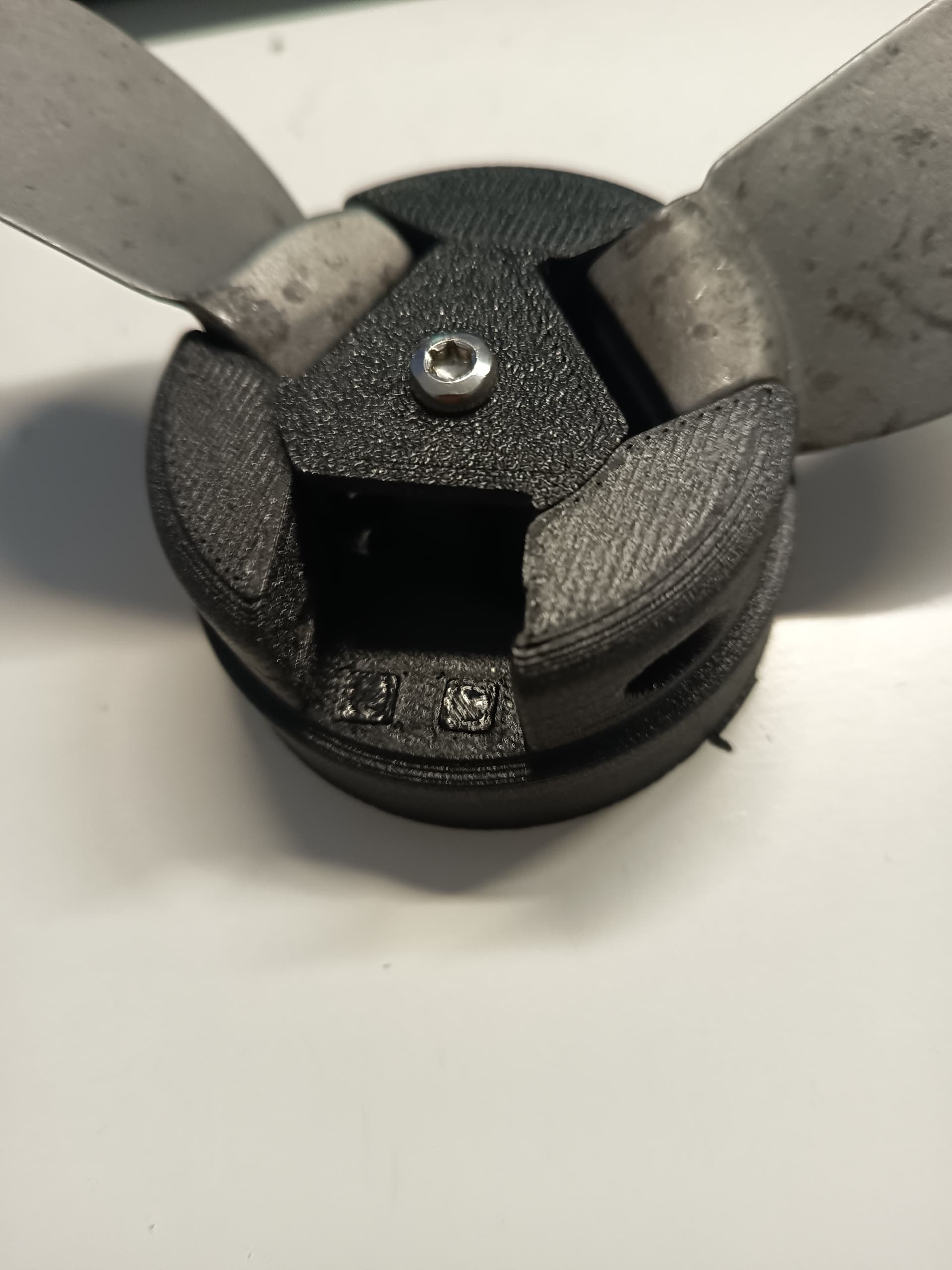
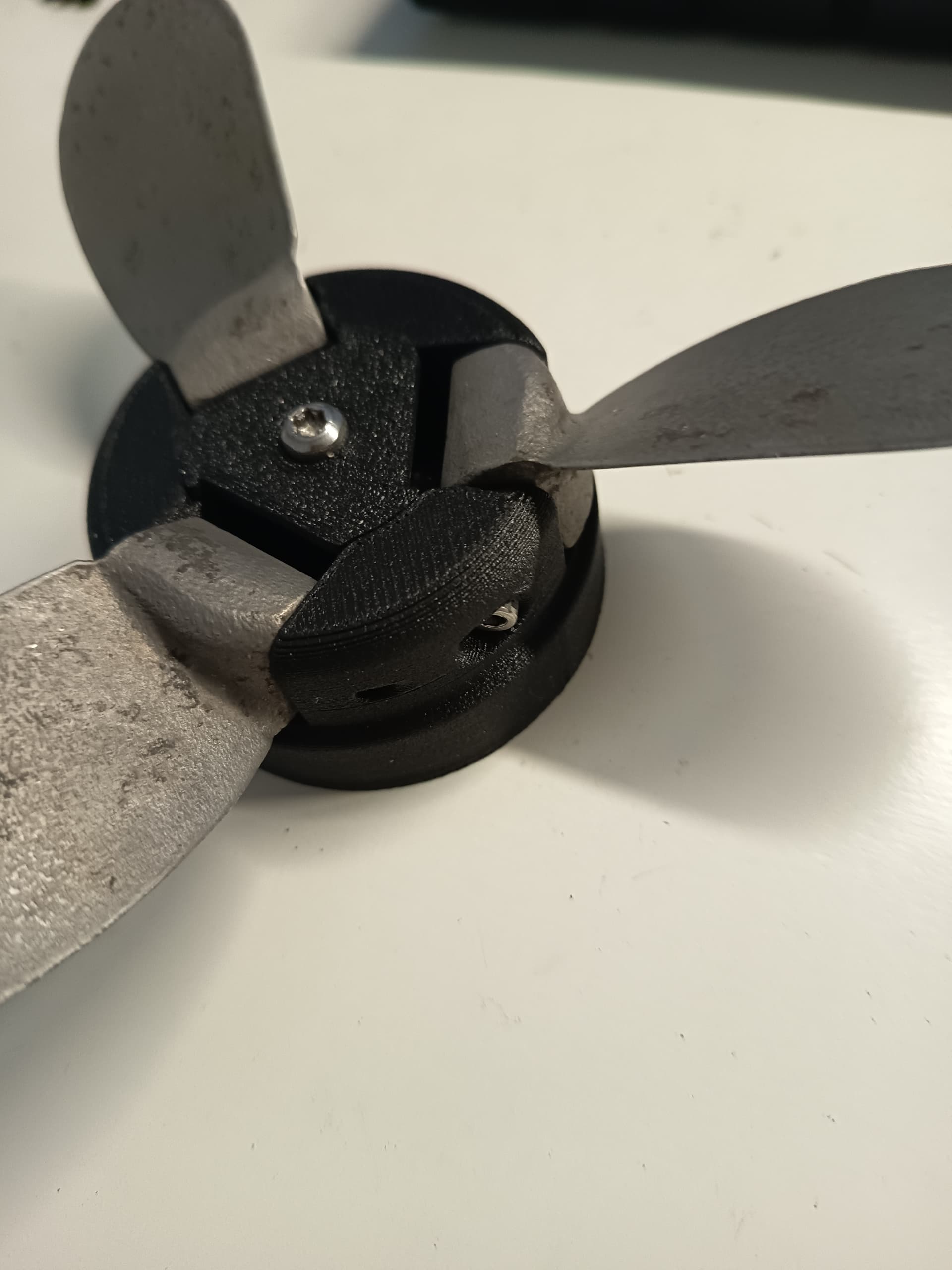
After crcking a hub a week ago, I was considering a better solution.
So I got two rolls to try this.
This is crazy good stuff.
Printed a test piece of my hub, pushed a screwdriver into the holes and I absolutely can not crack it. First thing I did was break my screwdriver, had to take a stronger one.
On first touch it feels and looks like ABS, just a bit softer.
Far more rigid than the usual TPU 95a.
do you think it will maybe deform with the blades moving ? that s a strange idea to use tpu, but tpu GF is creative happy to hear a real test result in water
But also no direct contact to it, so no feedback regarding vibrations.
But for me, I’d trade a bit of efficiency for reliability in this case for sure.
With TPUs superior layer adhesion, even with fibres added, this still has better layer adhesion than any non TPU filament I know and the fibres make it rigid enough for uses like this.
I tried several PA filaments in the past and none were nearly as tough as this is.
I also designed a new hub for 6484/6374 motors, optimized for maximum material at the stress points. For example getting rid of the nut and putting the screws directly into the filament.
And I added small bumpers to soften the impact when folding.
And a small recess at the screws so dirt can get out.
This worked ok in PETG already, hopefully now in TPU it will be even more robust.
I printed the bumpers with soft tpu and 1 wall no infill.
Adjust height so they actually stick out a bit. Bit of trial and error, but print is super quick.
I used it on the cheap bduav 6384, thats the only one I tested.
If someone wants to adjust this for Flipsky I can share the fusion files too.
Perhaps I am a retrograde, but I would not want to use a material whose important characteristic is elastic deformation as a hub or blades.
I started printing PPA-CF at 340 degrees Celsius. I used to be able to tear the supports off the blade by hand, but now I have to use side cutters.
 happy to hear a real test result in water