Hello to you all. I would like to build a coastal day tripper capable of 40-50 miles if possible. I am 110kg old salty sea dog with experience of boat building, commercial fishing, wakeboard instructor to just mention a few. I am looking to make a custom board and battery with off the shelf foil and electrics components. I am thinking that a surfboard shape with more of a V shaped hull/underside with a 95cm mast would be better for the choppy Atlantic weather. My tooling is a little less advanced than some of you folks on here but should be sufficient if not I can out source to pcbway. There is tons of info here and amazing builds. I look forwards to hearing your guys thoughts and advice to accomplish my build
40 to 50 miles is going to require a hell of a battery…
To give you a rough idea, I’m 100kg, using a 13S10P battery (45Ah, around 2.2Kwh) and I could maybe manage 20 miles… My setup isn’t the most efficient compared to what you could find around here, but keep in mind this battery is already 10Kg (22lbs) !!
My point is, to achieve such a range, is gonna take a lot of weight with an adverse effect on ease of use, maneuverability and dare I say, overall fun 

For a 110 kg rider, covering 40 miles is a major endurance feat requiring roughly 3 to 4 times the capacity of a standard eFoil pack.
1 Like
This might be a good reference for you re distance and normal battery consumption.
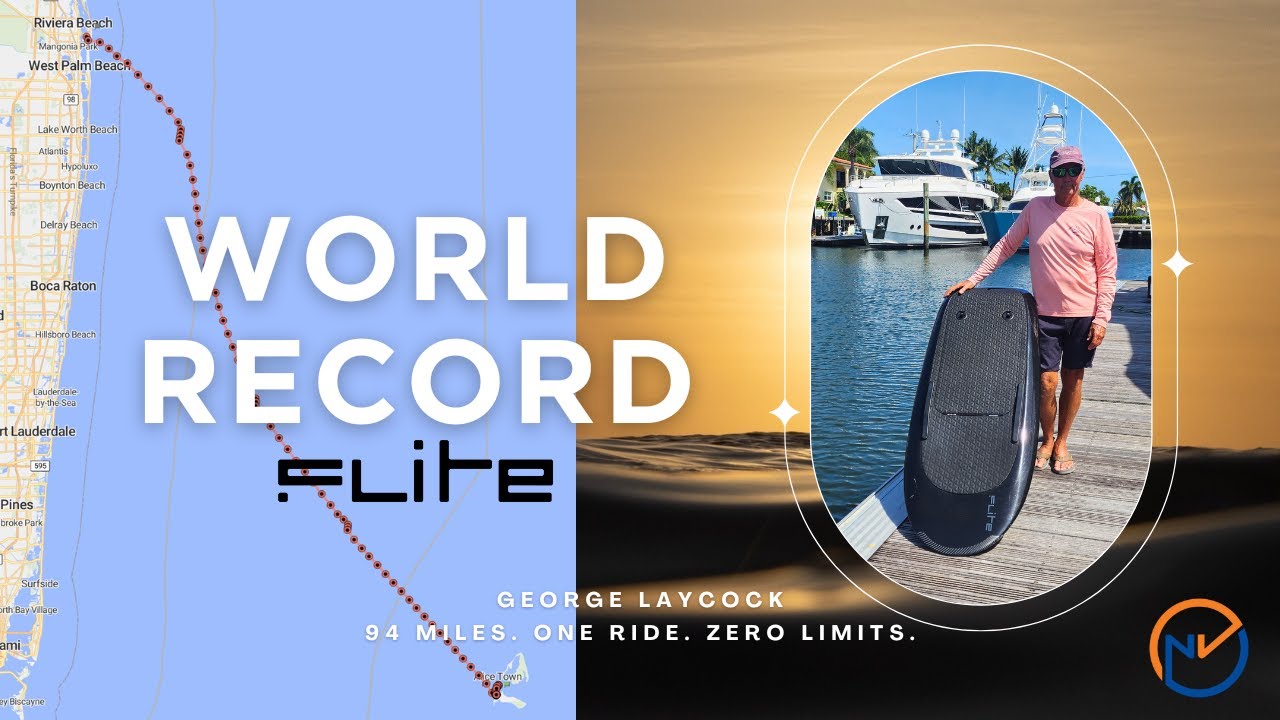
Personally I don’t believe what you are considering realistic and/or safe unless you plan on having a boat accompany you for that type of trip.
Cheers alex adds up wasn’t sure what was possible yet. Need to scale back the miles and layoff the bacon and get down to 100kg lol. Also from what I am reading on the hydrofoils the larger the front wing is nessesry for the weight but a medium is better for the rough conditions. After a bit of research I think a V bottom board with a pin tail and pointed nose with a large nose rocker would be best for the Atlantic conditions
Clearly I am was unaware of the capabilities of the current technology available hence asking here. 30 miles is clearly possible from your video and remember I never said I would do it all at once a man might fancy a pint or 2 at one of the fine establishments he passes lol. As for your safety advice I do not agree I believe a vhf and location becon are sufficient when keeping close proximity to the coast your speaking to a man who has lost count of the gales spent at sea, swam the majority of the west coast of scotland hunting for scallops, been to the deepest parts of the north sea and I am still here to tell the tale.
Currently I am thinking a Gong foil setup
Aluminium Mast 92 cm V3
Front Wing Curve H V3 FG
Stab Fluid H V3 FG
Fuselage V3
Carbon is far too expensive and have had issues with carbon fibre and aluminium fusing together in the past in fresh water so not a big fan of carbon
As for the motor and should I go Flipsky FS65161 or Maytech Mto65162? I would like to use Samsung cells maybe 21700 for my custom battery. Whats everyones thoughts on these parts?
HI,
Regarding your equipment choices:
- 92cm for an aluminiun mast is quite long, usual range is 65-85cm.
The longer the mast, the more it will flex. Defintely with a heavy board / rider.
Personally, I would go with 75-80cm. - The curve and fluid combo is fine, what size are you planning on using?
- The samsung 50S cells are perfectly fine!
- The 65161 from flipsky is basically the same as the maytech, but flipsky is a more popular choice.
Now regarding the range…
The 40-50 miles request is quite a stretch, I did 60km (37.5 miles) with 2 others, on flat water without any swells or much wind. We were sitting most of the time, and it is a very long ride, took us 3 hours, most of the time on cruise control and no speeding. Wouldnt do it again I think, as sitting that long hurts your butt after a while, so be sure to bring a pillow or seat.
All ours batteries were 3.5kWh, and roughly 15kg in terms of weight. They were pretty much completely empty after the ride, altough, 70km (43 miles) was maybe possible for one of us.
You could go bigger in terms of capacity, I recently saw a post of someone with a 4kWh+ battery, so it is possible, but also consider if such a heavy battery is wishful.
If you get a very efficient prop, and a very large flat front wing (fluid/veloce), you can probably do the 40+ miles, but in all honesty, doing such long rides is not going to be very enjoyable (I think). To have more fun in the water, I think its best to go lighter on the batteries, maybe you can do 2 smaller batteries, so you get all the benefits. Only downside would be is that you cannot do one single large trip.
1 Like
Bedankt voor de informatie.
I was thinking the 92cm mast to stay clear off the chop in worse conditions. I was originally thinking a large front wing as I had been recommended a medium for ruffer conditions but after learning the weight capacity I think I will need an xl, xxl or maybe even the 3xl. I really like your idea of a dual battery pack I am thinking about a twin 2kwh giving the ability of using one or two packs for diffrent scenarios. I totally understand you that long hauls are hard. I am going to to be using this board in the algarve and there plenty places for pit stops to regroup and rest up before going back at it.
Geen dank!
I think GONG also offers a 19mm V3 mast (thickness), when going for 92cm i would defintely choose this one combined with the large wings you are planning on using. Still I think 92cm is maybe too much, but that is upto you. Keep us posted and goodluck.
Oh and btw, with frontwings we can usually go a lot smaller than we think.
Currently I am using a 650cm² and 700cm² frontwing at a bodyweight of roughly 87KG. This is an XS wing and a S wing. But for efficient long rides, a larger wing will help.
1 Like
Your initial post implied you wanted something that would do 40-50 miles in a “day” which I assumed meant non stop. The video I linked for you makes clear that isn’t realistic or safe without a support boat. Wasn’t questioning your abilities as a waterman 
If you are not planning on stretching the range of a normal large battery by pumping or paddling etc then I don’t agree with your logic of a V shaped hull. All the successful commercial “efoil” products have very similar board shapes. Broad nose, flat and fairly wide with sufficient volume to float the onboard weight at rest. Once foiling the bottom shape doesn’t matter but when you touch down that shape tends to be the most forgiving. That’s also true in starting mode.
Your extra long mast follows the same logic. Very few foilers can hold an absolute height above water especially if it’s wavy/choppy. A few extra cm of height vs a more stiff mast I don’t feel is a good trade off.
As far as equipment goes the Flipsky VX5 or equivalent truely waterproof remote is well worth the extra $
Have you considered renting an efoil for a few days and ride it in locations where you want to normally ride? This will give you firsthand experience in what you need to build.
You know what they say assumptions are normally the mother of all screw ups  . I will explain the logic of wanting to do a v shape in choppy weather when coming close to breaching or actually breaching this will displace the water better without giving such an impact therefore giving a higher probability of staying up right. Same with the mast having the extra height put more distance between you and the chop. I have always been drawn to more adverse conditions when monoskiing, wakeboarding, sailing, Jetskiing and kitesurfing cause I like a challenge not that my knees or body like it:laughing: I have had a very brief go on a hydrofoil behind a sailing boat and the sensation of almost flying was very cool and having more control than a manta ray was also nice. Also just cause the commercial companys are doing one thing don’t mean the other ain’t possible if we followed that logic nobody would be efoiling. Thanks for the vx5 info hadn’t really got to controllers yet
For someone who came asking for advice you don’t seem to be very open to input.
Obviously build whatever you want but I’m out.
Good luck
More than open to advice I just ain’t open to the fun police and negativity cause I made a different choice to the advice given. As they say theres more than one way to skin a cat✌️
So if I disagree with you and attempt to point out that perhaps the efoil “wheel” for board shape has already been invented and refined I’m somehow being negative and I guess the fun police.
Yes you have vast experience in lots of watercraft BUT have never actually used an Efoil (which is NOT the same as the craft you list) you know more than the industry engineering experts with a big budget to trial and error lots of different shapes and that’s where they landed. Hmmmm
Like I said build whatever you want FAFO.
Theres a beautiful Scottish word you need to learn “wheesht” 

Hoi nu de kont weg is kun je me wat advies geven over de elektra hier een lijstje van wat ik nu denk
Motor Flipsky FS65161
Vesc Flipskp FSESC 75300
Remote Flipsky VX5
Battery 2 x 20s4p Samsung 21700 50s
Ik hou van het idee van 2 grote pakketten parallel die ik samen of onafhankelijk kan draaien, maar er zijn enkele problemen met het grote pakket, maar het is zogenaamd mogelijk met bms- en vesc-instellingen. Heeft u aanbevelingen voor een bms, lader, kill cord, propeller en alle andere onderdelen die ik nodig heb. Ik waardeer je hulp wel ook de 19mm mast was precies wat ik dacht
No it won’t. Science says no…
V-shapes sit lower in the water, increasing the hull’s wetted surface area. This creates a powerful hydrodynamic suction effect that effectively “sticks” the board to the water surface, actively fighting against the lift generated by the foil underneath
A V-hull requires more power to push water aside and climb onto a plane. Flat surfaces, conversely, skip along the top of the water immediately, allowing you to reach take-off speed with minimal effort.
Then on touchdowns:
-
The “Rudder Effect” (Loss of Steering)
When you are flying on a foil, you steer by leaning the board and turning the underwater wing. If you touch down with a V-hull while leaned over, the deep, angled hull violently bites into the water. This acts like a second rudder fighting against your foil, causing an instant, unrecoverable high-side crash (a “catapult”). -
High Drag and Slow Recovery
A V-hull is designed to slice deep into the water to absorb impact. However, for a foil board, cutting deep creates massive drag. This instant loss of speed drops your foil below its stall speed, meaning you lose all lift and get stuck back in the water. -
Stickiness Instead of Skipping
Flat hulls air-lubricate upon impact, allowing the board to skip across the surface like a flat stone. A V-hull wedges itself down into the water, maximizing surface contact and creating a suction effect that pins the board down.
2 Likes
Besides this a longer mast will create more drag when not fully used.
2 Likes
I think the listed materials are fine, for the battery, maybe lower voltage?
20S is quite high, for what I know, 14S is the relatively safe limit, alltough i see 16S more and more.
Im using a pidzoom charger right now, but aliexpress is also full of chargers, and you can also get a BMS there. You need to decide if you want to discharge by the BMS or only want to use it for charging.
For the killcord…no idea in all honesty, not many people use that with their efoils, also make sure to program it to the vesc, and not simply inbetween vesc and battery as it can damage the mosfets of the vesc. This can happen if you cut off battery power to the vesc under high load.
Momentarily there arent many prop options, you can get a fliteboard prop, but I think it wont have enough power for a heavy rider, maybe better to get the prop from zerotow, which is a 6’’ prop, so very strong pull:
1 Like