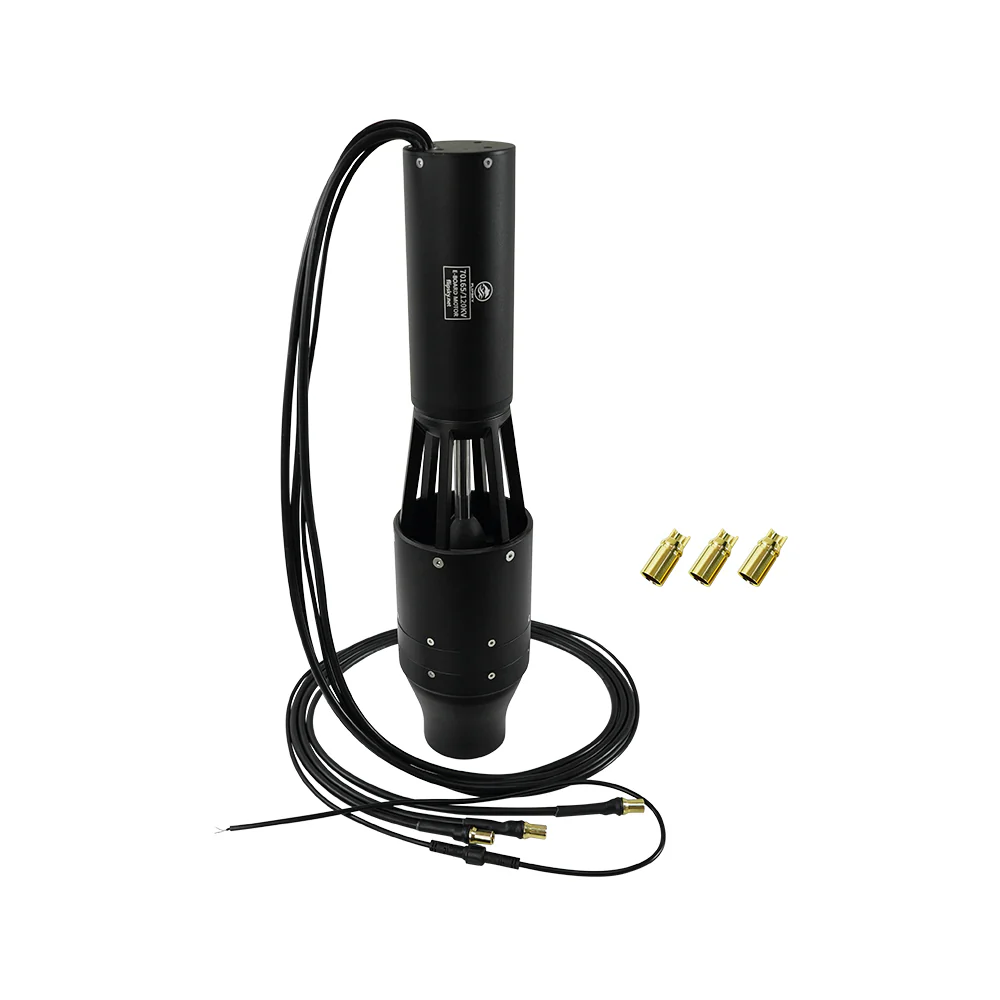
They have a version with a 70165 motor (8800w peek) and one with 65161 motor (6000w peek). The smaller one is only $422.
Does anyone have any experience using these for e-foil?
Do you thing they would be suitable?
Maybe to heavy and long to be practical?
As I understand it “water jets” need a higher RPM compared to a standard propeller. Maybe it would be better to get the motor with a higher KV if using it with 13S. I think Flipsky offer the motors with custom KV.
For a Jet, you will need much more rotations, KV needs to be upped. Either by a gearbox or a higher KV motor. WIth the regular 120kV motor, there is not enough RPM.
Thanks for you input!
I have asked Flipsky for more details of the products. I also ask if it is possible to get them with a higer KV motor. I post here if I get a response from them.
Jonas
They say the diameter of the impeller is 91.9mm and the impeller and housing are made from aluminium. This seems quite similar to the diameter of the Maytech Jet.
I asked about the optimal RPM for the jet-pump (since all info about jets say they need high RPM - more than the 120KV motor they are selling it with) and got the very strange answer: 2780 RPM is optimal. I don’t believe this is correct info! I that case they must use a very high pitch impeller that is pushing allot of water for every RPM. But more likely the person answering emails don’t understand the question or dont have the info.
However they say it is possible to get “any custom” KV value on the motor when ordering.
They also said a third version of the jet will be released soon using a 85161 motor.
Maybe I will order the one with the 70165 motor (peek 8800w, rated 4400w) but with 200KV that will produce theoretical 10000RPM on a 13S battery (probably more like 7000RPM with load). I have not decided yet. Or maybe it is better to wait for the more powerful one (but the weight and price will be higher for that one). The SiFly jet seem to use a motor with 8000w peek - therefore I am thinking it might be enough.
It’s unfortunate they haven’t provided much detail on this new product.
There are lots of builds here based on the 65161 either on Efoil and to some degree towboogie.
I asked them if they would sell just the “Jet” portion as I already have the motor and they have yet to respond which I interpret as no or at least not yet.
I would spend $ on the jet just to try to see if it would work. I did manage to Frankenstein attach an original Lift “Jet drive” (actually a small prop with tight tolerance to shroud) to a 65161 motor and efoiled with it albeit with limitations.
Personally I don’t think getting this with a larger - heavier motor than the 65161 would make sense for efoil. As mentioned getting a higher kv version of a 65161 might make it viable.
My reasoning behind choosing the 70165:
It is only 5mm more diameter and according to flipsky website only 0,1kg more weight but it will provide 46% more power.
The jet will give much more drag (compared to propeller without duct) and as i understanding a jet is 15-30% less efficient than a propeller. Therefore i think the 65161 might not have enough power (or it might just).
Just FYI, both the 65161 and 70165 weigh the same.
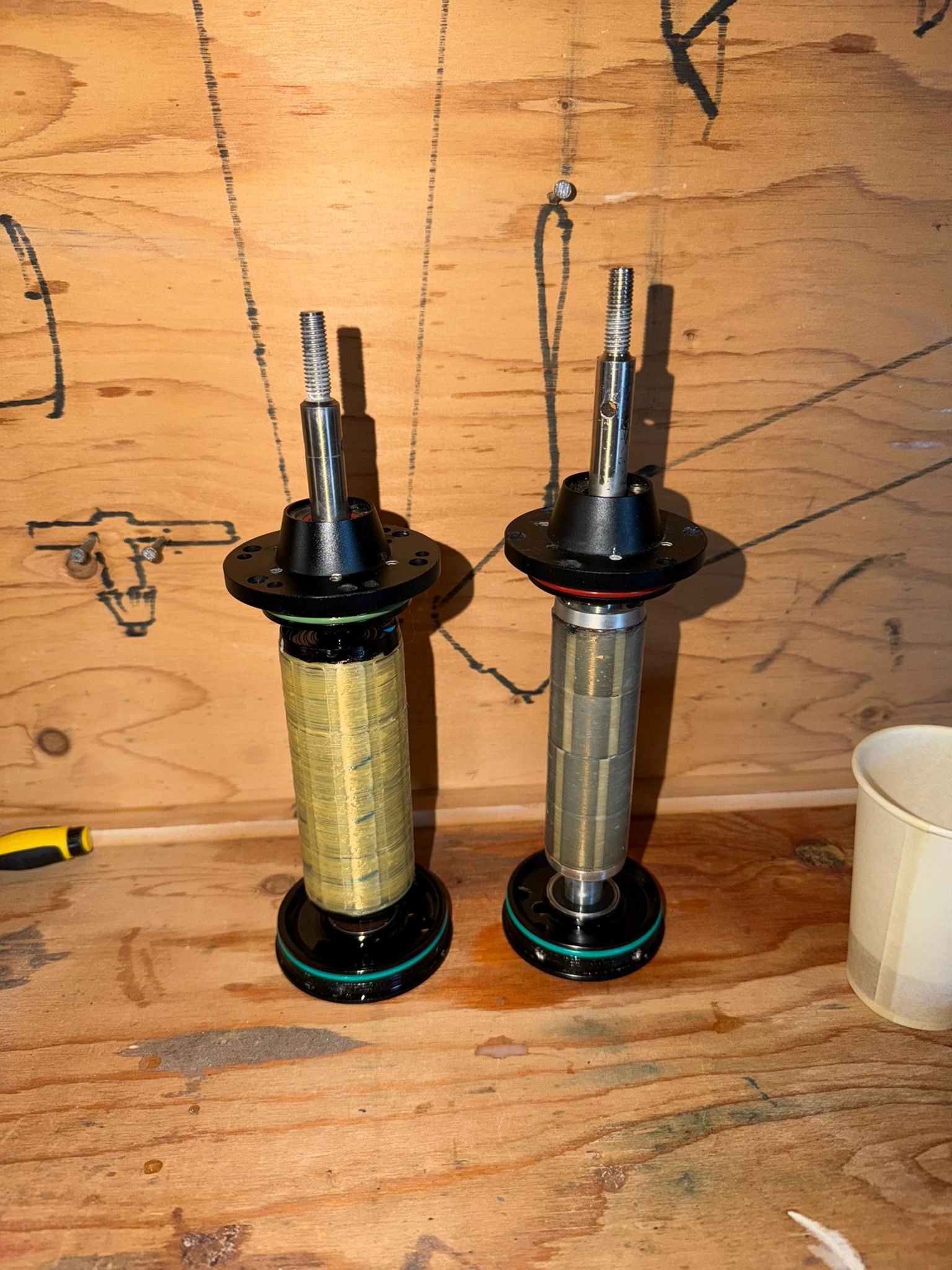
The differnce is that the 65161 has a bigger stator (more copper), and the 70165 has a bigger rotor (larger magnet).
Yes, the 70165 has more power on paper, but to be able to use this, you will need higher voltage. The 65161 is rated for 20S, the 70165 is rated for 24S. Since the 70165 has less copper, there is less thermal mass, so to not overload it with current, and reach the 8.8kW, it is best to use a relatively higher voltage.
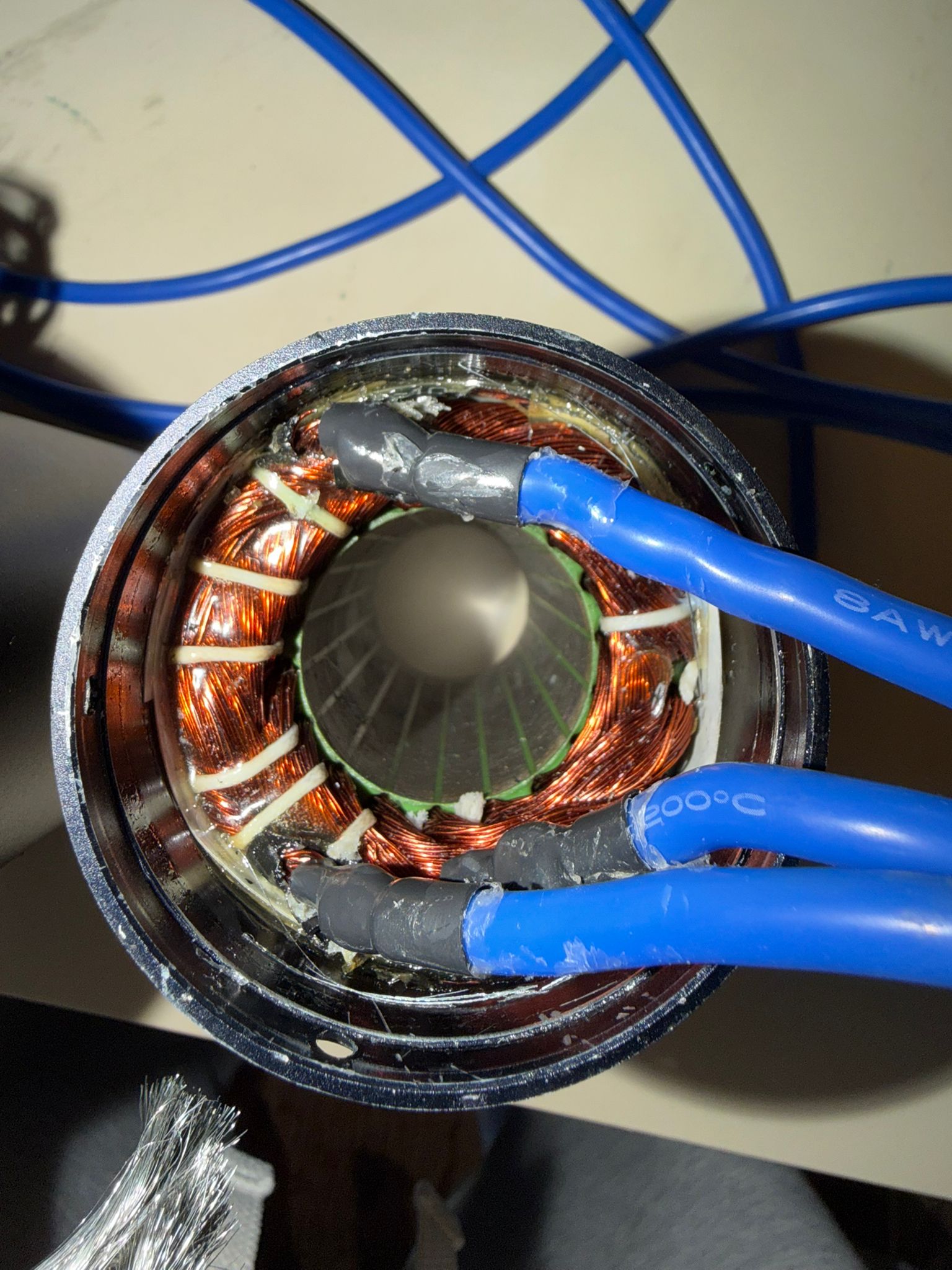
See my pictures for the differences, i have disassebled both!
70165 Stator (less copper)
I am using a 13S battery - that is quite faar from the 24S max on 70165. I my head intreasing the KV to 200 would make it more suitable for my battery. But my knowledge of motors are very limited. Are you saying the size of the rotor/stator on 70165 will make it hard to get the 8,8kw on a 13S battery even with 200KV?
I asked the “Google AI” about increasing the KV:
Yes, increasing the KV rating of a motor will generally increase its rated current (both its continuous current rating and its maximum peak current) assuming the physical size, voltage, and core structure of the motor remain the same.
Fewer Wire Turns: A higher KV motor has fewer turns of copper wire per stator pole. Fewer turns mean less Back Electromotive Force (Back EMF) is generated per RPM, which allows the motor to spin faster for a given voltage.
Thicker Wire: Because there are fewer turns, manufacturers can use thicker wire to fill the same physical space inside the motor.
Lower Resistance: Thicker wire and fewer turns drastically lower the electrical resistance ((R)) of the motor windings.
Higher Amperage: According to Ohm’s Law ((I = V/R)), lower resistance causes the motor to pull significantly more current ((I)) under load. Because the motor can handle and draw more current without overheating the thicker wire, its rated current increases.
Based on looks to be fair. Both motors weigh 3kg. So when the 70165 shows a larger rotor, I can only presume, the copper is less on this one compared to the 65161. It would also explain why Flipsky rates the 65161 for 200A peak and the 70165 for 150A peak (since there is less thermal mass
I’ll weigh them later today.
Why did you disassemble? I find the 70165 gives a lot more thrust for the same power input compared to the 65161. A lot more over head for burning out as well.
Unfortunately, the cables break very easy. Had to disassemble a mast, as the vesc was broken. Cables was potted with silicon, just like the cables of the motor connecting to the vesc. All broke down.