Gong V3 DIY Build

DIY E-Foil Build – Custom Board + Budget Performance Setup

I finally decided it was time to try e-foiling, so naturally I turned it into a full DIY project. My goal was to build something reasonably affordable but still performant. As with most DIY projects… things evolved along the way :sweat_smile:

For the foil itself, after recommendations from a couple of good friends, I decided to go with Gong.


Build Overview

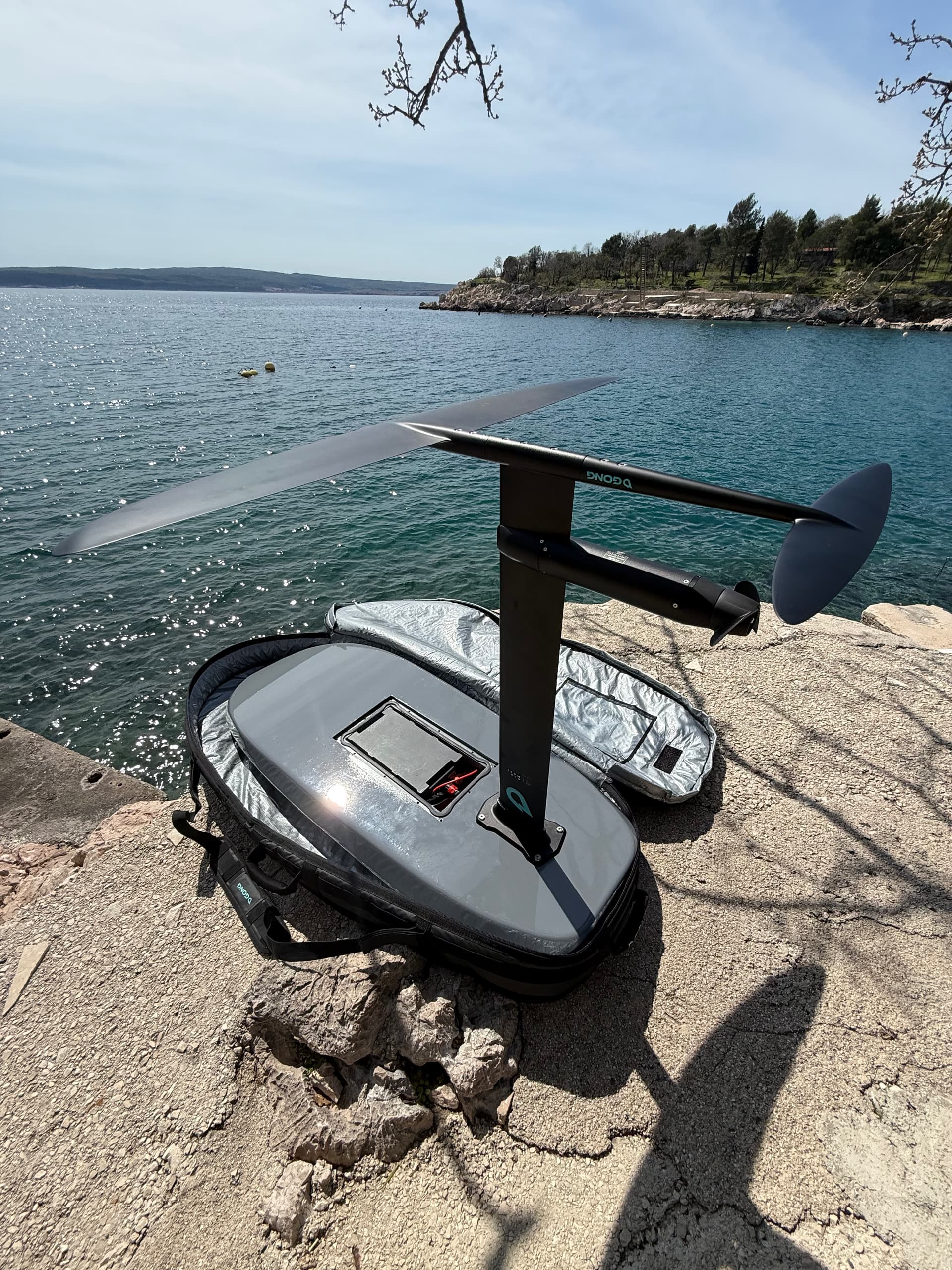
This is what the setup currently consists of:

  • Custom board
  • Gong Curve H v3 FG XXL front wing
  • Gong Curve v3 FG XL stabilizer
  • **Gong Alu Mast 19mm 85CM
  • Flipsky 65220 motor (watch for AliExpress discounts :slightly_smiling_face:)
  • Samsung 50S battery – custom 14s5p pack
  • Flipsky VX5 TX/RX remote (also worth watching for discounts)
  • Daly Blue BMS with reed key switch (acts as a kill switch if needed)

The target budget was under €1800, but reality hit a bit:

  • Upgraded remote
  • Had to CNC the adapters twice

So right now the build is just above €2000.

Worth mentioning:
I already had most of the tools and some spare glass fiber and epoxy, which definitely helped keep the cost down.


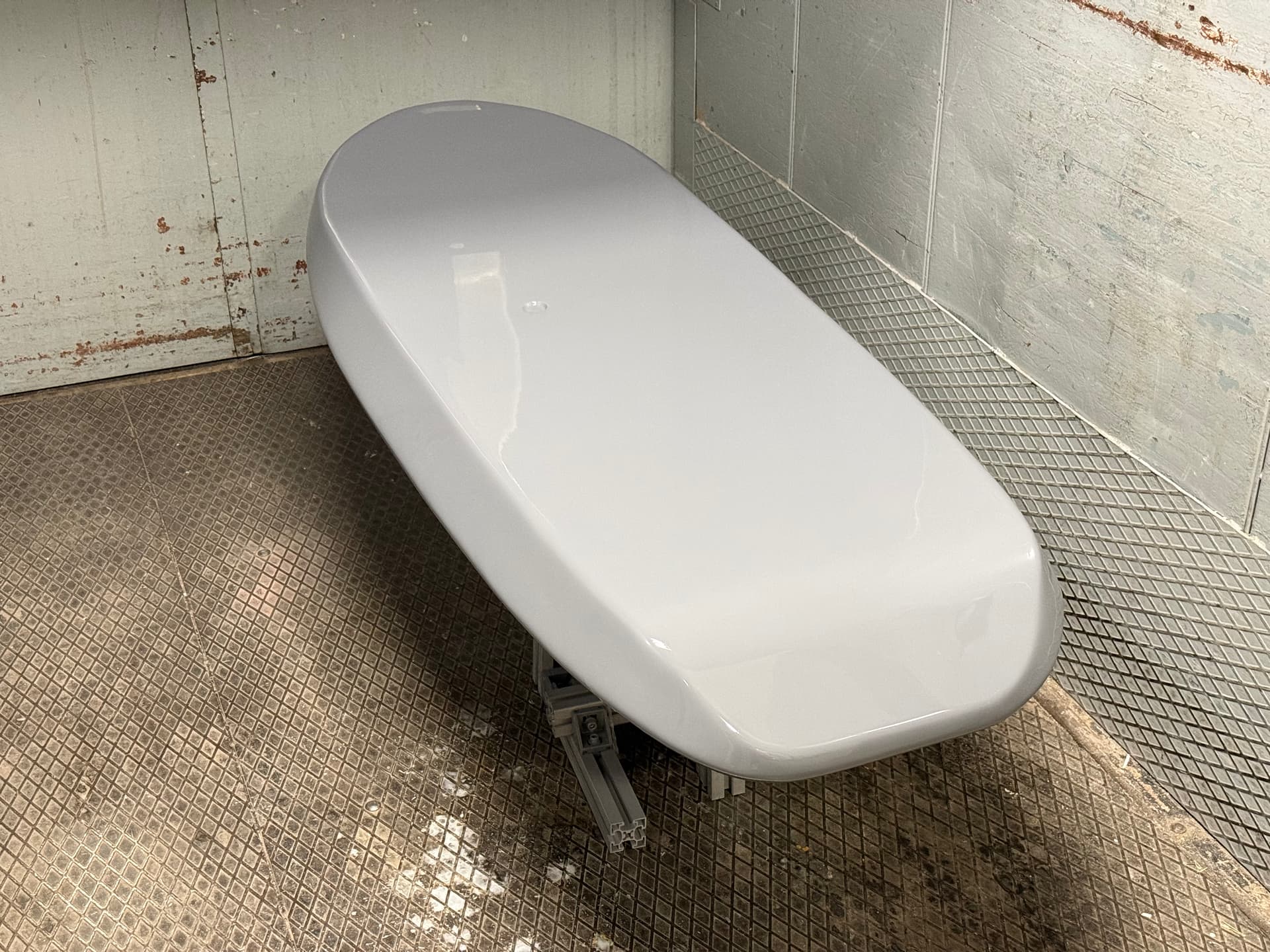
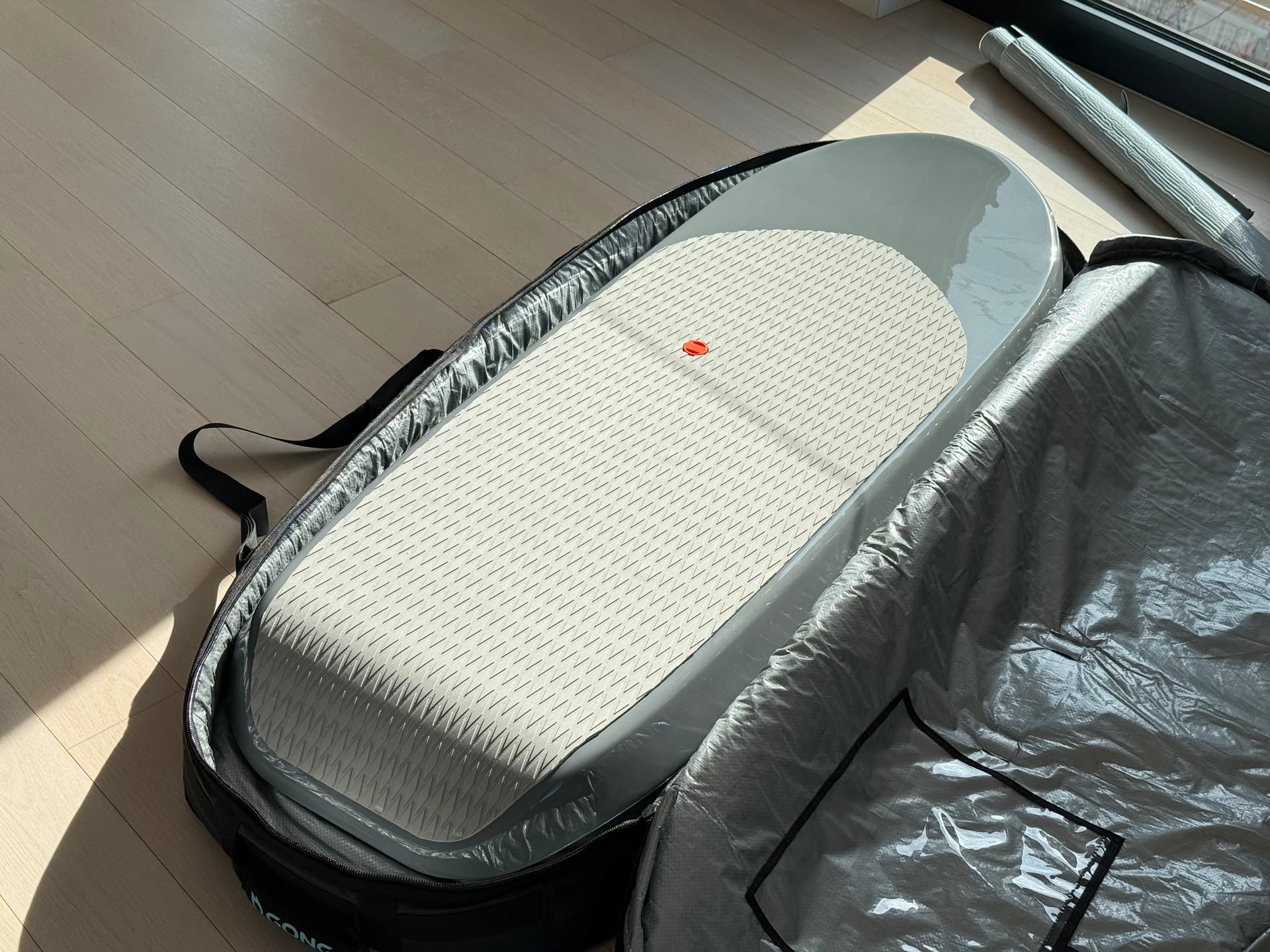
The Board

Initially, my plan was to build the board from a fully 3D printed shell.

The idea:

  • Print the shell in 18 separate sections
  • Glue them together
  • Fill the inside with PU foam

I ran quite a few tests using different materials:

  • PLA
  • LW PLA
  • ASA

But every option had some drawback:

  • Warping
  • Poor layer adhesion
  • Low heat deflection
  • Too heavy
  • Too expensive
  • Or simply too much work for the result

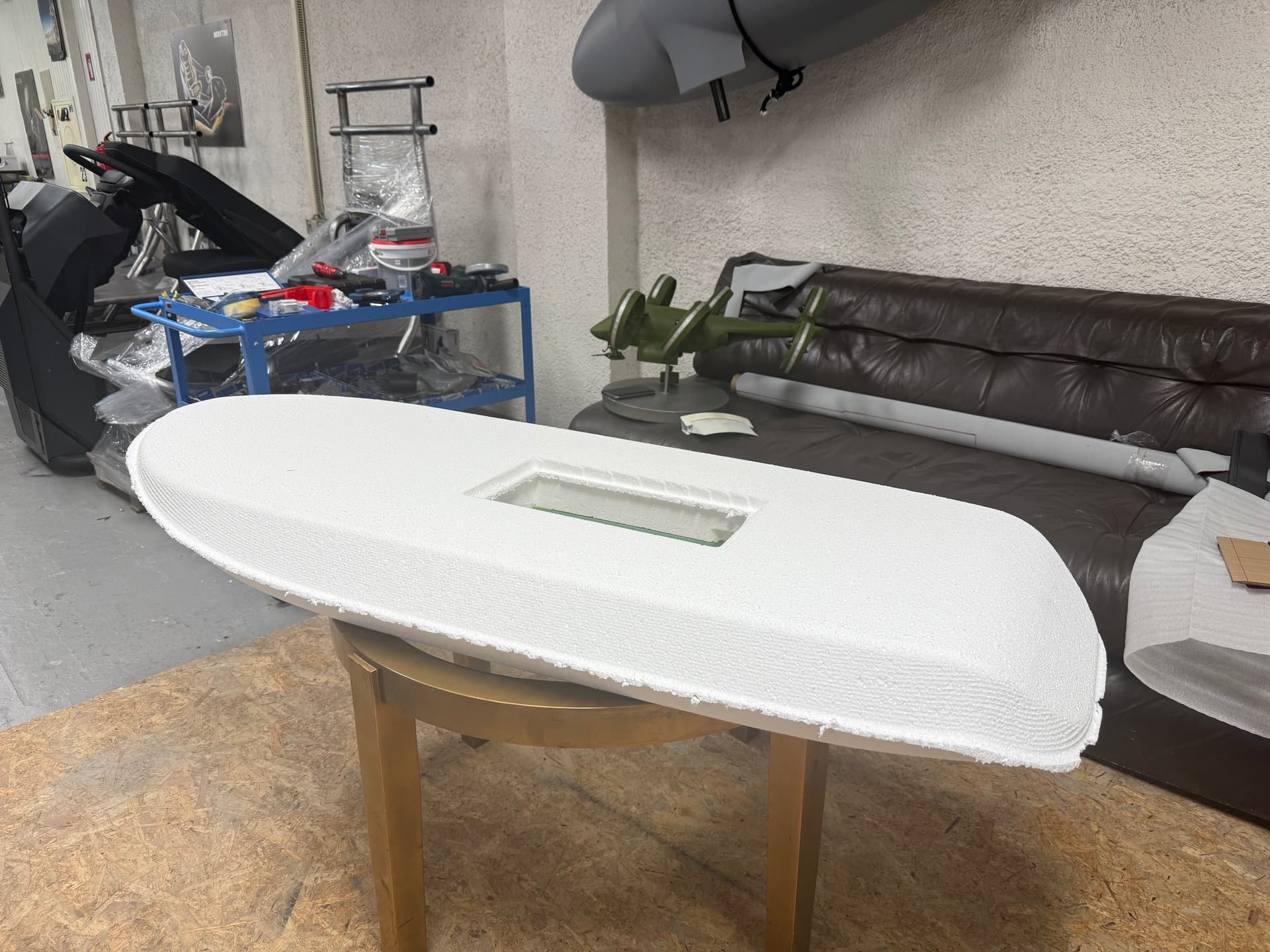
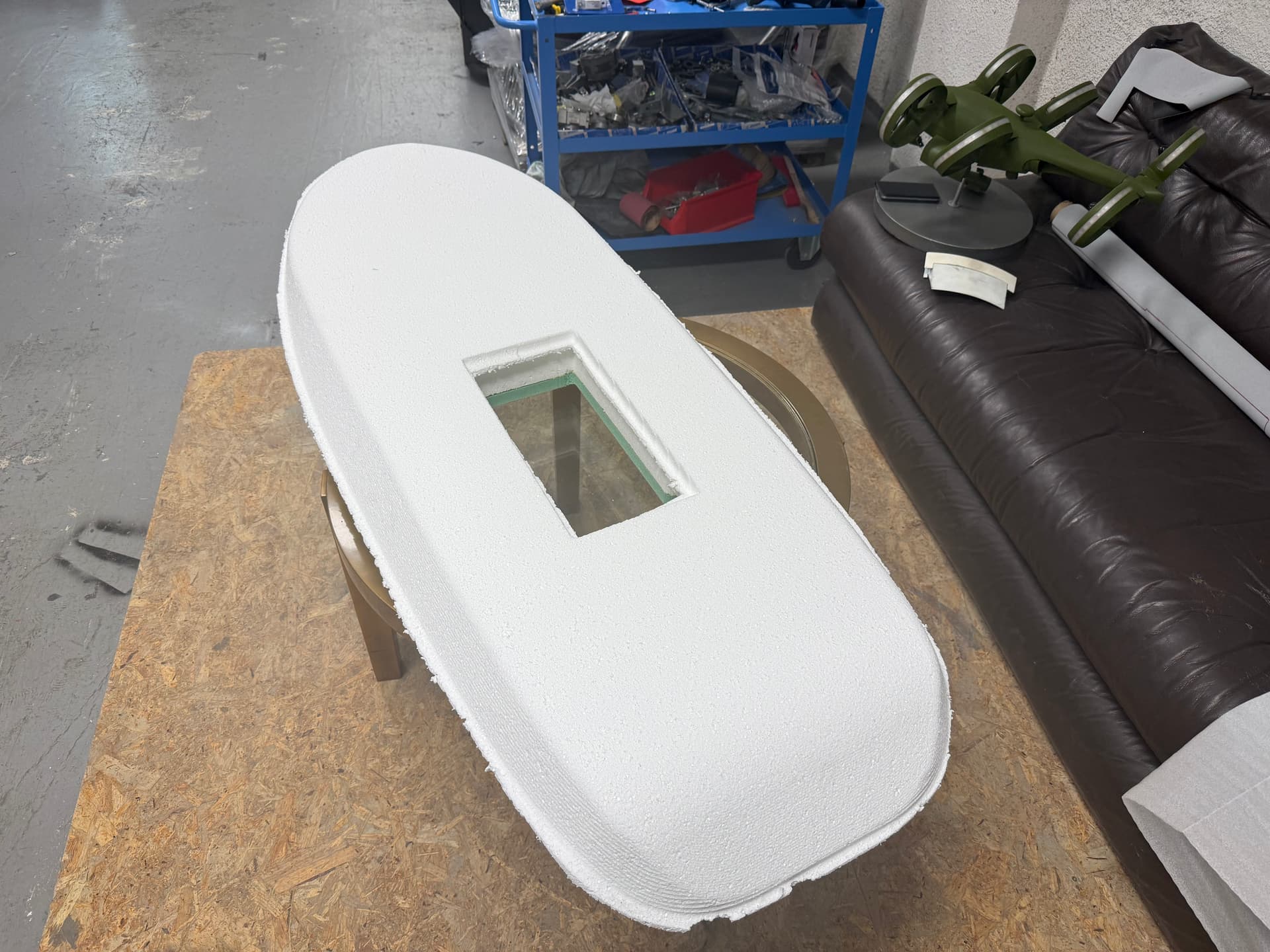
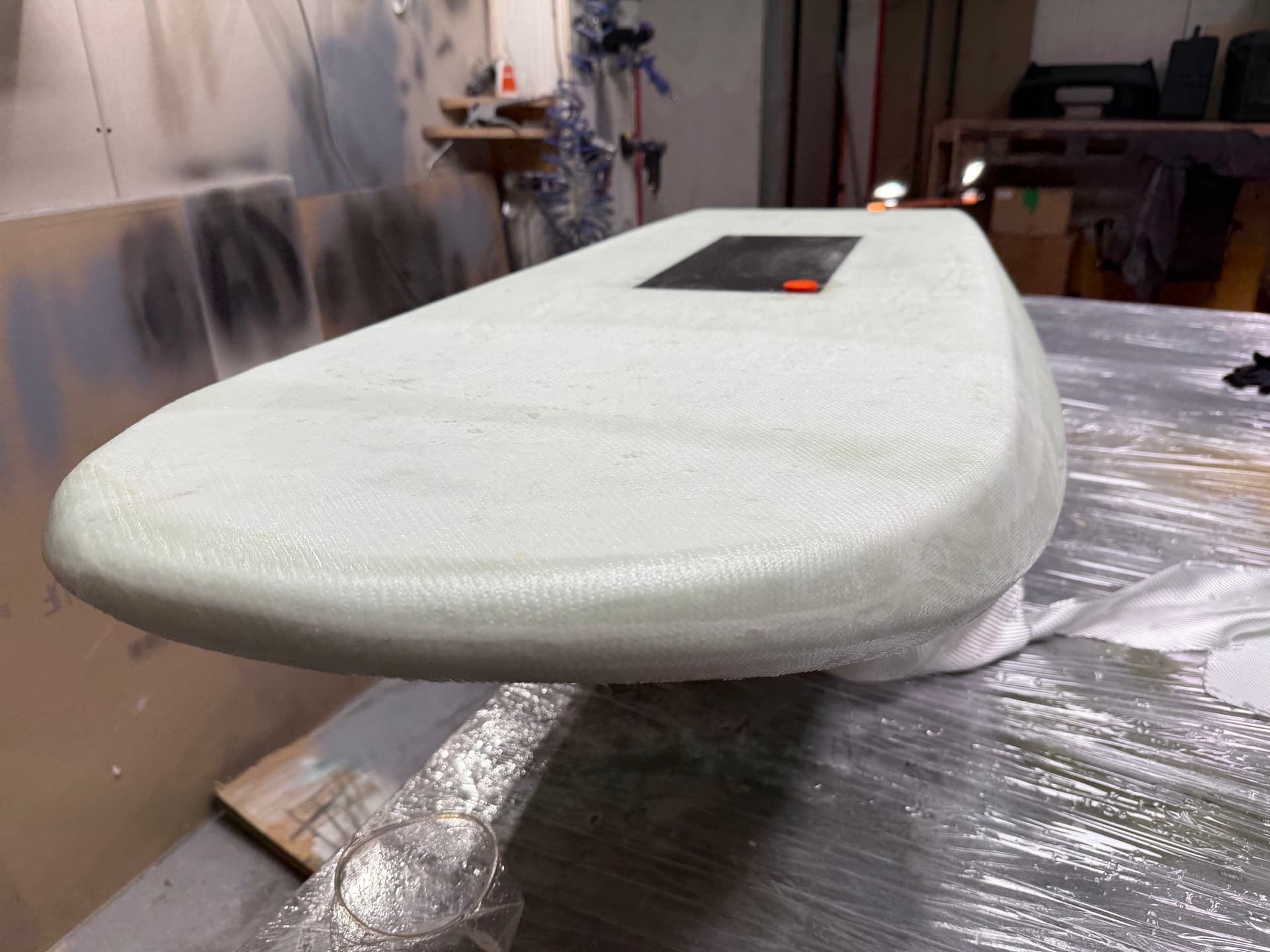
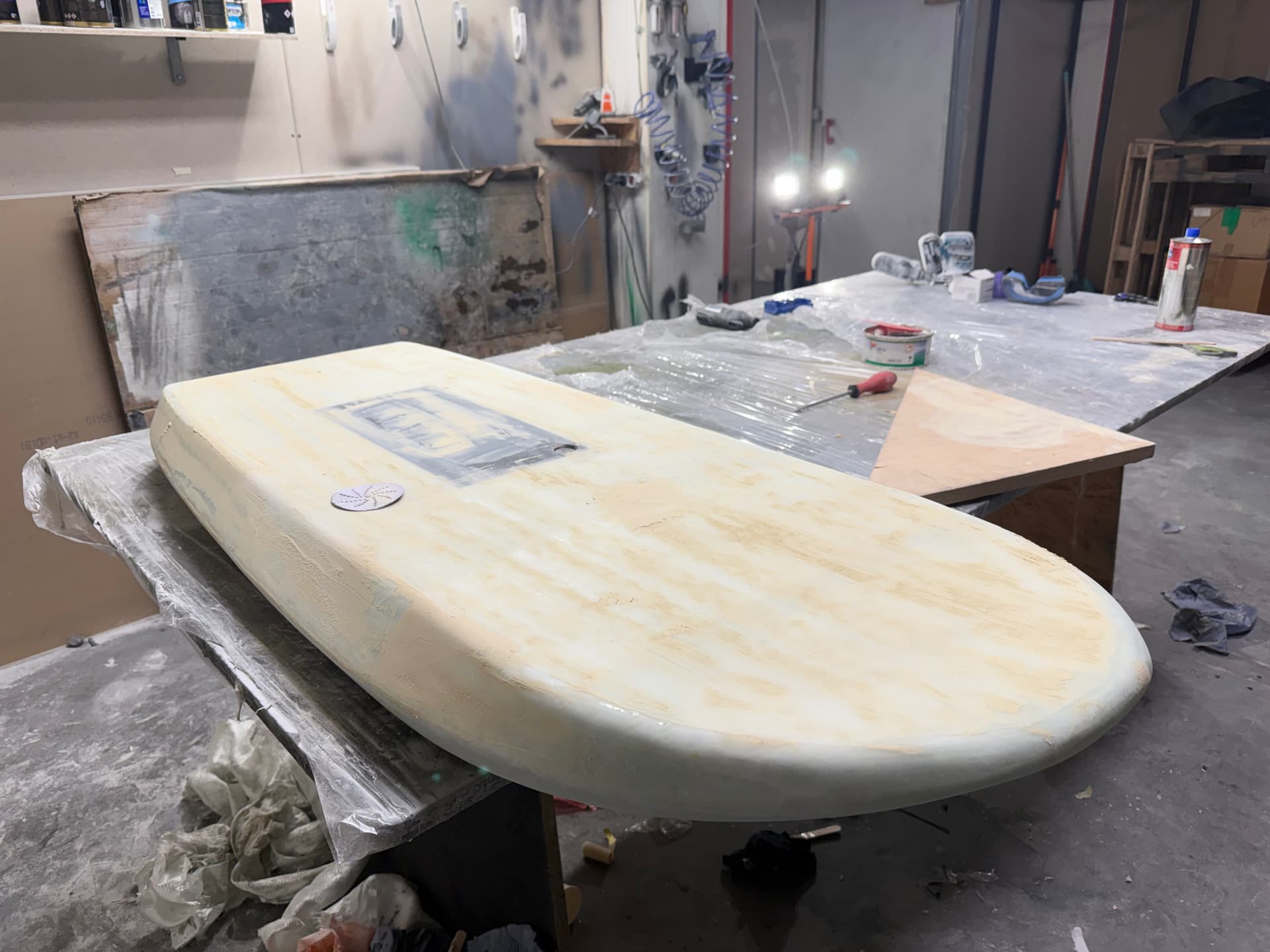
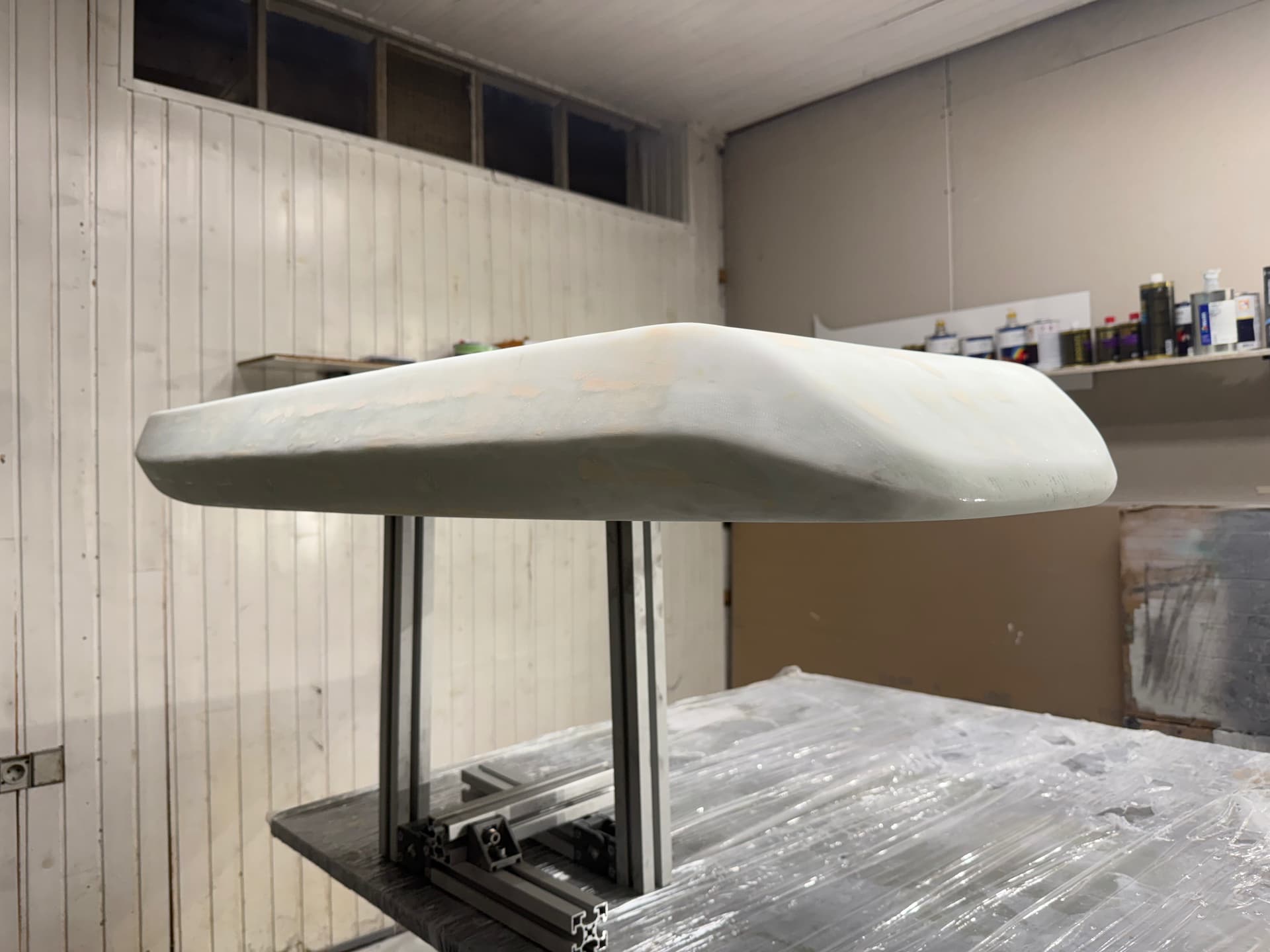
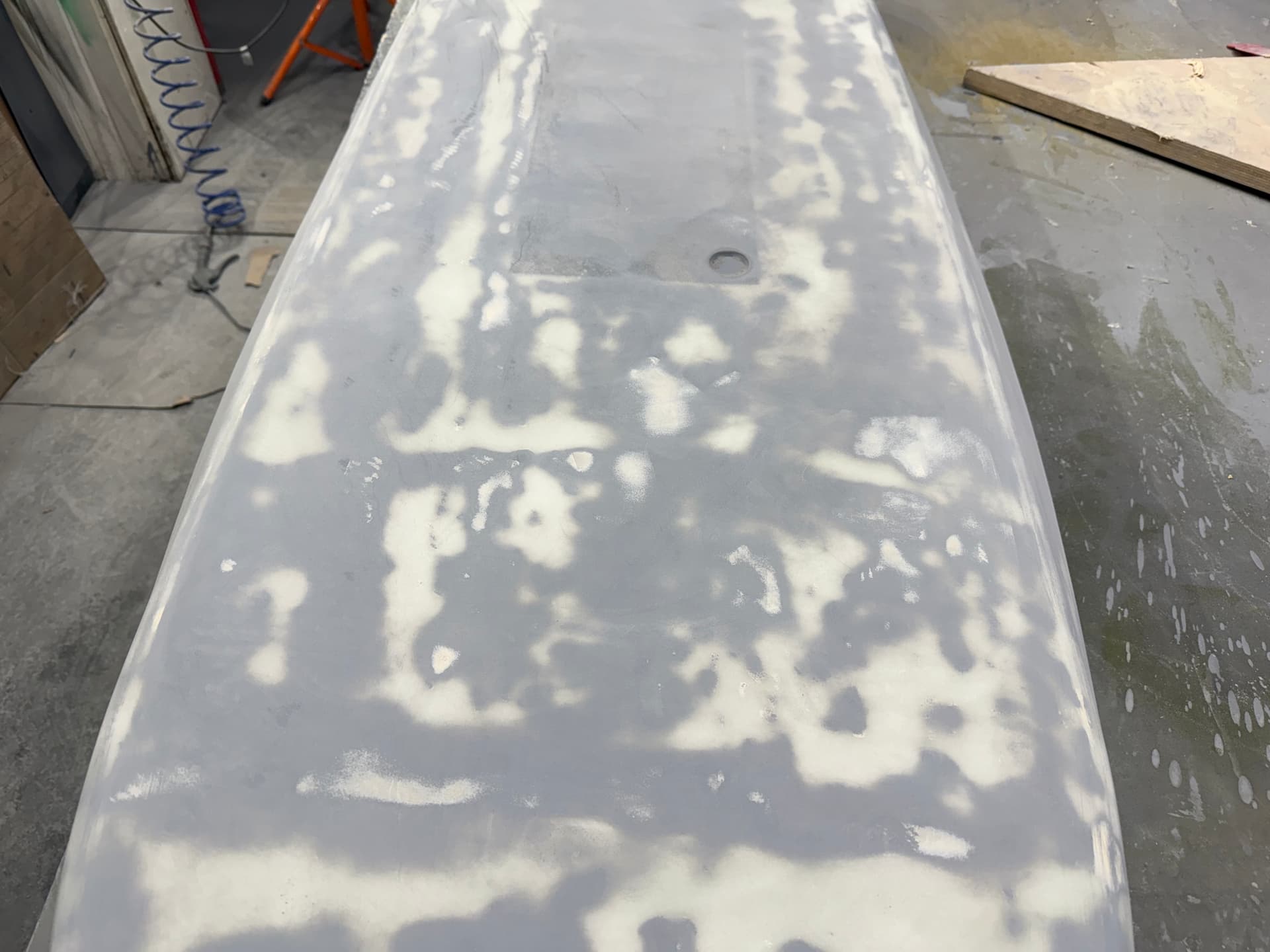
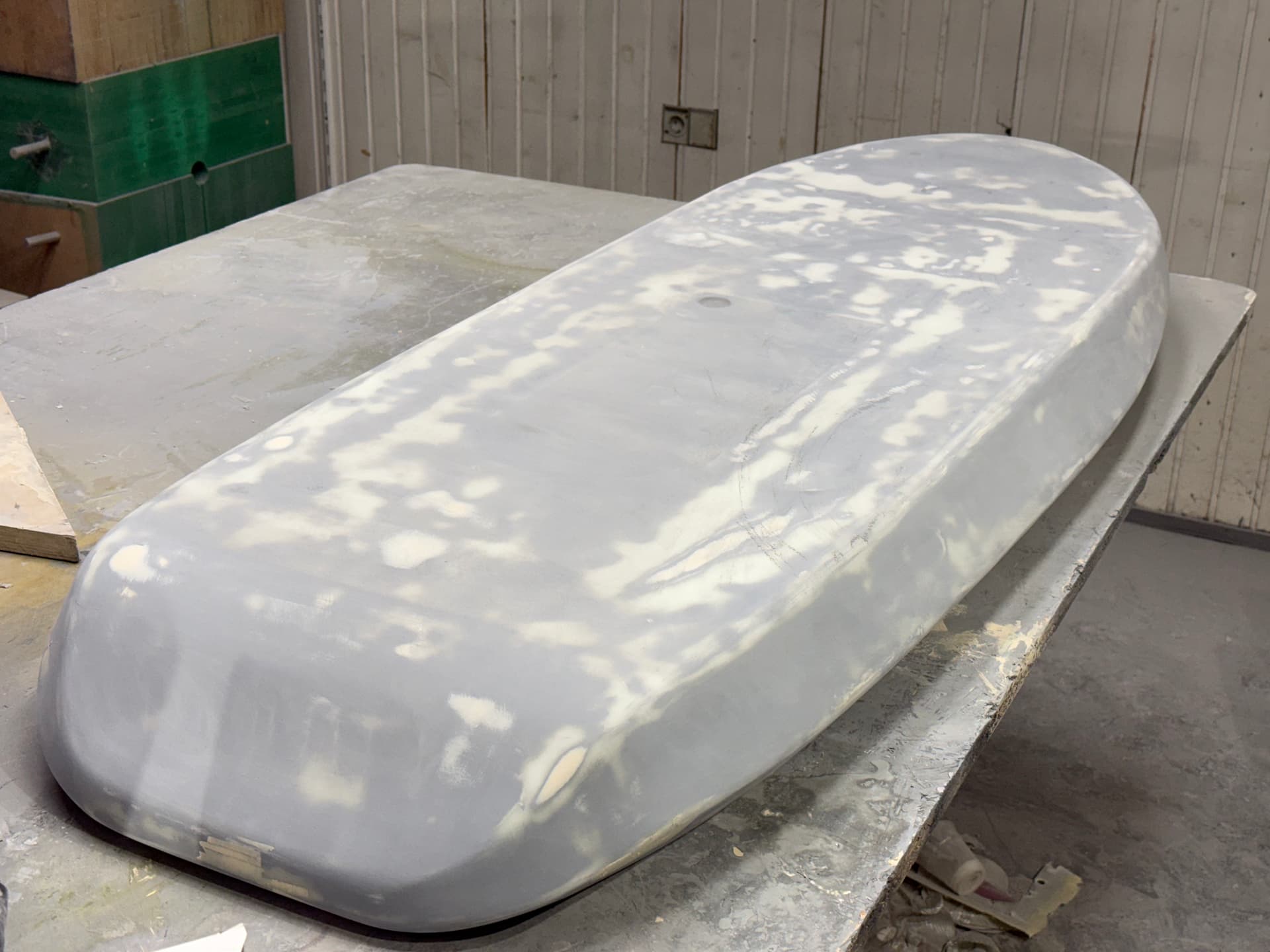
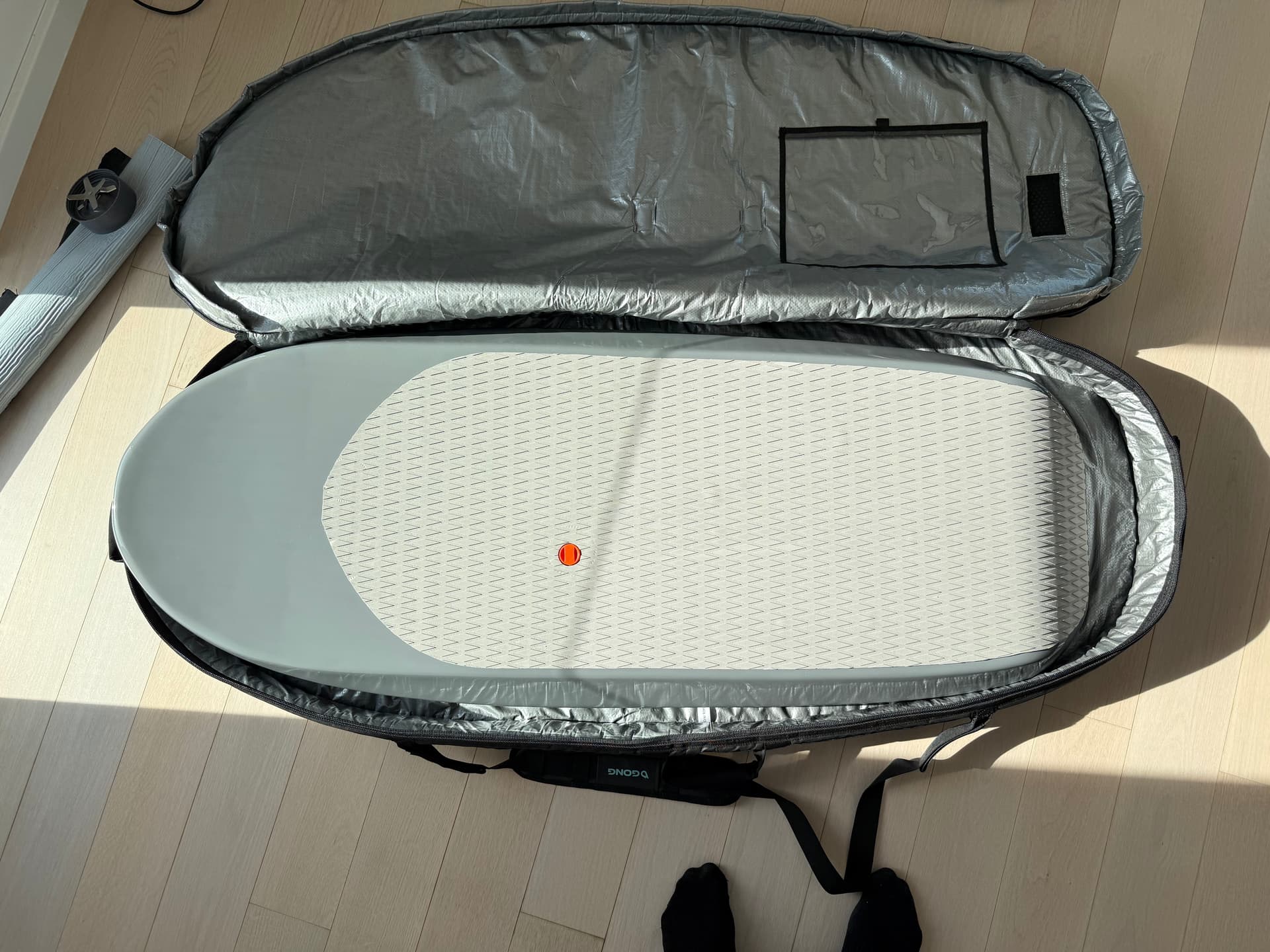
After fighting with this for a while, a friend stepped in and CNC-cut the board core.

Honestly… total lifesaver.


Board Design

The board design is my own.
I initially tried to roughly copy the Fliteboard shape, but as usual the design evolved during the process because of structural constraints:

  • battery case size
  • component placement
  • mounting structure

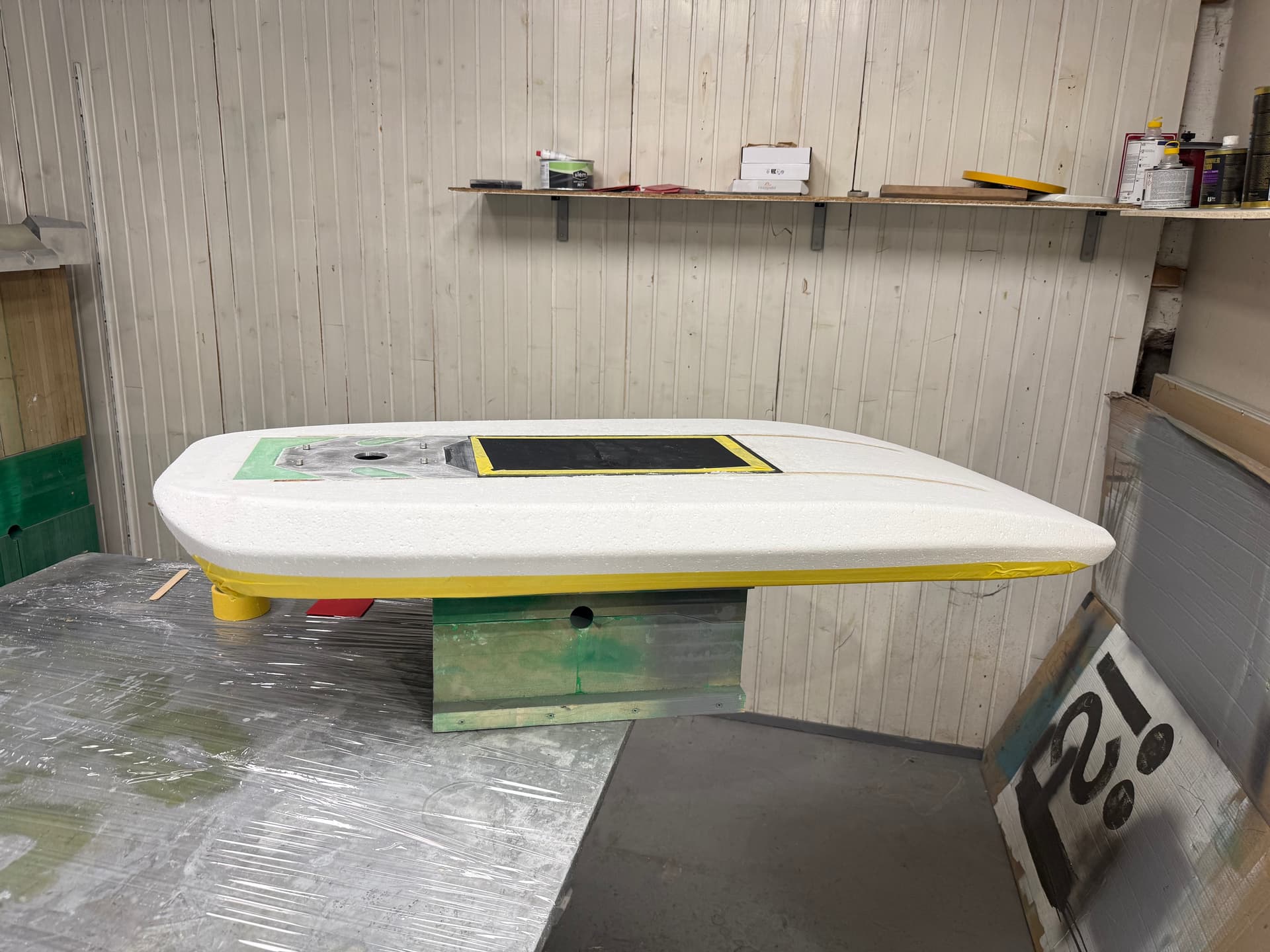
Final dimensions:

  • Length: 149 cm
  • Thickness: 11 cm
  • Volume: ~90 L

I already have the itch to build something much smaller for summer, but since I’ve never actually e-foiled before, I figured starting with something more stable is the smarter choice. Hopefully I’ll get the hang of it quickly.
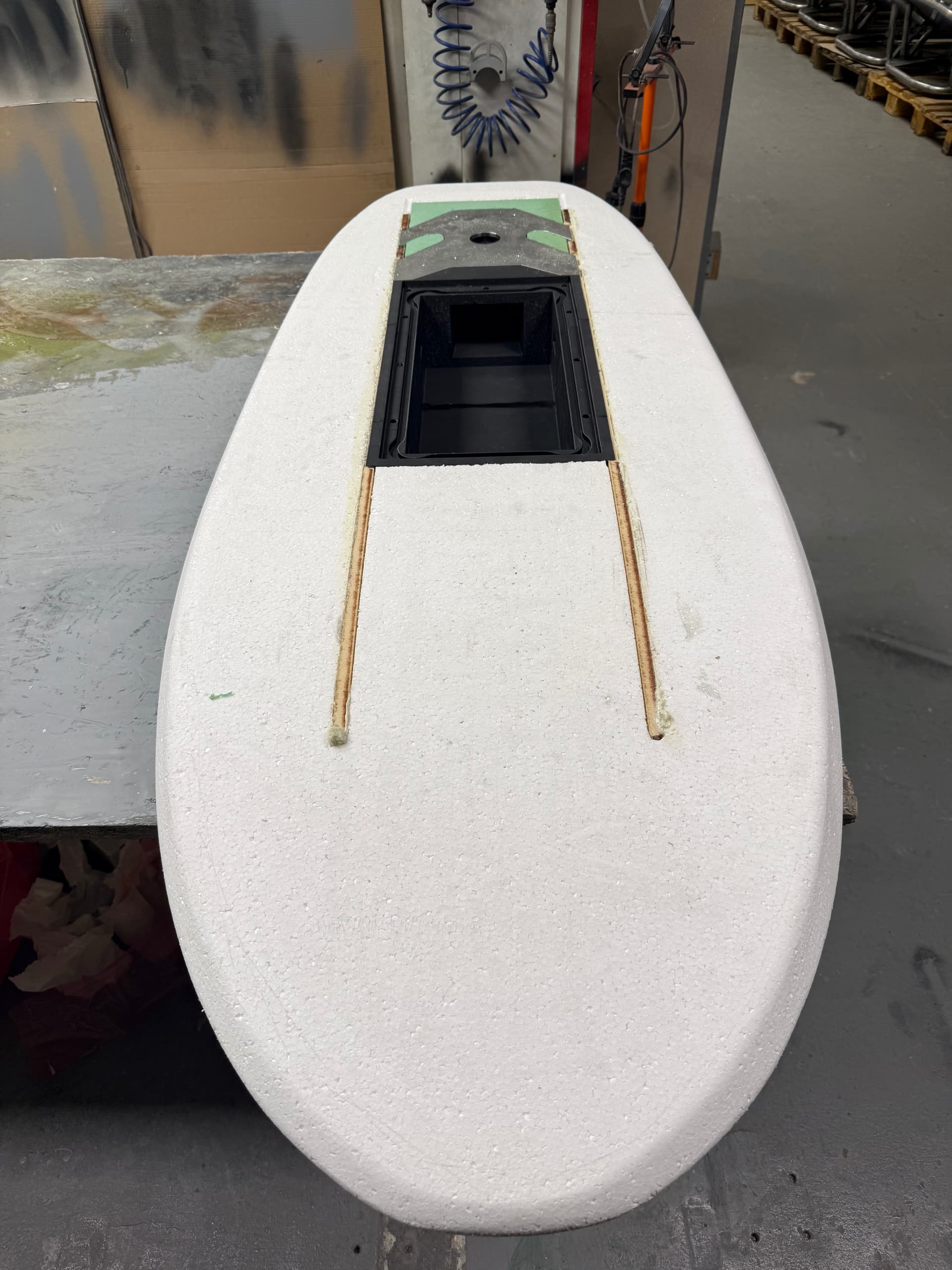
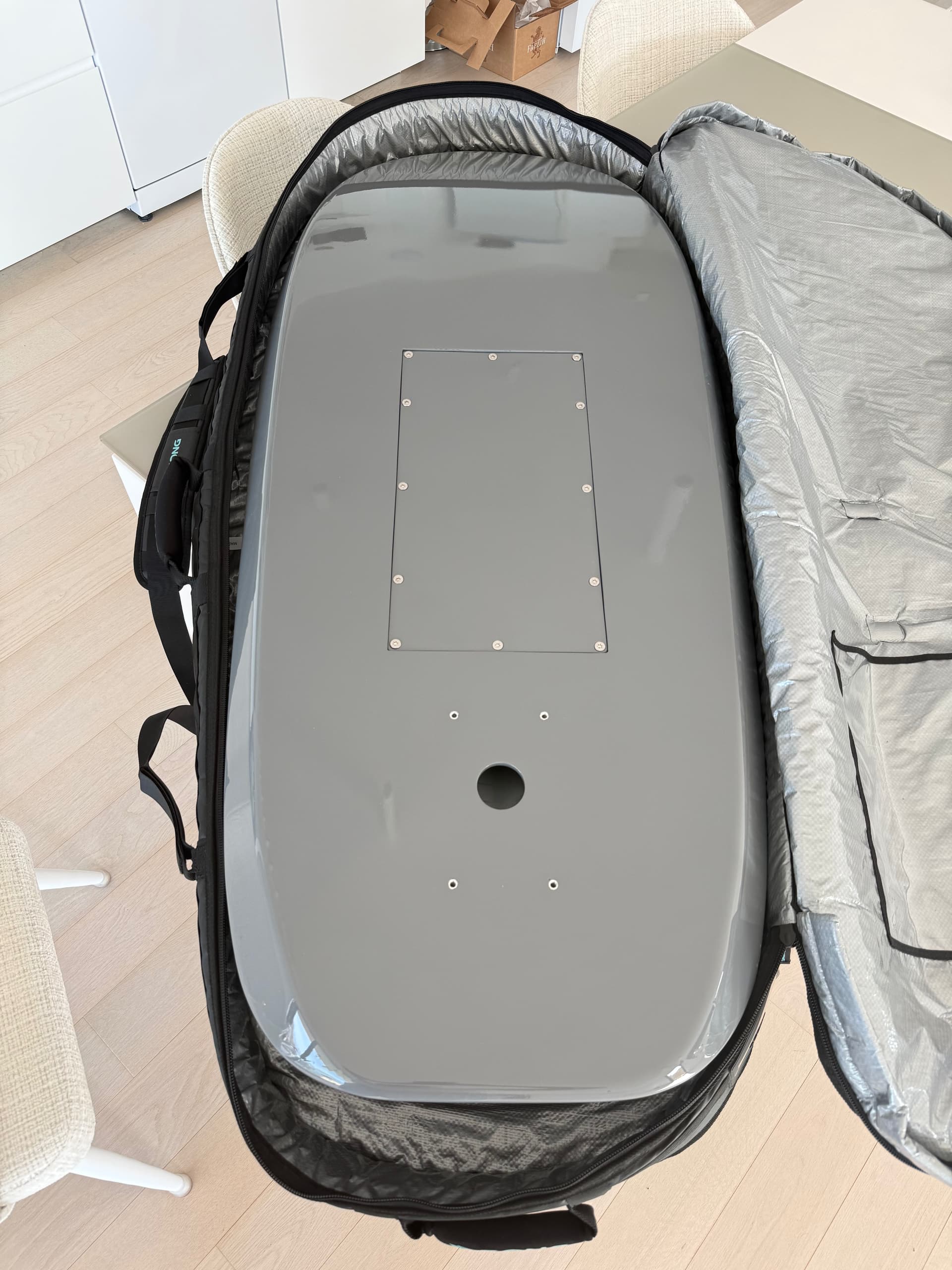
Board Inserts

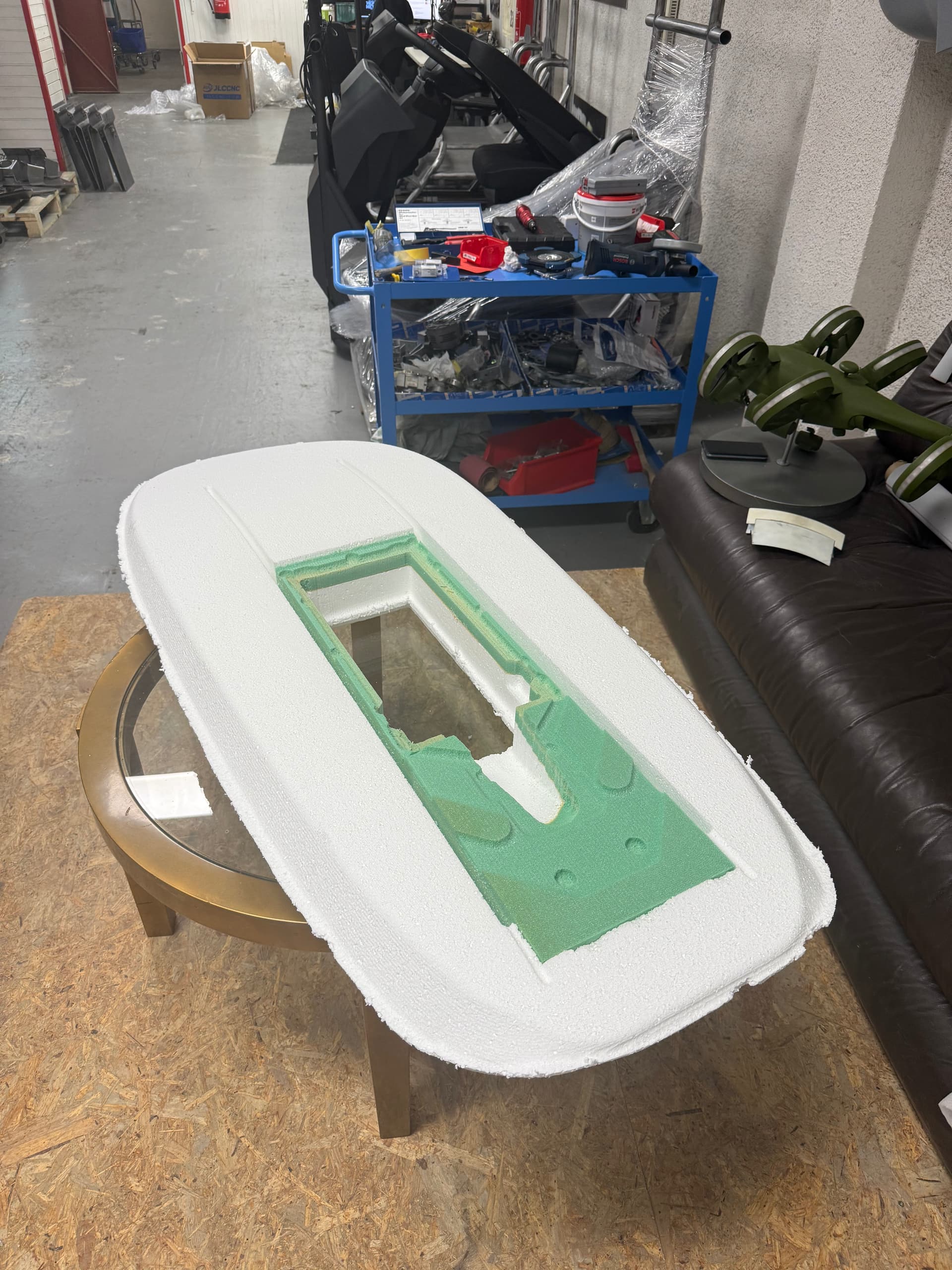
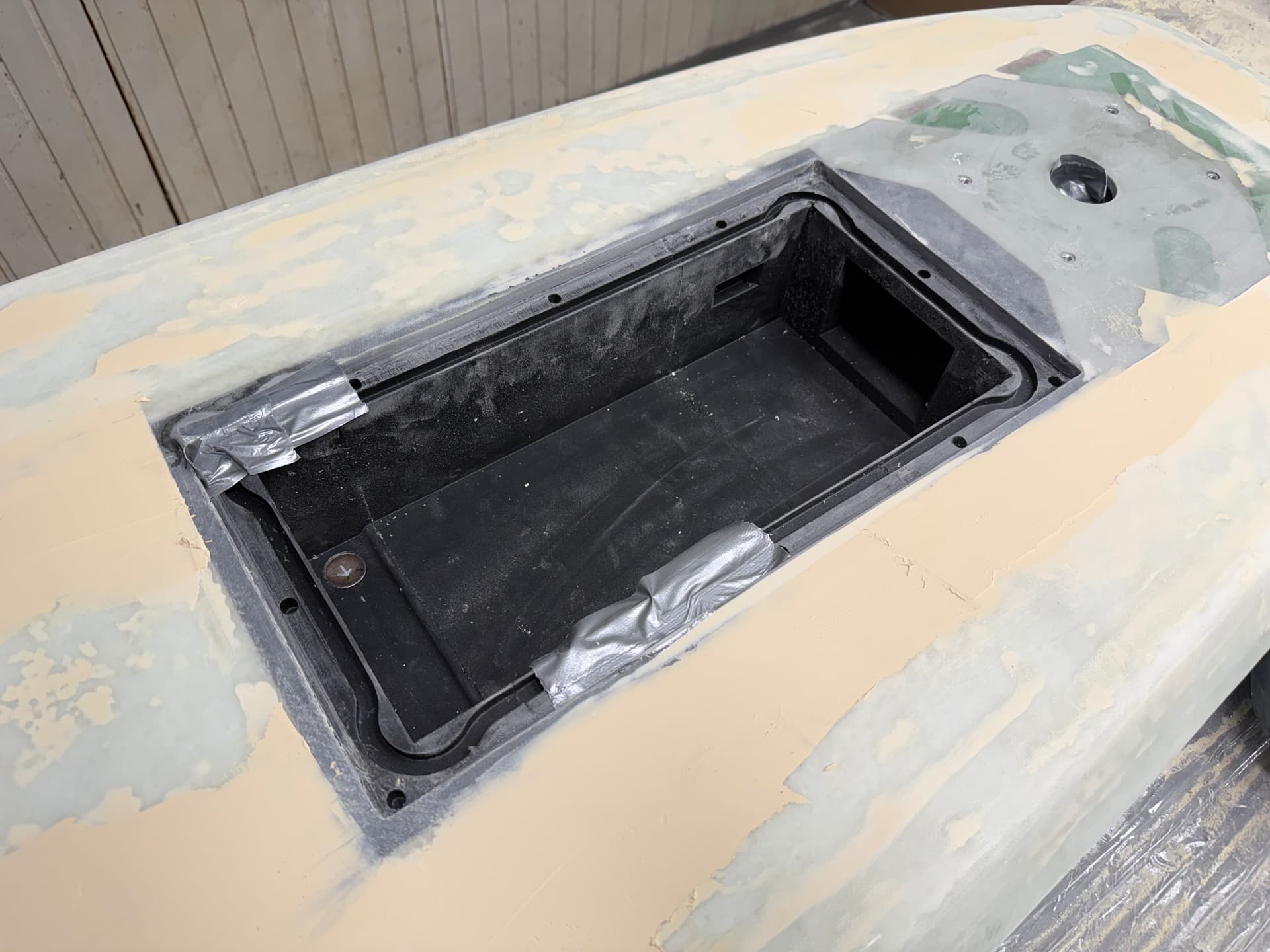
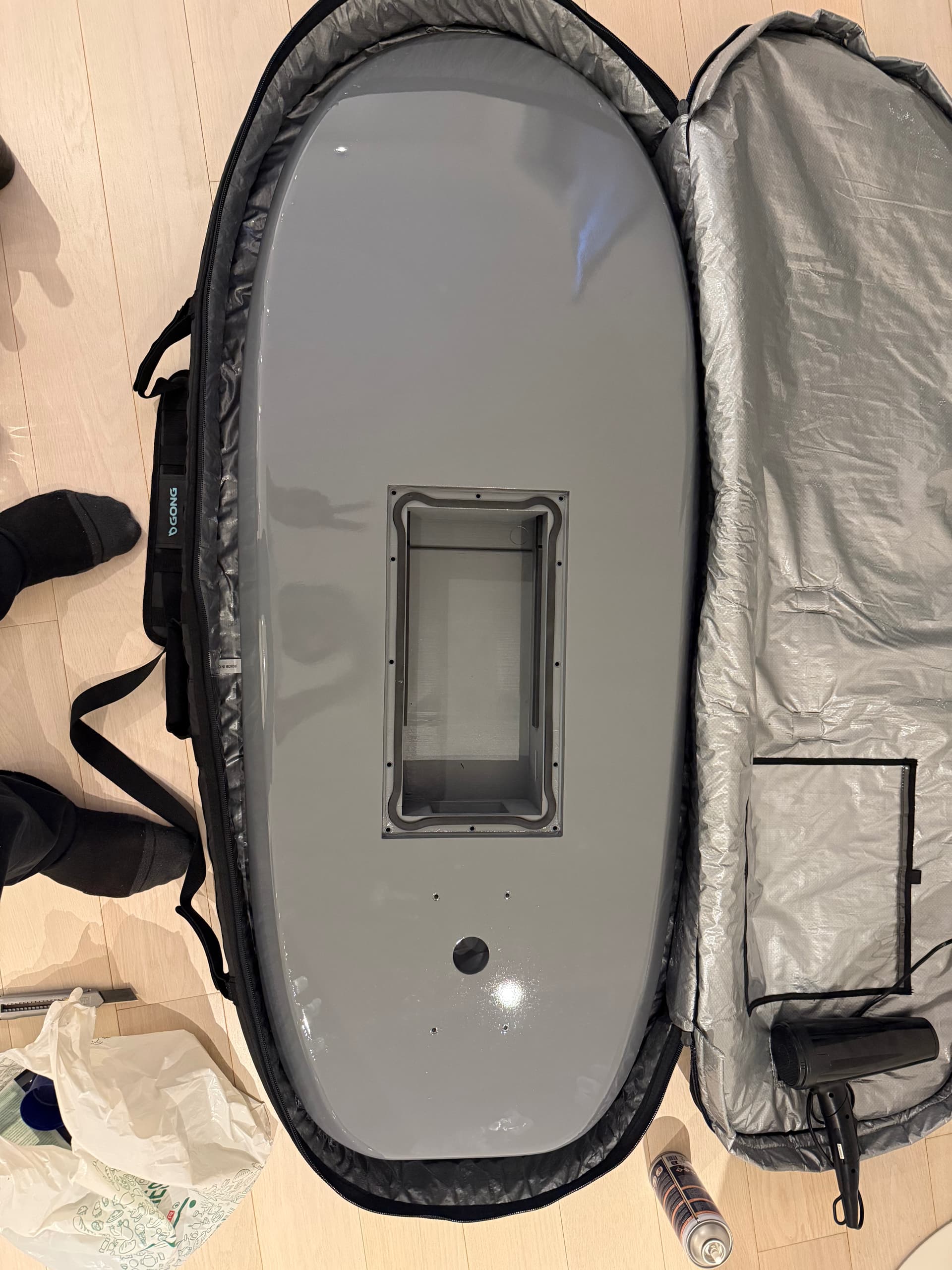
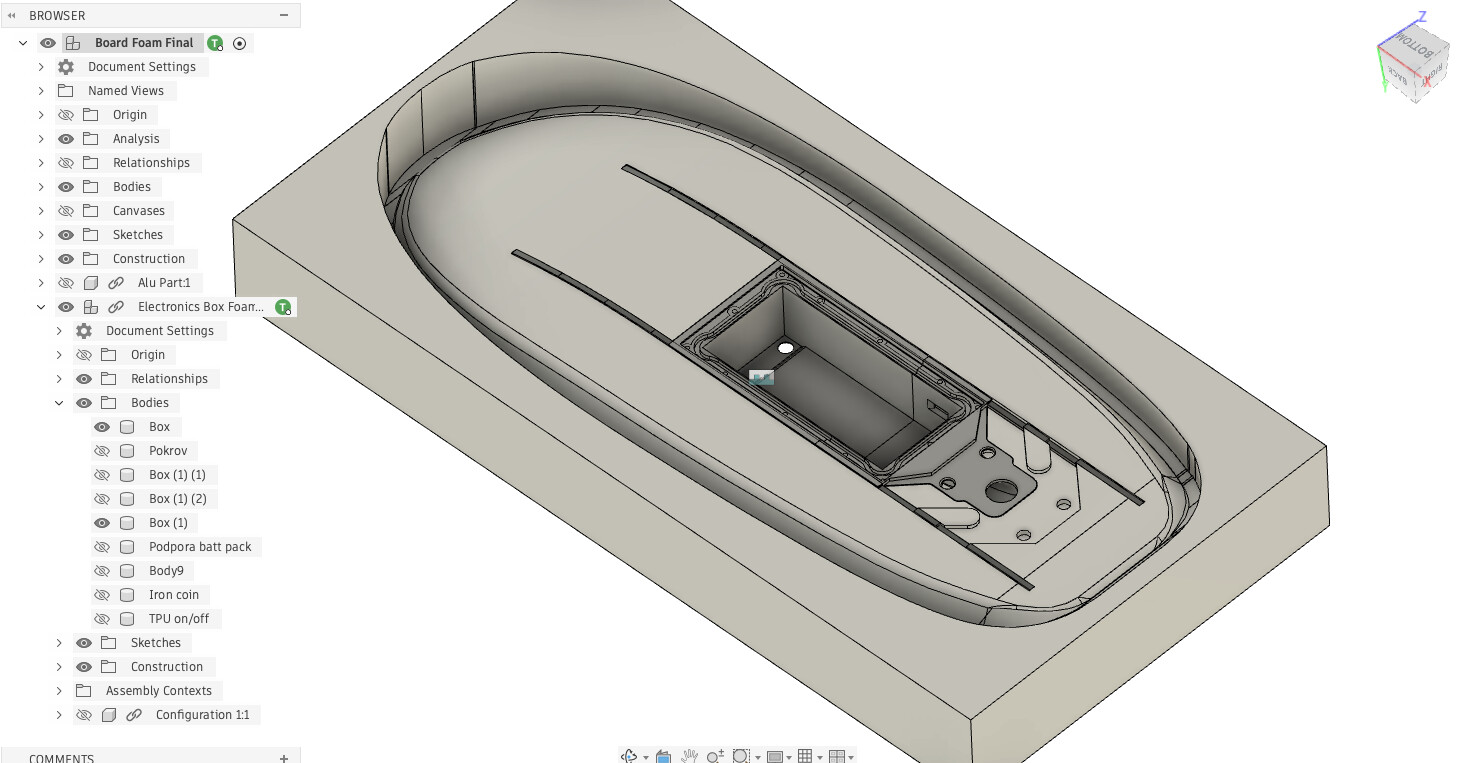
The board contains two main inserts:

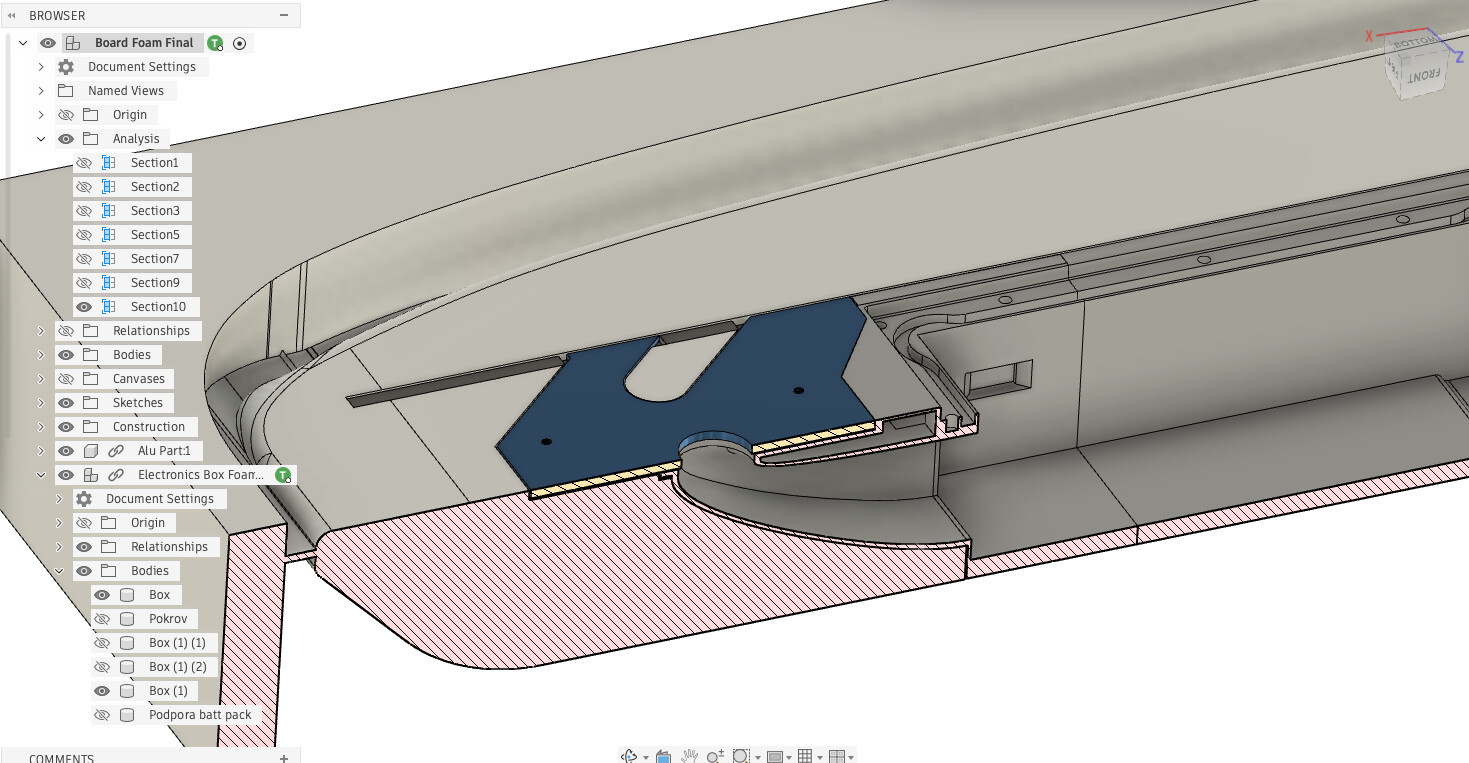
  1. Battery compartment
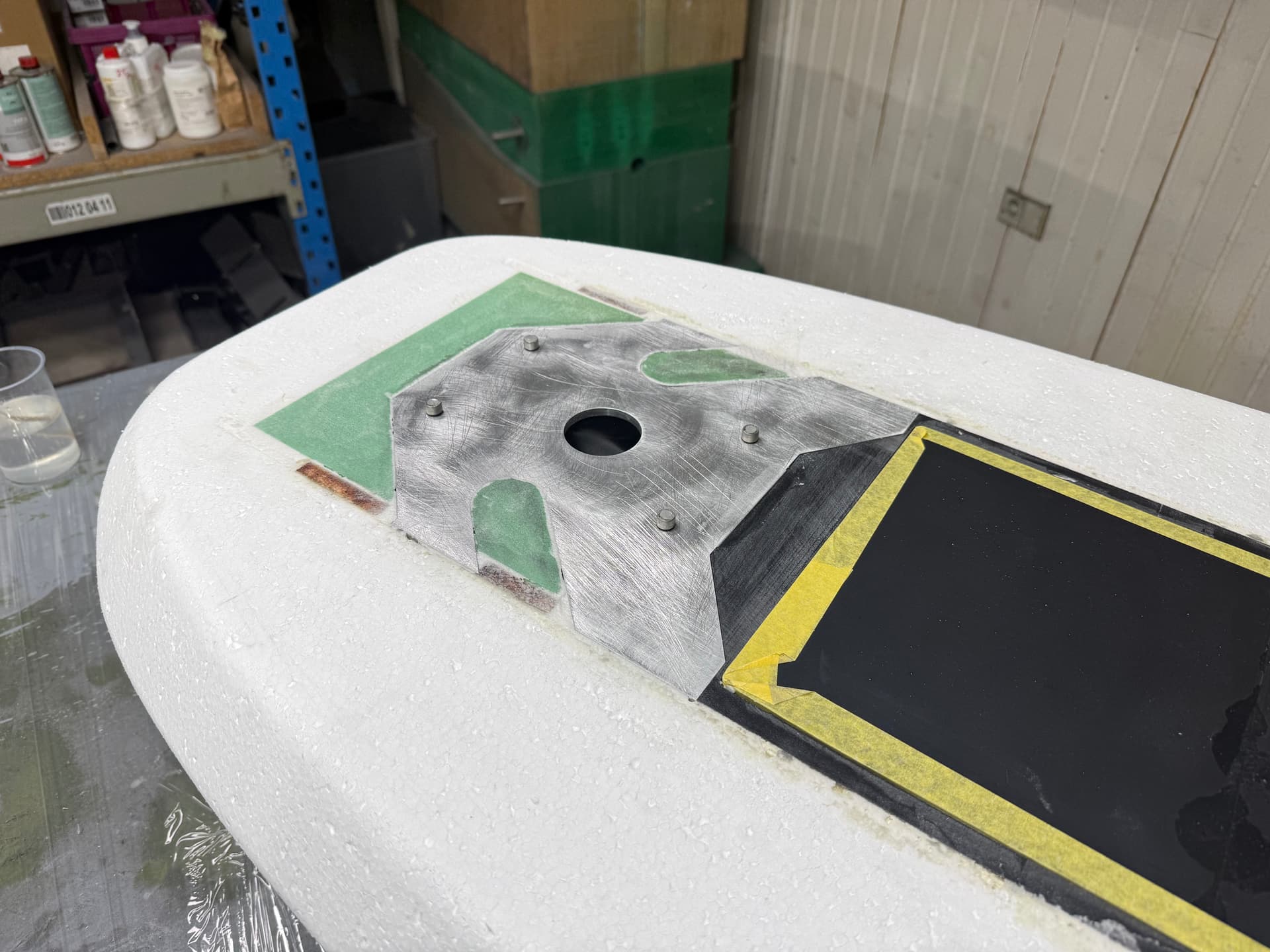
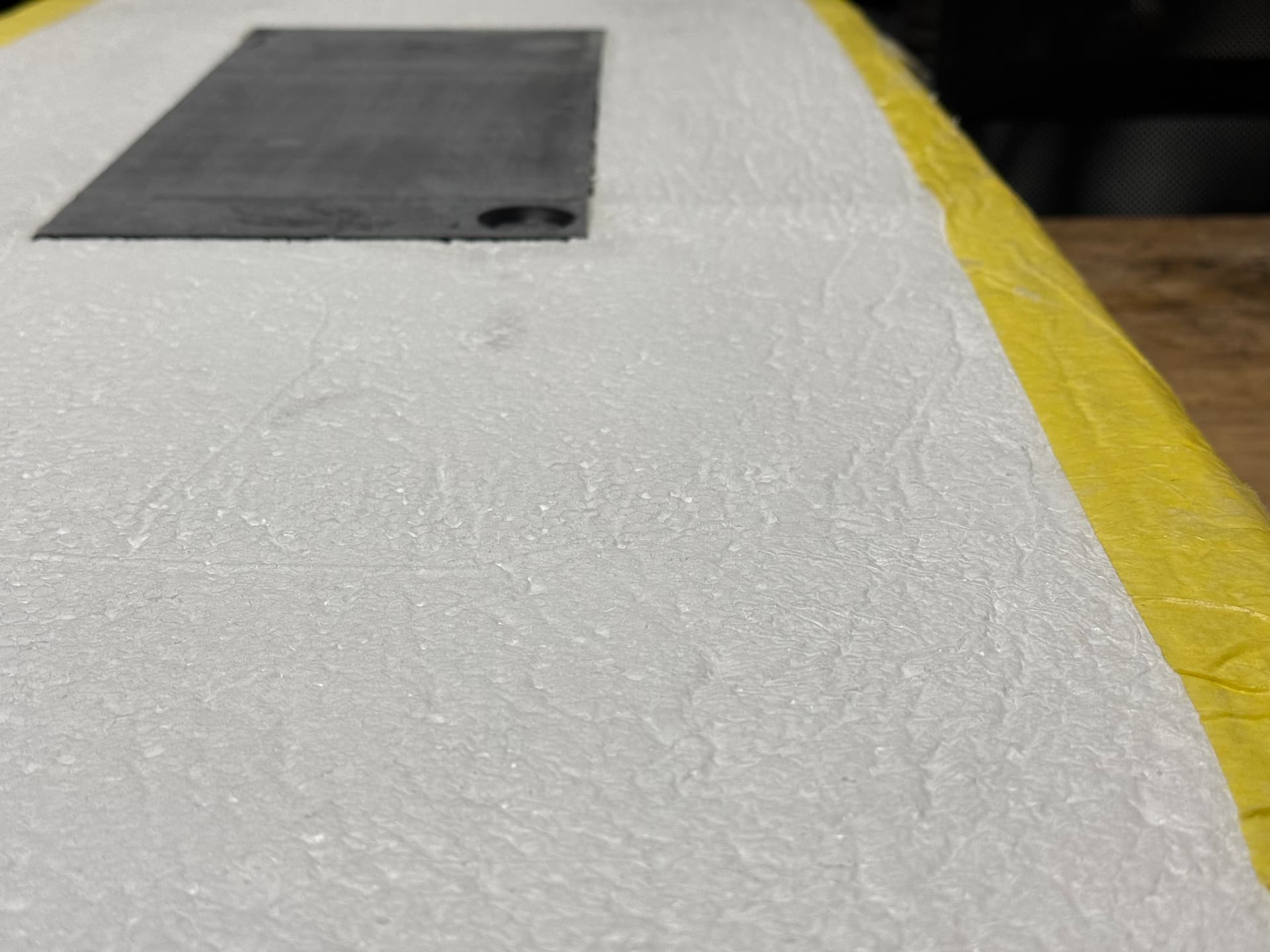
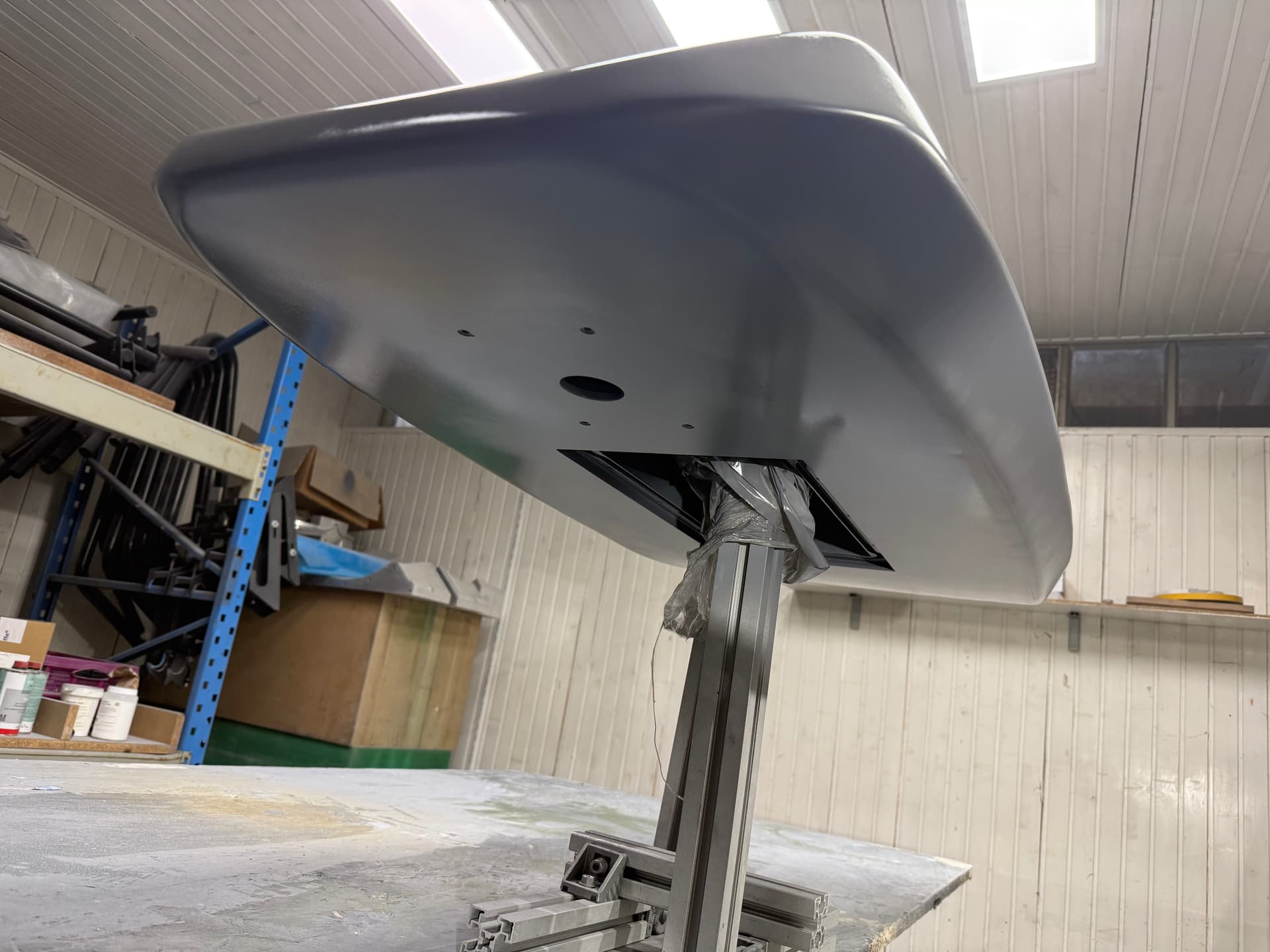
  2. Mast mounting aluminium plate

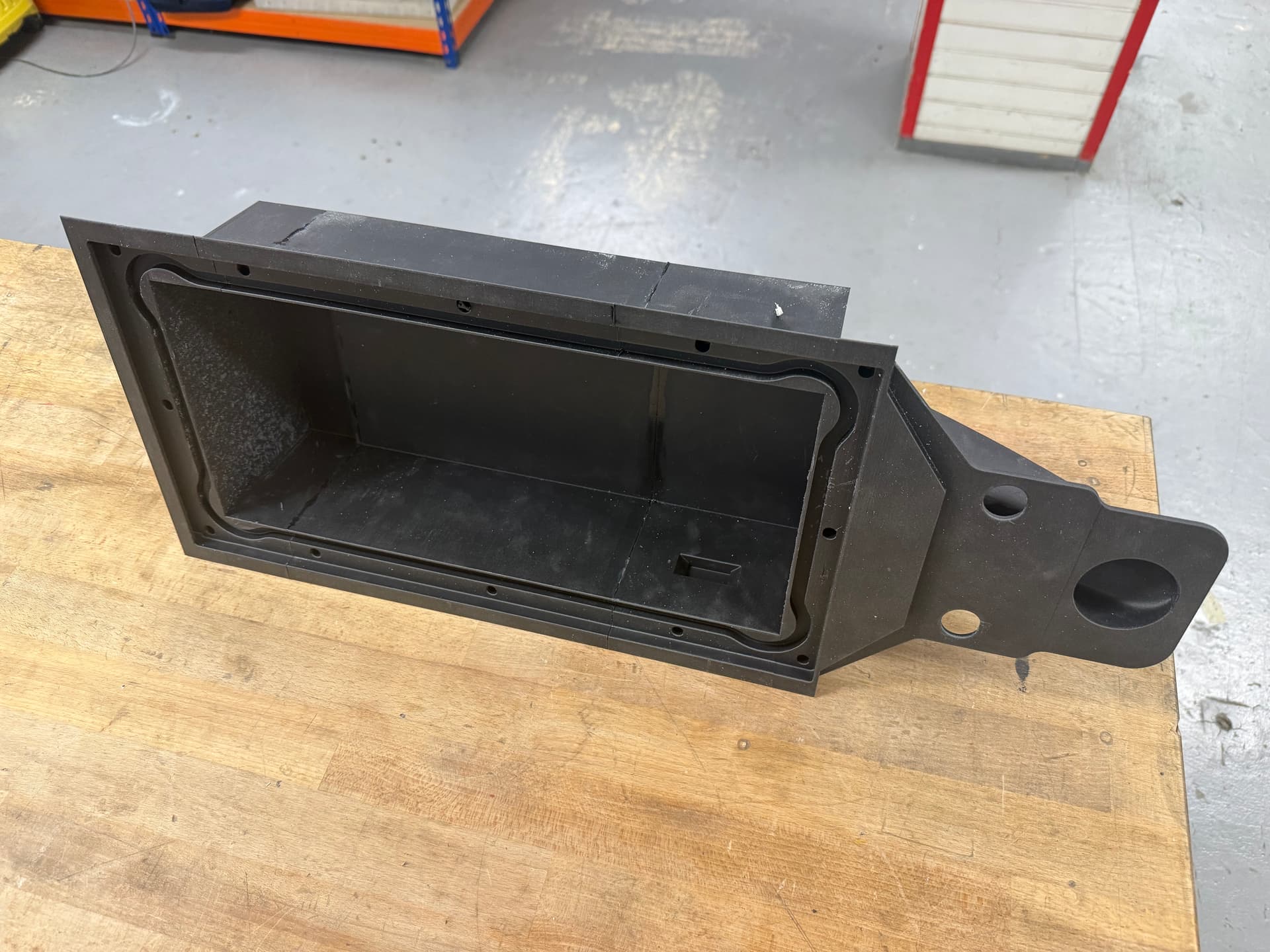
The battery compartment is 3D printed from PCCF.
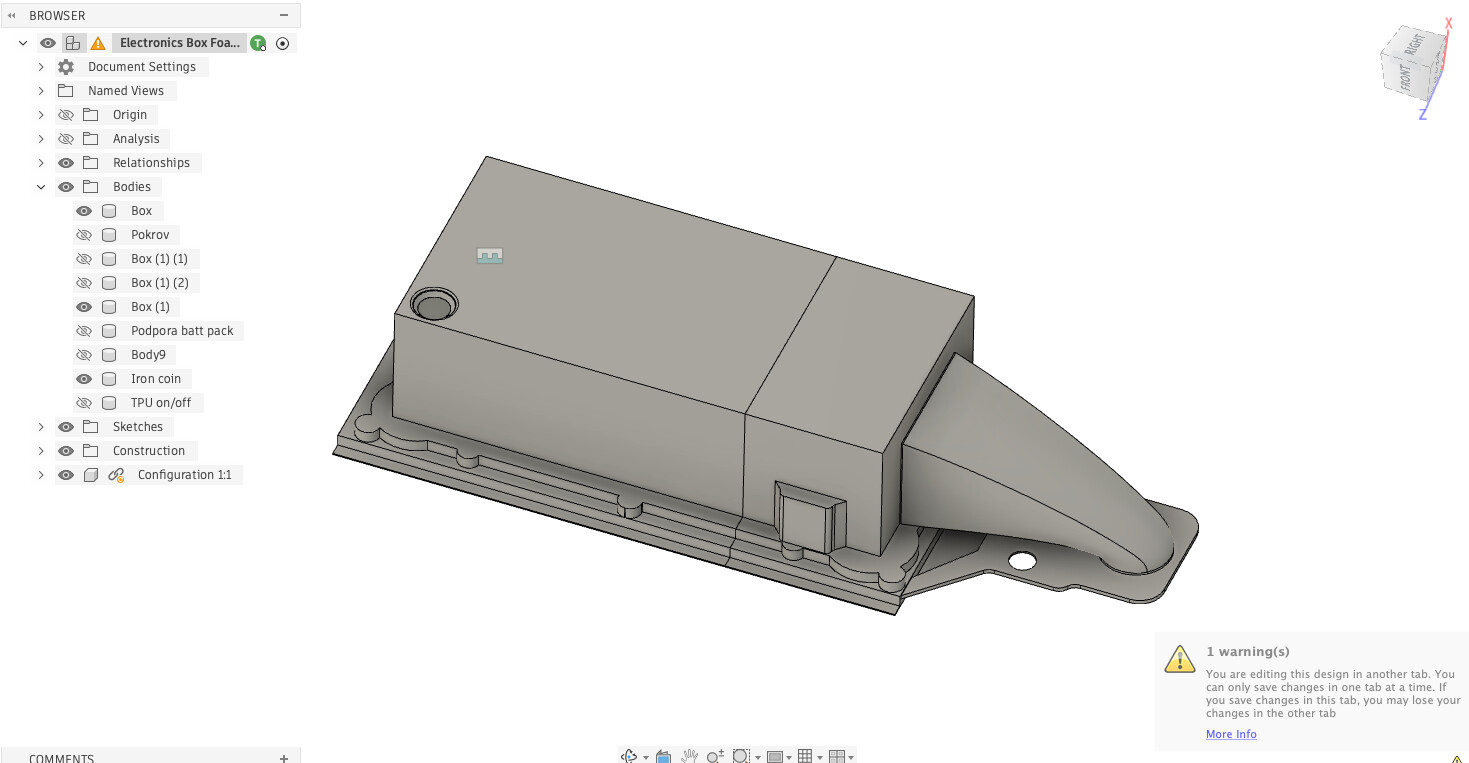

Waterproofing

I experimented with several different designs to seal the battery compartment, but none of them worked reliably enough.

In the end I decided to keep things simple:

Stainless screws + gasket sealing.

Important detail:

  • The battery is inserted from the bottom of the board.
  • The battery pack itself is fully waterproof, so even if some water gets inside the compartment it shouldn’t be a problem.

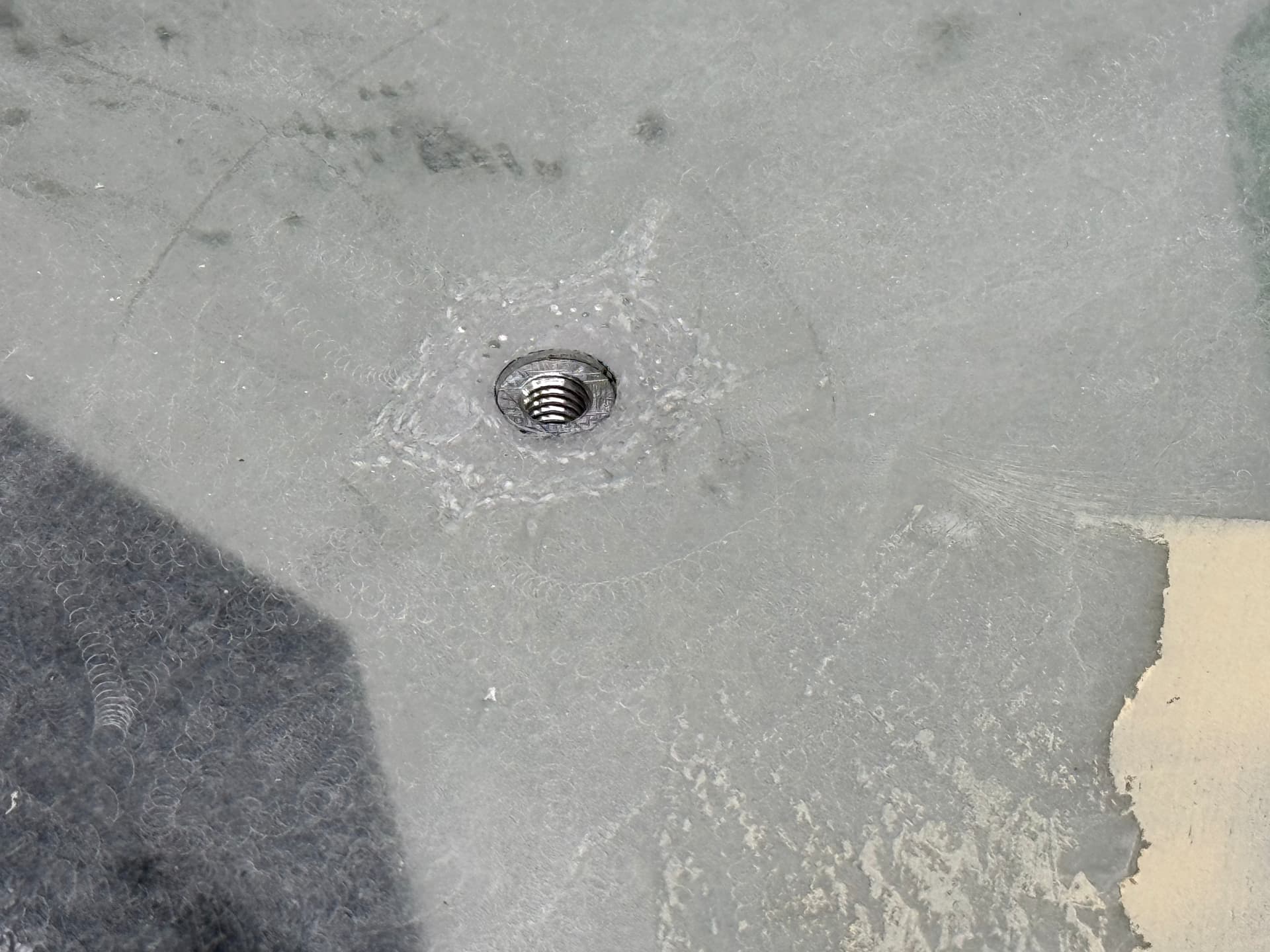
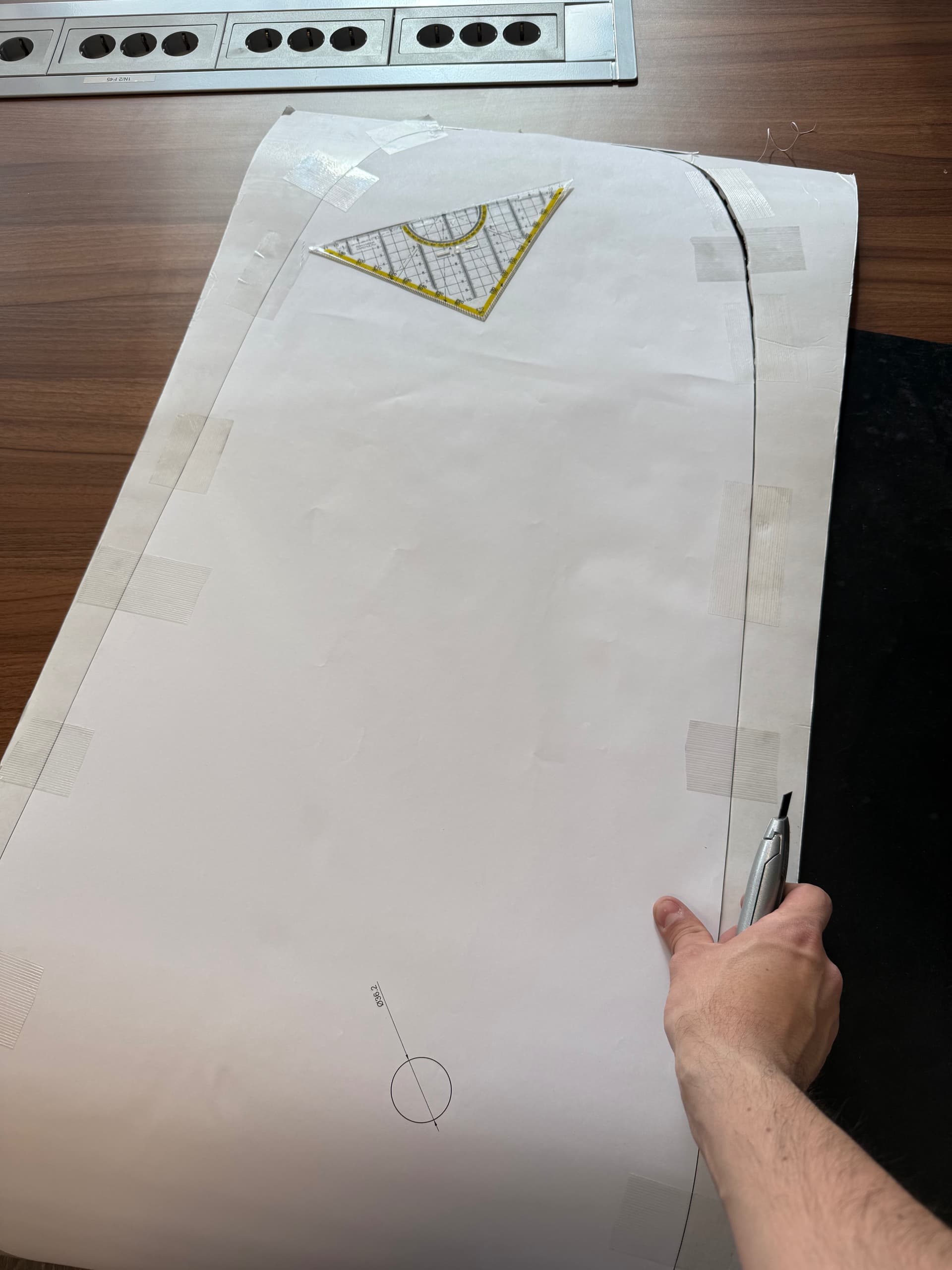
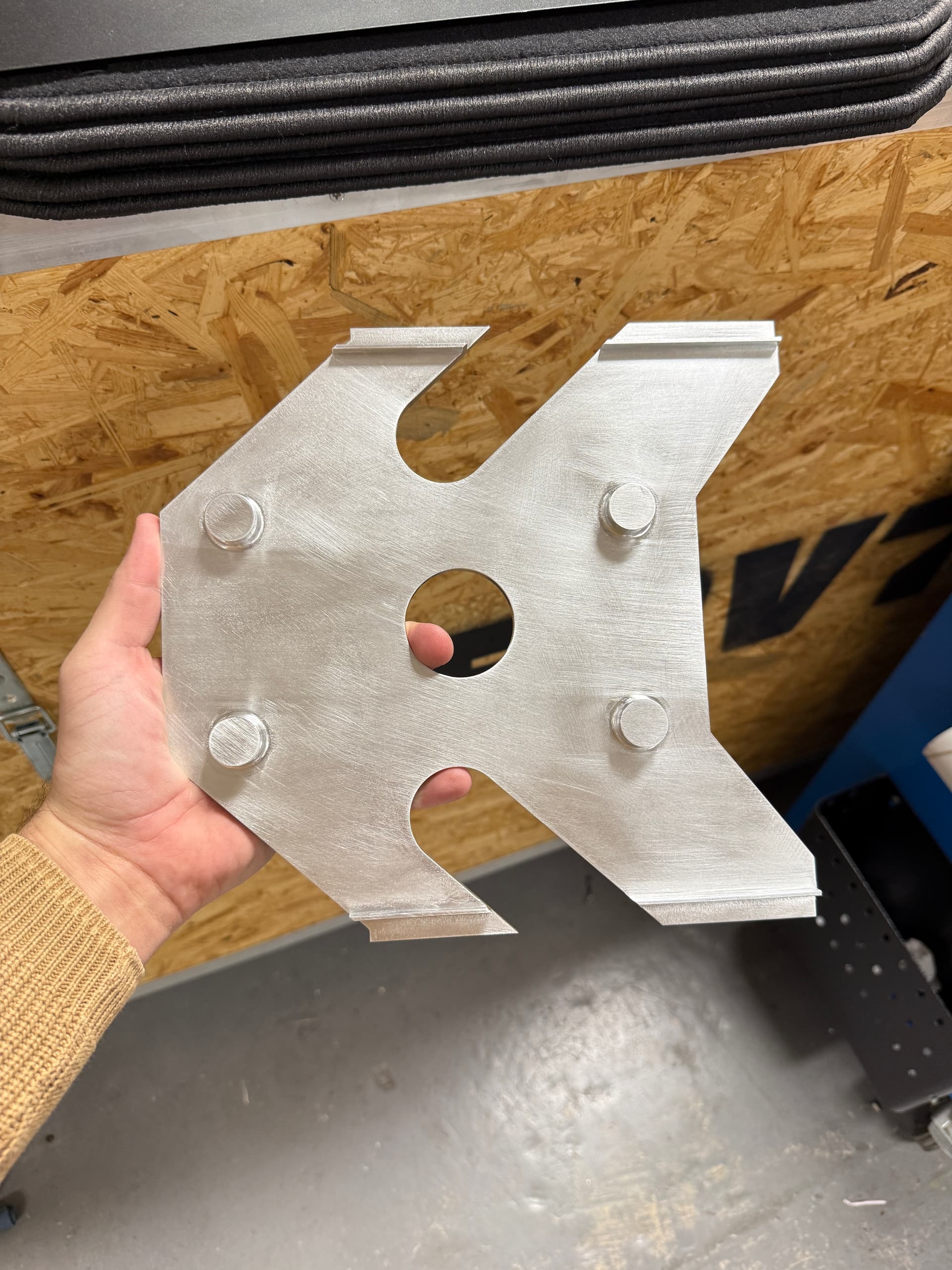
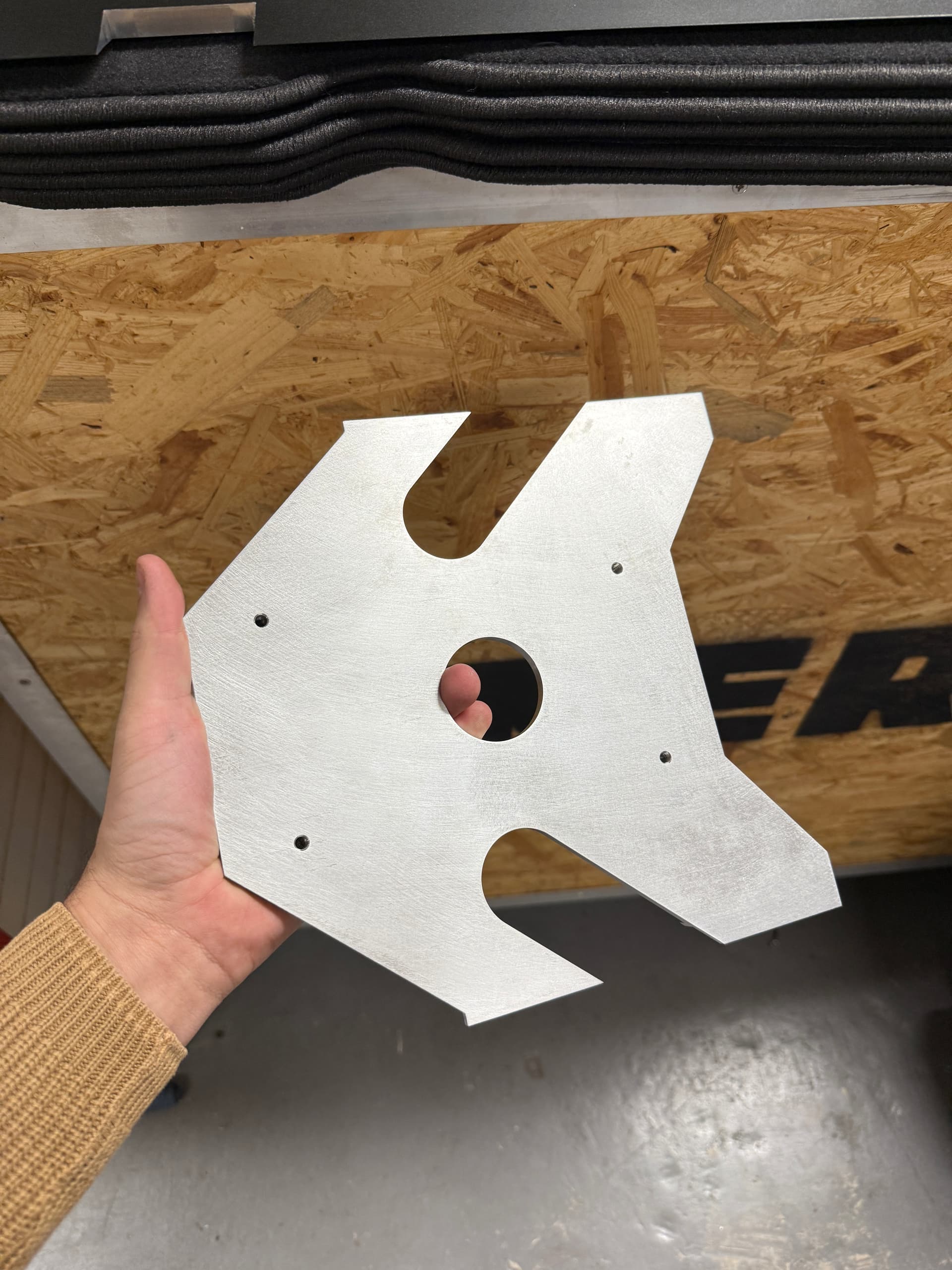
For the mast adapter plate, I machined a groove and installed an O-ring seal, which should keep water out from that interface.
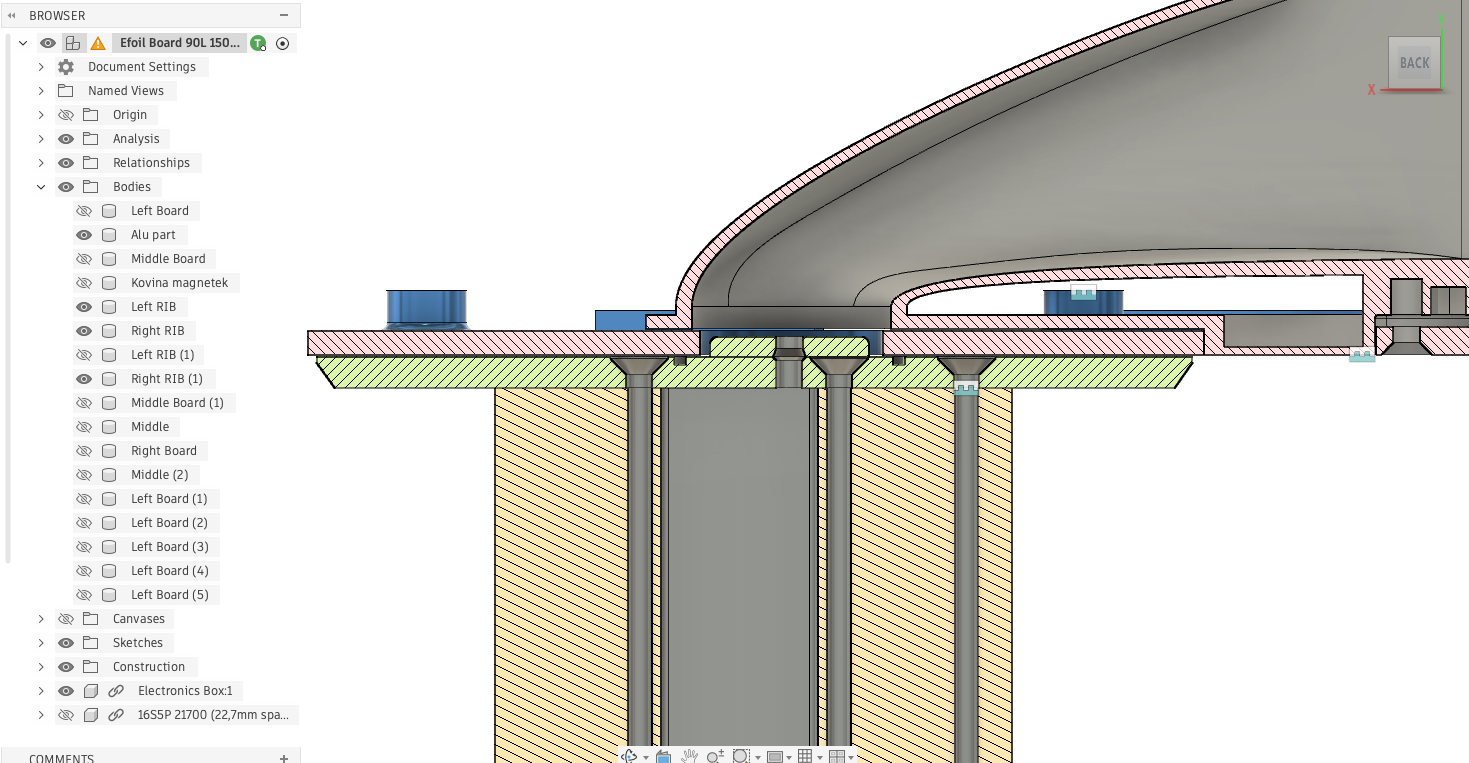
Structural Reinforcement

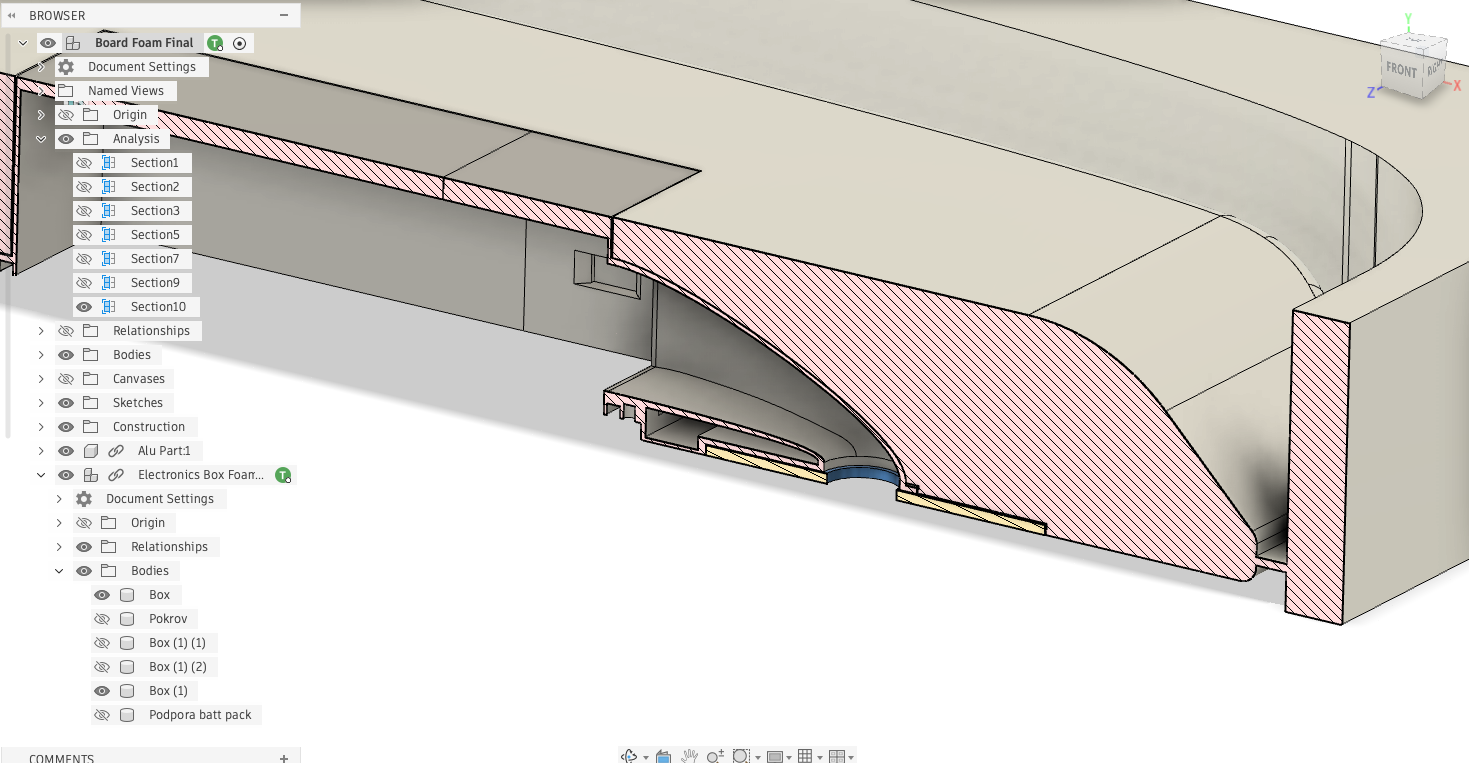
I also paid special attention to how the mast loads transfer into the board.

The forces from the aluminium mast insert are distributed into two longitudinal ribs running along the board.

Each rib is made from:

  • 10 mm Airex foam
  • Laminated with 80 g/m² fiberglass

This should help spread the load and avoid localized stress around the mast mount. Anddd - totally unnecessary I believe. I just bumped up the weight too much but its all good - a note for next build.
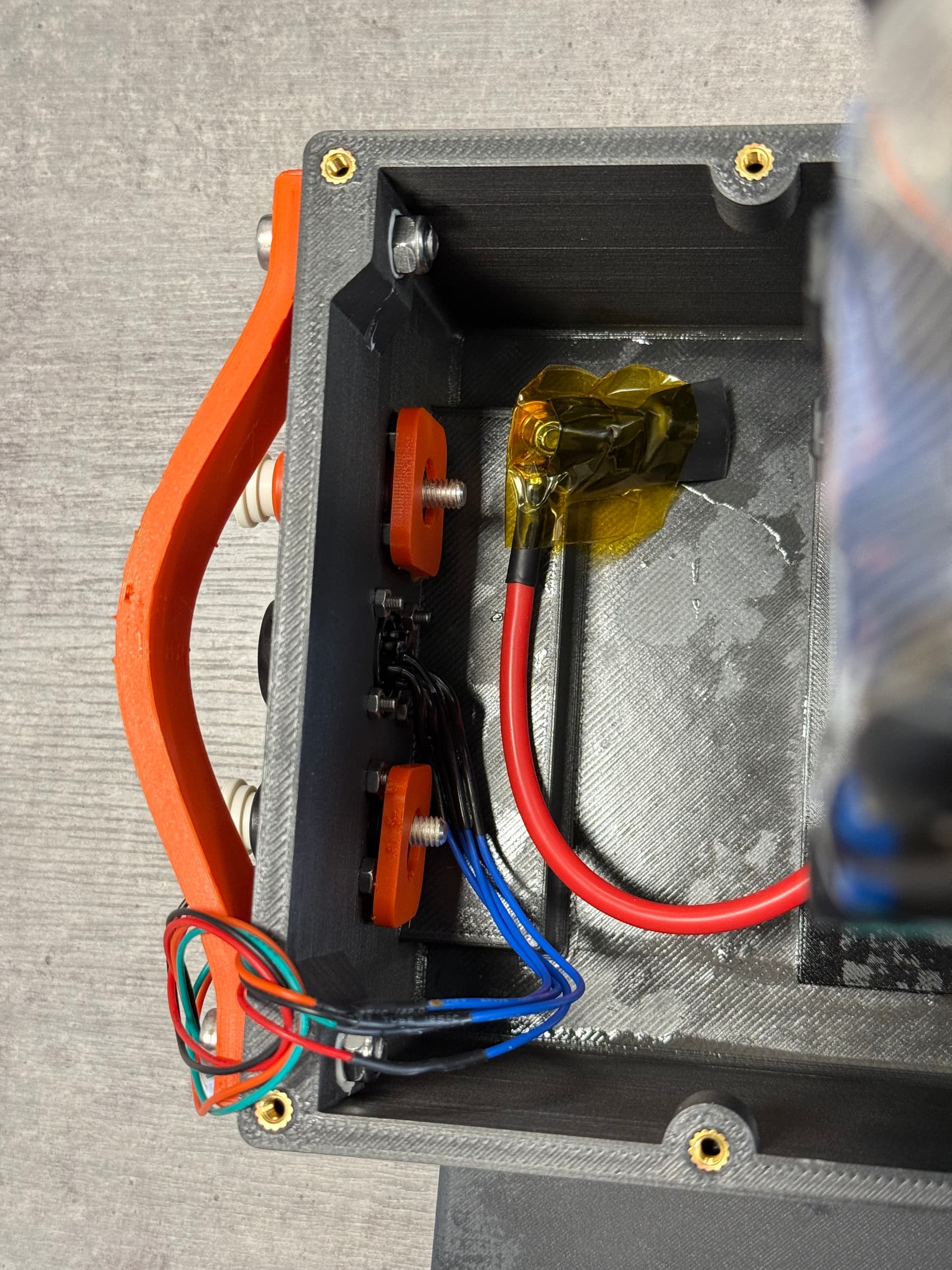
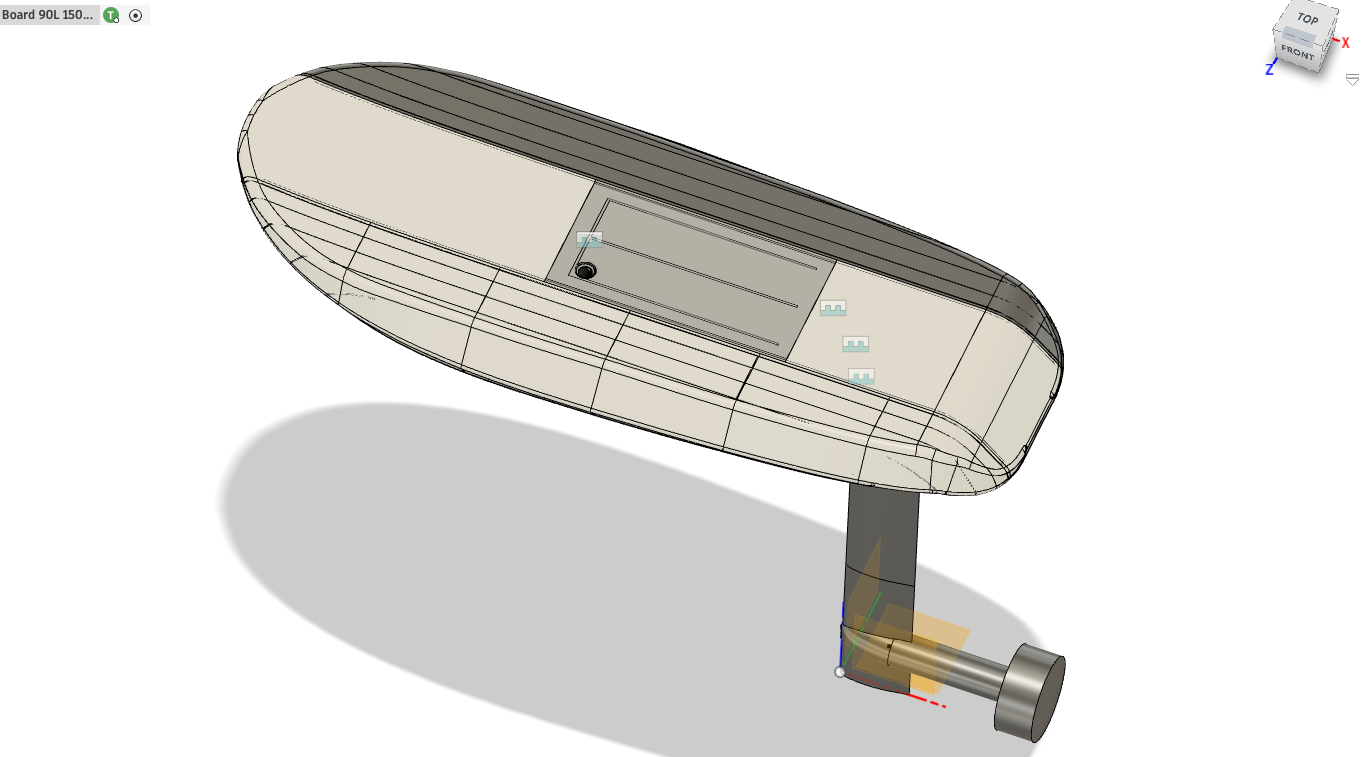
This is how the PCCF battery compartment looks like and also the aluminium board mast insert. Note that both of them mate in a specifict way between eachother and the two ribs - i know overcomplicated.
1 Like

Foil & Motor Setup

Moving on to the foil and motor setup.

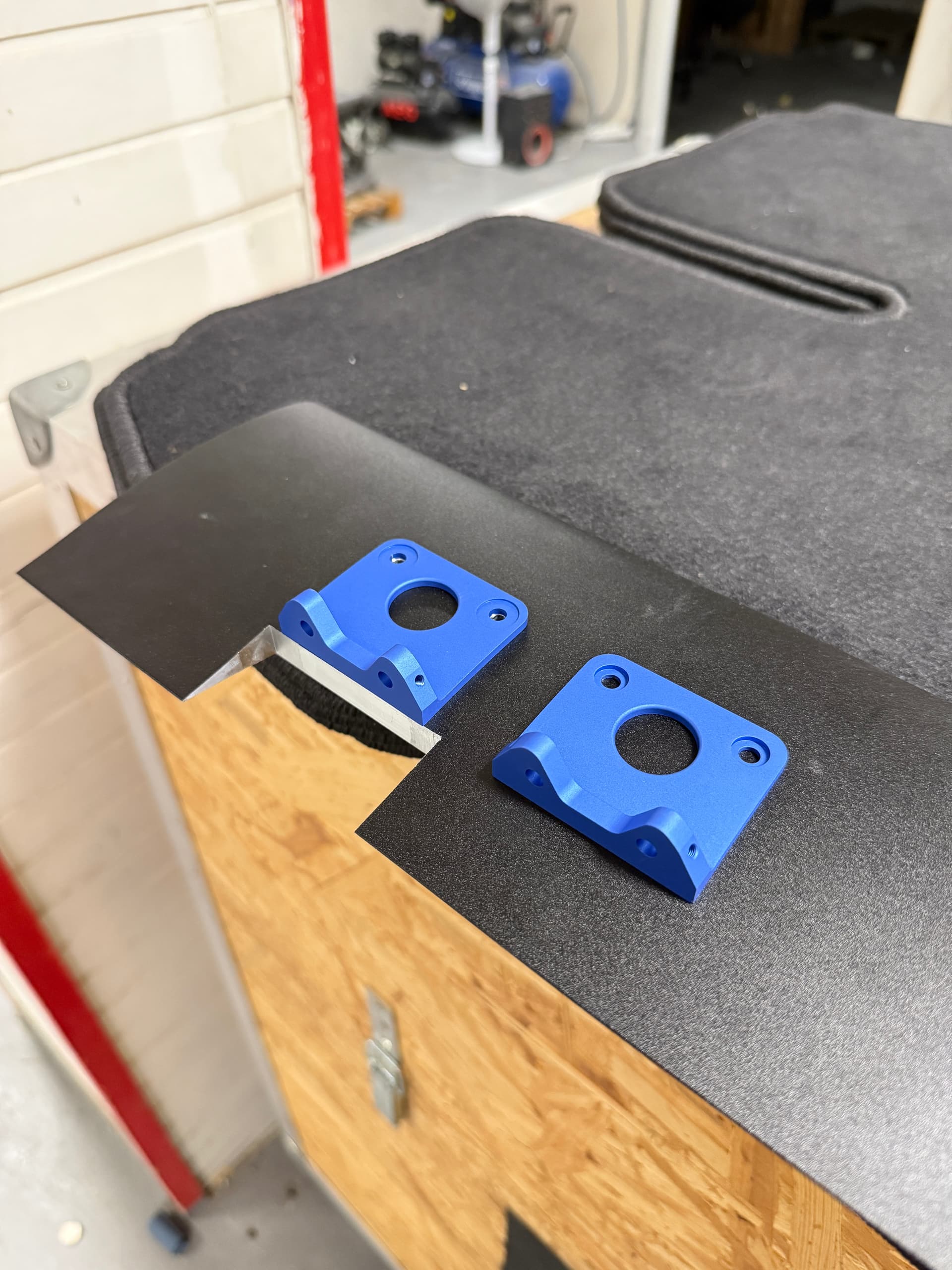
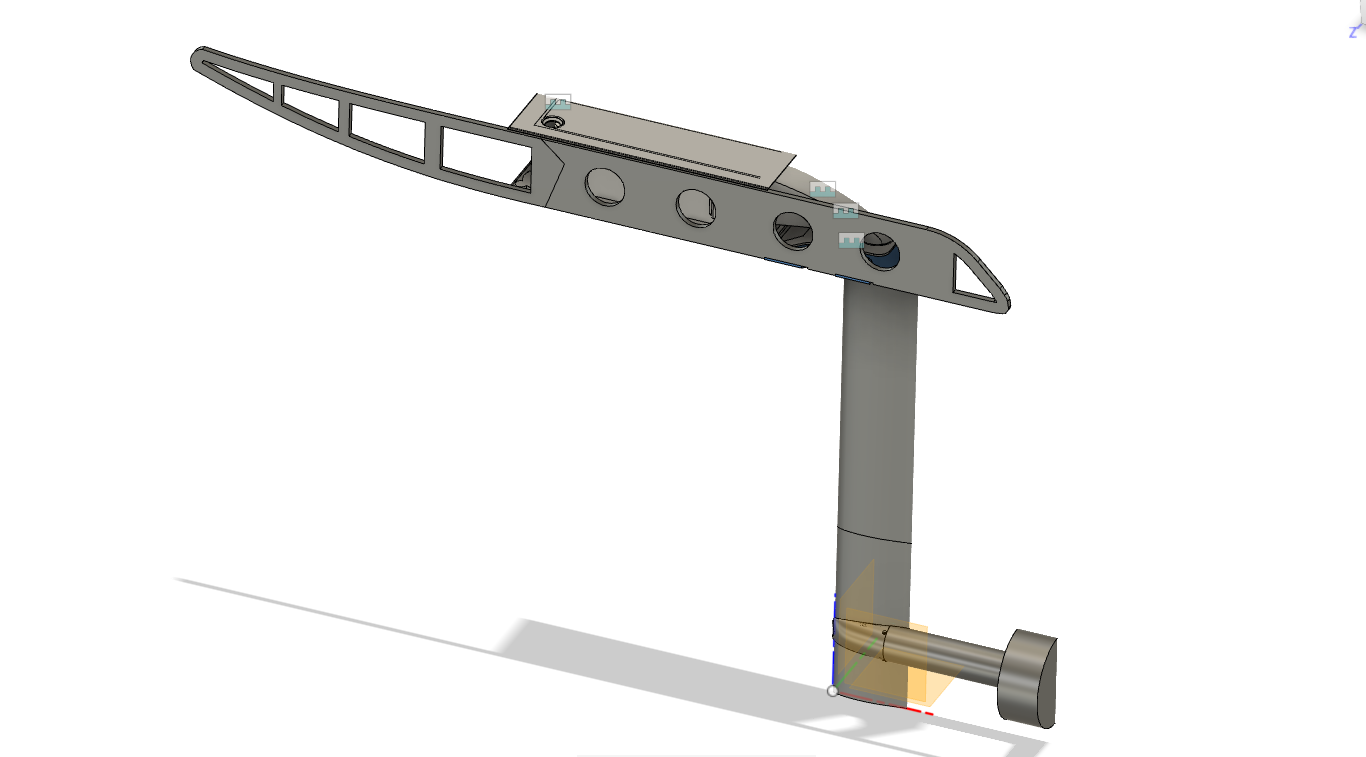
For the Gong V3 lineup, I couldn’t find a suitable motor mount for the new 19mm V3 aluminum mast, so I ended up designing and building one myself. The mount is very simple and was machined out via JLCPCB and over it I printed a simple motor front drag cone from ASA+.
During my thinking I wanted to push the motor as much in the mast as possible since the motor is extremely long and in the end just eyeballed everything :smiley: Also the vertical separation from the stab is eyeballed or well the thinking behind it was: 1-2cm from the stab till the propeller and then approximately 160mm is the propeller diameter.
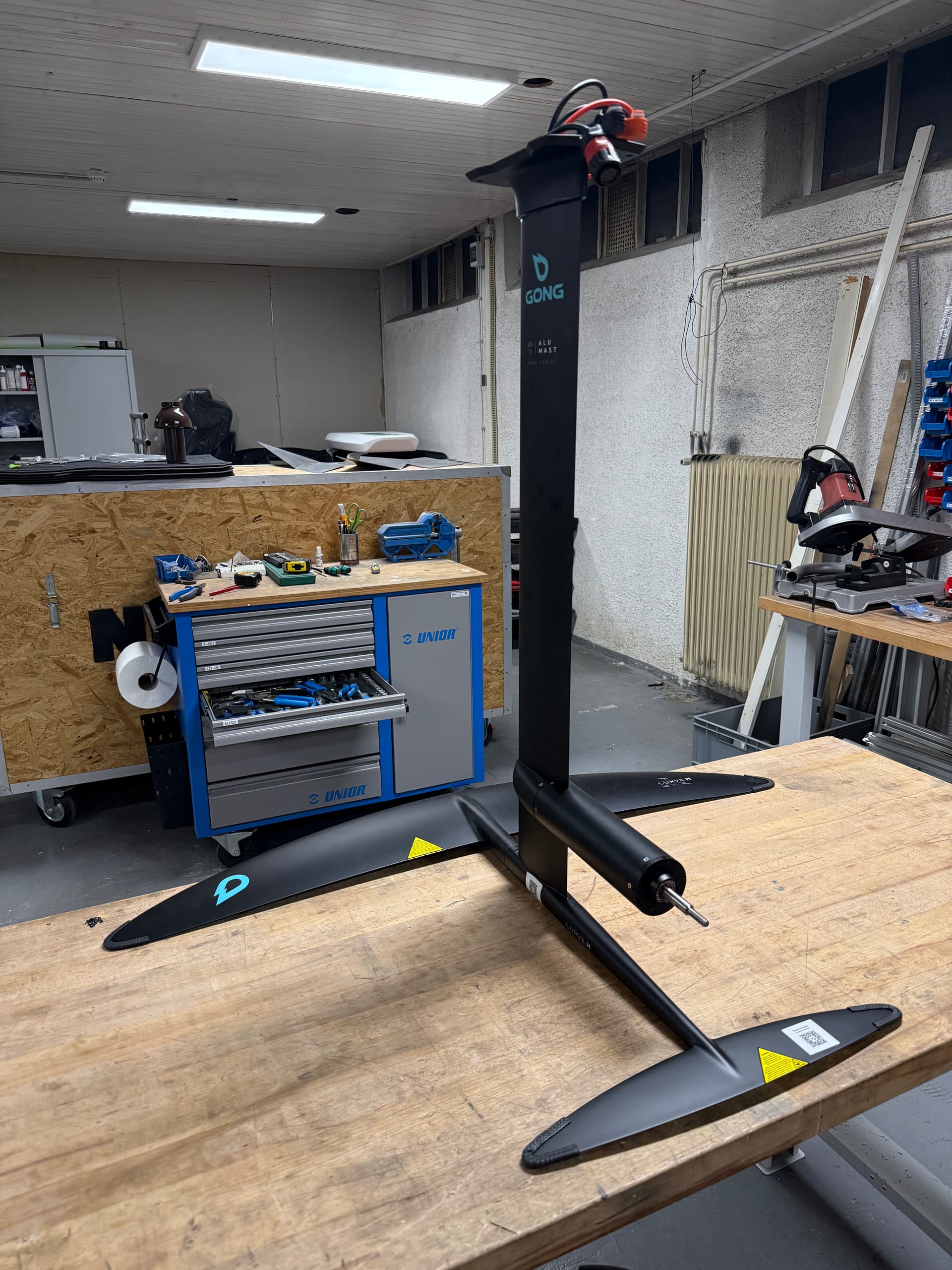
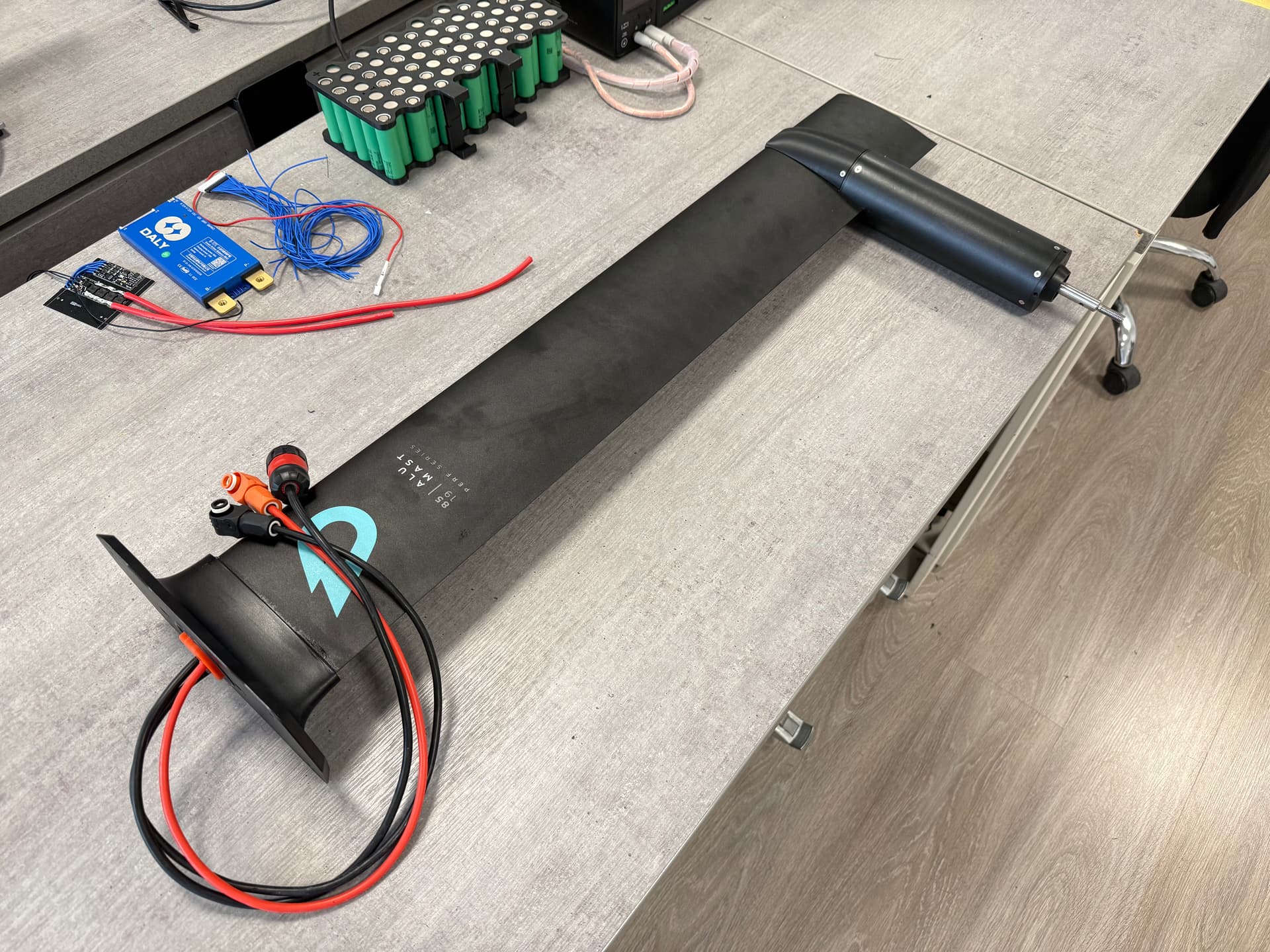
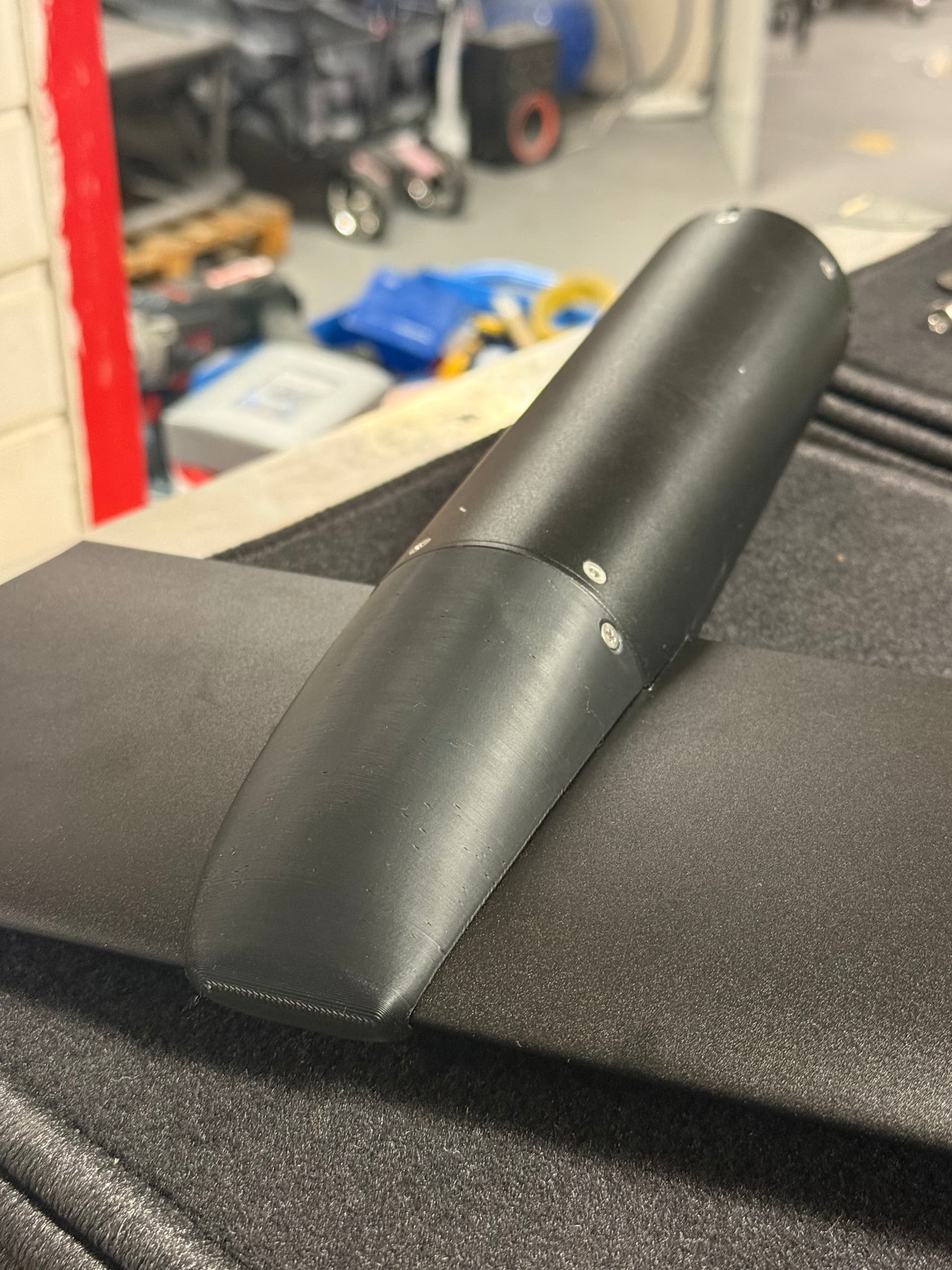
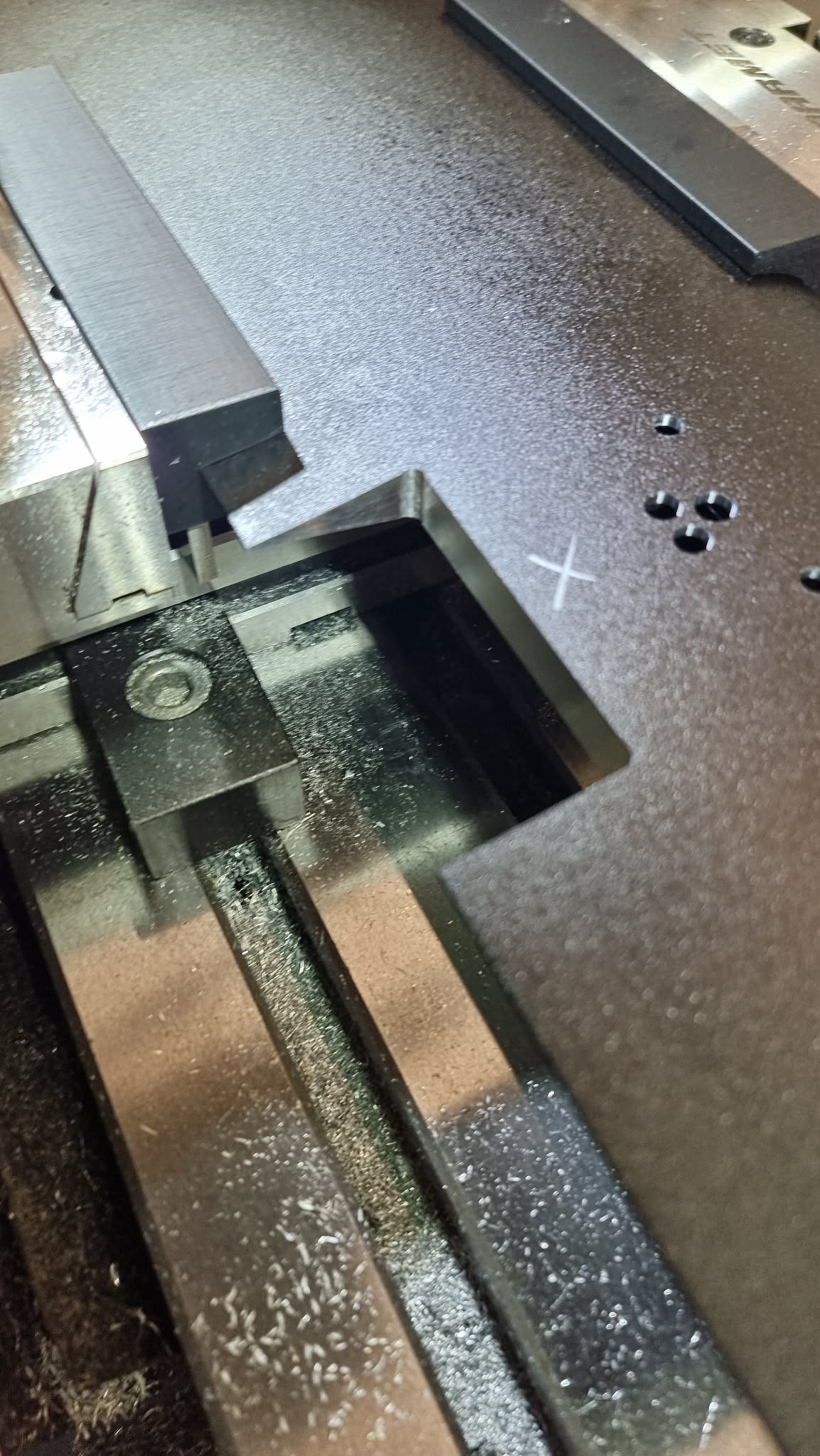
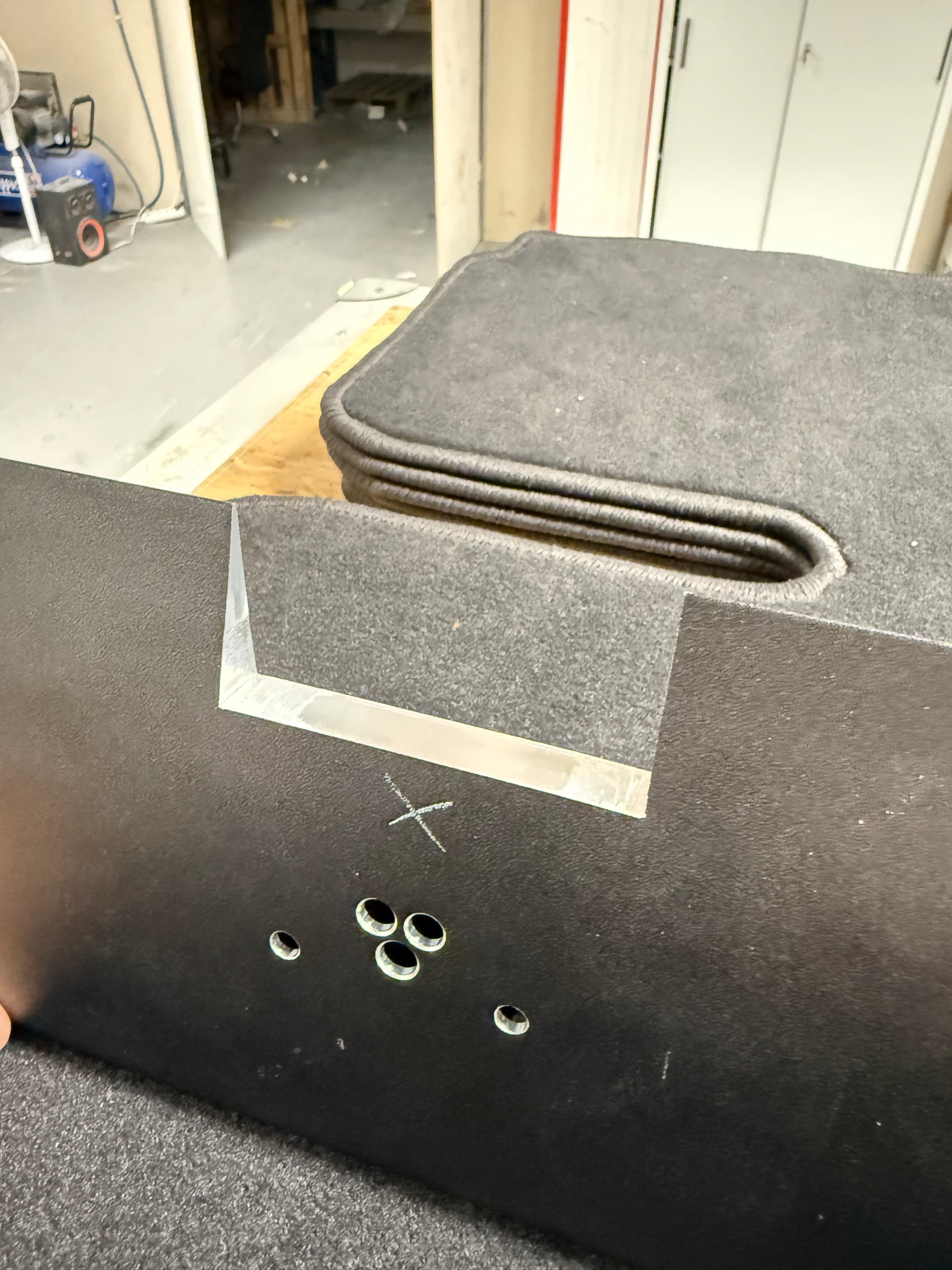
The motor mount fits the mast extremely well when the mast cut-out is CNC machined. After the CNC cut, I still had to do a bit of manual finishing on the edges to ensure proper perpendicularity so the motor sits perfectly aligned.

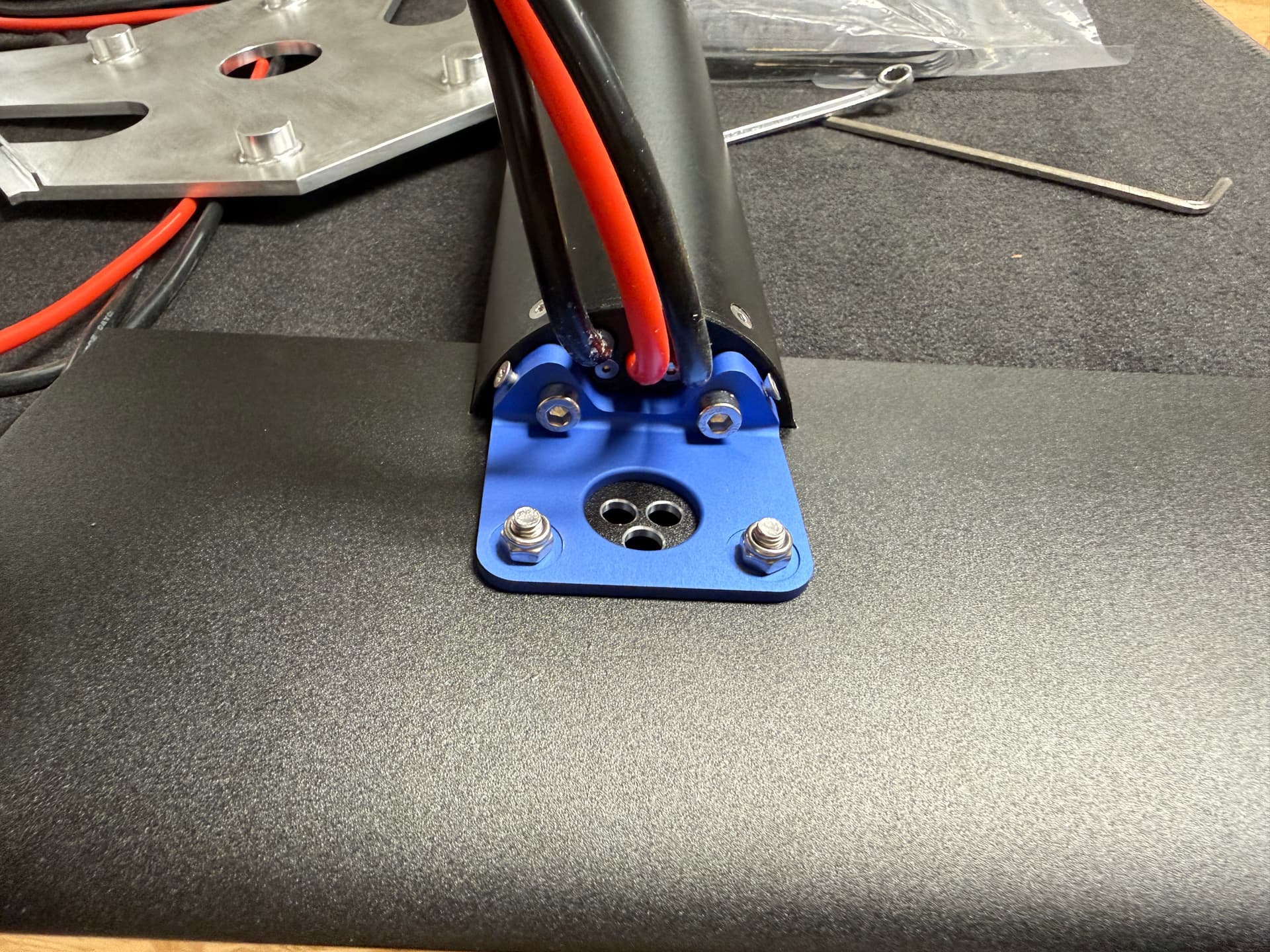
In addition to the main cut-out, I also drilled three holes in the mast for:

  • Motor positive
  • Motor negative
  • Signal wire

The motor motor mount looks like:


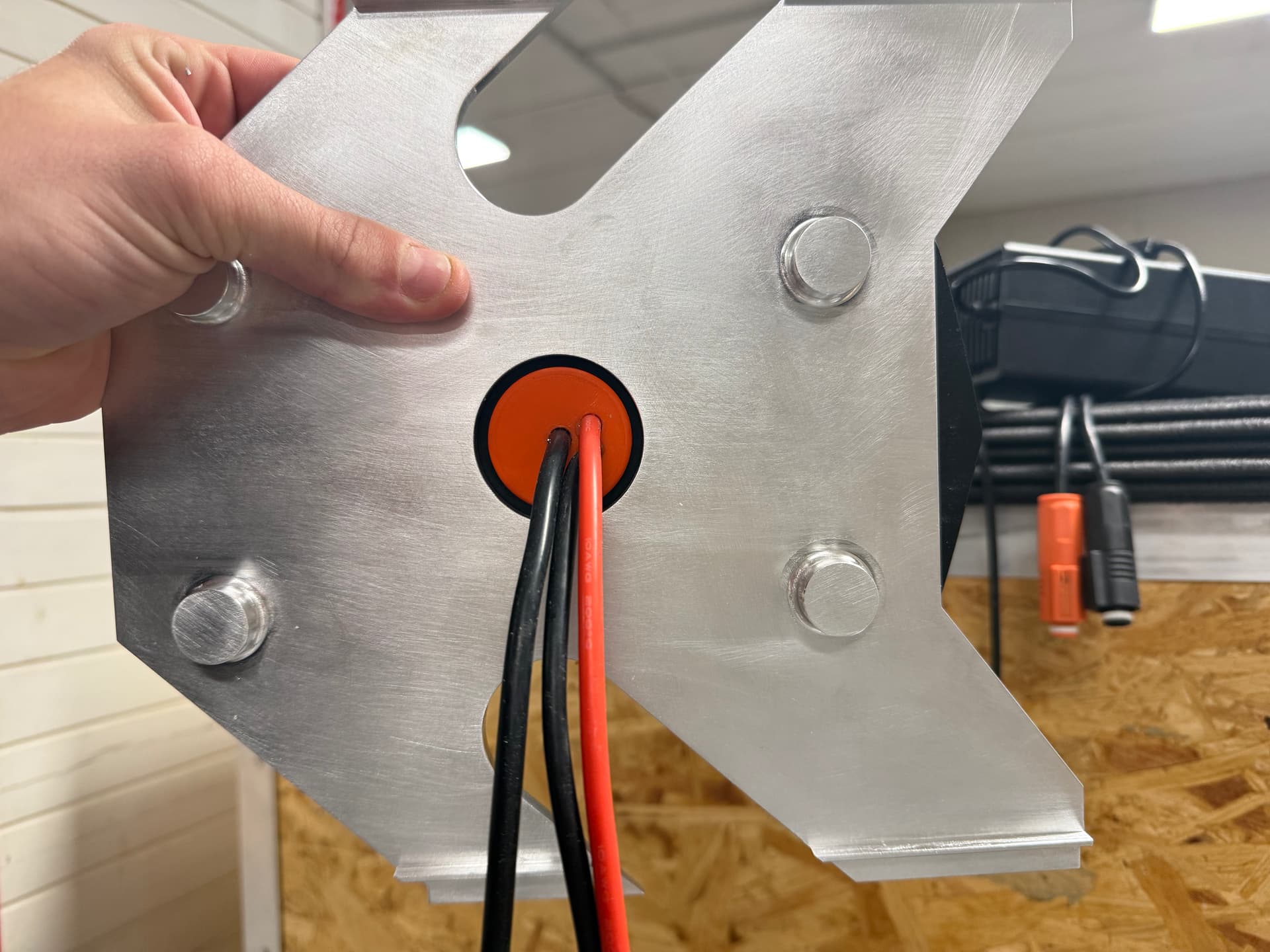
The wires enter the mast at the motor mount and run internally through the mast. They exit through the original mast plate, where I machined matching holes along with an O-ring groove for sealing.


Waterproofing

Waterproofing this section required a bit of creativity.

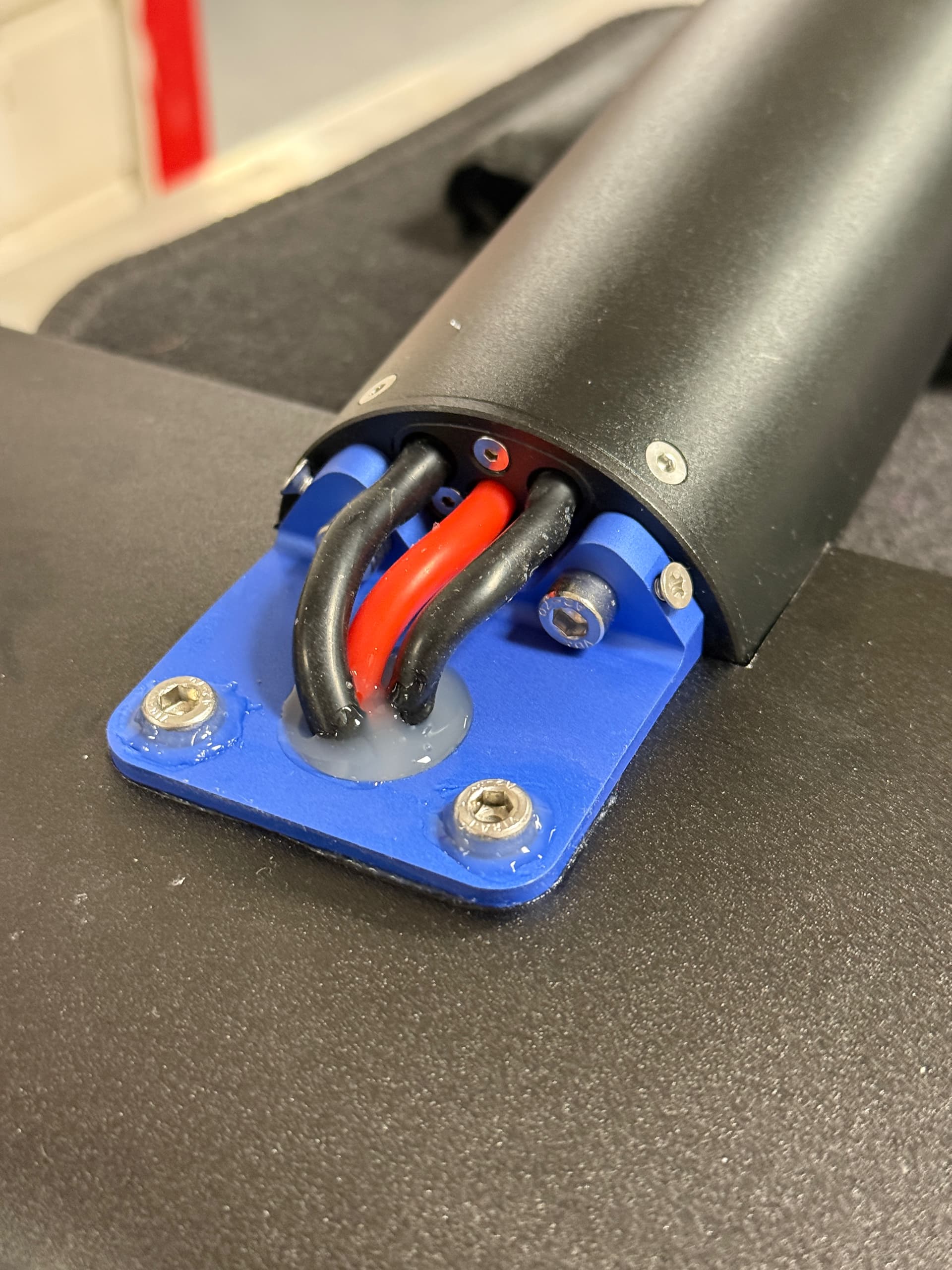
At the motor mount entry point, the wires are glued in place, but I also decided to silicone-seal everything for extra safety:

  • Motor wires at the entry point
  • Motor mount screws (2x)
  • Motor mount nuts

Gong also provides silicone rubber inserts inside the mast, so combined with the sealing I did, I’m fairly confident that the mast interior should stay dry.

Just to be extra safe, I also applied silicone around the mast plate and the itself.


Wire Protection

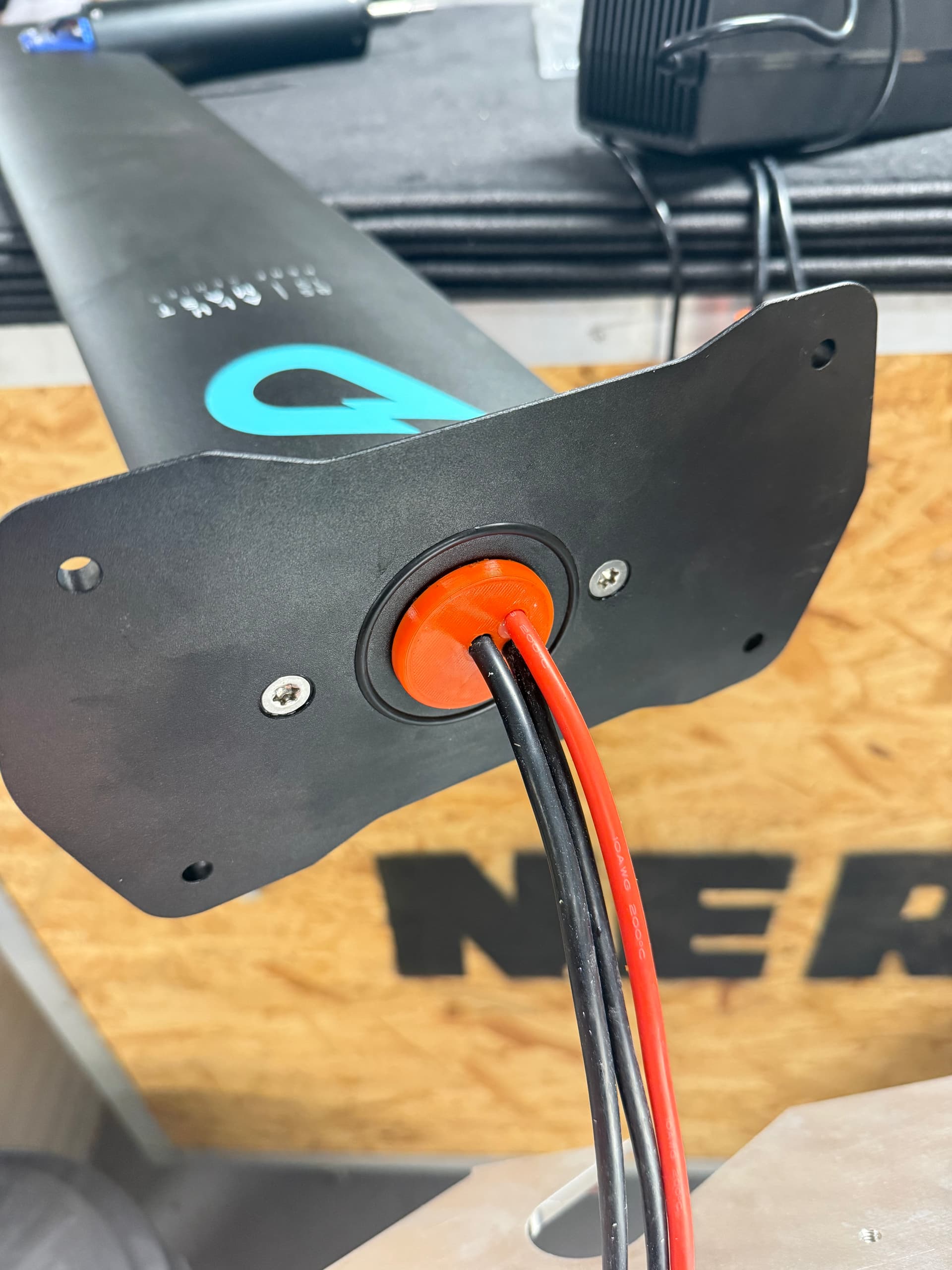
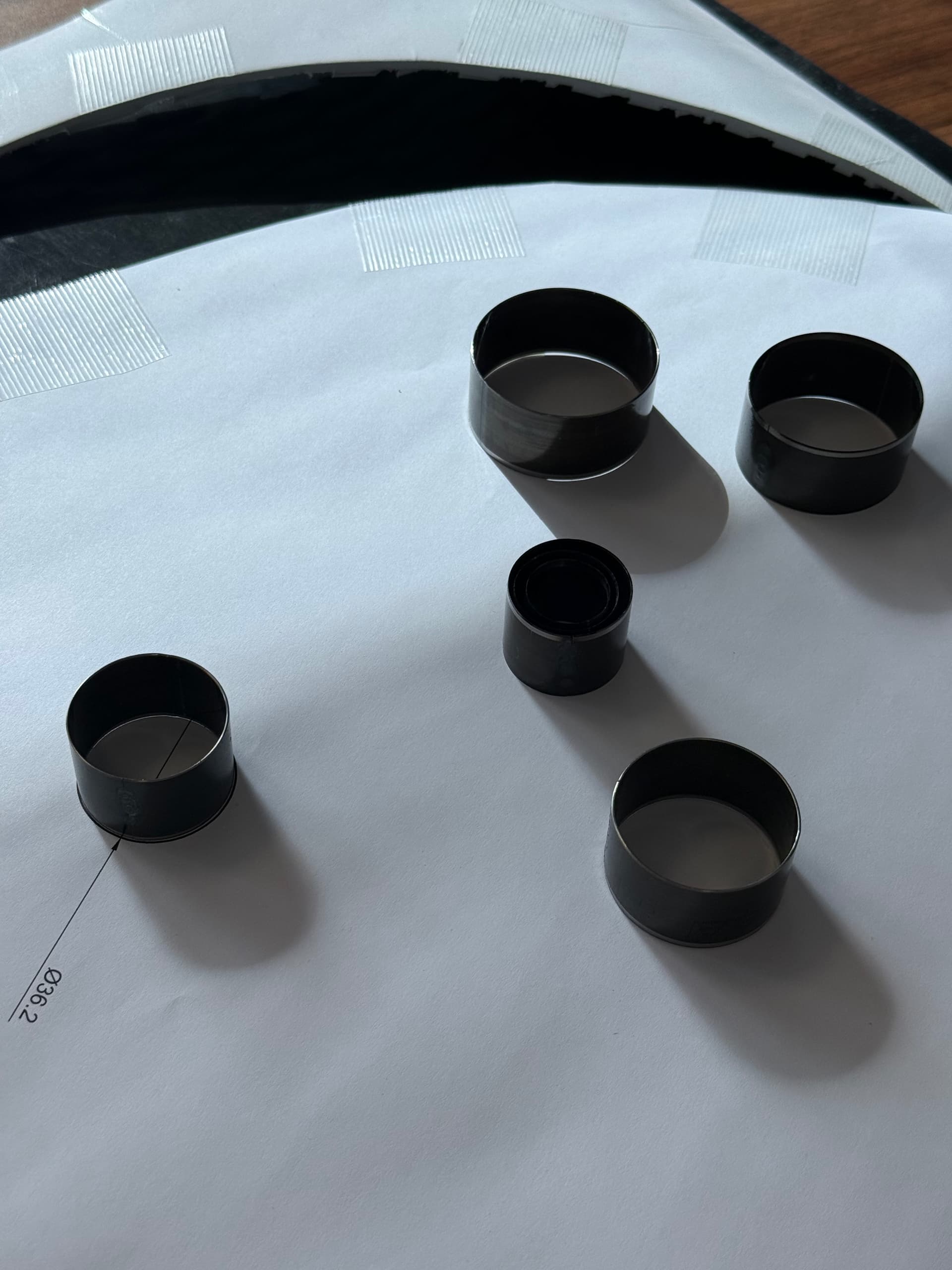
Where the wires exit at the mast plate, I printed a small TPU stress-relief component.

The silicone wires from Flipsky feel a bit fragile, and I had a feeling they could eventually tear from vibration or tension, so the TPU piece helps support them and reduce strain.

The stress-relief part is slightly smaller than the hole in the board, which allows it to sit neatly inside the opening without interfering with the mast installation.


Electrical Connections

For the wiring connections I used:

  • Amphenol connectors
  • CnLinko 9-pin waterproof connectors (from AliExpress)

During final assembly, the connectors will be fed through the board opening one by one, and the mast plate will then be secured using 4× M6 bolts.

The mast plate seals against the board using an O-ring, and the board surface around the mounting area is completely smooth, so this should provide reliable waterproof sealing.

Propeller

The propeller setup is still a work in progress.

At the moment I’m still looking for the right prop, but a friend of mine has been designing a custom one, and I’m currently waiting for him to finish it. Once I get it, I’ll be able to test how well it matches the motor and overall setup.

I’ll update this section as soon as the prop arrives and I can start water testing the full drivetrain.

1 Like

Battery & Control Box

This section is essentially the heart of the whole setup, since the enclosure contains:

  • Battery pack
  • BMS
  • Receiver (VX5 RX)

This layout is possible because the motor I’m using has an integrated ESC. On paper this seemed like a great solution since it simplifies the wiring and reduces the number of components inside the board.

That said, it’s also a bit of a risk. If the integrated ESC doesn’t behave the way I want, there isn’t much flexibility compared to a standalone VESC setup. What also surprised me is that the motor has been on the market for about a year now, yet there are almost no real-world reviews of it so far.

So… I guess I’ll find out soon enough how well it works :sweat_smile:


Enclosure

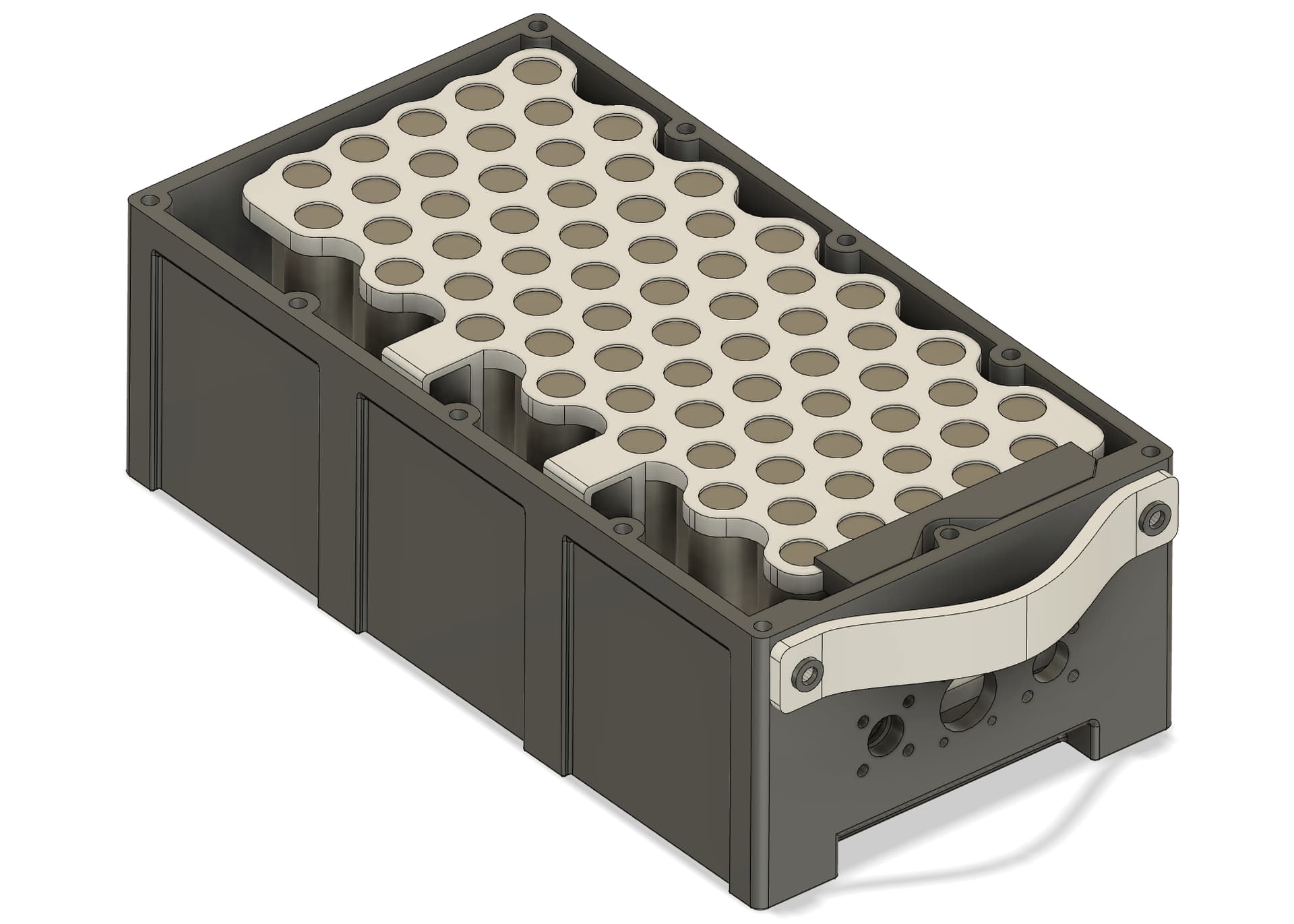
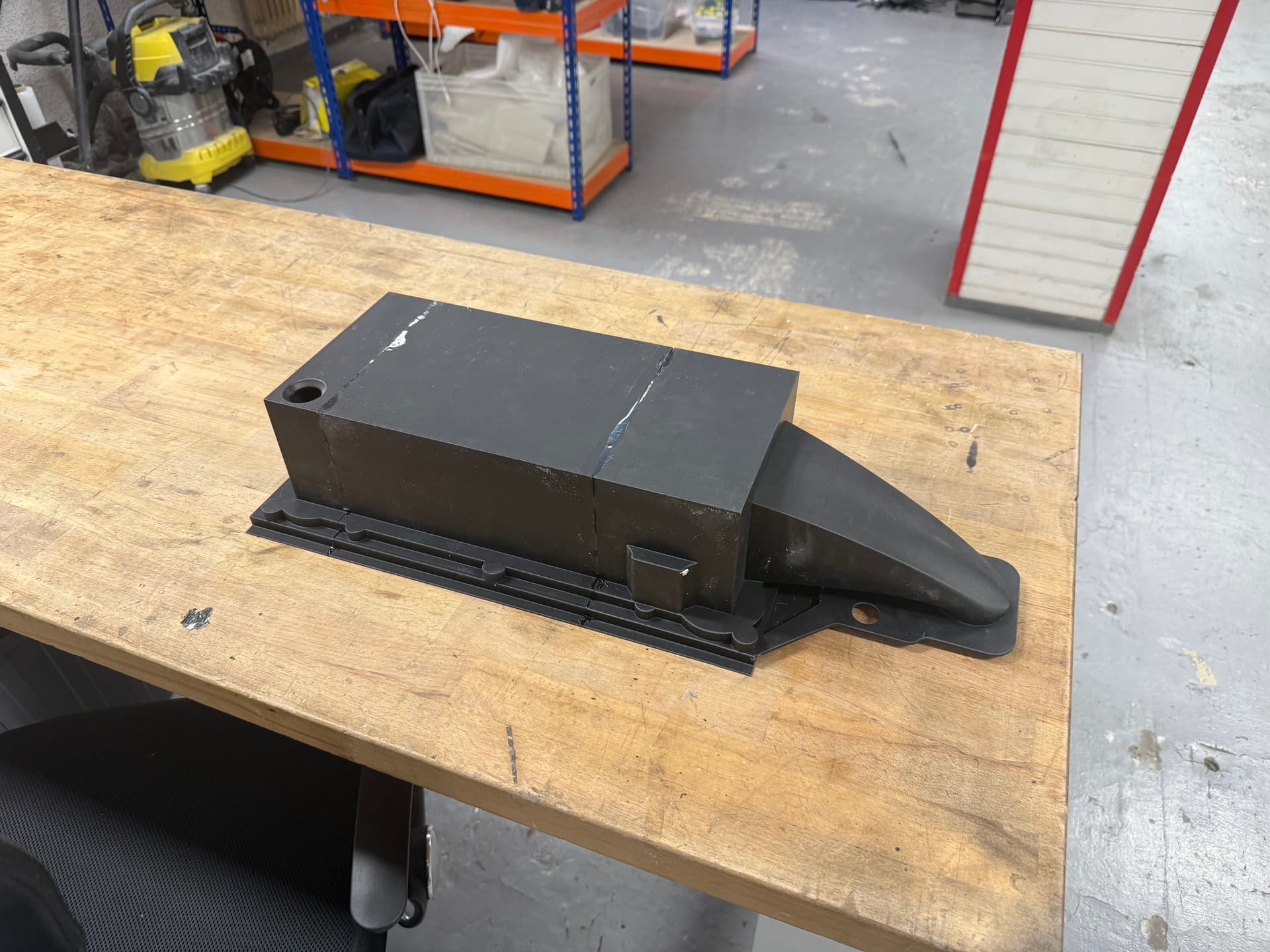
The battery box is fully waterproof and was 3D printed from PCCF in a single piece.

The main reason for making the battery completely sealed was simple:
if the main board compartment seal ever leaks, the battery will still stay protected. Also… why not add another layer of safety.

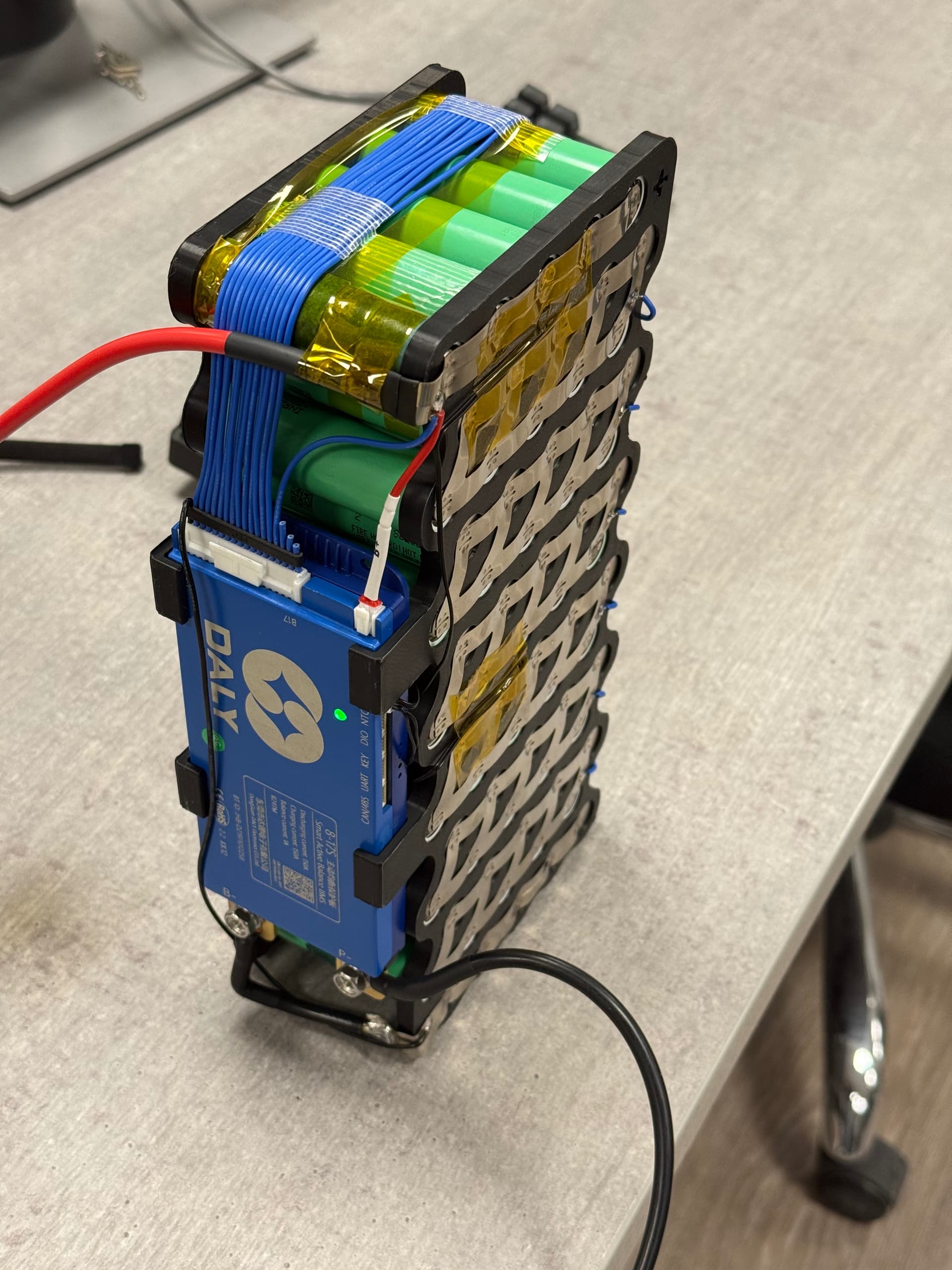
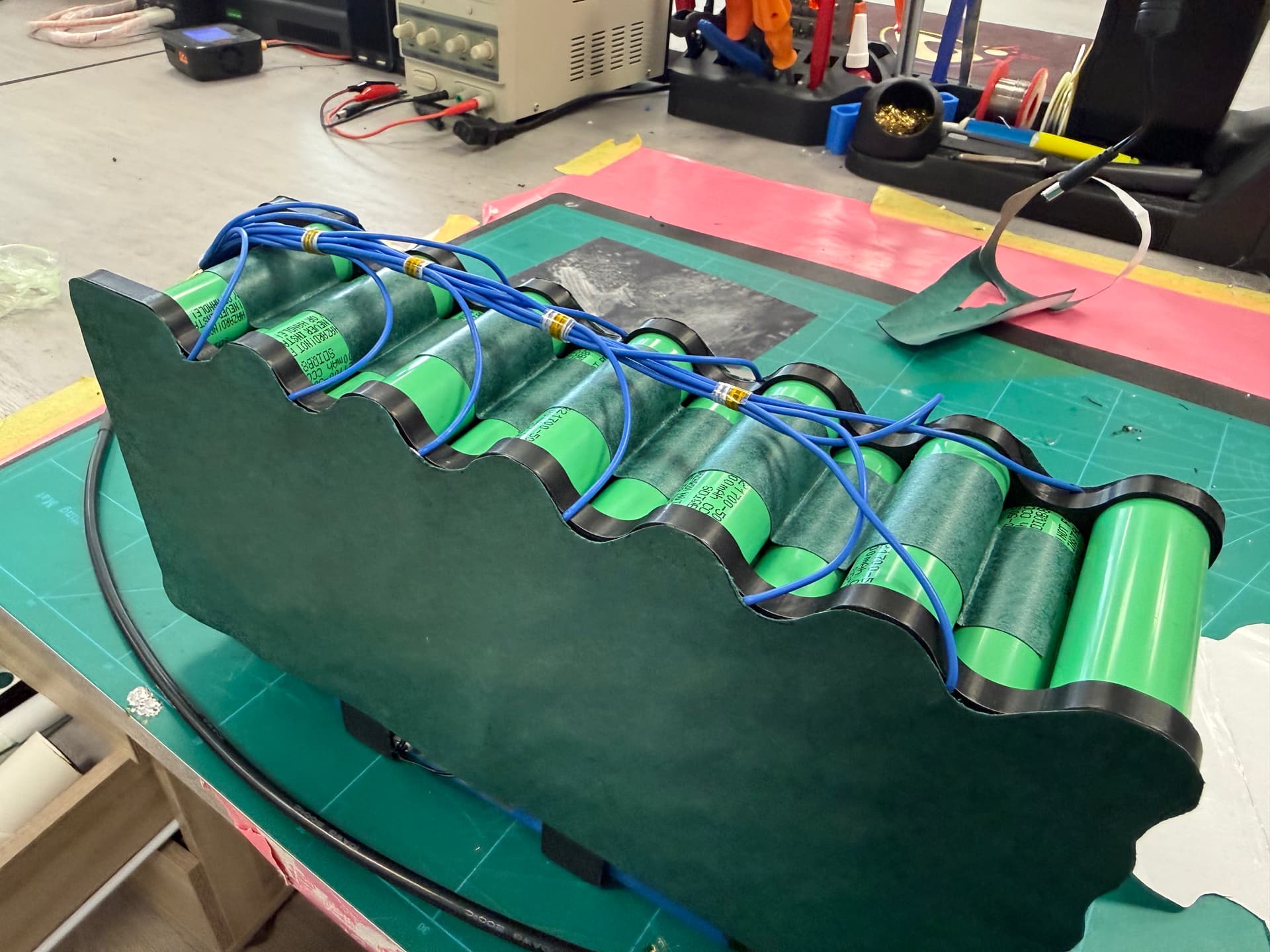
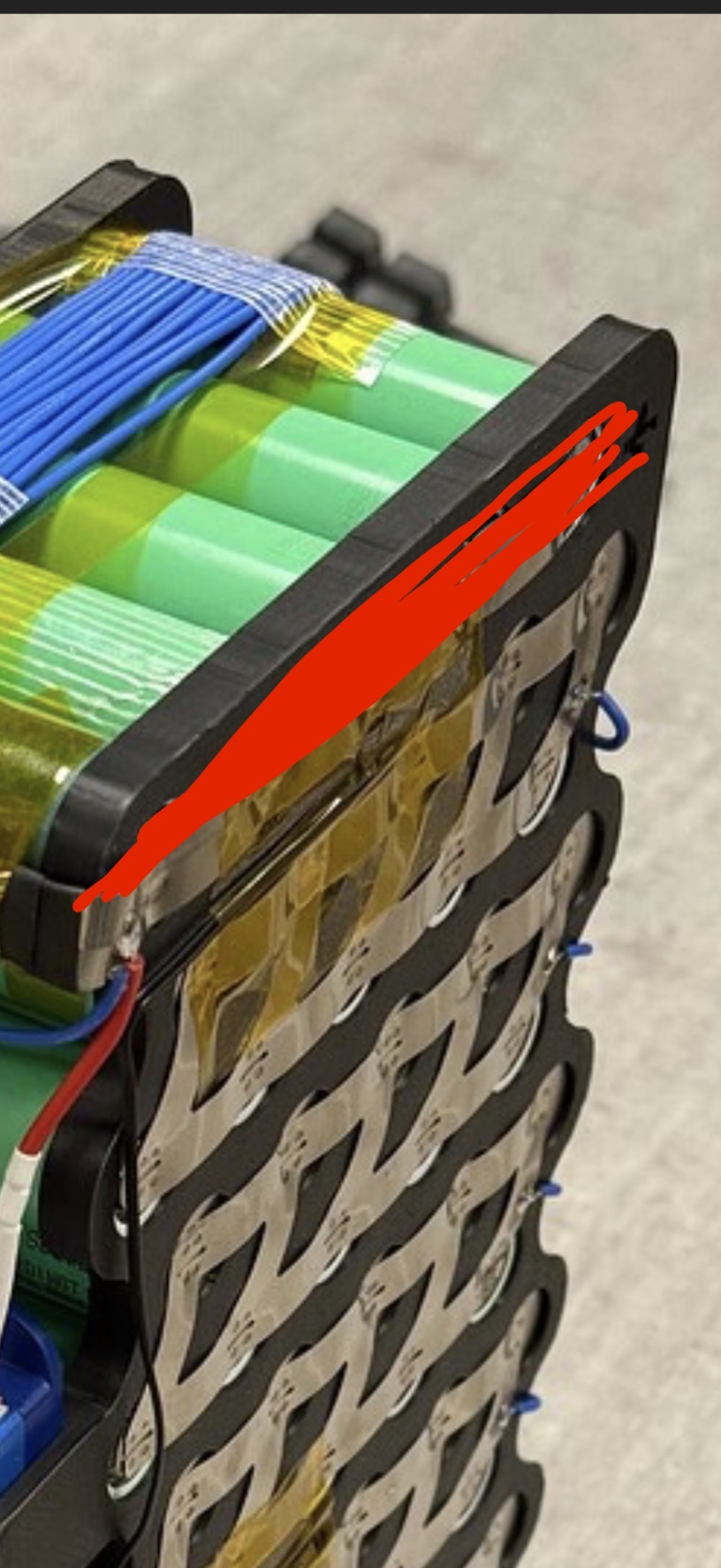
The enclosure was specifically designed around a 14S5P pack using Samsung 50S cells, with 22.7 mm spacing between cells.

Inside the enclosure, the cells are held by a custom battery bracket which serves both as a cell holder and structural support. The bracket is 3D printed from ASA, mainly to handle higher temperatures better than PLA or similar materials.

Features of the battery bracket:

  • Holds the 21700 cells in precise alignment
  • Includes two holes for temperature sensors
  • Structurally locks into the enclosure so the entire pack cannot move once assembled


21700 Pack

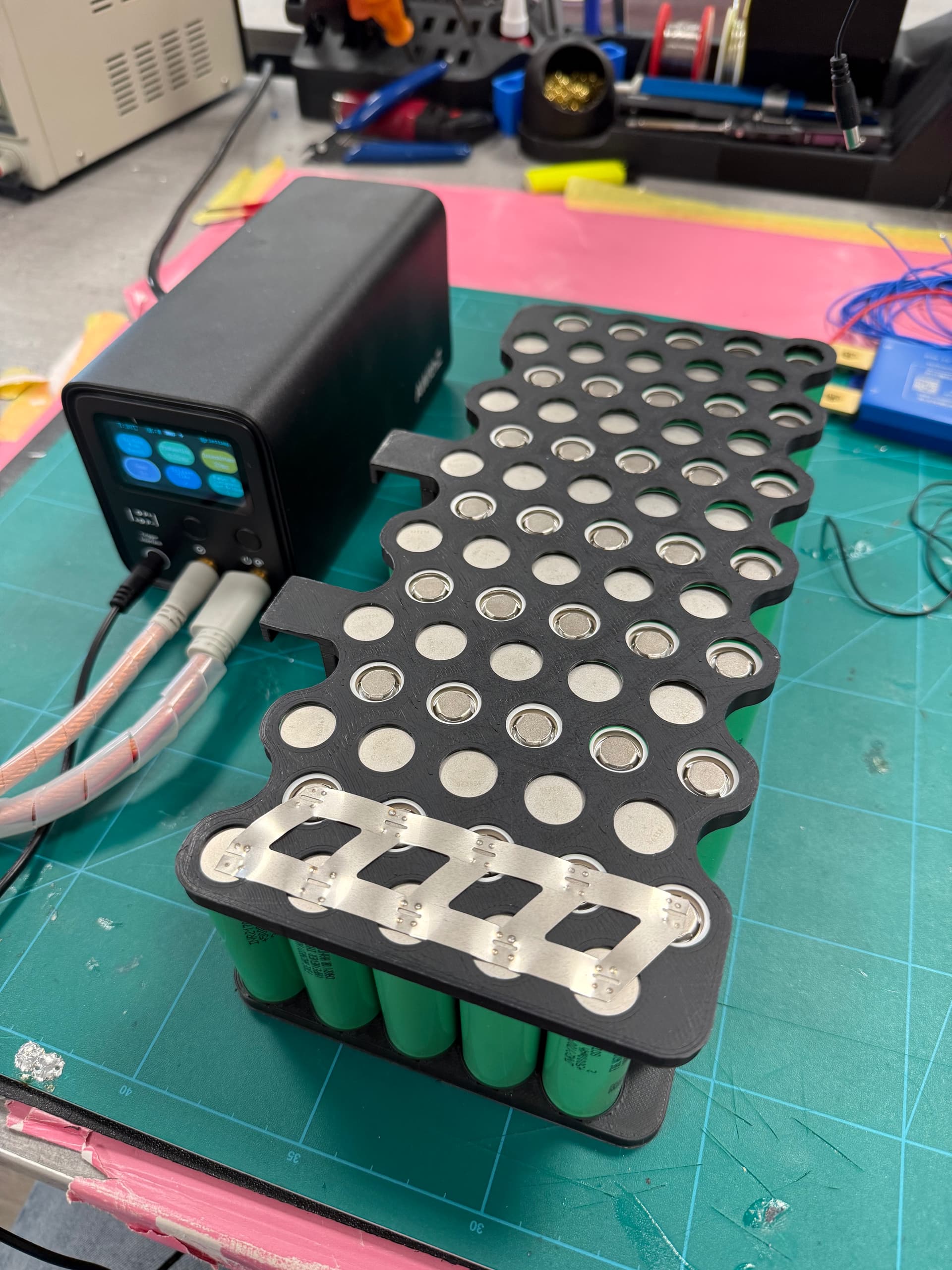
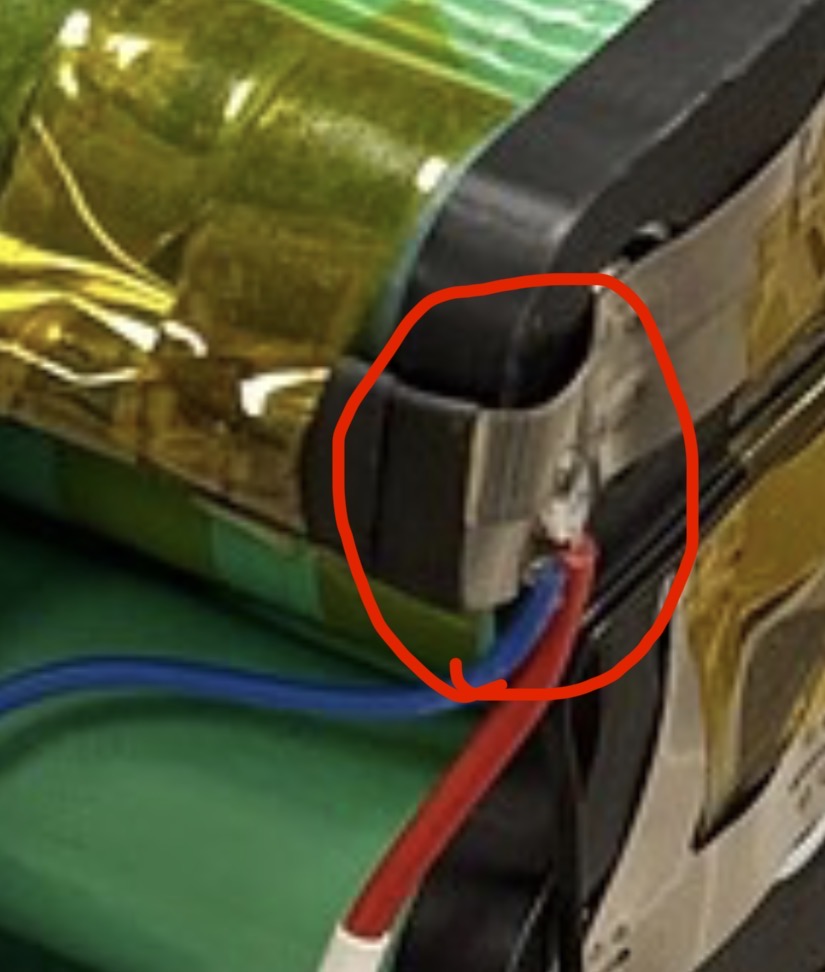
The cells were spot welded using my trusted welder with 0.15 mm pure nickel strip.

Final pack configuration:

  • 14S5P
  • Samsung 50S 21700 cells Super cheap on Nkon.nl


BMS & Safety

For the BMS I chose the new DALY Blue BMS, which has worked reliably for me in several other projects.

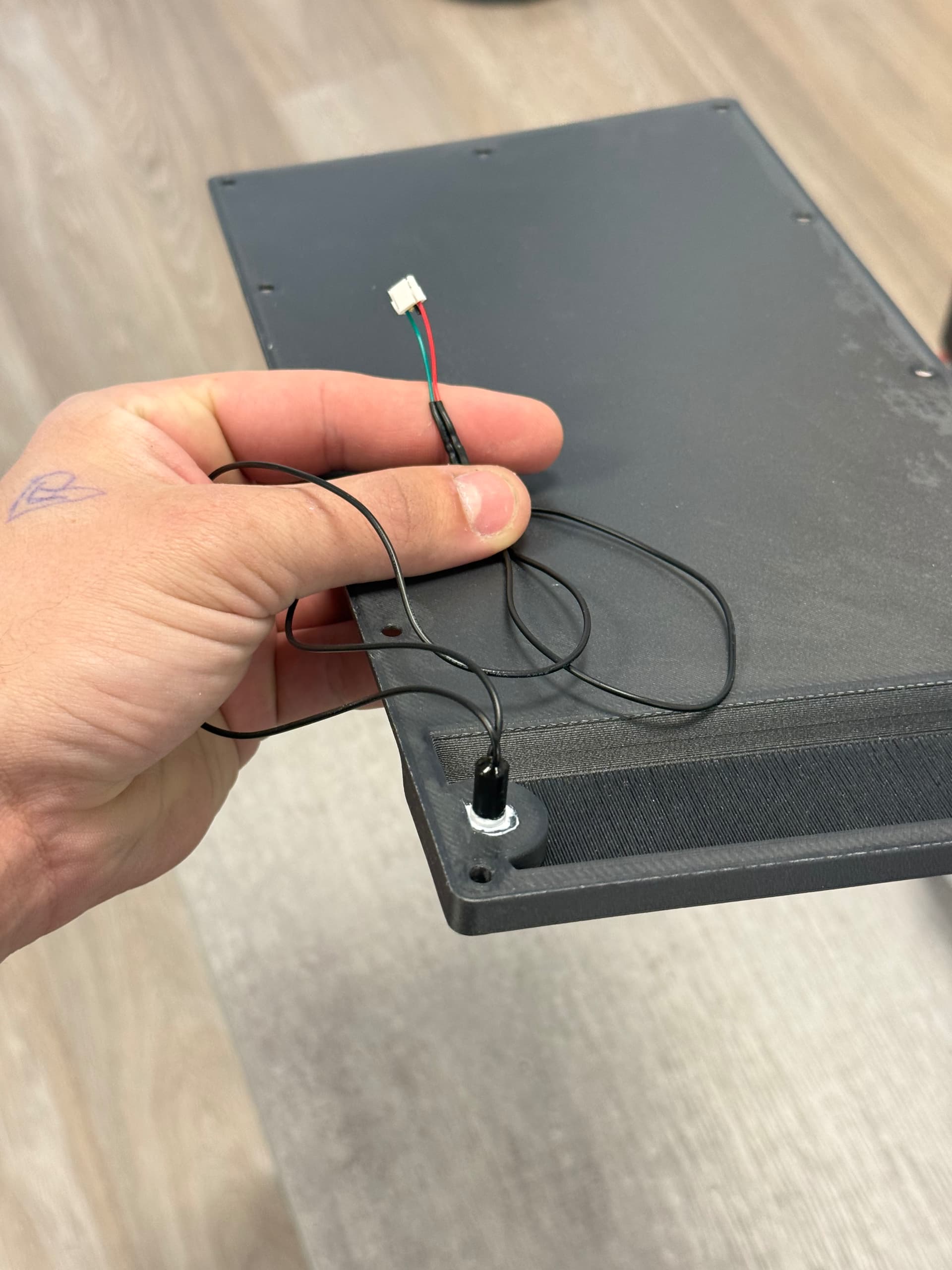
One feature I really like is the “Key” switch function. Instead of using a traditional switch, I connected a normally-open reed switch to it.

How it works:

  • Magnet away → Key disabled → Discharge MOSFETs OFF
  • Magnet near → Key enabled → MOSFETs ON

So essentially the battery only becomes active when the magnet is brought close to the switch.

My plan is to use this mainly as a safety feature, preventing accidental throttle activation before I’m in the water and ready.

In theory it could also serve as a kill switch, but I’m aware that cutting power while the system is drawing a lot of current could potentially damage the VESC.

That said, I’ve used the same setup in other projects and haven’t killed a VESC yet.

Oh and also, there is a 200A fuse inside. Got it from Mauser Electronics.

Reed on the lid. This is also a place where vx5 Receiver comes and antenna, just enough space for it.


Waterproofing

To further ensure water resistance, the entire enclosure was impregnated with Dichtol, which is a very low-viscosity sealing resin commonly used for 3D printed parts.

This process was done after installing the electrical connectors, allowing the sealant to penetrate any micro-gaps in the print and improve overall watertightness.


Chargers

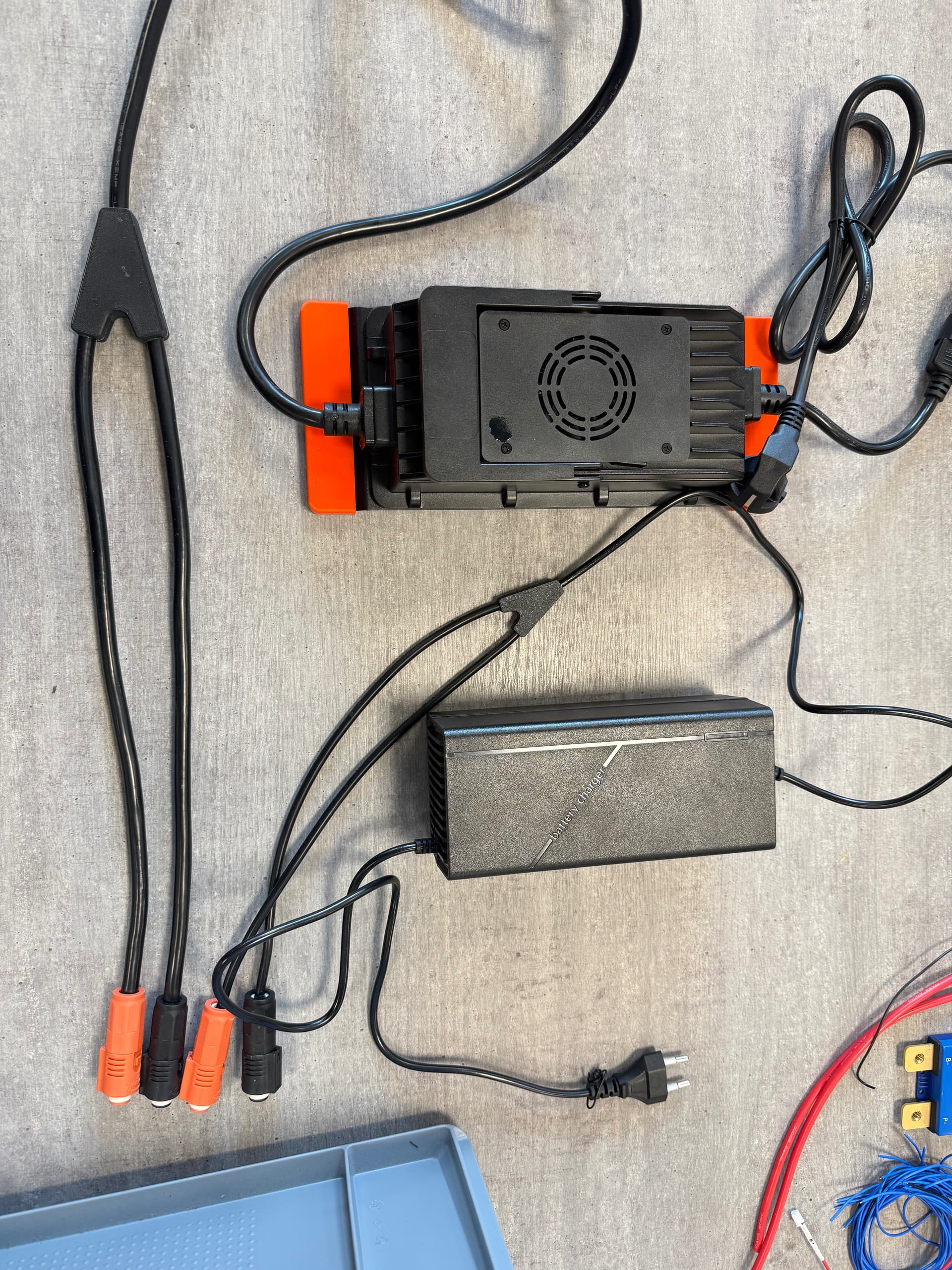
Alibaba connection supplied me with 20A 14S Charger for around 100 EUR but i also have a cheap one for 25 EUR, both work good.
Around the fast charger I printed TPU orange protections and did some cable “Y” splitting plastics. Oh and Amphenol connectors, well I had to crimp them but since the wires are to small i had to fold them twice to create enough “meat” to crimp strong.


Final Battery Assembly

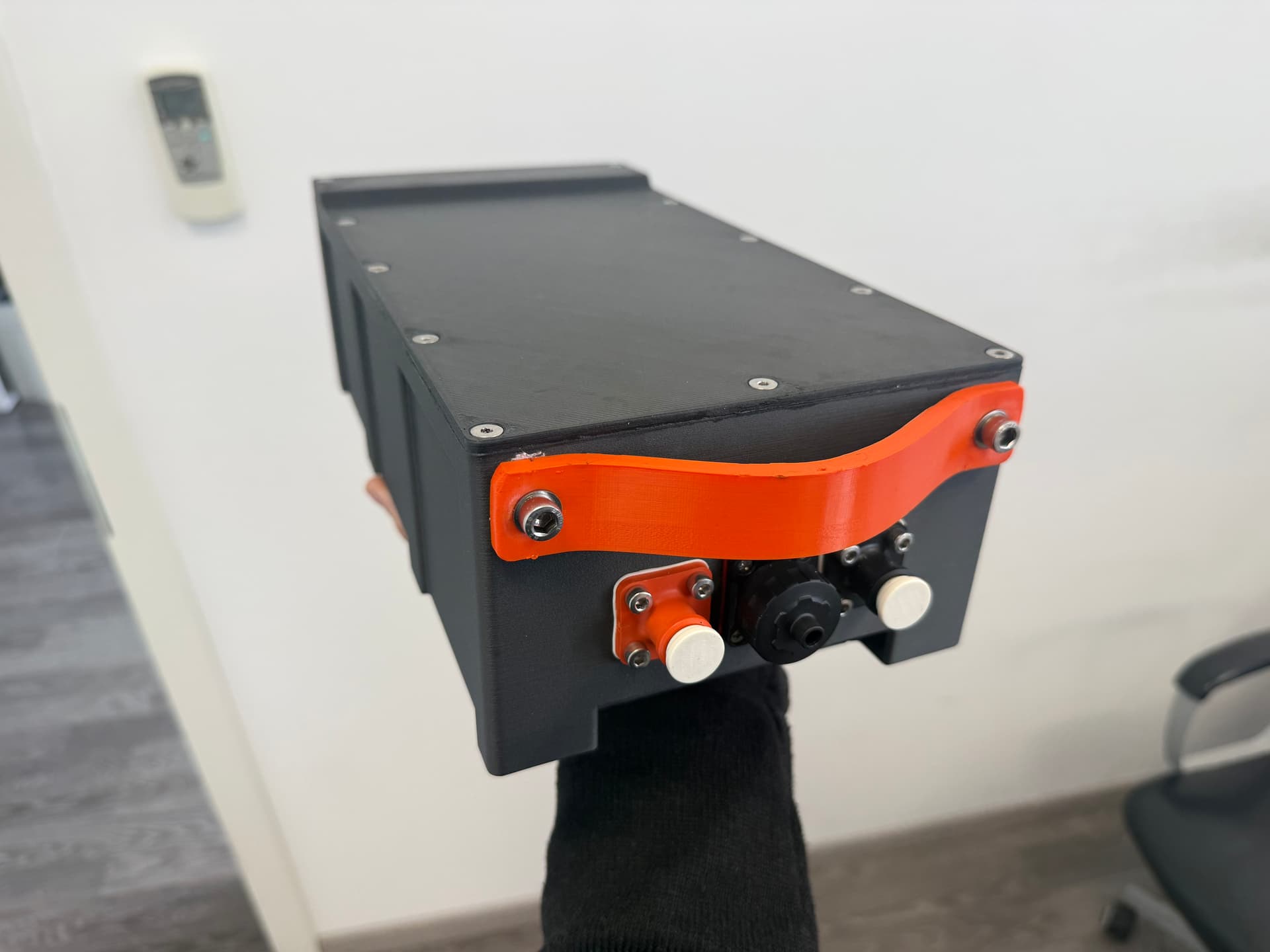
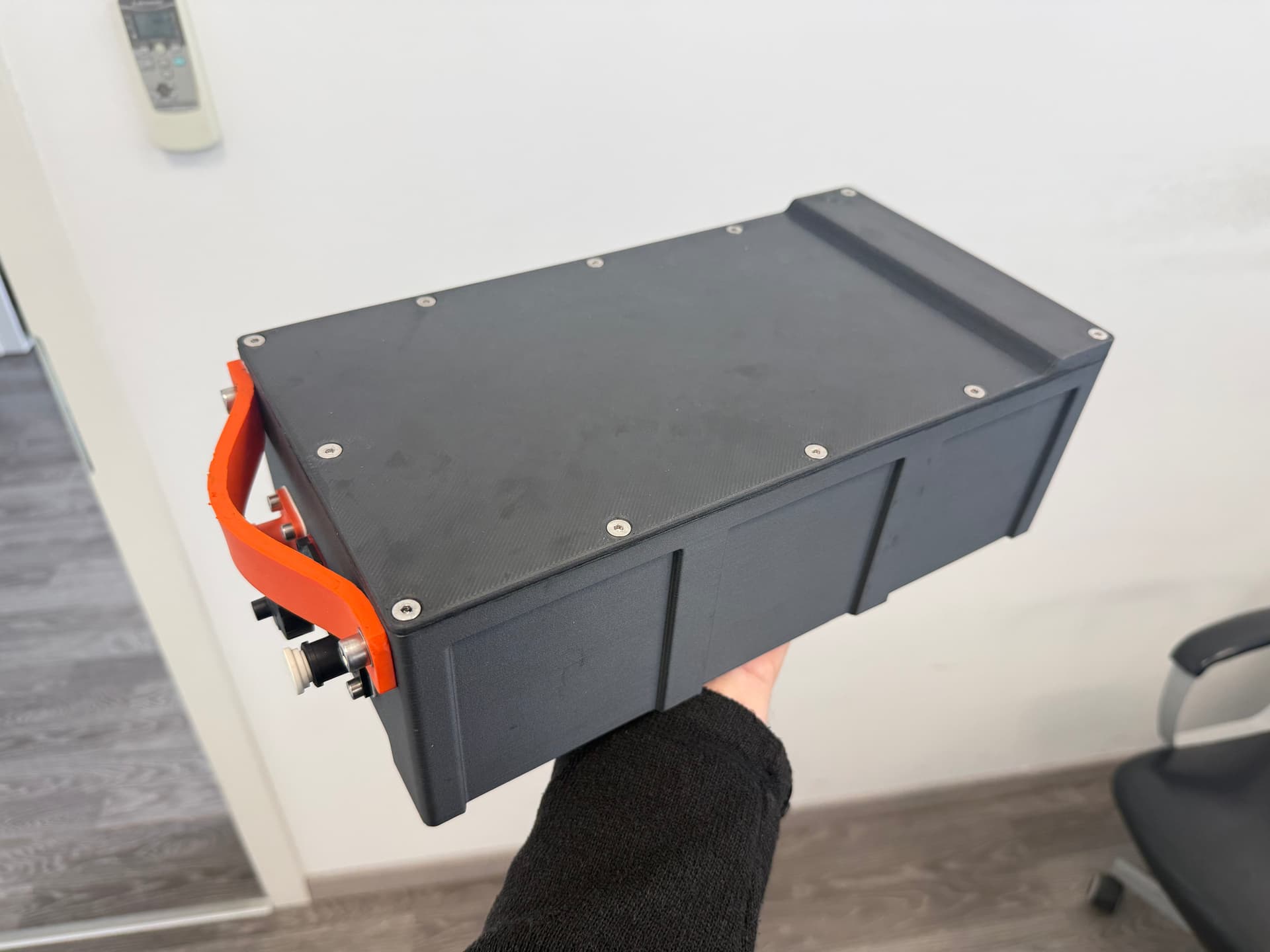
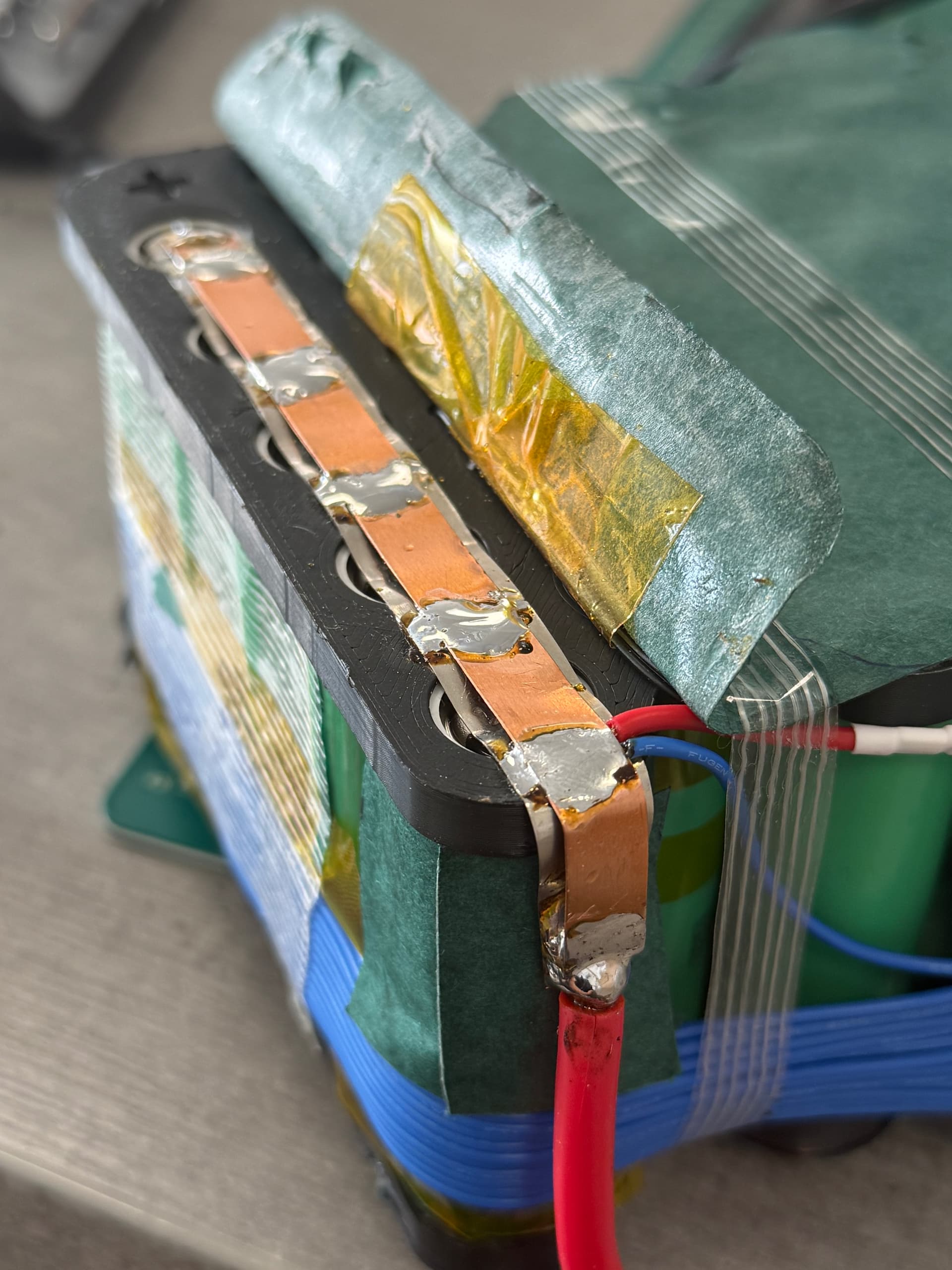
The finished battery pack looks like this:

14S5P Samsung 50S – 21700 cells
Total weight: 6.4 kg

Compact, fully sealed - already ran few benchmarks on my custom discharger and everything looks fine!


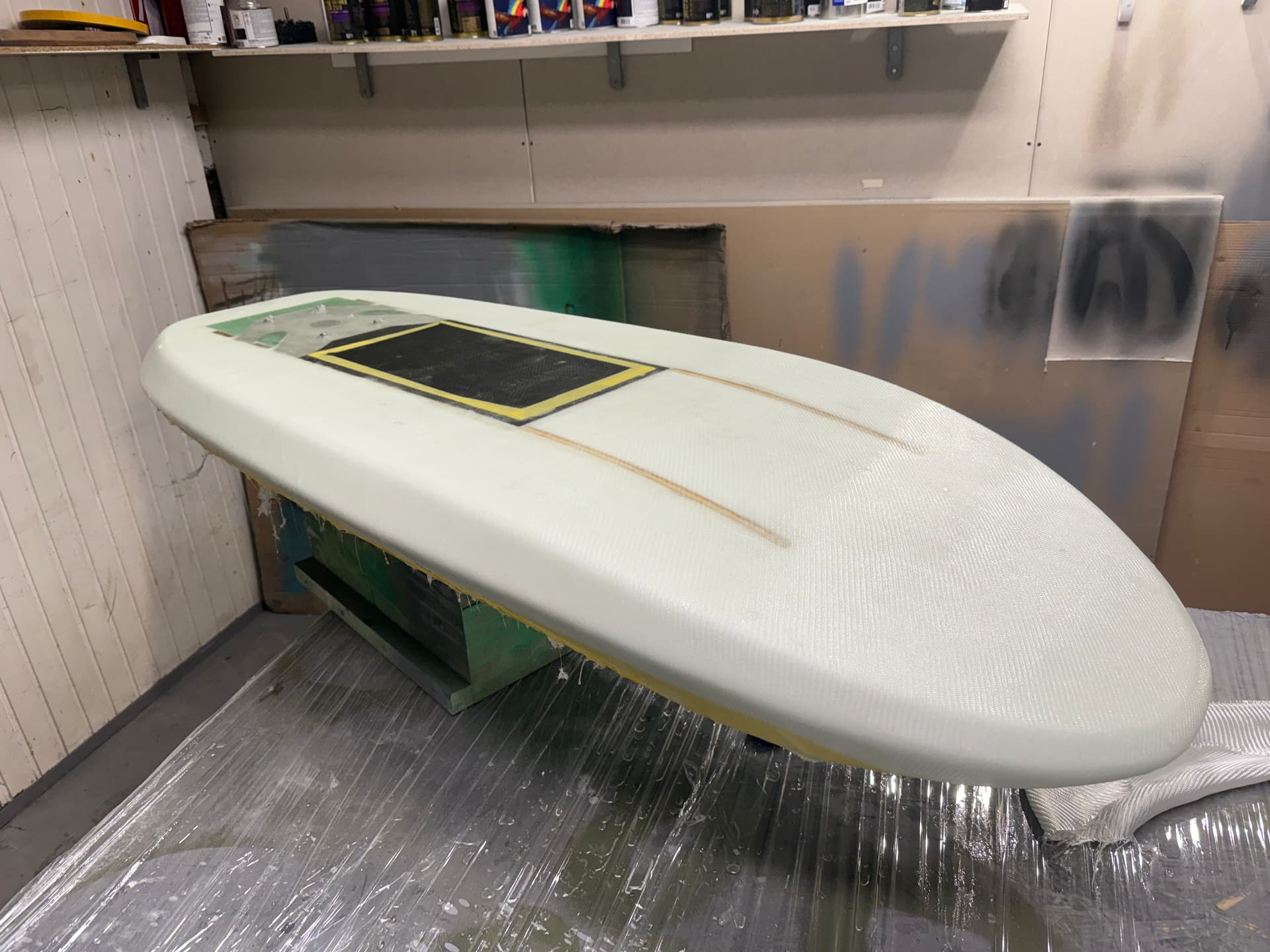
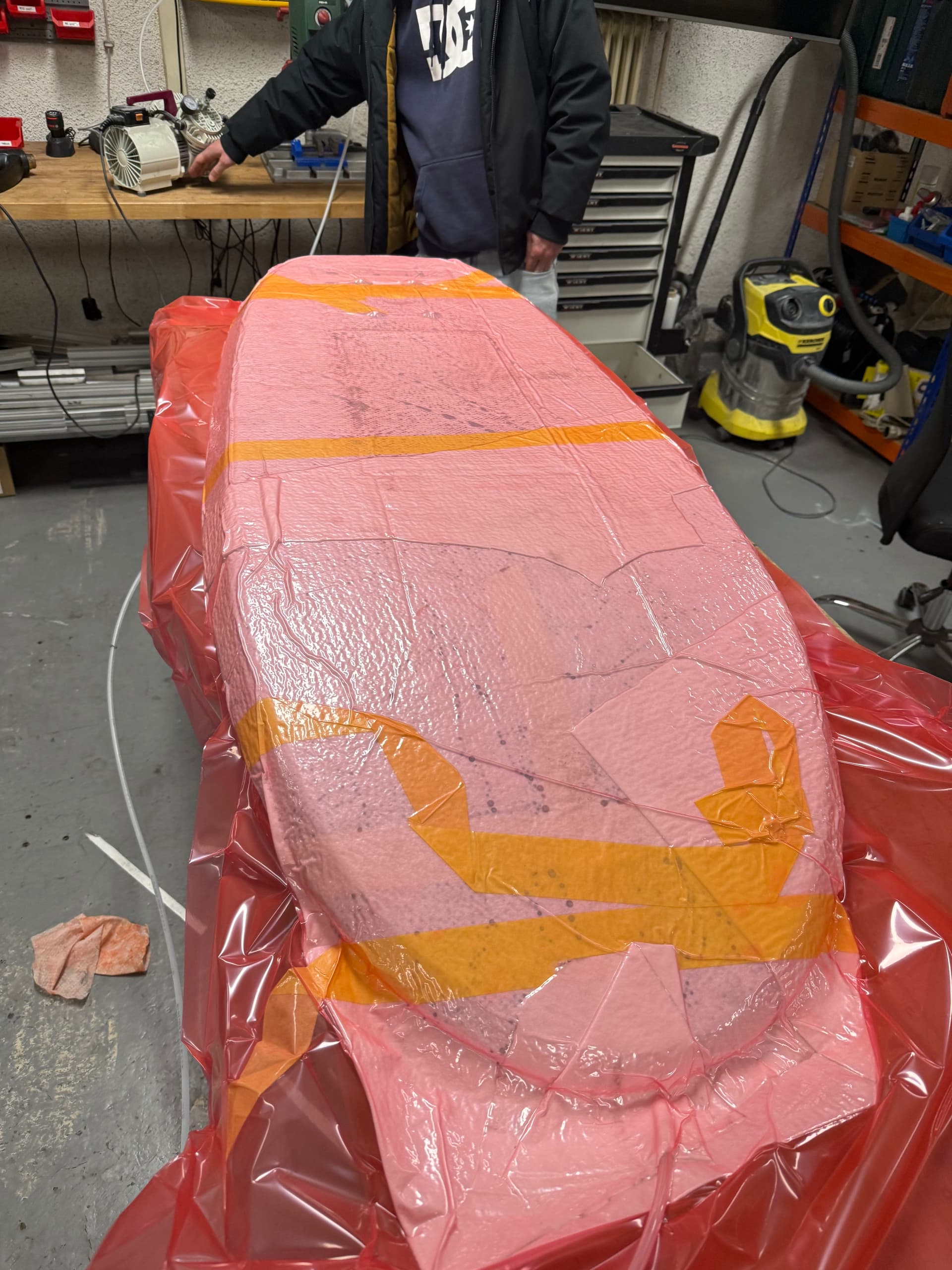
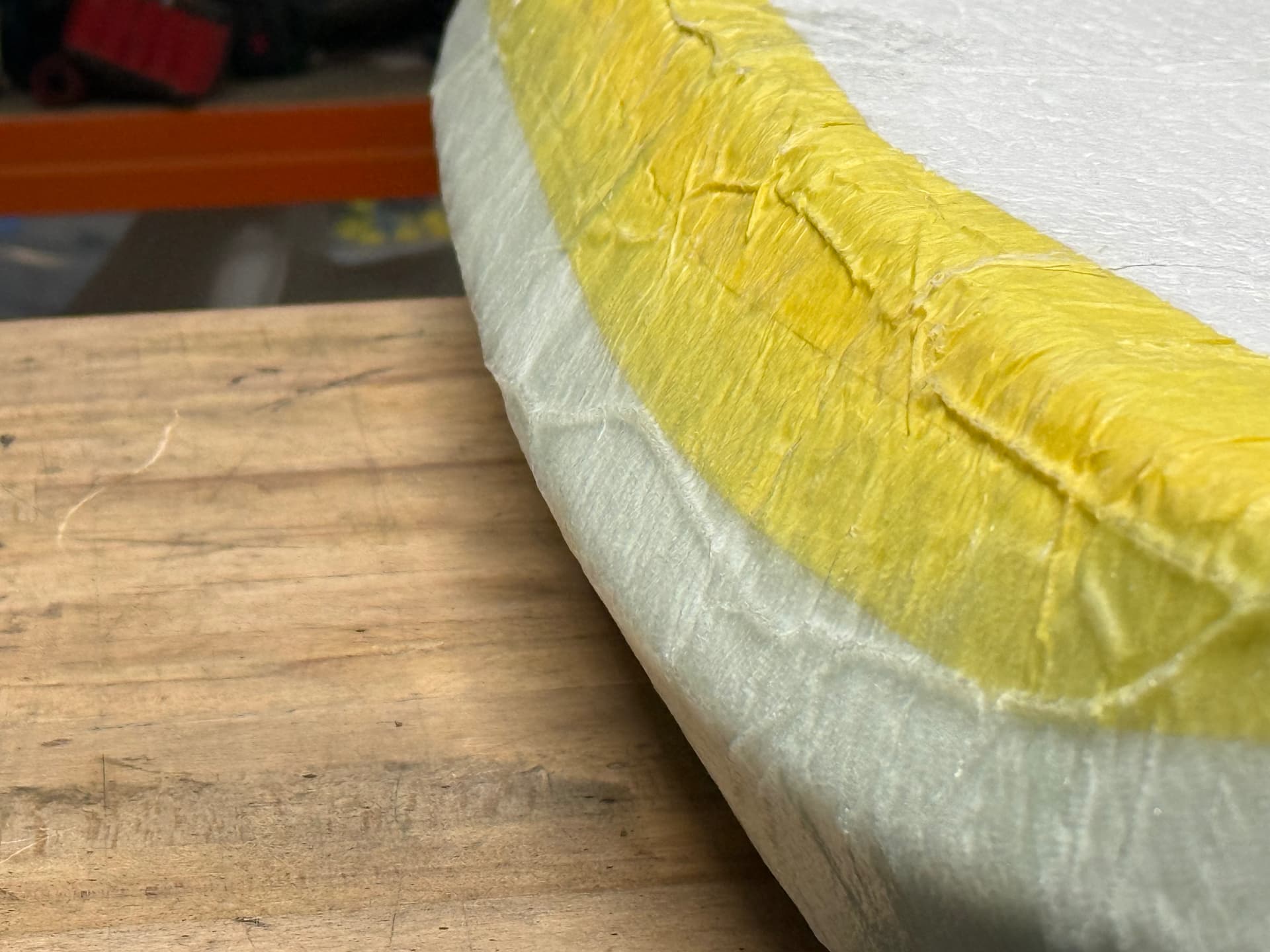
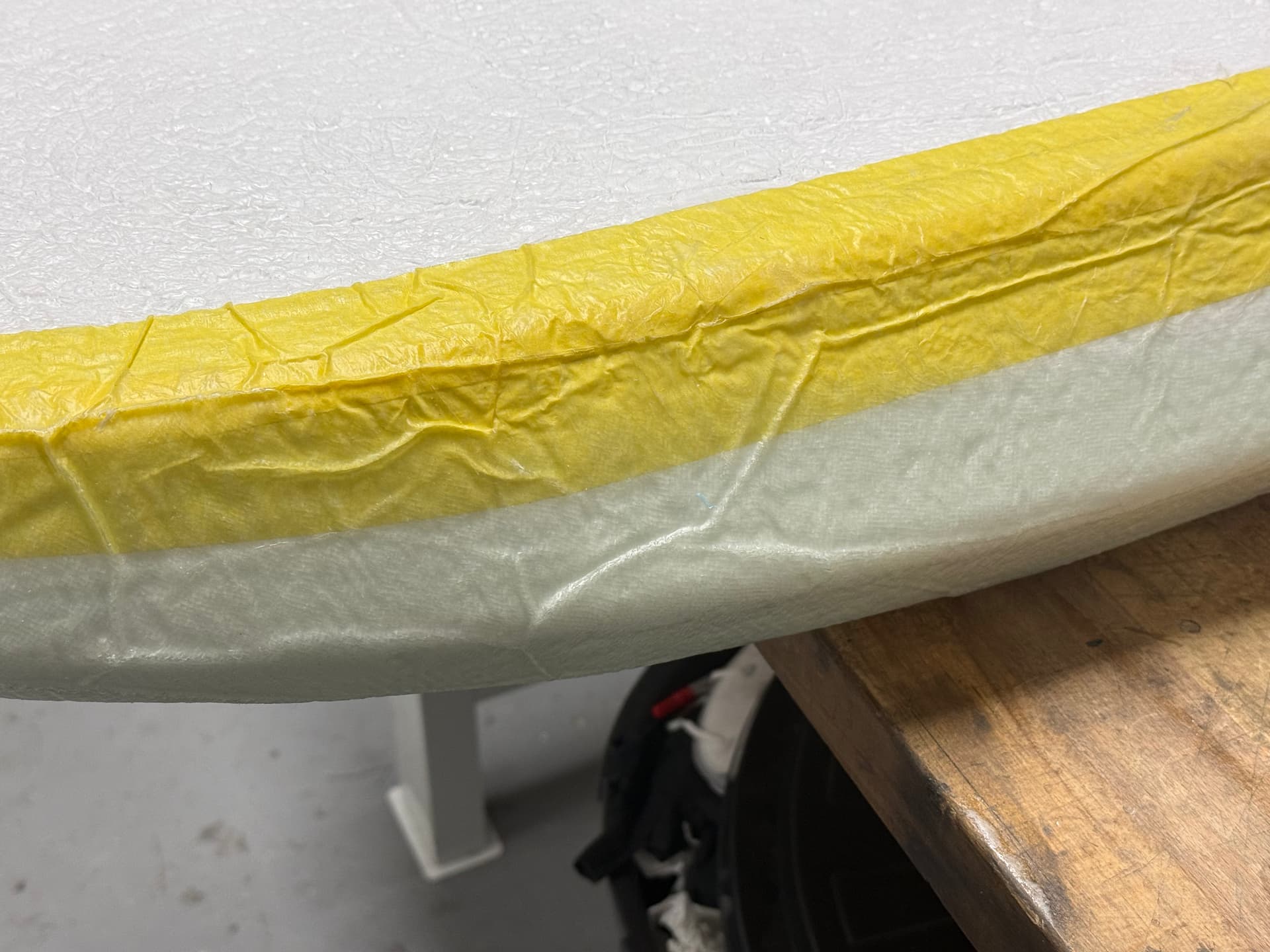
This is it until I start laminating the board :face_with_spiral_eyes: