Hi everyone,
About six years ago I decided to build my own eFoil. I bought pretty much all the parts I needed and was ready to start, but then other things related to work came up and the project was put on the back burner. And somehow six years went by. 
I finally came back to it in August this year, but I changed the original idea quite a bit.
At first I was planning to use a Tacuma board, but I decided to go with a much smaller inflatable board instead. The main reason is that I want to be able to pack the whole thing into the trunk of my car.
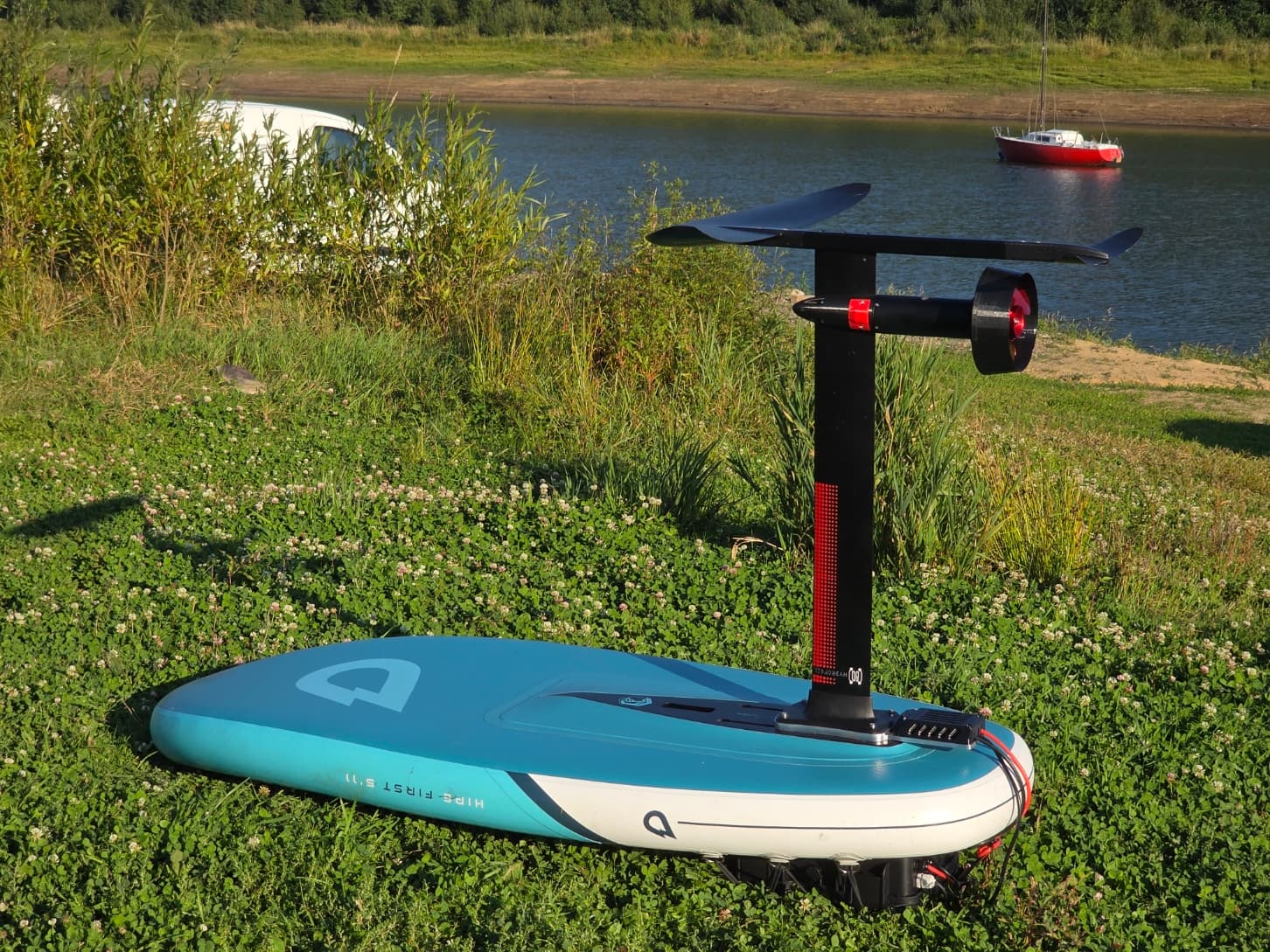
This created one obvious problem: where to put the batteries?
The idea I came up with is to put the batteries underneath the board, on an adapter mounted between the mast base plate and the bottom of the board.
It is somewhat similar to the battery concept used by Waydoo with the FoilBoost, where the battery is mounted underneath the board. I wanted to take the idea a bit further and use two separate battery pods with much more capacity, one on each side of the mast.
The pods will be long and relatively narrow, with a square cross-section. From the side they should look a little bit like two torpedoes, hence the name Twin Torpedo . 
The plan is to use two 6S packs connected in series for 12S. I already bought Molicel P42A cells specifically for this project, so that’s what I will be using.
Originally I was thinking about 12P, but after looking at the size of the pods I think that would make them unnecessarily large. I will probably build them as 6P or 8P.
One part of this concept that I really like is having basically all the electronics mounted on the adapter between the mast base plate and the board. It is quite a challenging approach because all the enclosures have to be properly waterproof, but it gives me a big advantage: the electronics and mast assembly can remain independent from the board itself.
This means I should be able to change the board whenever I want, whether I decide to use a smaller board, a larger one, a different inflatable board or even a rigid board. The idea is to make the adapter and electronics package a kind of independent module that can be transferred from one board to another.
There is one problem I still need to solve. The VX5 receiver cannot be completely underwater, otherwise the radio connection obviously won’t work.
So I will probably make a small separate enclosure for the VX5 receiver, mounted above the waterline at the rear of the board. I may also make this enclosure suitable for the VESC Express, which could be plugged in there when needed.
This should give me a small “electronics box” at the back of the board while keeping the main electronics and batteries mounted as low as possible underneath the board.
Designing and building the waterproof battery pods and the adapter will take some time. Since I live in Poland, winter is also coming, so I didn’t want to wait until spring before doing any more testing.
For now I decided to use what I already had.
I temporarily mounted a rather ugly and very large battery box with some LiPo batteries that I previously used in my mountainboards.
Definitely not the final solution, but it lets me continue testing while I work on the Twin Torpedo system.
Current setup
Gong Galaxy inflatable board, 5’11", 135 L
Gong Galaxy V1 foil
85 cm aluminium mast
Gong Alvator L 1350 front wing, 77 cm
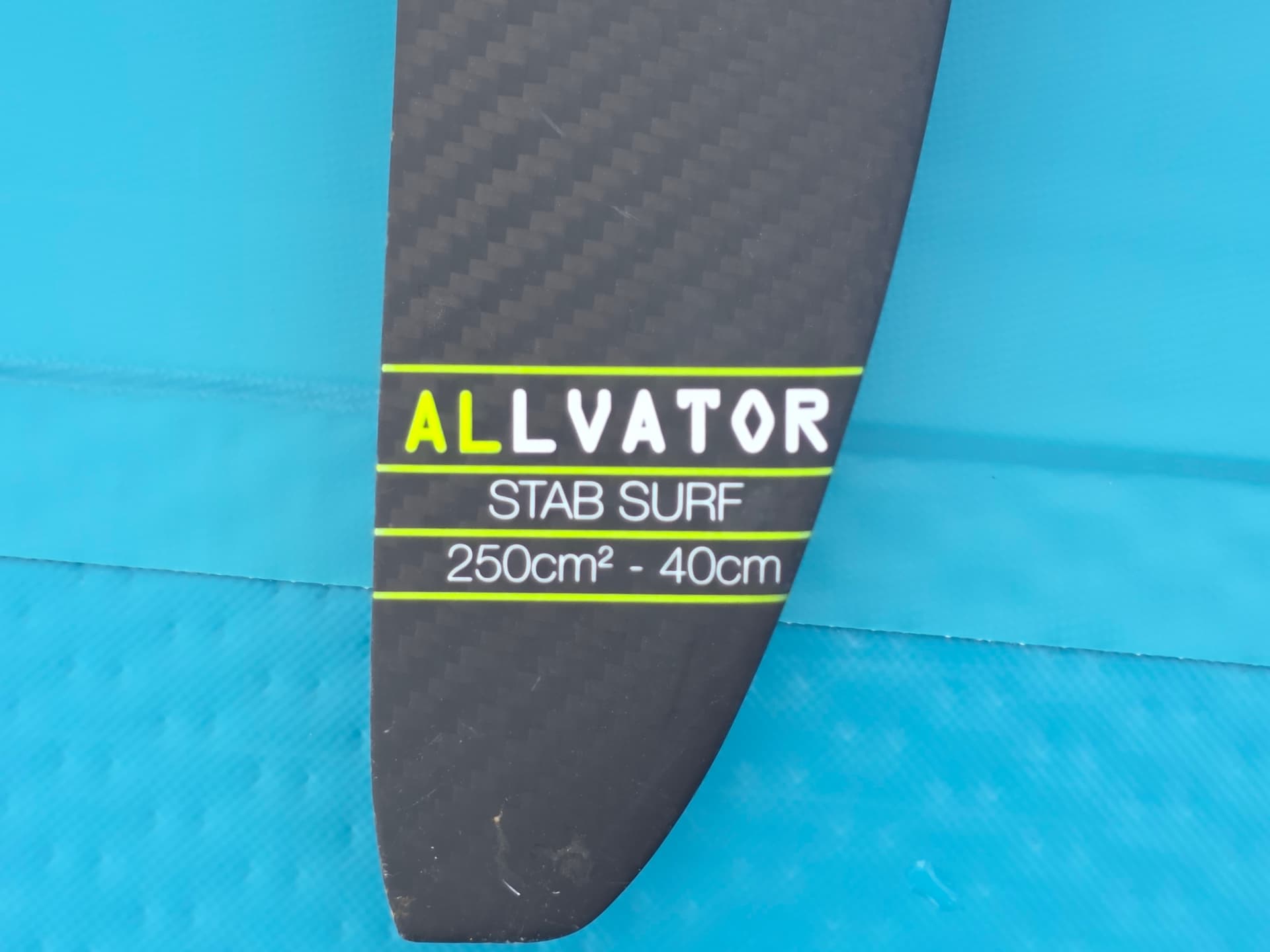
250 stabilizer, 40 cm
Flipsky 65161, 120 kV
Flipsky IP68 Mini FSESC 6.8 Plus
Flight Rodeo Progressive 7, 2021, 6" front / 7" rear
Flipsky VX5 remote
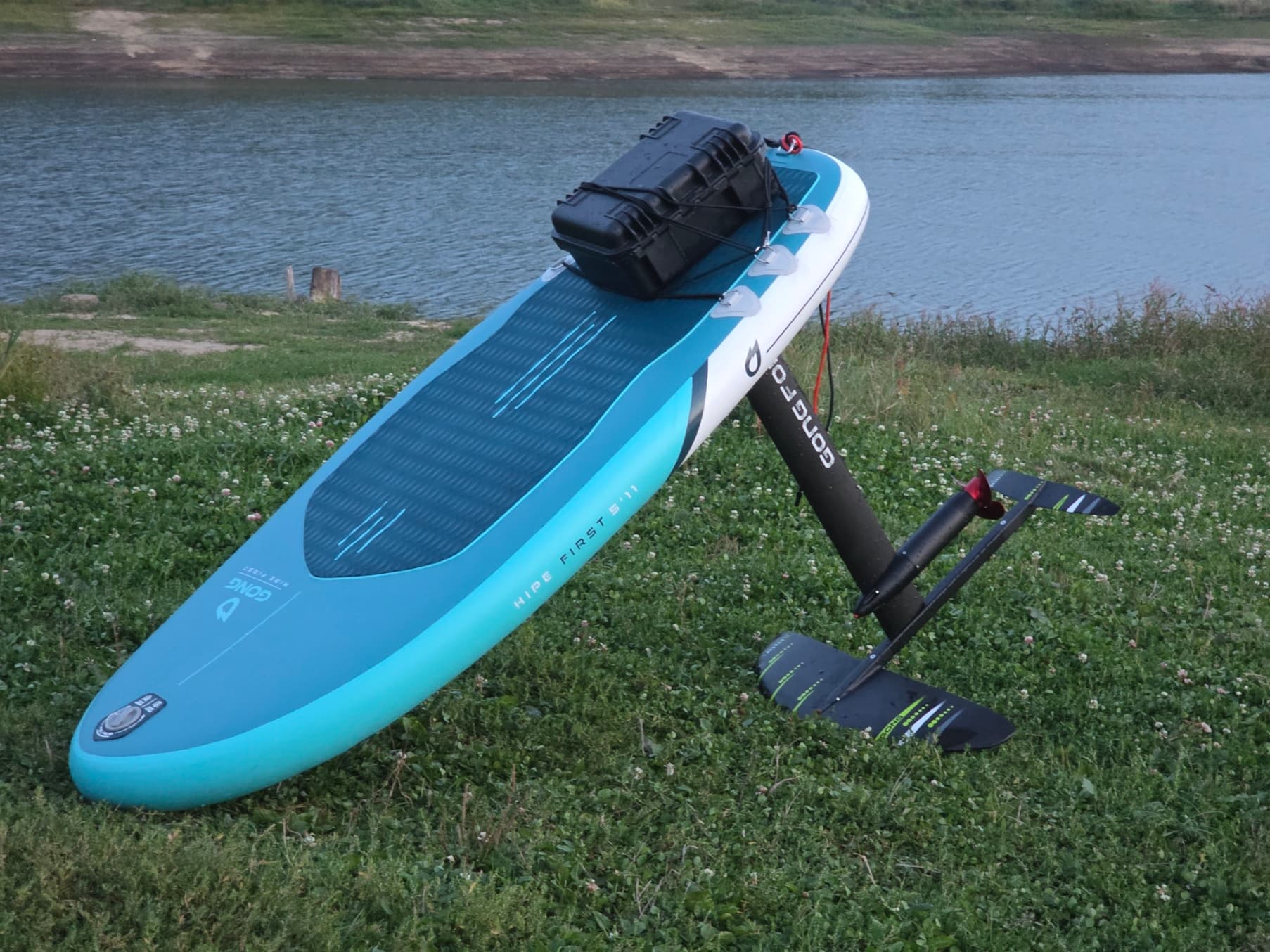
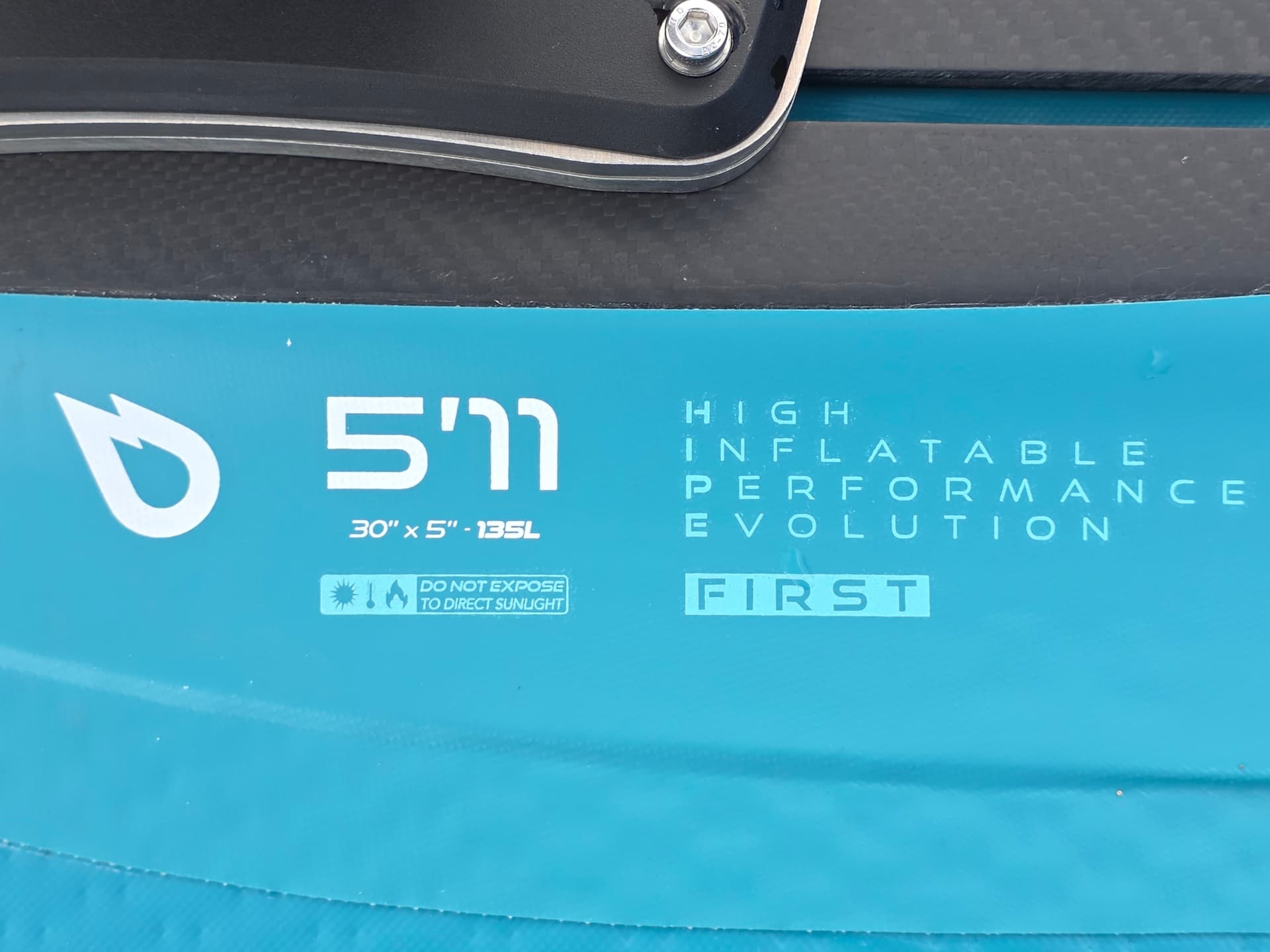
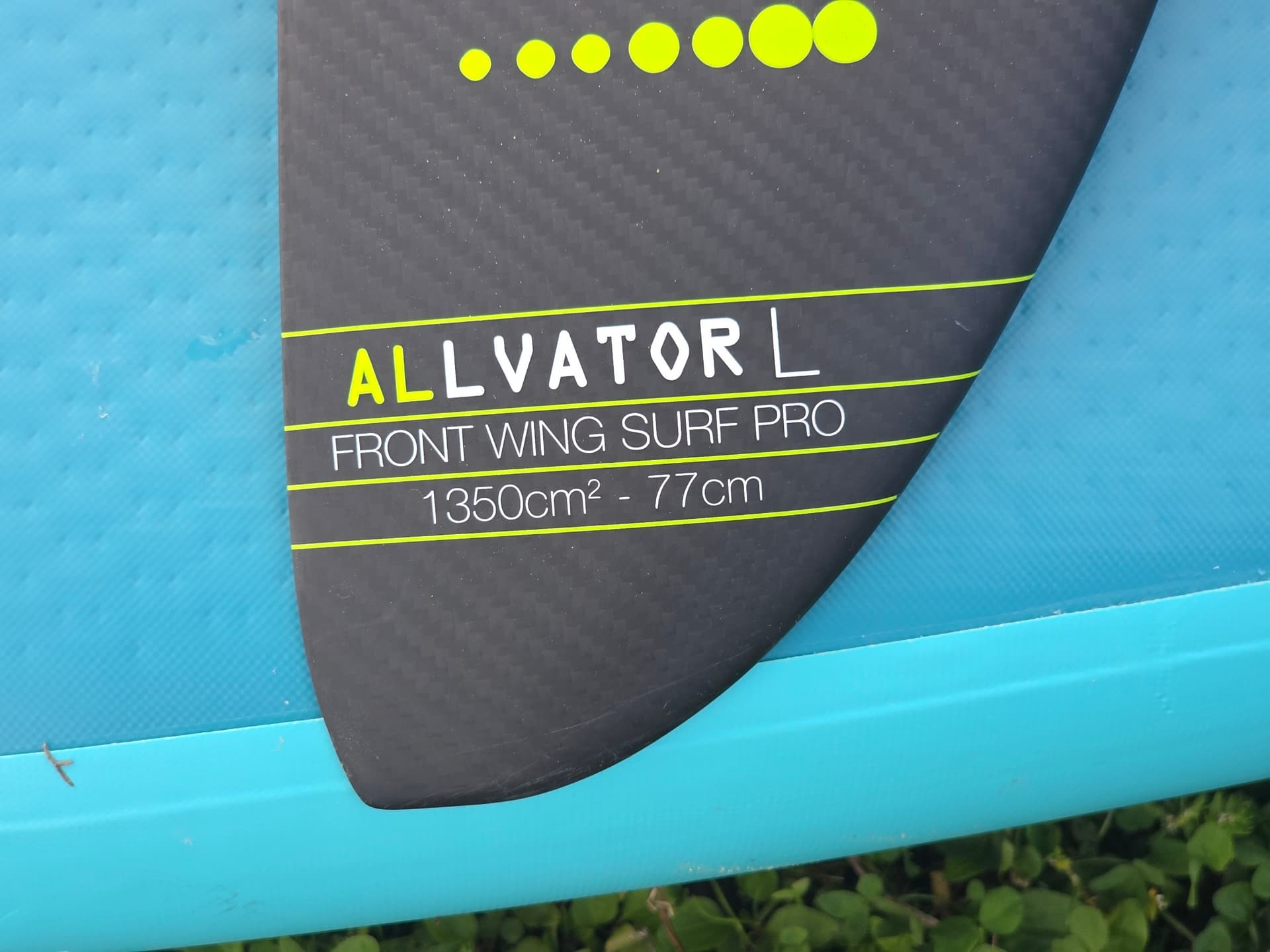
I’ve had only four sessions so far, so I’m still very much at the beginning and learning something new every time.
The current battery is around 1000 Wh, so the riding time isn’t particularly long, but I’ve already noticed a few interesting things.
The board starts to come onto foil at around 15 km/h.
It takes roughly 50 A to get the board out of the water, although I managed to take off at around 42 A.
At the moment the ESC seems to be limiting the battery current to around 60 A.
I need to check my VESC Tool settings because I currently have Battery Max set to around 99 A and motor current at around 100 A. The ESC is rated for 150 A, so I’m not sure yet why I’m only seeing around 60 A.
The fastest I’ve managed so far is around 30 km/h.
When flying comfortably at around 20 km/h, the current draw is roughly 30 A.
These numbers are obviously still very preliminary, as I’ve only had four sessions.
Propeller testing
I’ve tested two propellers so far.
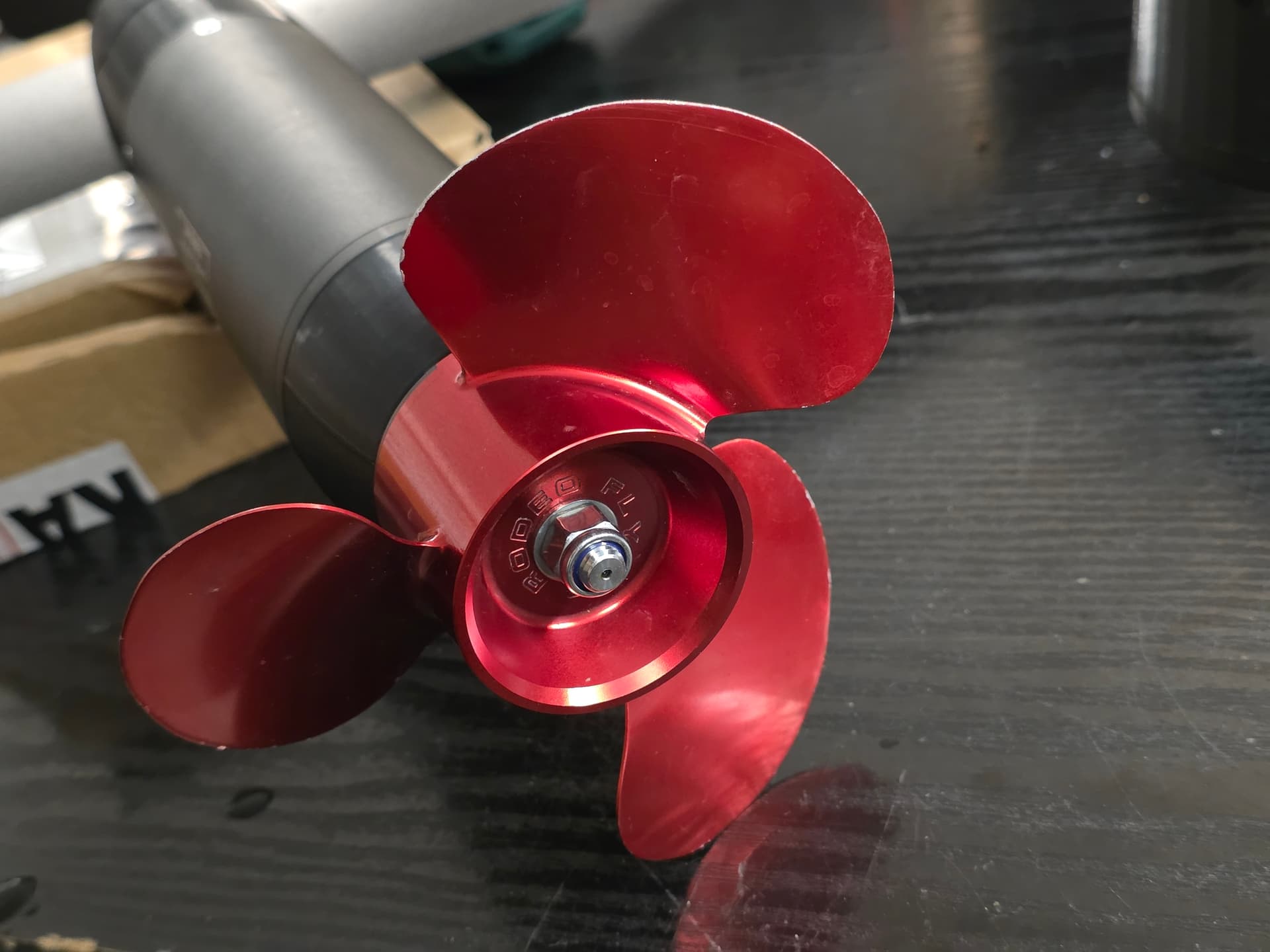
The first one is the Flight Rodeo Progressive 7 from 2021, 6" front / 7" rear.
So far this is my favourite, especially with the shroud installed.
This is actually something I don’t really understand.
I expected the shroud to create some additional drag, but my experience has been almost the opposite. When I remove the shroud, I have noticeably more trouble getting the board onto foil. With the shroud installed, the prop seems to work better and the board gets onto foil more easily.
It almost feels as if the shroud is improving the efficiency of the prop.
Has anyone else seen this?
I’m curious what the actual reason is.
The second prop I tested was the Flipsky 162 mm folding 2-blade.
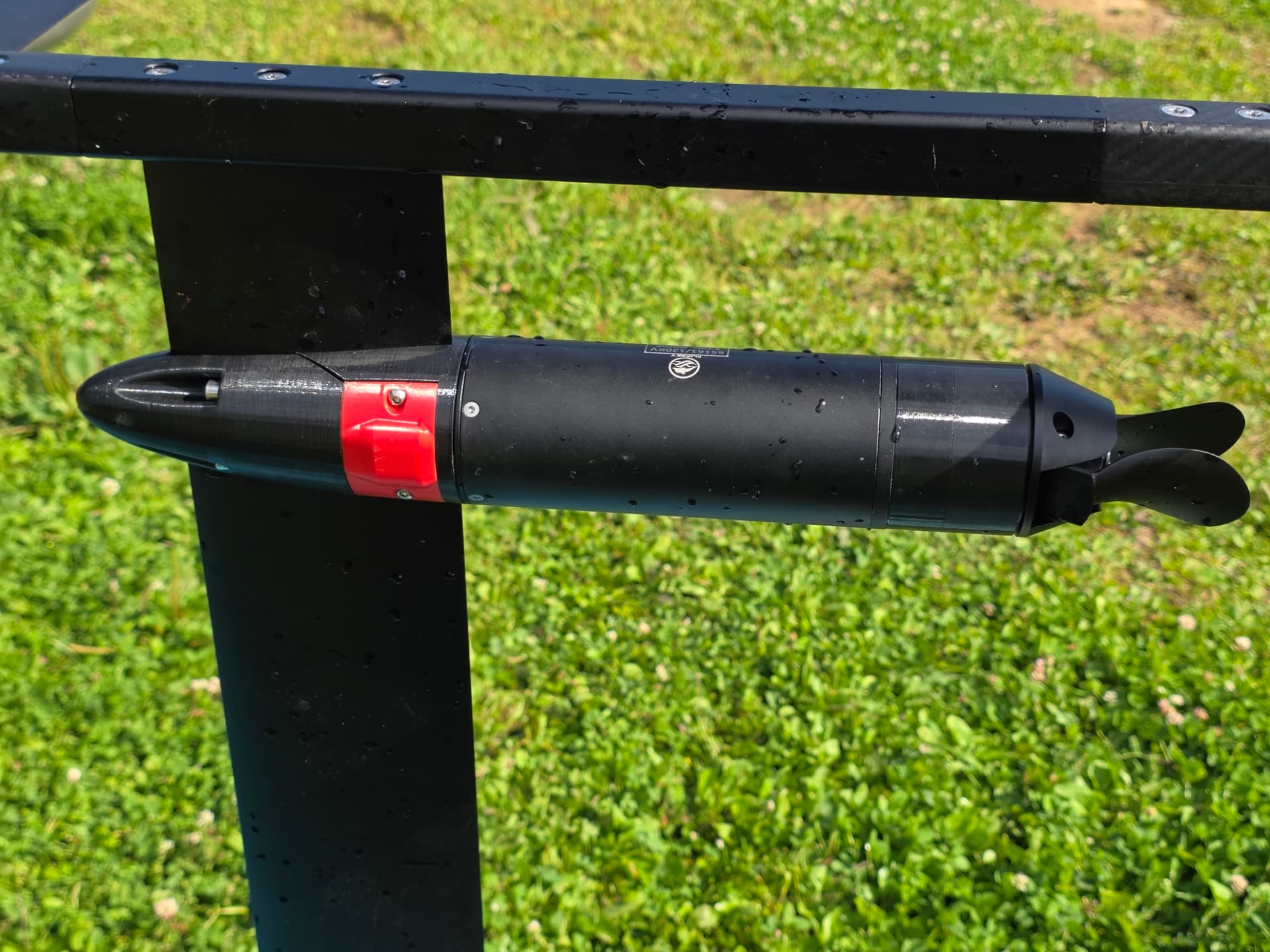
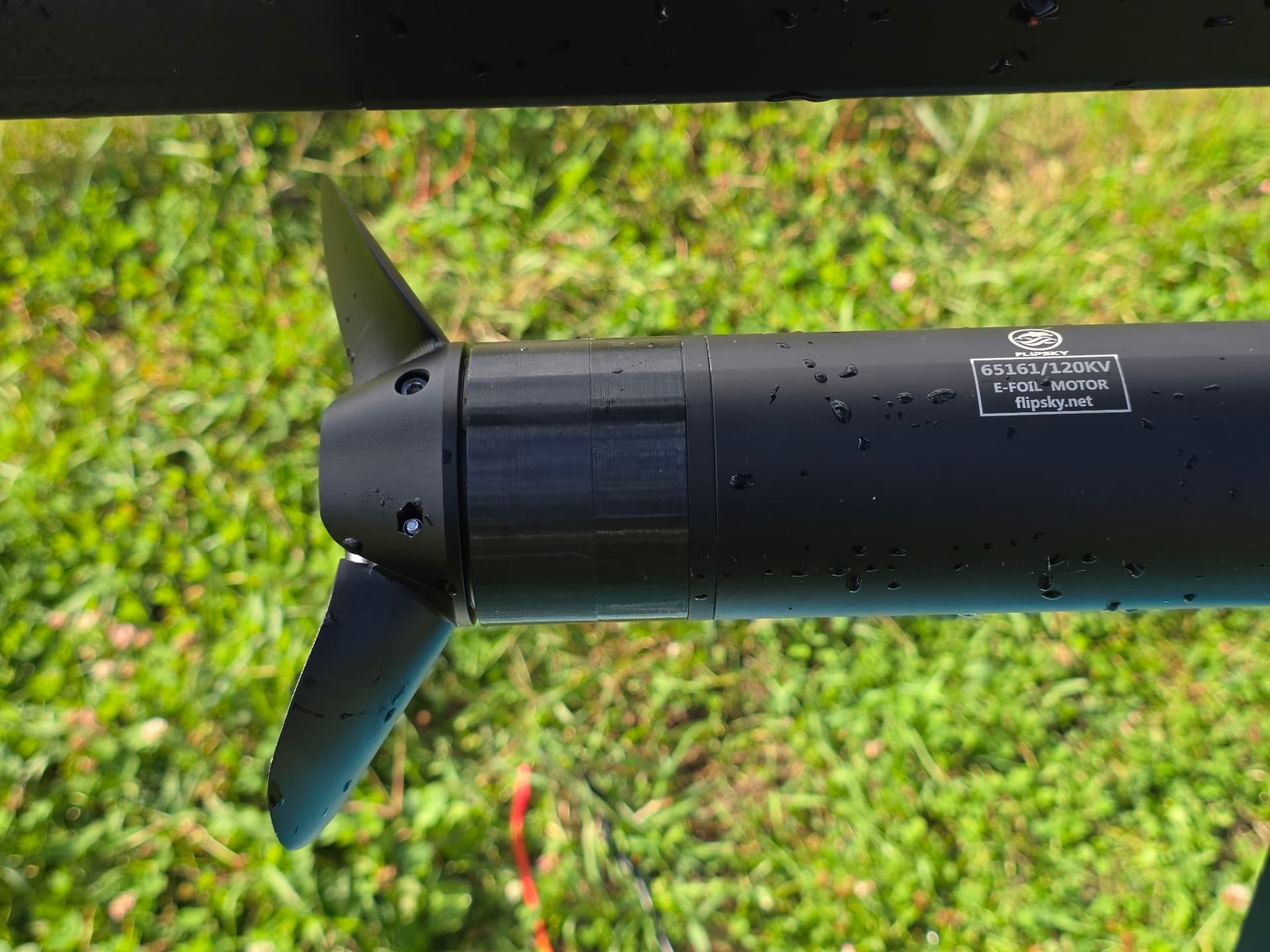
This one has a lot of thrust during takeoff. It feels stronger than the Flight Rodeo and works very well at low speed.
At higher speed, however, I don’t like it nearly as much.
It gets quite noisy and I can feel a noticeable vibration through the mast. I don’t know yet if this is cavitation, propeller imbalance, vibration or something else.
Has anyone experienced something similar with the Flipsky 162 mm folding prop?
Board stability
The other thing I’m struggling with is board stability once I’m flying.
The board feels quite nervous and very sensitive to roll changes.
I’m not sure how much of this is simply because I’m still learning and how much is related to the setup.
Would changing the stabilizer make a noticeable difference?
I’m also wondering if the propeller thrust could be disturbing the water flow around the stabilizer.
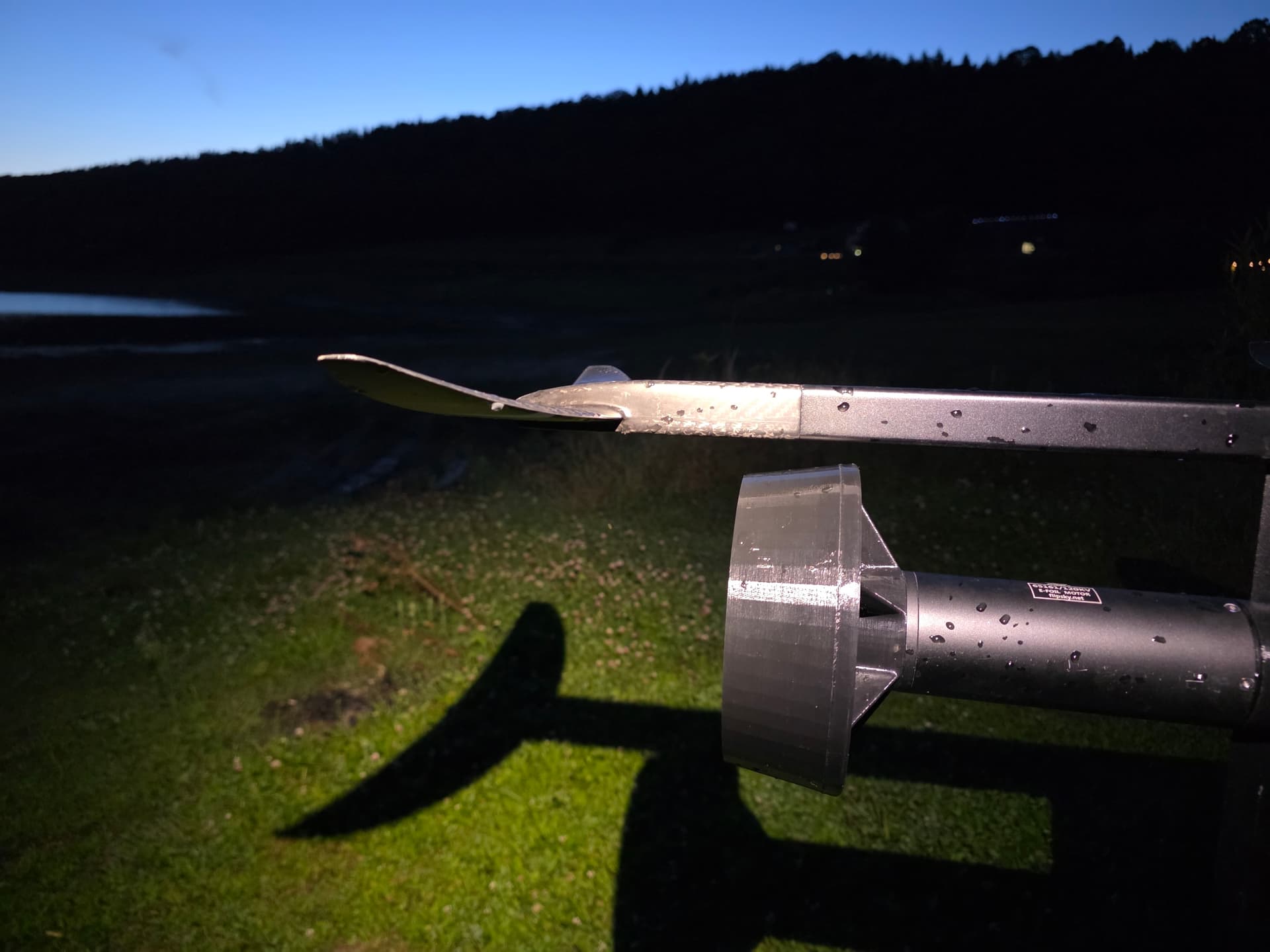
I have no idea if this is actually significant, so I’d be interested to hear what people with more experience think.
One thing I’m pretty sure about is that the current battery position doesn’t help.
The battery box is mounted high at the rear of the board, so the centre of gravity is both too high and too far back.
Unfortunately I can’t really change that until I build the new battery system.
Hopefully, moving the batteries underneath the board will make a noticeable difference. Maybe moving the motor further back, closer to the stabilizer, or changing the stabilizer could also help?
ESC
At the moment I’m using the Flipsky IP68 Mini FSESC 6.8 Plus, mounted behind the mast.
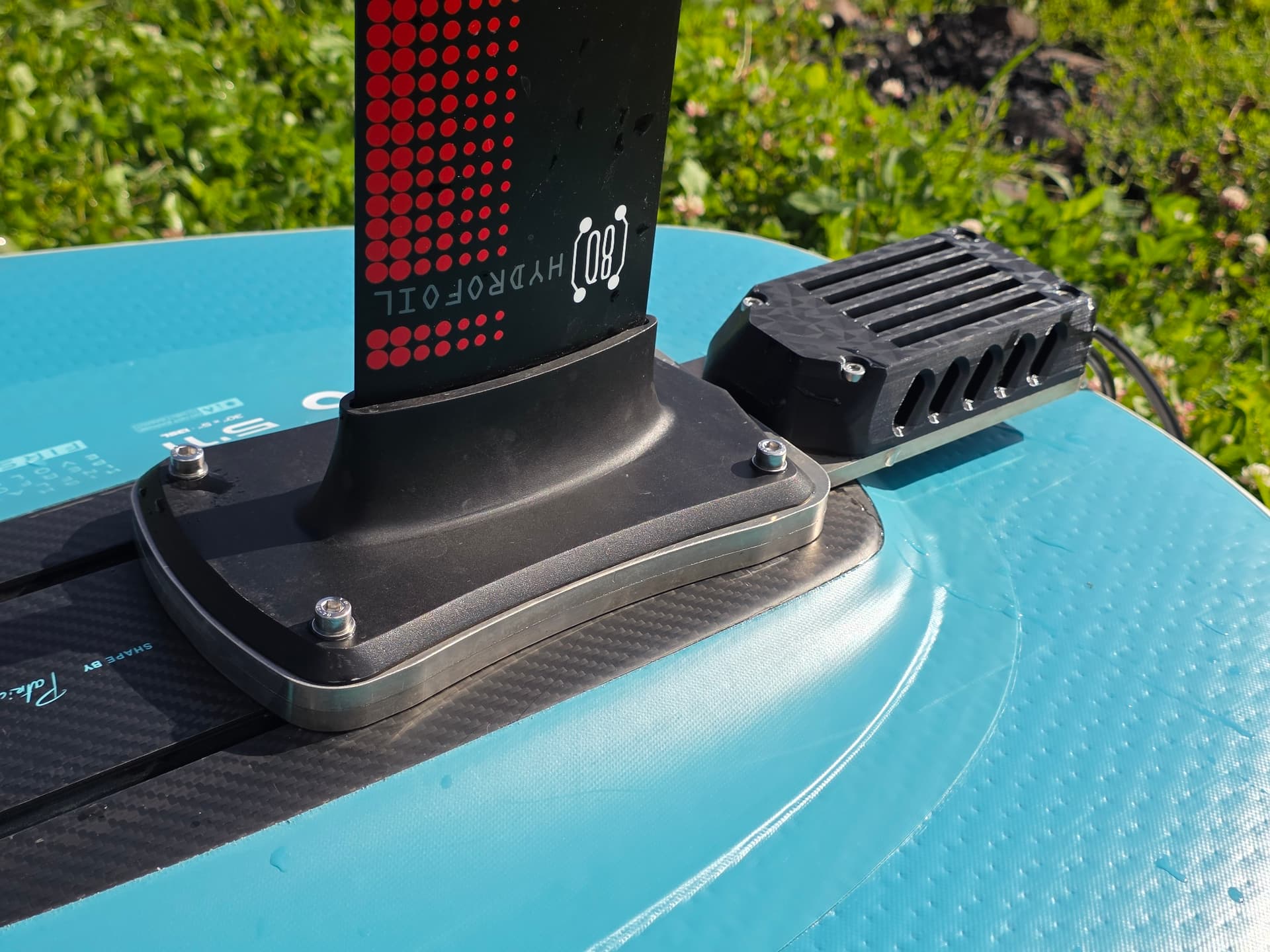
I also have two other ESCs:
Flipsky High Current FSESC 200A 60V
Flipsky 75200 Pro V2
I may eventually switch to one of them.
The 200A High Current has water cooling, but I’m not a big fan of the tube-based cooling arrangement.
The 75200 Pro V2 isn’t waterproof, so I would have to design a proper waterproof enclosure for it.
If I eventually move to 14S, I will probably do that and use the 75200 in a custom enclosure.
For now I’m staying with the IP68 Mini FSESC 6.8 Plus.
I really like how compact it is, but I am a little concerned about the temperature if I start doing longer flights while the ESC remains above the water.
At the moment I have an additional heatsink and water cooling while the board is not flying, and that works extremely well. The ESC temperature has never gone above 28°C so far.
But again, I’m still learning and my flights are quite short, so I haven’t really pushed it yet.
What’s next?
For now the plan is simply to keep testing the current setup while working on the new battery system.
The Twin Torpedo will eventually have two waterproof battery pods underneath the board, one on each side of the mast. They will be connected to the mast through a custom adapter.
The battery will be two 6S packs connected in series for 12S, built from Molicel P42A cells. I’m currently leaning towards 6P or 8P because I don’t want the pods to become too large.
The main goal is to get the batteries as low as possible, improve the centre of gravity and get rid of the big battery box sitting on top of the board.
I’m still very much at the beginning of this project, so any advice is welcome.
In particular, I’d be interested in hearing your thoughts on:
- Stabilizer choice and board stability
- Why the Flight Rodeo seems to work better with the shroud
- Vibration and noise from the Flipsky 162 mm folding prop
- ESC cooling and whether the IP68 Mini can handle longer flights above the water
And if anyone has built underwater battery enclosures for an eFoil, I’d be very interested to see how you solved the waterproofing and mechanical mounting.
I’ll post some pictures and more details once I start working on the Twin Torpedo design.
Cheers